
Tetramorium alperti
- Sci. Name
- Tetramorium alperti
- Tribe
- Crematogastrini
- Subfamily
- Myrmicinae
- Author
- Hita Garcia & Fisher, 2014
- Distribution
- Found in 1 countries
Introduction
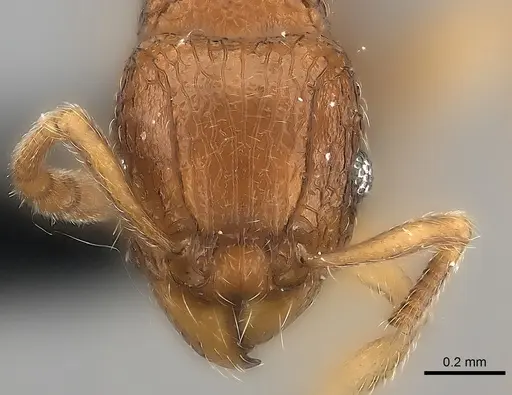
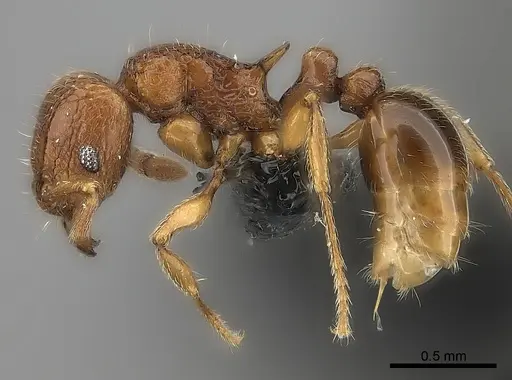
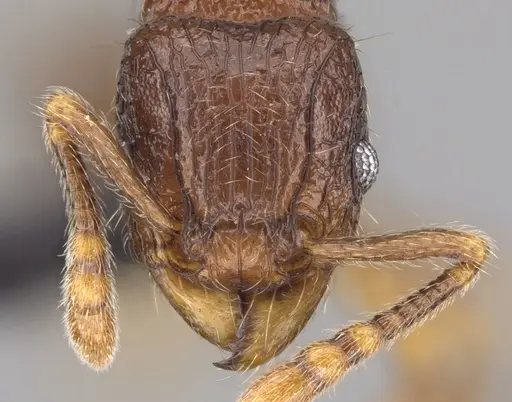
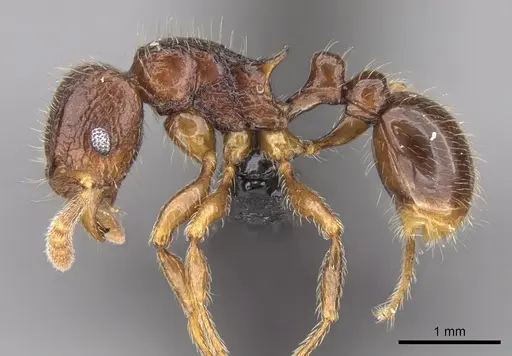
Tetramorium alperti is a leaf-litter ant endemic to northeastern Madagascar . Workers are very small (exact total length not documented), with a total head length of about 0.56-0.68 mm, but no full body measurement is available . They belong to the Tetramorium naganum species group and can be recognized by their long propodeal spines and distinctive hairy waist segments: the petiole and postpetiole have several long erect hairs, and the first gastral tergite has a mix of short appressed hairs and longer standing hairs . Their body color ranges from orange-brown to chestnut brown, with lighter yellowish-brown mandibles, antennae, and legs . This species has an extremely limited distribution, known from only three locations in northeastern Madagascar: Anjanaharibe-Sud, Marojejy, and Ambalagoavy, at elevations between 525 and 1325 m in montane and lowland rainforests . It was first described in 2014 and only the worker caste has been scientifically documented; queens and males remain unknown . Because of its recent description and rarity, very little is known about its captive care requirements.
Quick Summary
- Difficulty: Medium
- Origin & Habitat: Northeastern Madagascar, specifically montane and lowland rainforests at Anjanaharibe-Sud, Marojejy, and Ambalagoavy at elevations of 525-1325 m [1]. They inhabit the leaf litter layer of humid tropical forests [1][2].
- Colony Type: Colony structure is unconfirmed because only the worker caste has been described, no queens or males are known [1]. Based on typical Tetramorium patterns, they may be monogyne, but this is speculative.
- Size & Growth:
- Queen: Unknown, the queen caste has not been described [1].
- Worker: Size data unavailable, exact total length is not provided in existing literature. Head length ranges from 0.56 to 0.68 mm, but this is not a full body measurement [1].
- Colony: Unknown, maximum colony size has not been documented [1].
- Growth: Unknown, development timeline has not been studied [1].
- Development: Unknown, no species-specific data exists [1]. (Development time is completely unstudied for this species.)
- Antkeeping:
- Temperature: Estimated 22-26°C based on tropical rainforest origin. Avoid temperatures below 20°C or above 30°C until more is known [1].
- Humidity: High humidity is essential, aim for 70-85%. These leaf-litter ants come from constantly humid rainforest environments (terricolous, humid habitat) [2]. Keep the nest substrate consistently moist but not waterlogged, and provide a gradient so ants can regulate their own moisture exposure [1].
- Diapause: No, as a tropical species from Madagascar, they do not require hibernation or winter dormancy. Maintain consistent temperatures year-round [1].
- Nesting: They naturally nest in leaf litter and decaying wood [1]. In captivity, a small test tube setup is ideal for founding. For established colonies, Y-tong (AAC) nests or plaster nests with narrow chambers (3-5 mm wide) are recommended due to their tiny size and humidity needs. Avoid oversized spaces.
- Behavior: Workers are docile and non-aggressive, no stinging behavior has been reported. Their small size (head length ~0.56-0.68 mm) makes them expert escape artists, excellent escape prevention with fine mesh and tight seals is critical [1]. Foraging likely occurs individually in the leaf litter layer.
- Common Issues: escape prevention is critical, their tiny size means they can squeeze through gaps that larger ants cannot, use fine mesh and tight seals [1]., high humidity requirements can lead to mold if ventilation is inadequate, balance humidity with airflow [2]., very little is known about this species, most care advice is inferred, careful observation is needed [1]., wild populations are extremely restricted and protected in Madagascar, any captive colonies likely come from permitted sources [1]., temperature sensitivity, they do not tolerate cool or fluctuating conditions well, maintain stable warmth [1].
Housing and Nest Setup
Because of their tiny size, Tetramorium alperti needs housing scaled appropriately. A small test tube setup works well for any colony, use a test tube with a water reservoir at one end, stopped with a cotton plug, providing humidity through the water column. For established colonies, a small Y-tong (AAC) or plaster nest with narrow chambers (3-5 mm wide passages) keeps them comfortable and prevents them from feeling exposed in oversized spaces. Their natural habitat is leaf litter and decaying wood, so nests that mimic these dark, humid, confined conditions are ideal [1][2]. Avoid naturalistic setups with large open areas, these tiny ants feel safer in compact, enclosed spaces. Whatever nest type you choose, ensure it has excellent escape prevention: fine mesh barriers, tight-fitting lids, and fluon on any edges they might climb.
Feeding and Diet
No specific dietary studies exist for Tetramorium alperti. Based on its habitat and related Tetramorium species, it is likely omnivorous. Offer small protein sources appropriate to their tiny size: fruit flies, small pinhead crickets, mealworm pieces, or other small insects. Provide sugar sources like diluted honey, sugar water, or ant jelly regularly [1]. Feed small amounts 2-3 times per week, removing uneaten food within 24 hours to prevent mold. Since their natural foraging is in leaf litter, they may also scavenge for dead insects and collect honeydew from root-feeding hemipterans.
Temperature and Humidity Management
These tropical rainforest ants need warm, humid conditions year-round. Maintain temperatures between 22-26°C consistently, use a heating cable on one side of the nest if your room temperature falls below this range. Place the heating element on top of the nest, not underneath, to avoid evaporating moisture too quickly. Humidity should stay high at 70-85%, check the nest regularly and rehydrate when the substrate surface begins drying. Their native habitat is terricolous and humid, so providing a moist substrate is essential [2]. Good ventilation is important to prevent mold, but avoid placing the nest in direct airflow that could dry it out. Keep them away from windows, air conditioning vents, and exterior walls to avoid temperature fluctuations [1].
Colony Development and Growth
Since Tetramorium alperti was only described in 2014 and only the worker caste is known, specific colony development data does not exist [1]. The founding method, number of workers, and growth rate are all unconfirmed. Without knowledge of the queen or male castes, it is impossible to provide reliable development timelines. Keepers should be patient and record their own observations, contributing to the very limited knowledge base for this species.
Handling and Observation
Tetramorium alperti is a docile species that can be observed without significant risk of stinging. Workers are small and quick, making them interesting to watch as they forage through test tubes or formicarium chambers. However, their tiny size (head length ~0.56-0.68 mm) makes them challenging to handle or move [1]. If you need to relocate them, use gentle techniques, coax them into a secondary container rather than shaking or dumping the nest. They are not aggressive and will not defend their nest aggressively, but disturbing a colony can cause stress. For observation, a well-lit setup with a magnifying glass lets you appreciate their fine pilosity (the long hairs that help identify this species). Their small size also means they are expert escape artists, always double-check that lids and barriers are secure.
Frequently Asked Questions
How long does it take for Tetramorium alperti to produce first workers?
This is unknown, no species-specific data exists because the queen caste and founding behavior have not been observed [1]. Any estimate would be pure speculation.
Can I keep Tetramorium alperti in a test tube?
Yes, a test tube setup is ideal for this tiny species. Use a small test tube with a water reservoir stopped with cotton to provide humidity. Their natural habitat is leaf litter and rotten wood, so the confined space will help them feel secure [1]. Ensure excellent escape prevention, their small size allows them to escape through tiny gaps.
Do Tetramorium alperti ants sting?
No stinging behavior has been reported for this species. Like many Myrmicinae, they have a stinger and a venom apparatus adapted for 'smearing' venom (smear defense), but they are not known to pose any threat to humans. They are more likely to flee than to sting when disturbed [1].
What do Tetramorium alperti eat?
No specific dietary studies exist, but they are presumed omnivorous like most Tetramorium species. Offer small protein sources (fruit flies, small insects) and sugar sources (diluted honey, ant jelly). Feed small amounts 2-3 times per week [1].
Do Tetramorium alperti need hibernation?
No, they do not require hibernation. As tropical rainforest ants from Madagascar, they need consistent warm temperatures year-round [1].
How big do Tetramorium alperti colonies get?
Maximum colony size is unknown, no colony size data exists in scientific literature [1]. Any estimate would be speculative.
Are Tetramorium alperti good for beginners?
This species is rated medium difficulty. While docile, their tiny size and unknown biology make them challenging. They require high humidity and stable temperatures, and escape prevention is difficult. They are better suited for keepers with some experience who can commit to careful observation [1].
Why are my Tetramorium alperti dying?
Common causes likely include: temperatures below 20°C (they are sensitive to cool conditions), low humidity causing desiccation, escape through tiny gaps, mold from poor ventilation, or stress from excessive disturbance. Since so little is known about their optimal conditions, careful trial and error with stable warmth and high humidity is recommended [1][2].
When should I move Tetramorium alperti to a formicarium?
Since colony growth data is lacking, wait until the colony is actively foraging in an outworld and the test tube seems overcrowded. A small Y-tong or plaster nest with narrow chambers works well [1]. Move only when the colony is stable and has a healthy worker force (exact numbers unknown).
Can I keep multiple Tetramorium alperti queens together?
Colony structure is unconfirmed because queens are unknown. Based on typical Tetramorium patterns, they are likely monogyne, but this is speculative. Combining unrelated queens is not recommended [1].
What makes Tetramorium alperti different from other Tetramorium?
Tetramorium alperti belongs to the Tetramorium naganum species group and is identified by very long propodeal spines and distinctive hairy waist segments, several long erect hairs on the petiole and postpetiole, plus a mix of short and long hairs on the first gastral tergite [1]. Its distribution is extremely limited to three rainforest locations in northeastern Madagascar.
Where is Tetramorium alperti native to?
Endemic to northeastern Madagascar, found only at three locations: Anjanaharibe-Sud, Marojejy, and Ambalagoavy, in montane and lowland rainforests at 525-1325 m elevation [1].
Report an Issue
The current care sheet is based fully on literature. See inconsistencies, or something that's incorrect? Please , it will be resolved after review from an admin. Contributing to the blogs tab also helps providing information, to make us be able to further improve the caresheets. Thank you for your support!
References

This caresheet is licensed under CC BY-SA 4.0 .
Community Blogs
CASENT0009535
View on AntWeb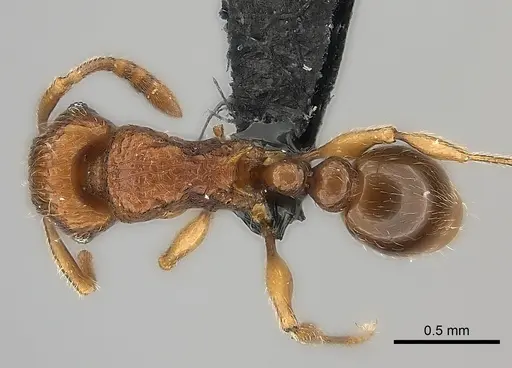
CASENT0042547
View on AntWeb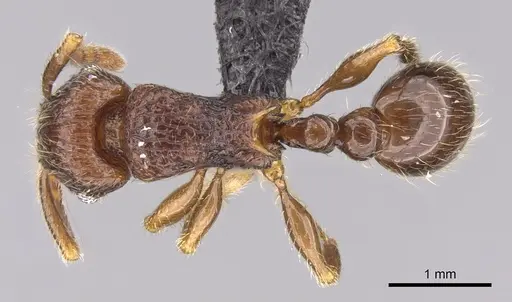
Literature
Loading distribution map...Loading products...