
Tetramorium aherni
- Sci. Name
- Tetramorium aherni
- Tribe
- Crematogastrini
- Subfamily
- Myrmicinae
- Author
- Hita Garcia & Fisher, 2012
- Distribution
- Found in 2 countries
Introduction
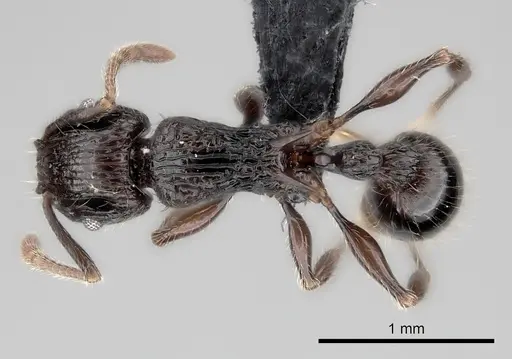
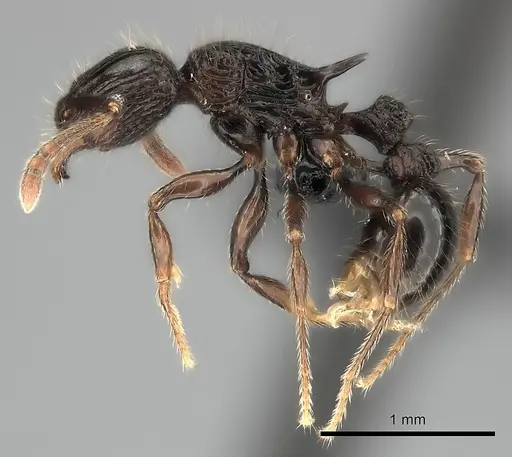
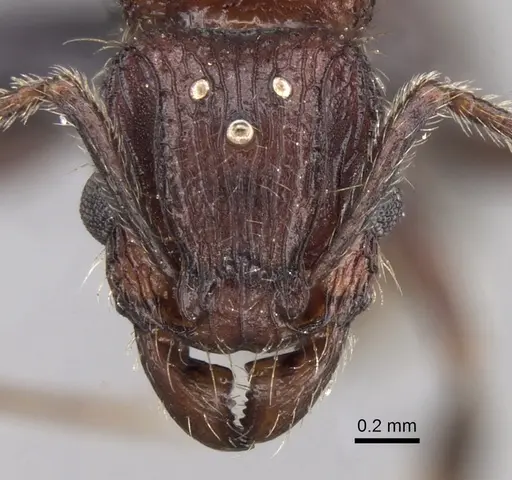
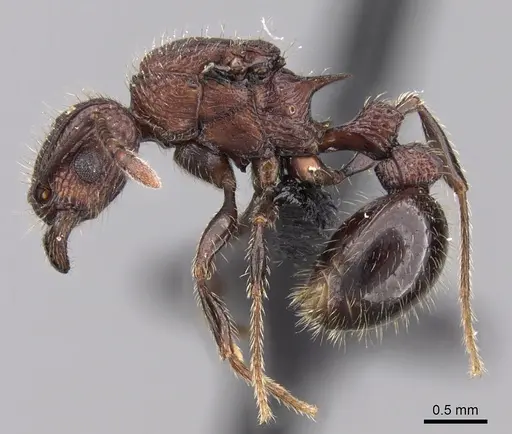
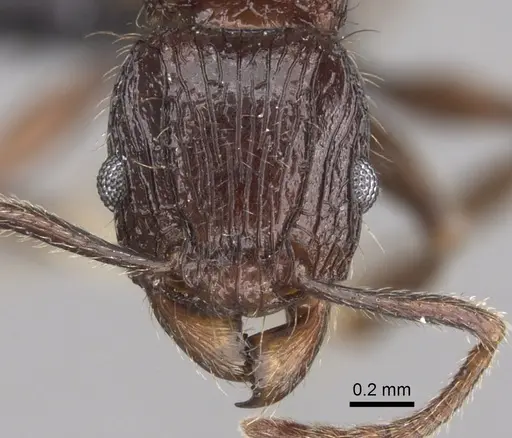
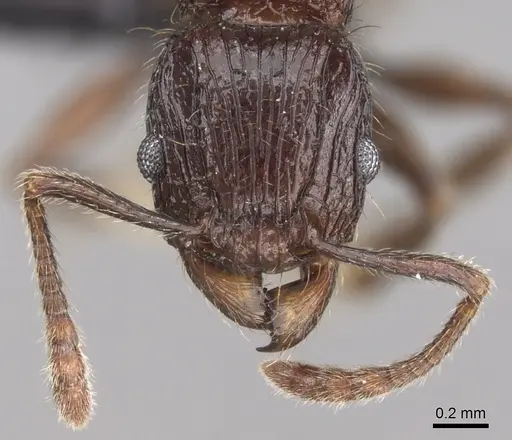
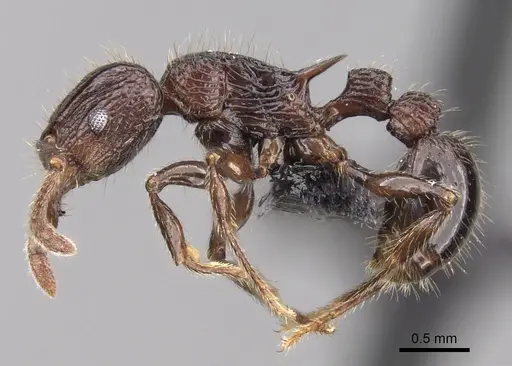
Tetramorium aherni is a small, dark brown to black ant endemic to Madagascar. Workers are uniformly dark brown to black with a distinctively shaped petiolar node where the front and back margins sit at about the same height, and very long propodeal spines . The species belongs to the Tetramorium tortuosum species group and is only known from a handful of lowland and montane rainforest locations in northeastern and eastern Madagascar, between 450 and 900 m elevation . These ants live primarily in the leaf litter stratum, the damp layer of decaying vegetation covering the forest floor . What makes T. aherni interesting is its extremely restricted distribution – it's known from only four sites (Befingotra, Marojejy, Makirovana, and Ambalagoavy) and has never been formally studied outside of taxonomy . There is no documented captive care for this species, so any keeper must be prepared to experiment based on its natural rainforest habitat. Like other myrmicine ants of the tribe Crematogastrini, T. aherni uses a 'smear' defense – workers wipe venom onto enemies using a modified flattened stinger rather than stinging.
Quick Summary
- Difficulty: Medium
- Origin & Habitat: Northeastern and eastern Madagascar: Befingotra, Marojejy, Makirovana, and Ambalagoavy. Occurs in lowland and montane rainforest leaf litter at elevations of 450–900 m [1][2].
- Colony Type: Unconfirmed – Tetramorium species vary from monogynous to polygynous, but no colony structure data exists for T. aherni.
- Size & Growth:
- Queen: Unknown – no queen measurements have been documented [1].
- Worker: Size data unavailable – only head and mesosomal measurements are documented, not total body length [1].
- Colony: Unknown – no colony size data exists for this species.
- Growth: Unknown – growth rate has not been documented.
- Development: Unknown – no development data exists. Based on typical Tetramorium patterns, expect 6–10 weeks at warm temperatures, but this is an estimate only. (Estimated from related Tetramorium species, actual timing may vary significantly.)
- Antkeeping:
- Temperature: Keep around 22–26 °C. This species comes from tropical rainforest, so warmth and stability are important. Provide a gentle gradient so workers can self-regulate [1][2].
- Humidity: High humidity is critical. Natural leaf‑litter habitat stays consistently damp. Keep the nest substrate moist but not waterlogged, and offer some drier escape areas [1][2].
- Diapause: No – this is a tropical species from Madagascar, maintain warm temperatures year‑round [1][2].
- Nesting: Use a naturalistic setup with moisture‑retaining substrate (soil‑coco fiber mix) and plenty of hiding spots (cork bark, leaves). Y‑tong or plaster nests work if kept adequately moist. Mimic the damp forest floor [1][2].
- Behavior: Poorly documented in captivity, but typical Tetramorium behavior includes moderate foraging and generally non‑aggressive temperament. Workers are small and active, likely foraging for small prey and sugary substances. Escape prevention is advisable – standard barriers for ants under 3 mm. Defense: like other Crematogastrini, they smear venom rather than sting.
- Common Issues: lack of documented care information makes precise guidance difficult – expect experimentation, humidity control is critical – too dry and colonies will fail, tropical species may be sensitive to temperature drops below 18 °C, no information on what foods they readily accept – start with standard ant foods and adjust, wild‑caught colonies may carry parasites from native habitat – quarantine new colonies
Natural History and Distribution
Tetramorium aherni is endemic to Madagascar, known only from four locations: Befingotra, Marojejy, Makirovana in the northeast, and Ambalagoavy further south in eastern Madagascar [1]. The species occupies a narrow elevation band between 450–900 m in lowland and montane rainforests, with the type locality being Marojejy National Park [1][2].
These ants live primarily in the leaf litter stratum – the decaying vegetation layer on the forest floor [2]. This microhabitat explains their need for humid, shaded conditions with abundant organic matter. The rainforest provides consistent warmth and moisture year‑round.
The species was described in 2012 by Hita Garcia and Fisher as part of their revision of the Tetramorium kelleri and T. tortuosum species groups [1]. It was named after Dan Ahern for his contribution to the Madagascar Project [2].
Identification and Morphology
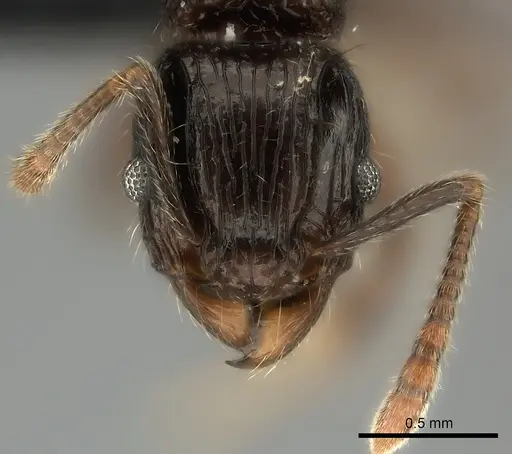
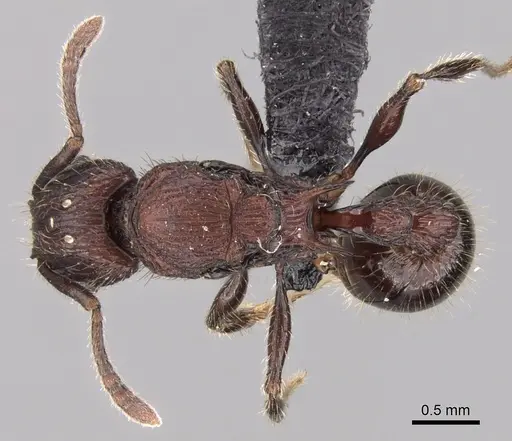
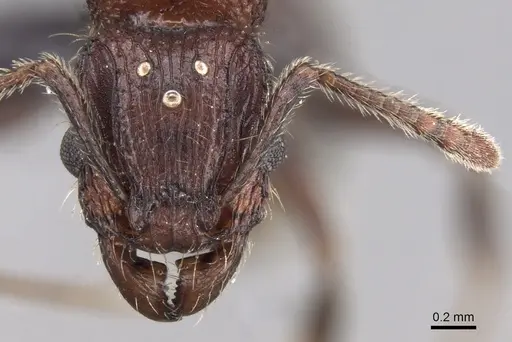
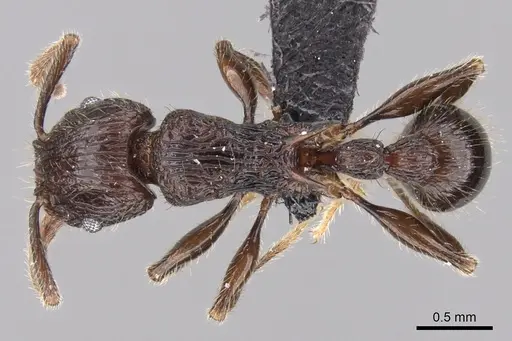
Tetramorium aherni workers are uniformly dark brown to black. The head is distinctly longer than wide, with moderate‑sized eyes [1]. The most striking feature is the very long propodeal spines – among the longest in the species group [1]. The petiolar node is rectangular, about as high as long, with the front and back margins at roughly the same height [1]. The base of the first gastral tergite has distinct ridges (costulae), but the rest of the gaster is smooth and shiny [1].
Housing and Nesting
Since this species naturally lives in rainforest leaf litter, a naturalistic setup that keeps humidity high works best. Use a moist substrate that retains water – a mix of soil and coco fiber works nicely. The substrate should feel damp but not have standing water. Provide plenty of hiding spots: cork bark pieces, leaves, or other debris help maintain microclimates. A shallow water dish for drinking is also appreciated, though they get most moisture from the substrate [1][2]. Avoid test‑tube setups unless you can maintain high humidity around them – these ants are adapted to the consistently damp forest floor. A formicarium with a water reservoir or frequent misting helps maintain the needed moisture.
Feeding and Diet
The specific diet of T. aherni has not been documented. Typical Tetramorium species are generalist omnivores, so they likely forage for small insects, honeydew, and nectar [2]. Start with standard ant foods: sugar water or honey for energy, and small protein sources like fruit flies, pinhead crickets, or other tiny arthropods. Since the workers are small, prey items should be appropriately sized. Because this species hasn't been kept in captivity, be prepared to experiment – offer a variety and watch what they take. The rainforest leaf‑litter environment suggests they may also benefit from some organic matter (decaying leaves) in the setup.
Temperature and Humidity Requirements
As a tropical rainforest species from Madagascar, T. aherni requires warm and humid conditions. Aim for 22–26 °C – stable warmth without major fluctuations [1][2]. A slight gradient allowing workers to choose their preferred temperature is ideal. Do not let temperatures drop below 18 °C for extended periods.
Humidity is critical. These ants live in the leaf litter where conditions are consistently damp. Keep the nest substrate moist but not waterlogged, and provide some drier areas so ants can escape overly wet conditions if needed. Regular misting helps maintain moisture levels [1][2].
Challenges and Considerations
The biggest challenge is the lack of documented captive care – you'll essentially be pioneering its husbandry. Document your observations carefully. Because it comes from a narrow elevation band in Madagascar's rainforests, it may have specific needs that differ from more common Tetramorium species. Watch how the colony responds to different conditions and adjust accordingly. Wild‑caught colonies may carry parasites or pathogens – quarantine and monitor new colonies before introducing them to any established setups. Start with a small colony to minimize risk. [1]
Frequently Asked Questions
How do I keep Tetramorium aherni ants?
This is a challenging species because documented care is scarce. Provide a naturalistic setup with consistently moist substrate, maintain 22–26 °C, and ensure high humidity. Start with standard ant foods and adjust based on what your colony accepts. This species is best suited for experienced keepers comfortable with experimentation [1][2].
What do Tetramorium aherni eat?
Their exact diet is undocumented. They likely accept typical ant foods: sugar water or honey for energy, and small protein sources like fruit flies or pinhead crickets. Because they are small, prey items should be appropriately sized. Be prepared to experiment [2].
What temperature do Tetramorium aherni ants need?
Keep them at 22–26 °C. This tropical rainforest species requires consistent warmth and may struggle below 18 °C. Provide a gentle temperature gradient and avoid cold drafts [1][2].
Do Tetramorium aherni ants need hibernation?
No. As a tropical species from Madagascar, they do not need hibernation. Maintain warm temperatures year‑round, cold conditions are harmful [1][2].
How big do Tetramorium aherni colonies get?
Colony size is unknown – no documented data exists. Based on typical Tetramorium patterns, colonies likely reach several hundred workers, but this is an estimate only.
What humidity level do Tetramorium aherni ants need?
High humidity is essential – think damp forest floor. Keep the nest substrate moist but not waterlogged, and provide some drier areas so ants can escape overly wet conditions if needed [1][2].
Are Tetramorium aherni good for beginners?
No. This species is not recommended for beginners. There is almost no documented captive care, and specific requirements are poorly understood. They need careful humidity and temperature management that new keepers may find challenging. Consider starting with better‑known species [1][2].
Where is Tetramorium aherni found in the wild?
This species is endemic to Madagascar, known only from northeastern and eastern parts of the island: Befingotra, Marojejy, Makirovana, and Ambalagoavy. They inhabit lowland and montane rainforests at 450–900 m elevation, living in the leaf litter stratum [1][2].
How long does it take for Tetramorium aherni to develop from egg to worker?
The development timeline is unconfirmed for this species. Based on typical Tetramorium patterns, expect roughly 6–10 weeks from egg to first worker at optimal temperatures. This is an estimate only – no specific data exists for T. aherni.
Can I keep multiple Tetramorium aherni queens together?
Unknown. The colony structure has not been documented – whether they are monogyne (single queen) or polygyne (multiple queens) is unclear. Do not attempt to combine unrelated queens without evidence that they can coexist. This applies to most ant species and is especially important for poorly studied species like T. aherni.
Report an Issue
The current care sheet is based fully on literature. See inconsistencies, or something that's incorrect? Please , it will be resolved after review from an admin. Contributing to the blogs tab also helps providing information, to make us be able to further improve the caresheets. Thank you for your support!
References

This caresheet is licensed under CC BY-SA 4.0 .
Community Blogs
Literature
Loading distribution map...Loading products...