
Teratomyrmex greavesi
- Sci. Name
- Teratomyrmex greavesi
- Tribe
- Melophorini
- Subfamily
- Formicinae
- Author
- McAreavey, 1957
- Distribution
- Found in 1 countries
Introduction
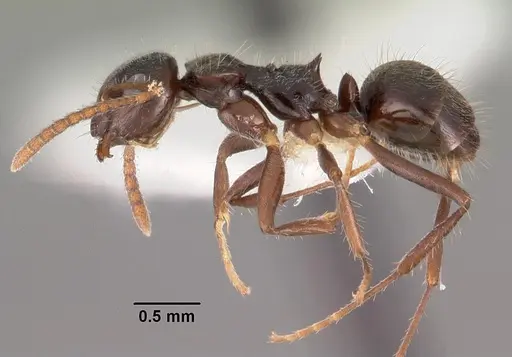
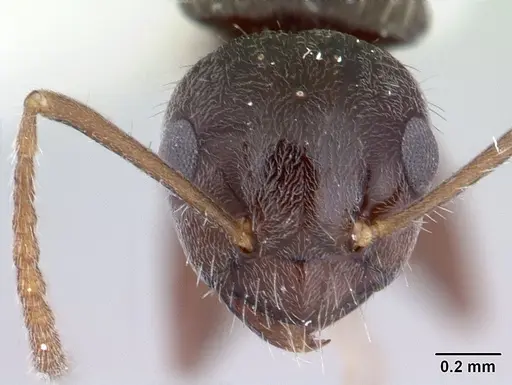
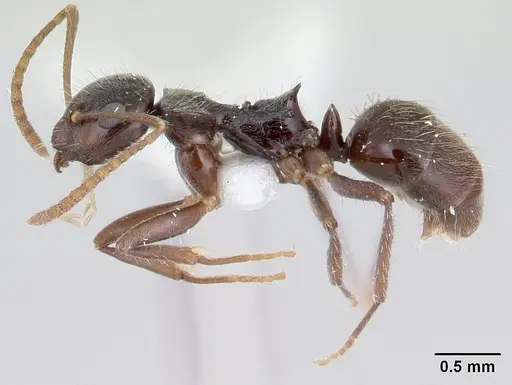
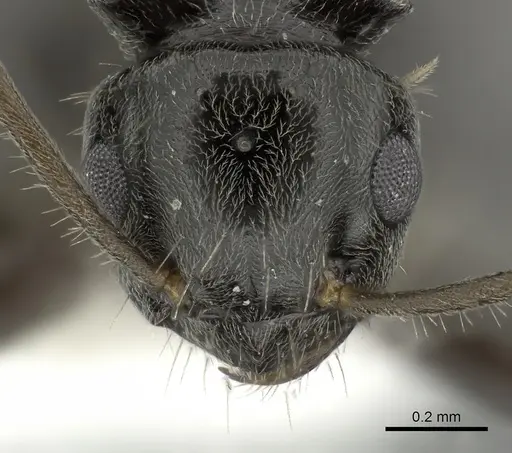
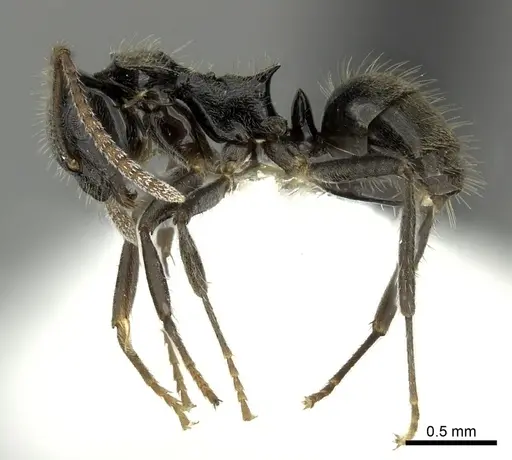
Teratomyrmex greavesi is a small Australian ant with a striking appearance. Workers are uniformly dark brown to almost black . Their pronotum (the first part of the thorax) is unusually broad and high, with large wing-like projections sticking out to the sides – these give the ant a unique outline among Australian species . The head is roughly square and widest at the large eyes, and the antennae extend about a third of their length past the back of the head . Full body size is not well documented, but head width ranges from 0.66 to 0.85 m. This species lives only in a small area of extreme south-east Queensland, with a single record just over the border in New South Wales . The entire genus *Teratomyrmex* has only three known species, all found in forests along Australia’s east coast .
Quick Summary
- Difficulty: Unknown, likely Expert
- Origin & Habitat: Extreme south-east Queensland and a single record in northern New South Wales, Australia. Mostly collected in rainforest, with one record from dry sclerophyll forest. Nests in rotten wood on the ground and forages on low vegetation [1][2].
- Colony Type: Unconfirmed, colony structure has not been studied
- Size & Growth:
- Queen: size data unavailable
- Worker: size data unavailable (head width 0.66–0.85 mm, but total length not documented) [1]
- Colony: Unknown, no published estimates
- Growth: Unknown
- Development: Unknown, no data available. Related Melophorini ants often take 6–10 weeks at optimal temperatures, but this is guesswork. (Development time is completely unknown for this species.)
- Antkeeping:
- Temperature: Unconfirmed, based on the rainforest origins, likely a range of 18–25 °C. Start around 22 °C and watch how the colony reacts.
- Humidity: Unconfirmed, rainforest origin suggests high humidity. Keep the nest substrate consistently moist but not waterlogged, and provide a gradient so the ants can choose their preferred level.
- Diapause: Unknown, no data on overwintering. Queensland winters are mild, so a true hibernation may not be needed, but activity might drop in cooler months.
- Nesting: In nature they nest in rotten wood on the ground [2]. For captive care, use a naturalistic setup with damp rotten wood or a well-humidified plaster nest. Offer tight, humid chambers.
- Behavior: Very little is known. They forage on low vegetation, which is unusual and may mean they are partly arboreal [1][2]. Their large eyes suggest good vision. As a formicine, they have no stinger but can spray formic acid. Escape risk is moderate due to their small size – use standard barriers. Aggression levels are unknown.
- Common Issues: almost no scientific data exists to guide care, founding behavior and colony development are completely unknown, wild-caught colonies may fail because their needs are not understood, rainforest origin means high humidity is probably required, which can be hard to maintain, small workers can escape through tiny gaps – seal the setup well
Appearance and Identification
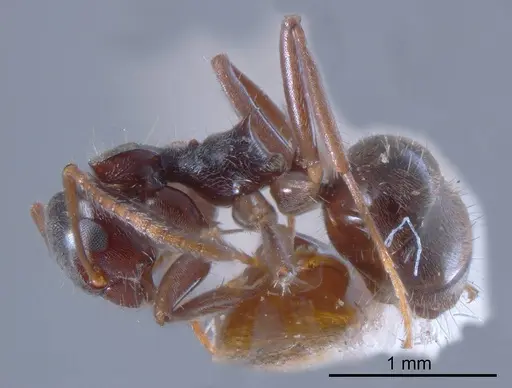
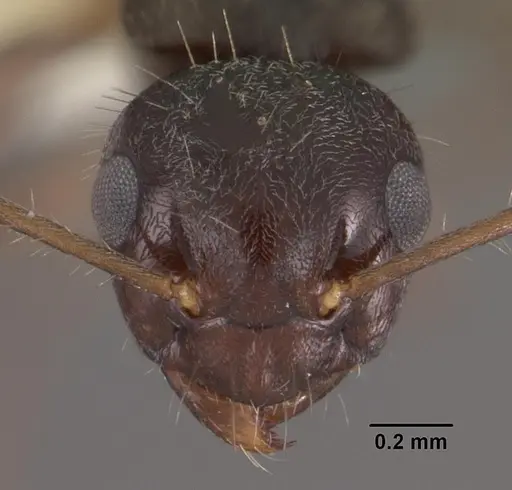
Workers of Teratomyrmex greavesi are uniformly dark brown to nearly black over the whole body [1]. The most obvious feature is the massive pronotum – the first segment of the thorax – which is very broad and high and has large wing-like plates sticking out sideways [1]. The head is roughly square and widest at the large, convex eyes, which sit about a third of the way from the back of the head [1]. The antennae are long, with the scape reaching about a third of its length past the back of the head [1]. The propodeum is narrow and has two small spines, and the petiole is tall and narrow with a concave top that also bears two tiny spines [1]. The whole body is covered in scattered long hairs, and there is a dense layer of shorter, pressed‑down hair on the head, thorax, and gaster [1].
Natural Habitat and Distribution
This species has a very small range: only in extreme south‑east Queensland, with one record just over the border in New South Wales [1][2]. Most collections come from rainforest, but one came from dry sclerophyll forest [2]. Within these forests, they nest in rotten wood on the ground and forage on low vegetation, not on the ground itself [1][2]. The whole genus Teratomyrmex contains only three species, all restricted to forested areas along the east coast of Australia [3].
Housing and Nesting
In the wild, Teratomyrmex greavesi nests in rotten wood on the ground [2]. For captive care, try a naturalistic setup with damp rotten wood or a plaster nest kept humid. Because they come from rainforest, they likely need high moisture – keep the nest substrate consistently damp but not waterlogged. Provide a humidity gradient so the ants can pick their spot. Since they forage on low vegetation, adding some vertical elements like small plants or twigs to the outworld might help them feel at home. Choose small chambers, as these are tiny ants. Standard escape‑proof barriers are enough, but check for very small gaps.
Feeding and Diet
Diet has not been studied for this species. Because they belong to the Melophorini tribe (and their relatives in Melophorus are omnivorous), they probably eat both honeydew and small soft‑bodied prey. Their foraging on low vegetation suggests they may tend aphids or hunt tiny insects there. In captivity, offer sugar water or honey and small insects such as fruit flies, pinhead crickets, or small pieces of mealworm. Provide sugar constantly and protein 2–3 times per week. Remove uneaten food quickly to stop mold.
Temperature and Seasonal Care
Temperature needs are not documented. Based on the rainforest origin in south‑east Queensland, they probably like warm conditions – think low‑to‑mid 20s °C. The region has a temperate to subtropical climate with mild winters. Start around 22 °C and watch the colony. If workers huddle and stop moving much, it may be too cold, if they flee from the warm area, it’s too hot. There is no data on diapause – given the mild winters, they probably don’t need a true hibernation, but activity may slow in winter. Adjust care based on what you see.
Behavior and Temperament
Very little is known about their behavior. They forage on low vegetation, which is odd for an ant and suggests they might be partly tree‑dwelling [1][2]. Their large eyes hint that they rely on sight more than many ants. As formicines, they have no stinger but can spray formic acid. Their aggression level is unknown, but they are likely not dangerous to a keeper. Standard ant‑keeping caution is enough.
Frequently Asked Questions
How long does it take for Teratomyrmex greavesi to develop from egg to worker?
The development time has not been studied. No data exists on egg‑to‑worker duration. If you guess from related Melophorini ants, it might be 6–10 weeks at good temperatures, but that is only a guess [1].
What do Teratomyrmex greavesi ants eat?
Diet is not documented. Their foraging on low vegetation and membership in the Melophorini tribe suggests they eat honeydew and small soft‑bodied prey. In captivity, offer sugar water or honey and tiny insects like fruit flies or small mealworms.
Are Teratomyrmex greavesi good for beginners?
No – this species is not recommended for beginners. Almost nothing is known about their care, colony structure, or behavior. They are a poorly studied specialist ant from Australian rainforests with unknown needs. Only very experienced keepers willing to take an experimental approach should try them.
What temperature should I keep Teratomyrmex greavesi at?
Temperature needs are unconfirmed. Based on their Queensland rainforest home, start around 22–24 °C and watch the colony. They should be active and foraging. Avoid going below 18 °C or above 30 °C until more is known.
How big do Teratomyrmex greavesi colonies get?
Colony size has not been documented. The species is rare and has a tiny range, which often goes with small colonies, but that is just a guess. No numbers exist [1].
Can I keep multiple Teratomyrmex greavesi queens together?
Colony structure (monogyne vs polygyne) has not been studied. There is no data on whether they accept multiple queens or how they start colonies. Do not try to combine unrelated queens without evidence that it is safe.
What type of nest does Teratomyrmex greavesi need?
In nature they nest in rotten wood on the ground [2]. In captivity, use a naturalistic setup with damp rotten wood or a well‑humidified plaster nest. They probably prefer tight, humid chambers that mimic rotten wood.
Do Teratomyrmex greavesi need hibernation?
Diapause requirements are unknown. Their native range in south‑east Queensland has mild winters, so they likely do not need a true hibernation. They may slow down in cooler months but probably do not require temperatures below 10–15 °C for long periods.
Where is Teratomyrmex greavesi found?
This ant is endemic to Australia with a very restricted range: extreme south‑east Queensland and one record in northern New South Wales. It lives mainly in rainforest, with one collection from dry sclerophyll forest [1][2].
Report an Issue
The current care sheet is based fully on literature. See inconsistencies, or something that's incorrect? Please , it will be resolved after review from an admin. Contributing to the blogs tab also helps providing information, to make us be able to further improve the caresheets. Thank you for your support!
References

This caresheet is licensed under CC BY-SA 4.0 .
Community Blogs
ANTWEB1008358
View on AntWeb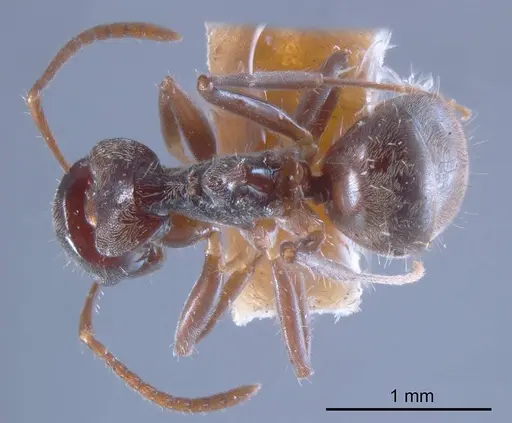
CASENT0102382
View on AntWeb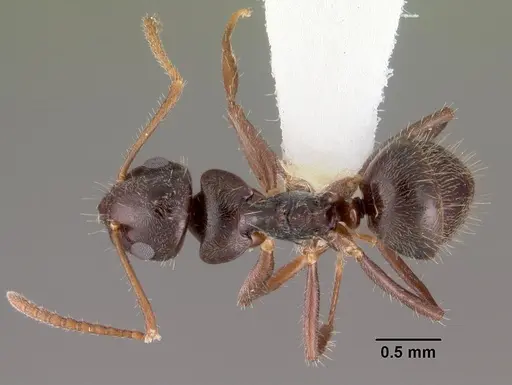
CASENT0178515
View on AntWeb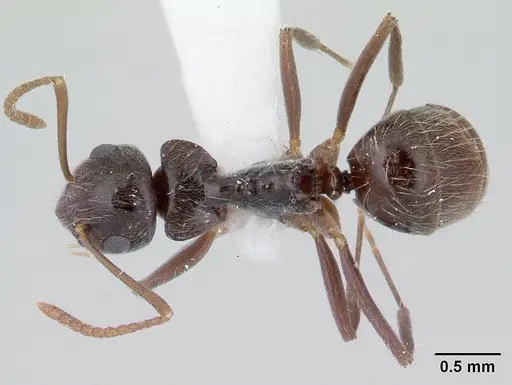
QMT162820
View on AntWeb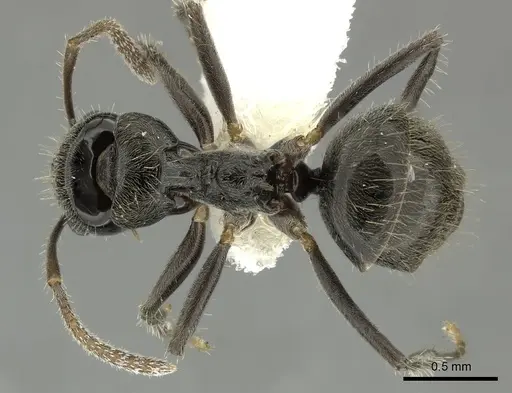
Literature
Loading distribution map...Loading products...