
Temnothorax xanthos
- Sci. Name
- Temnothorax xanthos
- Tribe
- Crematogastrini
- Subfamily
- Myrmicinae
- Author
- Radchenko, 2004
- Distribution
- Found in 2 countries
Introduction
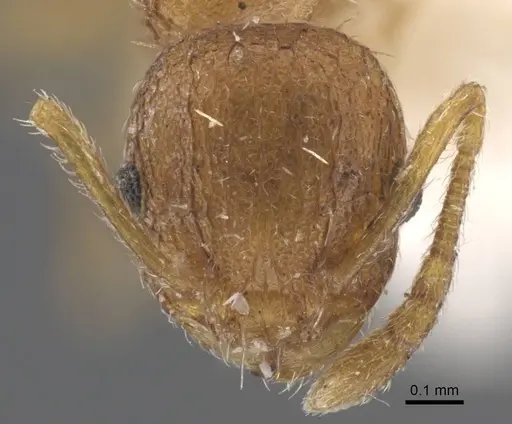
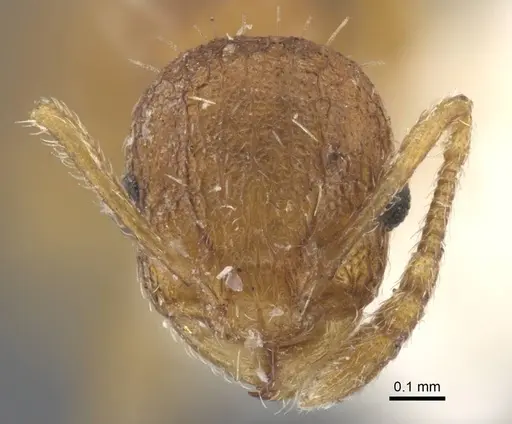
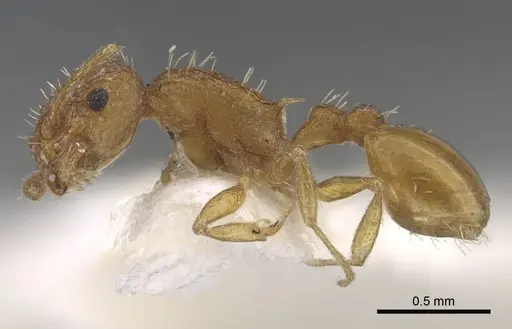
Temnothorax xanthos is a small, brightly colored ant from the Palaearctic region, specifically North Korea and eastern China . Workers are uniformly ochreous-yellow all over, which sets them apart from most other, darker Temnothorax species. The head is oddly shaped: broadly rounded above the eyes without distinct corners, and the sides are convex . This species also has very long, sharp propodeal spines that curve slightly downward . The whole body and legs are a plain yellow color . Unfortunately, almost nothing is known about the biology of this species . All current care advice comes from what we know about related Temnothorax ants, not from direct studies on T. xanthos itself.
Quick Summary
- Difficulty: Medium
- Origin & Habitat: Temnothorax xanthos is native to the Palaearctic region, recorded in North Korea (Democratic People's Republic of Korea) and eastern China (Jiangsu province) [1][3]. Its natural habitat is unknown, but based on the region it likely lives in temperate forests with moderate humidity, probably nesting in small cavities like under stones or in rotting wood, a common pattern for Temnothorax.
- Colony Type: Likely monogyne (single-queen), based on typical Temnothorax patterns, but this is unconfirmed for this species. Some related species have ergatoid (wingless) replacement queens, but nothing is known for T. xanthos. Colony size is unknown, but based on related species it probably reaches a few hundred workers at most.
- Size & Growth:
- Queen: Estimated ~5-6 mm based on genus patterns, no actual measurements are available [2]
- Worker: Estimated ~3-4 mm based on typical Temnothorax workers, not directly measured in available literature [2]
- Colony: Unknown, but likely up to a few hundred workers based on related Temnothorax species
- Growth: Moderate, typical for temperate species, though unconfirmed
- Development: Estimated 8-12 weeks, based on related temperate Temnothorax at room temperature, no specific data for T. xanthos (Development time is unconfirmed. Related species take about 2-3 months from egg to first worker.)
- Antkeeping:
- Temperature: Keep at typical room temperature, around 20-22°C. Avoid heat sources and direct sunlight. A slight temperature gradient allows workers to choose their preferred zone. Exact needs are unknown, observe and adjust if the colony seems stressed.
- Humidity: Moderate humidity is likely. Keep the nest substrate consistently moist but not waterlogged. A well-hydrated test tube setup works well for founding. Exact figures not available.
- Diapause: Yes, as a temperate species from North Korea and China, it almost certainly needs a winter hibernation period. Gradually lower temperature to 5-10°C for 2-3 months, then slowly warm up. This mimics natural seasons and supports colony health.
- Nesting: These ants need small, tight spaces. For founding, a test tube with a cotton water reservoir works perfectly. For larger colonies, use Y-tong (AAC) or plaster nests with narrow passages (3-5 mm wide). Do not use acrylic nests. Provide a small outworld for feeding.
- Behavior: Temnothorax xanthos is likely a calm, non-aggressive species, typical of the genus. Workers are tiny and quick-moving. They probably use tandem-running recruitment to lead nestmates to food, a common behavior in this genus. Escape prevention is critical, workers can squeeze through tiny gaps. Their sting is very weak and hardly noticeable, posing no danger to keepers. Based on the subfamily Myrmicinae (tribe Crematogastrini), they have a 'smear' defense: they wipe venom onto enemies with a flattened stinger rather than stabbing, but this is general knowledge, not species-specific.
- Common Issues: escape prevention is critical due to their small size, seal all openings with fine mesh, almost no species-specific care data exists, all advice is inferred from related species, hibernation failure can kill the colony if proper cooling is not provided, overheating is a risk, keep away from heat sources, small colony size means losses have a bigger impact, avoid disturbing founding colonies
Housing and Nest Setup
For a founding queen, a simple test tube setup works well. Fill the tube about one-third with water, push in a cotton plug to create a barrier, then leave a dry section for the queen to nest in. Cover the opening with cotton to allow airflow but prevent escapes. The queen will likely seal herself in and stay until her first workers appear. For larger colonies (50+ workers), consider a small Y-tong (AAC) or plaster nest with chambers sized to fit these tiny ants, passages about 3-5 mm wide work well. Avoid acrylic nests. Connect a small outworld for feeding, but use excellent escape prevention: fine mesh (0.5 mm or finer) over all vents, fluon on rims, and check for gaps regularly. These ants can squeeze through shockingly small openings. [2]
Feeding and Diet
Like most Temnothorax species, Temnothorax xanthos will likely take a varied diet of sugars and proteins. Offer sugar water or diluted honey on a small piece of cotton or in a bottle cap. For protein, give small insects like fruit flies, pinhead crickets, or pieces of mealworm. Pre-kill larger prey so the tiny workers can handle it. Feed protein every 2-3 days and remove leftovers within a day to avoid mold. Fresh water should always be available. Start with small amounts and adjust based on how quickly food is taken. These details are based on related species, no feeding studies exist for Temnothorax xanthos.
Temperature and Seasonal Care
This species comes from a temperate climate and likely prefers cooler conditions. Keep the nest area at typical room temperature, around 20-22°C. Avoid placing the nest near heaters, radiators, or in direct sunlight, overheating can kill the colony. A slight temperature gradient helps the ants regulate themselves. In winter, provide a hibernation period: gradually drop the temperature to 5-10°C over 2-3 weeks, maintain that for about 2-3 months, then slowly warm them back up. Place them in a cool basement, garage, or fridge (ensure humidity stays adequate). Do not feed during hibernation. If your room stays above 15°C year-round, you may skip hibernation, but this might shorten the colony's lifespan. These recommendations are based on the species' temperate origin and general Temnothorax care, not on direct studies.
Colony Development and Growth
After mating, the queen will likely seal herself in a chamber and lay eggs. She uses her stored fat reserves to raise the first brood, this is called claustral founding and is common in the genus. Eggs develop into larvae, then pupae, and finally emerge as tiny nanitic workers. This whole process takes about 8-12 weeks based on related species, but it hasn't been confirmed for Temnothorax xanthos. Once the first workers appear, they take over foraging and brood care, and the queen becomes a full-time egg-layer. Colony growth is moderate: it may take months to reach 50 workers and over a year to reach 100+. Be patient and avoid disturbing the queen during founding, stress can cause her to eat eggs or leave the nest.
Behavior and Observation
Temnothorax ants are known for their interesting recruitment behavior: a single worker leads a nestmate to a food source by walking slowly and tapping her antennae (tandem running). Workers are active, fast, and non-aggressive. They rarely bite, and their stinger is too small to cause any discomfort. The bright yellow color makes them easy to see against dark backgrounds. Some related species produce ergatoid (wingless) queens that can replace the original queen if she dies, but this hasn't been studied in Temnothorax xanthos. Their small size and calm nature make them a fine species for observation, but keep in mind that almost everything we know about their behavior comes from related species, not from this ant itself.
Frequently Asked Questions
How long does it take for Temnothorax xanthos to get their first workers?
The exact timeline is unconfirmed for this species, but based on related temperate Temnothorax species, expect around 8-12 weeks from egg to first worker at room temperature (about 20°C). The queen seals herself in and raises the first brood alone using her own fat reserves.
What do Temnothorax xanthos ants eat?
They likely accept standard ant food: sugar water or honey for energy, and small insects like fruit flies or pinhead crickets for protein. These feeding habits are inferred from related Temnothorax species, no direct studies exist for Temnothorax xanthos.
Do Temnothorax xanthos ants need hibernation?
Yes, very likely. This species comes from the temperate climate of North Korea and China, so a winter dormancy period is probably essential. Keep them at 5-10°C for 2-3 months. Do not feed during hibernation.
Are Temnothorax xanthos good for beginners?
They are moderate difficulty. The main challenges are their tiny size (escape prevention is critical) and the lack of species-specific biological data. If you have experience with other small Myrmicinae ants, this species is manageable. Beginners might find it frustrating because advice is based on inference rather than confirmed care.
How big do Temnothorax xanthos colonies get?
Colony size is unknown for this species, but based on typical Temnothorax patterns, they likely reach a few hundred workers at most. Growth is moderate.
Can I keep multiple Temnothorax xanthos queens together?
This is not recommended. Based on typical genus patterns, Temnothorax xanthos is likely monogyne (single queen). Combining unrelated queens has not been studied and would probably result in fighting.
What temperature is best for Temnothorax xanthos?
Keep them around 20-22°C (normal room temperature). They prefer cooler conditions than tropical ants. Avoid overheating and direct sunlight.
Do Temnothorax xanthos ants sting?
Their sting is very weak and hardly noticeable to humans. They are docile and pose no danger. As Myrmicinae, they have a sting but rarely use it, and even if they do, it causes little irritation.
When should I move my colony to a formicarium?
Wait until the colony has at least 30-50 workers and the test tube setup becomes cramped. This usually takes 6-12 months after founding. Make sure the formicarium has narrow passages (3-5 mm) to suit their small size.
Why is escape prevention important for this species?
Workers are only about 3-4 mm long, so they can slip through tiny gaps. Use fine mesh (0.5 mm or finer), apply fluon to rims, and seal all openings. Even a small crack can lead to escape.
Is Temnothorax xanthos invasive anywhere?
No, this species is native only to North Korea and eastern China and has not been reported as invasive. But never release ant colonies into the wild outside their natural range.
Where does Temnothorax xanthos naturally live?
It lives in the Palaearctic region, specifically North Korea (Democratic People's Republic of Korea) and eastern China (Jiangsu province) [1][3]. Its exact habitat is unknown, but it likely inhabits temperate forests.
Report an Issue
The current care sheet is based fully on literature. See inconsistencies, or something that's incorrect? Please , it will be resolved after review from an admin. Contributing to the blogs tab also helps providing information, to make us be able to further improve the caresheets. Thank you for your support!
References

This caresheet is licensed under CC BY-SA 4.0 .
Community Blogs
CASENT0917212
View on AntWeb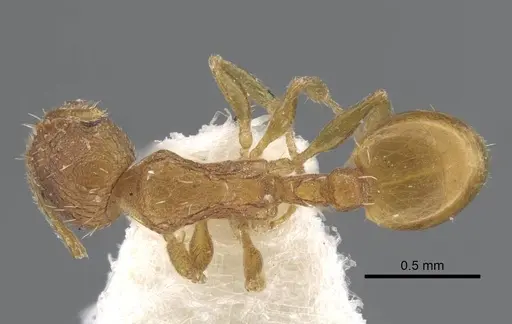
Literature
Loading distribution map...Loading products...