
Temnothorax whitfordi
- Sci. Name
- Temnothorax whitfordi
- Tribe
- Crematogastrini
- Subfamily
- Myrmicinae
- Author
- Mackay, 2000
- Distribution
- Found in 2 countries
Introduction
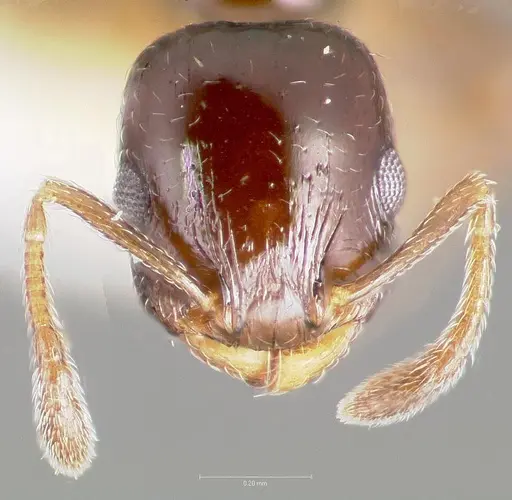
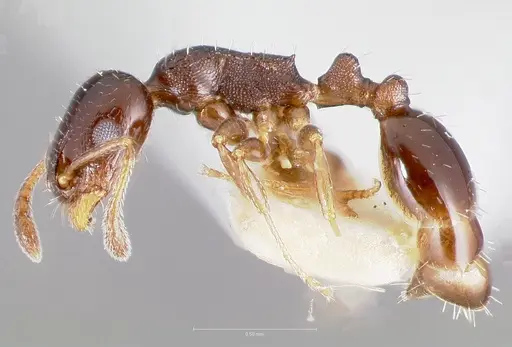
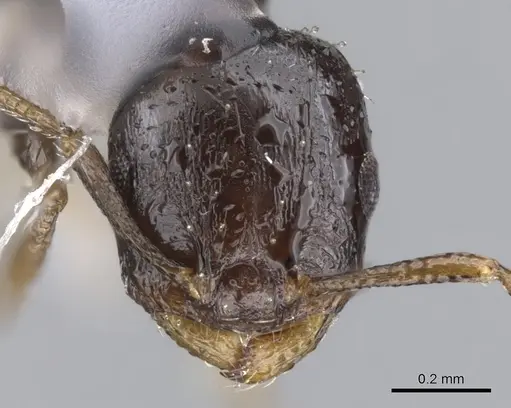
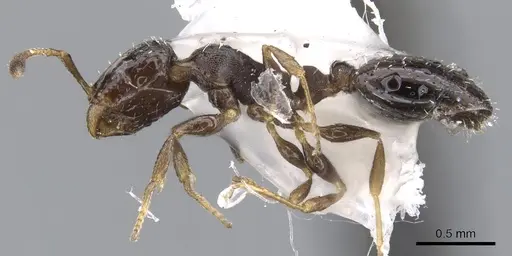
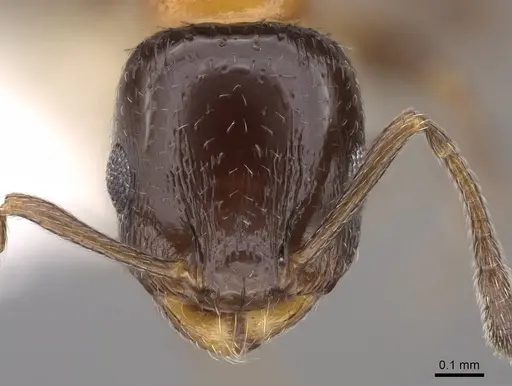
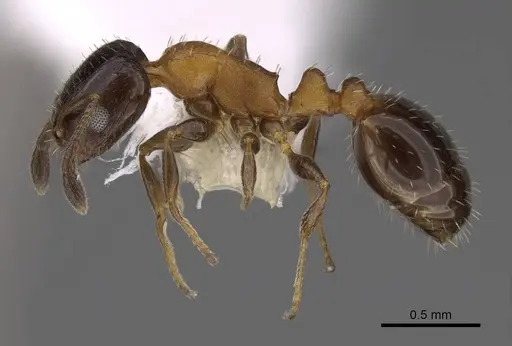
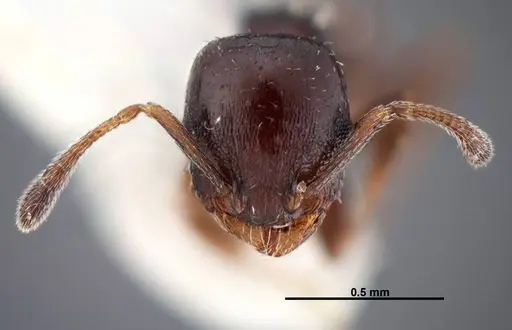
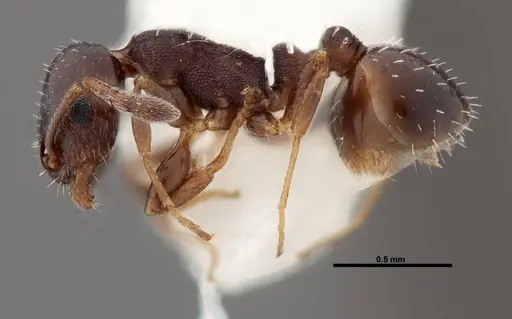
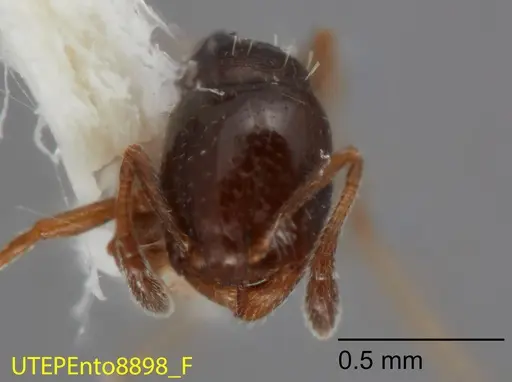
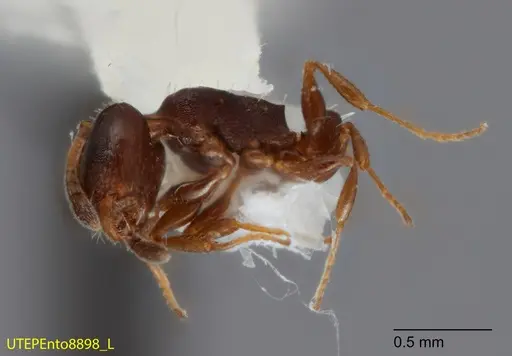
Temnothorax whitfordi is a small, dark brown ant native to the southwestern United States and northern Mexico. Workers are tiny, roughly 3-4 mm in total length based on related species, with an 11-segmented antenna, a mostly smooth and shiny head, and a mesosoma covered in coarse punctures . Queens are slightly larger. They inhabit areas from desert scrub with yucca, mesquite, and cactus to oak forests and mixed pine-juniper-oak woodlands, often nesting in pre-made cavities in branches of oaks, mesquite, and juniper at elevations of 4900-5700 feet . What makes this species stand out is its feisty personality. Unlike many tiny ants that flee when disturbed, T. whitfordi workers actively rescue their brood and deliver a surprisingly painful sting, comparable to fire ants (Solenopsis) or little fire ants (Wasmannia) . This aggression likely helps them defend against predators like Liometopum apiculatum, which hunt their brood in shared oak trees . They are a cold-climate specialist, found in cooler mountainous habitats rather than hot lowlands .
Quick Summary
- Difficulty: Medium
- Origin & Habitat: Southwestern United States (Arizona, southeastern New Mexico, western Texas) and northern Mexico. Found in desert scrub, oak forests, and mixed pine-juniper-oak woodlands at elevations of 4900-5700 feet [3][2].
- Colony Type: Single-queen colonies (monogyne). Excavated wild nests contained one queen each, with up to 116 workers [2].
- Size & Growth:
- Queen: Inferred from genus patterns: total length roughly 4-5 mm (larger than workers, specific body measurements not available) [2]
- Worker: Inferred from genus patterns: total length roughly 3-4 mm (head length and mesosoma length are documented but not total length) [2]
- Colony: Up to 116 workers in wild colonies [2]
- Growth: Moderate, based on typical Temnothorax patterns
- Development: Estimated 6-10 weeks at optimal temperature, based on related species since species-specific data is lacking (Brood found in nests during August, suggesting summer reproduction. Development likely depends on temperature and food supply.)
- Antkeeping:
- Temperature: 20-24°C is ideal. This is a cold-climate specialist from high-elevation woodlands, so avoid overheating [3]. Room temperature usually works, keep away from heat sources.
- Humidity: Moderate to dry. Since they nest in tree branches, keep the nest substrate on the drier side, allow the nest to dry out between light waterings rather than keeping it constantly moist. Provide a small moist area (e.g., a humid corner or test tube) for the colony to drink.
- Diapause: Yes, a winter rest period is recommended (approximately 8-12 weeks at 10-15°C), based on their cold-climate origin [3]. Reduce temperature gradually and provide minimal moisture, do not feed during diapause.
- Nesting: Naturally nests in pre-made cavities in branches of oaks, mesquite, and juniper (including beetle galleries [3]). In captivity, they do well in Y-tong (AAC) nests, test tubes, or naturalistic setups with small twigs or cork bark. Keep chambers tight and scaled to their tiny size, avoid large open spaces.
- Behavior: More aggressive than typical acorn ants. Workers sting when threatened, and the sting is noticeably painful [2]. They prioritize brood rescue over escape. Small size makes them a high escape risk, use fine mesh and tight barriers. Handle gently and avoid unnecessary disturbance.
- Common Issues: escape prevention is essential, their tiny size lets them slip through standard barriers, use fluon and fine mesh., stinging behavior may surprise keepers who expect docile acorn ants, handle with care., colonies grow slowly and remain small (under 150 workers), patience is needed during founding., overheating is a real risk since they come from cool mountainous habitats, avoid direct sun or heat sources., wild-caught colonies may have parasites or damage from collection, quarantining new colonies is wise.
Housing and Nest Setup
Temnothorax whitfordi does best in small, tight-fitting nests that mimic their natural cavities in branches [3][2]. A Y-tong (AAC) nest with narrow chambers works well, as does a simple test tube formicarium. You can also use natural setups with small twigs or cork bark placed in an outworld, they will nest inside the cavities. The key is to keep spaces proportionally small, large open chambers stress them and make it hard to maintain humidity. Escape prevention must be top-notch due to their minuscule size: coat the rim of the outworld with fluon or similar barrier, and use fine mesh on ventilation holes. Avoid any gaps around tubing connections.
Feeding and Diet
These ants are generalist foragers [3]. Offer small protein sources such as fruit flies, pinhead crickets, or tiny pieces of mealworm, cut prey into size-appropriate chunks. Provide a constant sugar source like honey water or sugar water (diluted 1:10 to avoid drowning). Feed protein 2-3 times per week, remove any uneaten prey after 24-48 hours to prevent mold. They will also accept nectar and honeydew when available. A varied diet keeps the colony healthy and supports brood development.
Temperature and Seasonal Care
As a cold-climate specialist from high-elevation woodlands [3], T. whitfordi prefers cooler conditions than most tropical ants. Keep the nest at room temperature (20-24°C) and avoid placing it near heaters, windowsills, or other heat sources. They do not need a temperature gradient, but a slight drop at night is natural. In winter, provide a diapause period of 8-12 weeks at 10-15°C. You can achieve this by moving the colony to an unheated basement, garage, or a refrigerator set to the correct temperature (for test tube colonies). During diapause, stop feeding but keep a small water source available (e.g., a damp cotton ball). Gradually increase temperature in spring to resume activity.
Behavior and Defense
Expect a more defensive ant than typical acorn ants. When disturbed, workers do not flee, they actively rescue the brood and will sting anything that threatens the colony [2]. The sting is surprisingly painful, comparable to that of fire ants, which is unusual for such a small species [2]. This high level of aggression may be an adaptation to compete with larger predators like Liometopum apiculatum that share their oak trees and prey on their brood [2]. Handle the nest gently and minimize disturbance. The sting is not dangerous to healthy humans but can be uncomfortable. Due to their tiny size, they are also prone to escaping through small gaps, always use tight seals.
Colony Development
Colonies are monogyne (single queen) [2]. The founding method is unconfirmed, but based on typical Temnothorax patterns the queen likely seals herself in a small chamber and raises the first workers (nanitics) from her stored reserves. After the first workers emerge, growth is gradual. Excavated wild colonies contained up to 116 workers [2], and captive colonies are unlikely to exceed 150. Development from egg to worker takes an estimated 6-10 weeks at 20-24°C, based on related species. Be patient with founding queens, they may take months to produce a stable worker force. Do not disturb the queen during the founding phase.
Frequently Asked Questions
Can I keep Temnothorax whitfordi in a test tube?
Yes, test tubes are perfect for founding colonies. Use a small tube with a water reservoir sealed by a cotton plug. The queen will seal herself in a dark chamber and raise the first workers there. Once the colony reaches 20-30 workers, you can connect a small Y-tong (AAC) nest or naturalistic setup.
Do Temnothorax whitfordi ants sting?
Yes, and they do so readily if threatened. Unlike many small ants that only bite or spray formic acid, T. whitfordi has a functional stinger that delivers a painful sting, similar to fire ants [2]. Handle with care and avoid provoking them.
How long does it take for Temnothorax whitfordi to raise first workers?
Expect 6-10 weeks from egg to first worker at room temperature (20-24°C). This estimate is based on typical Temnothorax development since species-specific data isn't available. Founding colonies can be slow, be patient and avoid disturbing the queen.
Are Temnothorax whitfordi good for beginners?
They are rated as medium difficulty. Their aggressive stinging behavior and specific temperature needs make them better suited for keepers with some experience. Their small colony size and cold-climate requirements differ from more common tropical species.
Do Temnothorax whitfordi need hibernation?
Yes, they benefit from an 8-12 week winter rest at 10-15°C, consistent with their cold-climate origin [3]. Move the colony to a cool location (garage, basement, or refrigerator for test-tube colonies). Stop feeding during diapause but keep a small water source available. Gradually warm them back up in spring.
How big do Temnothorax whitfordi colonies get?
Wild colonies reach up to 116 workers [2], and captive colonies will likely stay in the 100-150 worker range. This is typical for acorn ants, small, manageable colonies rather than massive supercolonies.
What do Temnothorax whitfordi eat?
They are generalist foragers [3]. Offer small protein sources like fruit flies, pinhead crickets, or tiny pieces of mealworm 2-3 times per week. Provide a constant sugar source such as honey water or sugar water. They will also eat nectar and honeydew if available.
Why are my Temnothorax whitfordi dying?
Common causes include: overheating (they are cold-climate specialists), escape through tiny gaps due to small size, stress from excessive disturbance during founding, poor nutrition, or mold from overly humid conditions. They prefer drier nests than ground-nesting species. Check for these issues and adjust care accordingly.
Can I keep multiple Temnothorax whitfordi queens together?
No, this is a monogyne (single-queen) species [2]. Combining unrelated queens will likely lead to fighting and death. Keep only one queen per colony.
When should I move Temnothorax whitfordi to a formicarium?
Wait until the colony has 20-30 workers before transitioning from a test tube to a larger nest. A foraging test tube works fine for smaller colonies. To move them, gently connect the test tube to the new nest, do not force them. They prefer tight, small chambers that match their tiny size.
Report an Issue
The current care sheet is based fully on literature. See inconsistencies, or something that's incorrect? Please , it will be resolved after review from an admin. Contributing to the blogs tab also helps providing information, to make us be able to further improve the caresheets. Thank you for your support!
References

This caresheet is licensed under CC BY-SA 4.0 .
Community Blogs
CASENT0005934
View on AntWeb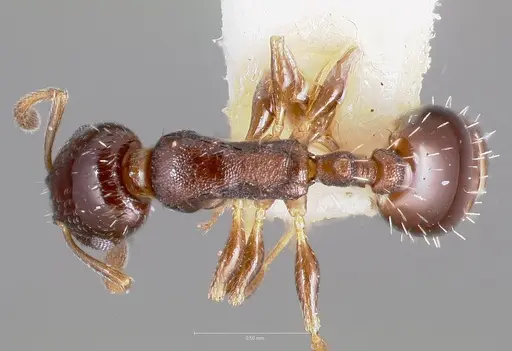
CASENT0901791
View on AntWeb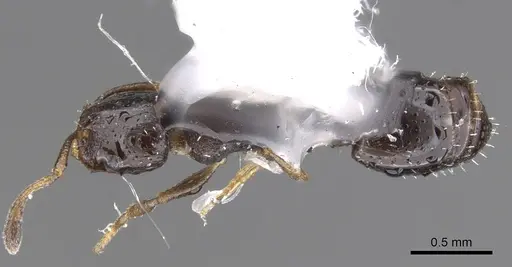
CASENT0922577
View on AntWeb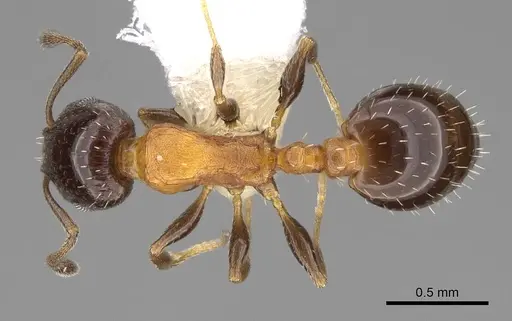
FMNHINS0000049465
View on AntWeb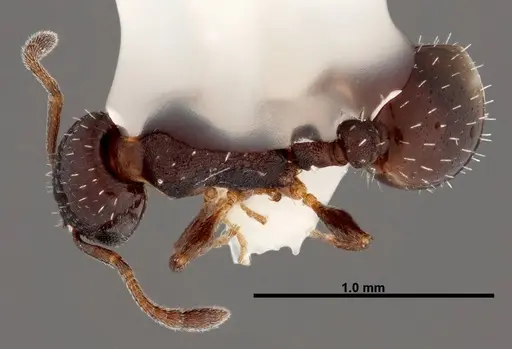
UTEPENTO8898
View on AntWeb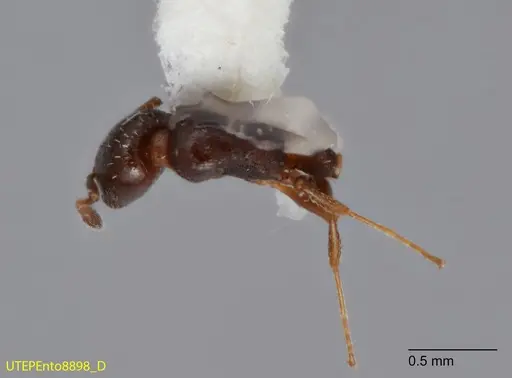
Literature
Loading distribution map...Loading products...