
Temnothorax variabilis
- Sci. Name
- Temnothorax variabilis
- Tribe
- Crematogastrini
- Subfamily
- Myrmicinae
- Author
- Salata <i>et al.</i>, 2018
- Distribution
- Found in 1 countries
Introduction
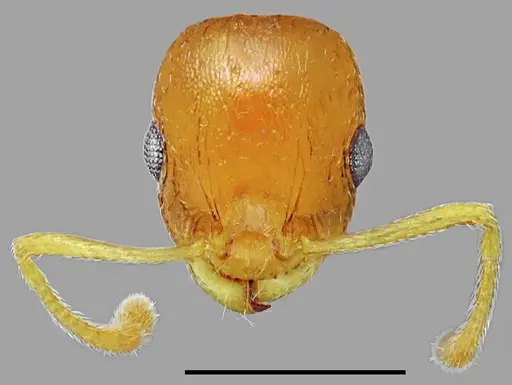
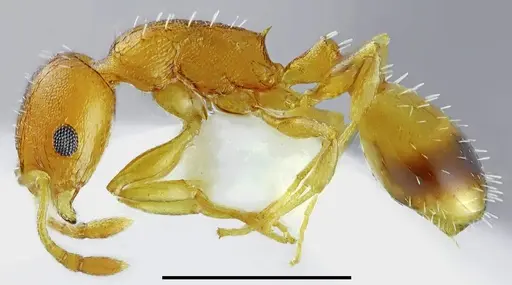
Temnothorax variabilis is a tiny yellow ant endemic to the island of Crete, Greece . It belongs to the T. luteus group, characterized by a uniform bright yellow body with a narrow black band along the rear edge of the first segment of the abdomen . Workers have large eyes and no metanotal groove - features that help tell them apart from related species . Body size is undocumented in the scientific literature (only head measurements exist), so precise total length is unknown . This species is rare and was only described in 2018,meaning very little is known about its life history in the wild or in captivity . It lives in dry open areas and sometimes in leaf litter in deciduous forests on Crete . The name 'variabilis' refers to the high variability in its body sculpture, which can range from weak to strong among workers .
Quick Summary
- Difficulty: Hard
- Origin & Habitat: Endemic to Crete, Greece, found in dry open areas and occasionally in litter of deciduous forests [1][2]
- Colony Type: Unconfirmed, likely single-queen colonies (monogyne) based on typical Temnothorax patterns
- Size & Growth:
- Queen: Unknown, queens have not been described in the literature [1]
- Worker: Size data unavailable, only head length is known (0.556-0.654 mm), total body length is not given in any publication [1]
- Colony: Unknown, likely under a few hundred workers based on genus patterns
- Growth: Unknown
- Development: 6-10 weeks (estimated from related Temnothorax species) (Development timeline has not been directly studied for this species)
- Antkeeping:
- Temperature: Keep at room temperature, roughly 20-24 °C [1]. These are Mediterranean ants from Crete, so they don't need extra heat. A gentle temperature gradient across the nest lets workers pick their preferred spot.
- Humidity: Moderate to low, these ants are adapted to dry Mediterranean habitats [1][2]. Let the nest dry out partially between waterings. Provide a small damp area (e.g., a cotton plug with a little water) but avoid keeping things constantly moist.
- Diapause: Likely yes, Crete has mild winters, so a 2-3 month cooling period around 10-15 °C is recommended from November to February [1][2].
- Nesting: Prefers small, enclosed cavities, test tubes, Ytong nests with narrow chambers, or plaster nests with tight spaces work well. In the wild they nest under stones or in small crevices in dry areas [1].
- Behavior: Generally peaceful and non-aggressive, typical of Temnothorax. Workers are very active foragers but their tiny size makes them excellent escape artists, standard fine mesh (under 0.5 mm) is essential for outworlds and ventilation holes. As a member of Myrmicinae, they have a modified stinger used for smearing venom rather than stinging (a common defense in the tribe Crematogastrini). They pose no real threat to humans.
- Common Issues: tiny size means escapes are likely without extremely fine mesh barriers, limited availability, only described in 2018 and endemic to Crete, so colonies are hard to find, dry habitat requirements, overwatering can quickly kill the colony, very little captive care information exists, so keepers must rely on genus-level guesses, wild-caught colonies may carry endemic parasites that are not well understood
Housing and Nest Setup
Temnothorax variabilis is a very small ant, so your nest should be scaled accordingly. A test tube with a water reservoir and cotton plug works well for a founding colony. Keep the tube partially horizontal so the ants can move between the water source and dry areas [1]. For an established colony, use a Ytong (AAC) nest with narrow chambers or a small plaster nest. Avoid big, open spaces that can stress the colony. Their Mediterranean origin means the nest should not stay wet. Let the substrate dry out between water additions, a small damp cotton plug is enough. Place the nest in a quiet spot away from vibrations and direct sunlight [1][2].
Feeding and Diet
Like most Temnothorax, these ants are omnivorous. Offer sugar water or honey water on a cotton ball as a constant carbohydrate source [1]. For protein, provide tiny prey such as fruit flies, pinhead crickets, or small mealworms. Remove uneaten prey after 24 hours to prevent mold. They likely feed on aphid honeydew and small insects in the wild [1]. Feed small amounts twice a week, and watch whether the colony accepts different foods. Because they are so small, prey must be appropriately sized, not larger than the workers themselves.
Temperature and Seasonal Care
Keep your colony at room temperature, ideally 20-24 °C [1]. These ants come from Crete, which has mild, wet winters and hot, dry summers. They don't need extra heat. A gentle temperature gradient across the nest (one side slightly warmer) lets workers choose their preferred zone. During winter (November to February), reduce temperatures to 10-15 °C to mimic their natural seasonal cycle [1][2]. This simulated winter rest is likely important for long-term health. Don't feed heavily during this cool period, the ants will naturally slow down. Return to normal temperatures gradually in spring.
Behavior and Observation
Workers are active and forage readily, but their tiny size makes them easy to overlook. They are not aggressive and show no defensive reaction to gentle handling [1]. Their primary defense is a modified stinger that smears venom, rather than stinging, a trait shared with many members of the tribe Crematogastrini. Escape prevention is the biggest challenge: use baby powder or fluon on outworld walls, and cover all ventilation holes with mesh no larger than 0.5 mm. They naturally prefer to nest in small, enclosed spaces like cavities under stones or in dry twigs [1]. Since this species was only described in 2018,every observation you make in captivity can add to our knowledge of this rare island endemic [1][2].
Acquiring and Legal Considerations
Temnothorax variabilis is endemic to Crete, it occurs nowhere else in the world naturally [1][2]. Because of its restricted range and rarity, wild collection on Crete is not recommended and may be illegal. If you obtain a colony, make sure it comes from a reputable breeder who has propagated it in captivity. Check local regulations on keeping non-native ants in your country. Never release this species into the wild outside its native range, as it could become invasive or disrupt local ecosystems [1][2].
Frequently Asked Questions
How long does it take for Temnothorax variabilis to produce first workers?
The development time hasn't been studied for this species. Based on typical Temnothorax, expect 6-10 weeks from egg to worker at 20-24 °C [1]. The queen will stay sealed in her founding chamber until the first nanitic (small first‑generation) workers emerge. Be patient, if no workers appear after 10 weeks, you may have a problem with the queen.
Can I keep Temnothorax variabilis in a test tube?
Yes, test tubes are perfect for founding colonies. Use a small tube (about 1.5 cm in diameter) with a water reservoir at one end and a cotton plug. Position the tube slightly horizontally so the ants can move freely. Once the colony reaches about 20-30 workers, you can move them to a small Ytong or plaster nest [1]. Avoid oversized test tubes, these tiny ants prefer tight spaces.
Do Temnothorax variabilis ants sting?
Like other Myrmicinae, they have a stinger, but it's modified to smear venom rather than pierce skin. The venom is applied as a topical irritant, and it's very mild to humans. They are not aggressive and rarely use their stinger in captivity. You have nothing to fear from handling the setup carefully.
What temperature do Temnothorax variabilis need?
Room temperature (20-24 °C) is ideal [1][2]. They don't need heating pads or heat lamps. A slight gradient across the nest (e.g., one side a few degrees warmer) lets workers regulate themselves. In winter, reduce to 10-15 °C for 2-3 months to simulate Mediterranean winter conditions.
Are Temnothorax variabilis good for beginners?
No, this species is not recommended for complete beginners. It's only been described in 2018,and captive care information is sketchy. Their tiny size demands excellent escape prevention, and their dry‑adapted biology is easy to get wrong. Beginners are better off starting with a more common and forgiving species. Experienced antkeepers with a love for rare Mediterranean ants will find them a rewarding challenge [1].
How big do Temnothorax variabilis colonies get?
Colony size has never been recorded in scientific literature. Based on the genus, most Temnothorax colonies stay under a few hundred workers. T. variabilis is a rare species in the wild, so colonies are probably not huge. Expect a modest colony size and don't be surprised if it stays under 100 workers for a long time [1].
Do Temnothorax variabilis need hibernation?
Yes, a winter rest period is recommended. Lower the temperature to 10-15 °C for 2-3 months (roughly November to February). This mimics Crete's mild winters and helps maintain colony health. Don't feed heavily during this period, reduce feeding to once a week or skip it entirely. Return to normal temperatures gradually in spring [1][2].
What do Temnothorax variabilis eat?
They are omnivorous. Give them a constant supply of sugar water or honey water on a small cotton ball. For protein, offer fruit flies, pinhead crickets, or small mealworms. Prey must be very small, no larger than the workers themselves. Remove uneaten protein after a day to prevent mold [1].
Where is Temnothorax variabilis found?
It is endemic to the island of Crete, Greece. It's found in dry open areas and sometimes in leaf litter in deciduous forests, at elevations around 200 meters [1][2]. It has never been recorded anywhere else in the world.
Why are my Temnothorax variabilis dying?
Most deaths in captivity are caused by overwatering (this species is adapted to dry conditions), poor escape prevention (they are tiny and can slip through tiny gaps), or incorrect temperature (too hot or too cold). Make sure the nest dries out between water additions, use fine mesh (0.5 mm or smaller) on all openings, and keep the temperature stable at 20-24 °C. Avoid frequent handling, stress can also cause losses [1].
Can I keep multiple queens together?
Colony structure hasn't been studied for this species. Most Temnothorax are monogyne (single queen), and unrelated queens typically fight. Combining multiple founding queens is not recommended. If you want to try pleometrosis (multiple queens founding together), it's a gamble, start with a single queen for the best chance of success.
When should I move my colony to a formicarium?
Move from the test tube to a small nest (Ytong or plaster) when the colony reaches about 20-30 workers. If you move them too early, they may struggle to control moisture or find their brood. The new nest should have narrow chambers, these tiny ants don't like large open spaces. Make the transition by connecting the test tube to the new nest and letting the ants move on their own.
Report an Issue
The current care sheet is based fully on literature. See inconsistencies, or something that's incorrect? Please , it will be resolved after review from an admin. Contributing to the blogs tab also helps providing information, to make us be able to further improve the caresheets. Thank you for your support!
References

This caresheet is licensed under CC BY-SA 4.0 .
Community Blogs
CASENT0845941
View on AntWeb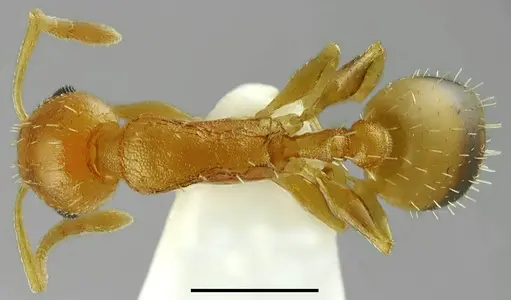
Literature
Loading distribution map...Loading products...