
Temnothorax tricarinatus
- Sci. Name
- Temnothorax tricarinatus
- Tribe
- Crematogastrini
- Subfamily
- Myrmicinae
- Author
- Emery, 1895
- Distribution
- Found in 2 countries
Introduction
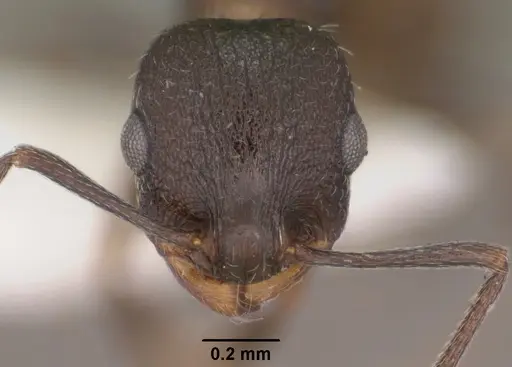
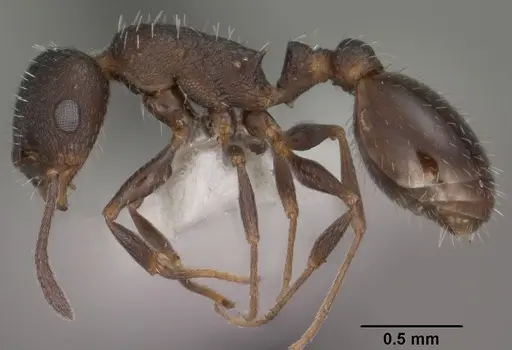
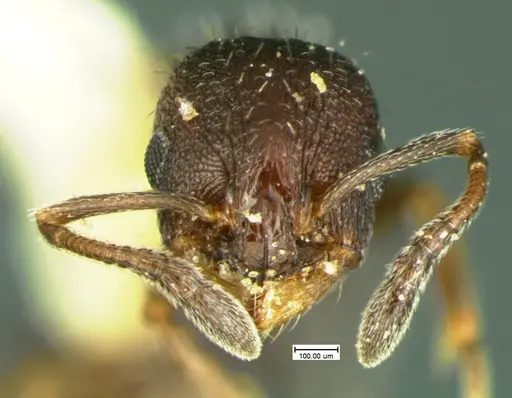
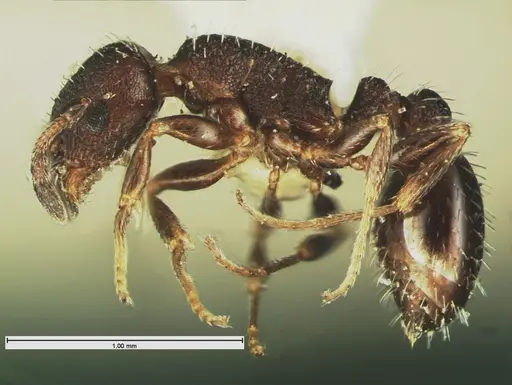
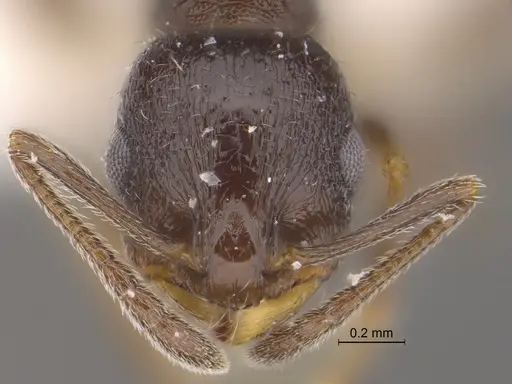
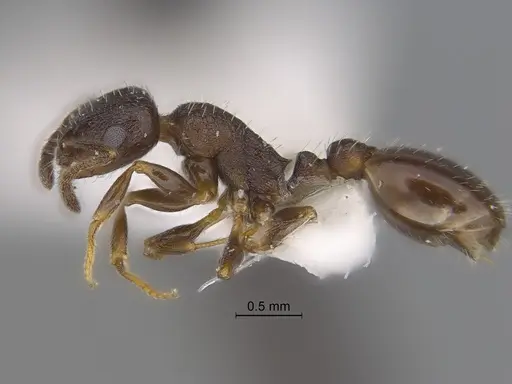
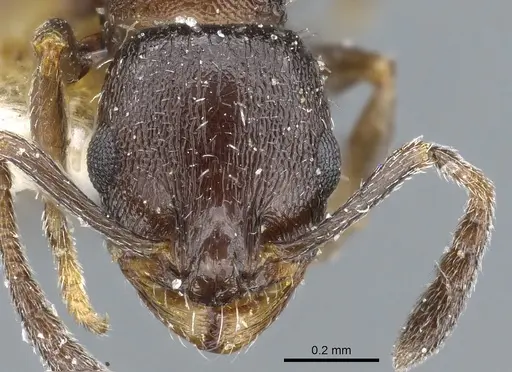
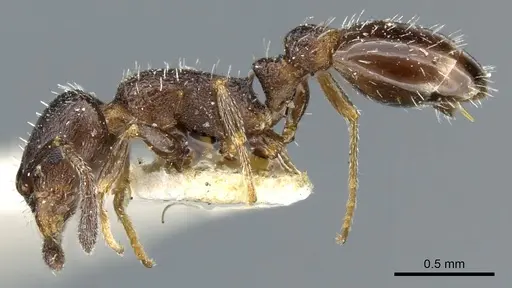
Temnothorax tricarinatus is a small, dark ant native to the western United States. Workers measure 2-2.6 mm . They have 12-segmented antennae and well-developed propodeal spines. The body is dark brown to brownish black with lighter leg joints and mandibles. The clypeus has a distinctive central ridge (carina) with two side ridges, which helps tell this species apart from similar ones . This species can live with either one queen or several queens in the same nest . They forage mainly at dawn and dusk (crepuscular) . Their eyes are relatively large for their size, which helps them see in low light . In the wild, they nest under rocks in moist soil in open grassy areas and forest clearings. Colonies stay small, usually under 100 workers .
Quick Summary
- Difficulty: Easy
- Origin & Habitat: Western United States: North Dakota, South Dakota, Idaho, Wyoming, Utah, Nevada, Arizona, Colorado, New Mexico, Nebraska, and Iowa. They live in open grasslands, foothill meadows, sagebrush, and forest clearings. Nests are under rocks in moist soil [1].
- Colony Type: Facultatively polygynous, colonies can have a single queen (monogyne) or multiple queens (polygyny) [1].
- Size & Growth:
- Queen: Variable in size [1]
- Worker: 2-2.6 mm [1]
- Colony: Up to 100 workers [1]
- Growth: Moderate
- Development: 6-10 weeks (inferred from related Temnothorax species, not directly studied for this species) (Keep temperatures around 22-24°C for consistent development. Exact timing is unknown without direct studies.)
- Antkeeping:
- Temperature: Based on their temperate range, keep at room temperature, roughly 20-24°C. Provide a temperature gradient so workers can choose. Avoid prolonged heat above 28°C.
- Humidity: Moderate to high humidity. Keep the nest substrate consistently moist but not waterlogged. These ants naturally nest in moist soil under rocks [1].
- Diapause: Yes, this species is from temperate regions with cold winters. Give them a winter rest period of 2-3 months at 5-10°C. This is inferred from their natural range and is likely necessary for long-term health.
- Nesting: Y-tong (AAC) nests work well because the chambers are small and match the ants' size. Naturalistic setups with flat stones over moist soil also work nicely and mimic their natural habitat [1]. Avoid dry, airy nests.
- Behavior: Generally peaceful and harmless. Workers are active at dawn and dusk (crepuscular) [2]. They have a modified stinger used for smearing venom, but it cannot pierce human skin. Escape prevention is critical because of their tiny size, use fine mesh (0.5 mm or finer) and tight lids. They are not aggressive toward keepers.
- Common Issues: small size means escapes are likely without fine mesh barriers, colonies stay small (under 100 workers) so don't expect massive colonies, moisture needs are moderate, too dry causes colony decline, winter diapause is likely required for long-term health, wild-caught colonies may have parasites, quarantine new colonies
Housing and Nest Setup
Temnothorax tricarinatus is tiny, so their nest needs to match their size. Y-tong (AAC) nests are excellent because the chambers are narrow and let the ants feel secure. You can also use naturalistic setups: place a flat stone over moist soil or plaster so they can dig their own chambers, just like in nature [1].
For the outworld, a small container or test tube works during founding. Once the colony grows a bit, connect a modest outworld area. Because the ants are so small, you must take escape prevention seriously. Use fine mesh (0.5 mm or smaller) on all vents, and make sure lids seal tightly. They aren't strong climbers on smooth surfaces, but they can squeeze through gaps you might not notice.
Feeding and Diet
In the wild, these ants hunt small arthropods and also collect honeydew from aphids and scale insects [1]. In captivity, offer small live prey like fruit flies, springtails, or pinhead crickets. You can also give them sugar water or diluted honey for energy, but protein-rich foods should be the main part of their diet.
Feed small amounts every 2-3 days. Watch how fast the colony eats and adjust. Since colonies stay under 100 workers, a few fruit flies per feeding is plenty. Remove any leftover prey after 24 hours to avoid mold. A constant supply of sugar water is optional but can help during growth phases.
Temperature and Seasonal Care
Keep your colony at room temperature, about 20-24°C. They can handle a range from roughly 18-26°C. It's more important to be consistent than to hit an exact number. A gentle temperature gradient (using a small heating cable on one side) allows workers to choose their comfort zone.
Like most temperate ants, this species likely needs a winter rest period. Starting in late fall, gradually cool them down to 5-10°C and keep them there for 2-3 months. During this diapause, offer very little food and keep the nest slightly moist but not wet. This rest is important for the colony's long-term health and next year's growth. In spring, slowly warm them back up to normal temperatures.
Colony Structure and Queen Care
This species is facultatively polygynous, you might find colonies with one queen or several [1]. If you start from a founding queen, she will seal herself in a small chamber (claustral founding is typical for Temnothorax, but unconfirmed for this species) and raise her first workers alone on stored reserves. The first workers (nanitics) are often smaller than later generations.
Multiple queens can peacefully share an established colony. If you have a polygynous colony, avoid separating the queens unless you're experienced. Colony growth is moderate, and mature colonies stay under 100 workers. Don't expect a massive colony, they stay small their whole lives.
Behavior and Observation
Temnothorax tricarinatus forages mainly at dawn and dusk [2]. Their eyes are relatively large, which helps them see in low light. Workers are active and quick, searching for small prey and tending honeydew sources.
The species is peaceful and not aggressive toward keepers. They have a modified stinger used for smearing venom onto enemies (a common defense in the Crematogastrini tribe), but it cannot pierce human skin. Their tiny size means they can escape easily, so always use fine mesh and tight lids. Watching their twilight foraging is one of the best parts of keeping this species.
Frequently Asked Questions
How long does it take for Temnothorax tricarinatus to produce first workers?
The exact timing is not documented for this species. Based on related Temnothorax, expect first workers (nanitics) to appear around 6-10 weeks after the queen lays eggs, assuming temperatures around 22-24°C. The actual time depends on temperature, humidity, and individual colony conditions.
Can I keep multiple queens together in one colony?
Yes, this species is facultatively polygynous, colonies can have either a single queen or multiple queens [1]. If you combine unrelated queens early, they may accept each other, but success varies. Established polygynous colonies usually have peaceful queen relationships.
What size colony does Temnothorax tricarinatus reach?
Colonies stay small, typically under 100 workers even at maturity [1]. This is one of the smaller ant species kept in captivity. Don't expect huge colonies, they do best in modest, space-appropriate setups.
Do Temnothorax tricarinatus sting?
They have a modified stinger, but it is used for smearing venom onto enemies, not for piercing human skin. They are completely harmless to keepers. You won't feel anything if they try to defend themselves.
What do I feed Temnothorax tricarinatus?
Offer small live prey like fruit flies, springtails, or tiny crickets. They also take sugar water or diluted honey. Protein-rich foods should make up most of their diet, with occasional sugar offerings. Remove uneaten prey after 24 hours to prevent mold [1].
Do they need hibernation?
Yes, this species likely needs a winter dormancy period based on its natural range. Cool them to roughly 5-10°C for 2-3 months during winter. This diapause is important for their long-term health and reproductive cycles.
Are these ants good for beginners?
Overall, yes. They are small, peaceful, and have simple care needs. The main challenges are preventing escapes due to their tiny size and providing a proper winter rest. If you can handle these two things, they are a good choice for beginners.
What nest type is best for Temnothorax tricarinatus?
Y-tong (AAC) nests work great because the chambers match their small size. Naturalistic setups with flat stones over moist soil also mimic their natural habitat [1]. Avoid dry, airy nests, they need some moisture.
Why are my ants dying outside the nest?
Some worker loss is normal. But if many die, check for: too dry conditions, poor nutrition, stress from too much disturbance, or parasites in wild-caught colonies. Make sure humidity is right and food is available. Wild-caught colonies sometimes carry parasites that can be a problem.
When should I move them to a formicarium?
Wait until the colony has at least 15-20 workers before moving to a permanent nest. Test tube setups work well for small colonies. Moving too early can stress the queen and cause failure. Let the colony establish first.
How do I distinguish Temnothorax tricarinatus from similar species?
Look for the three ridges (carinae) on the clypeus, a central ridge with one on each side [1]. The head has relatively coarse sculpturing compared to similar species like Temnothorax rugithorax. Also, the postpetiole is noticeably wider than the petiole, which helps separate this species from Temnothorax stenotyle [1].
Report an Issue
The current care sheet is based fully on literature. See inconsistencies, or something that's incorrect? Please , it will be resolved after review from an admin. Contributing to the blogs tab also helps providing information, to make us be able to further improve the caresheets. Thank you for your support!
References

This caresheet is licensed under CC BY-SA 4.0 .
Community Blogs
CASENT0102845
View on AntWeb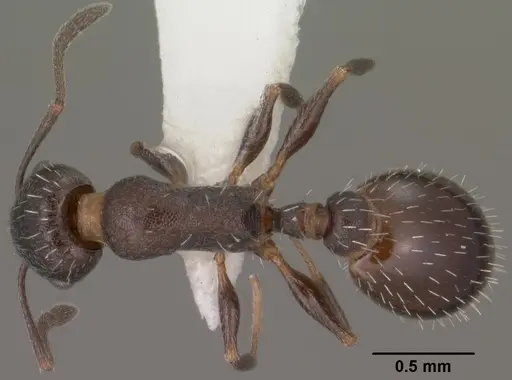
CASENT0105629
View on AntWeb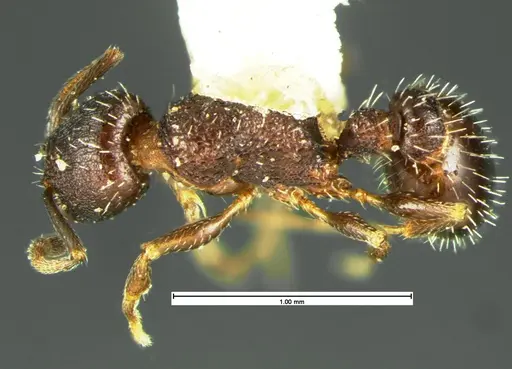
CASENT0869801
View on AntWeb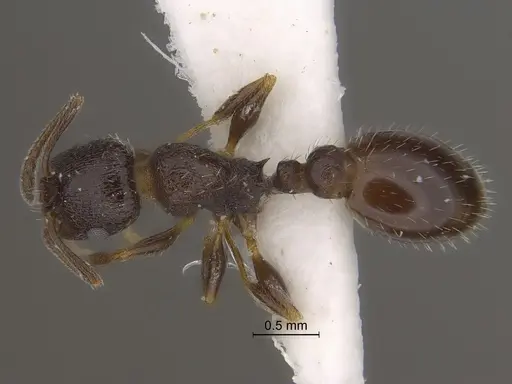
CASENT0904747
View on AntWeb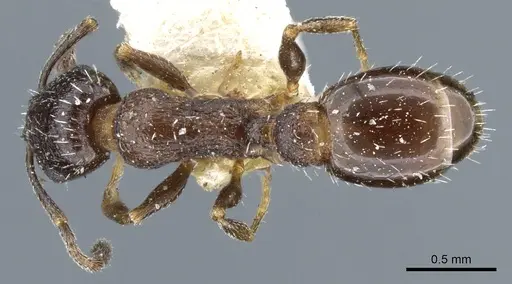
Literature
Loading distribution map...Loading products...