
Temnothorax smithi
- Sci. Name
- Temnothorax smithi
- Tribe
- Crematogastrini
- Subfamily
- Myrmicinae
- Author
- Baroni Urbani, 1978
- Distribution
- Found in 1 countries
Introduction
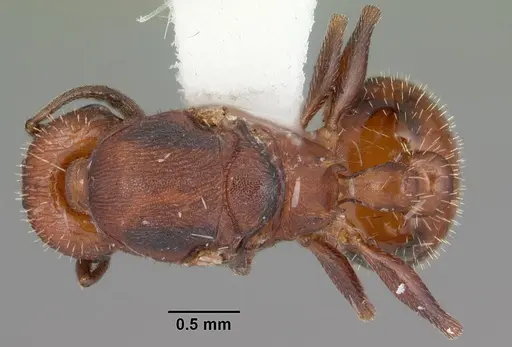
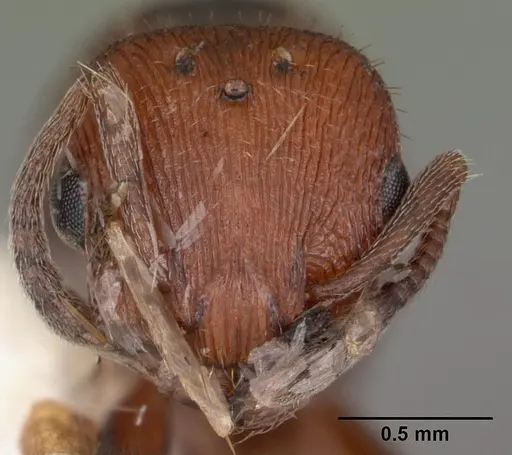
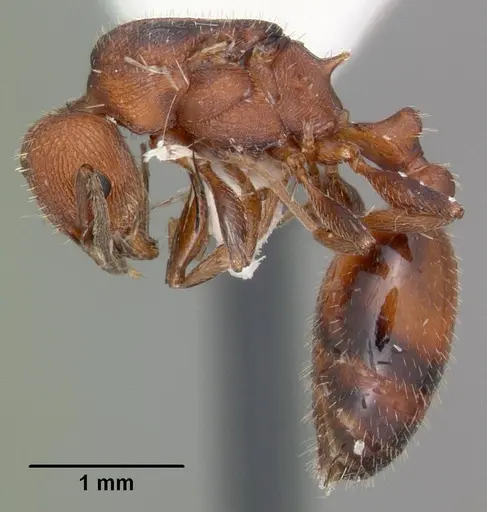
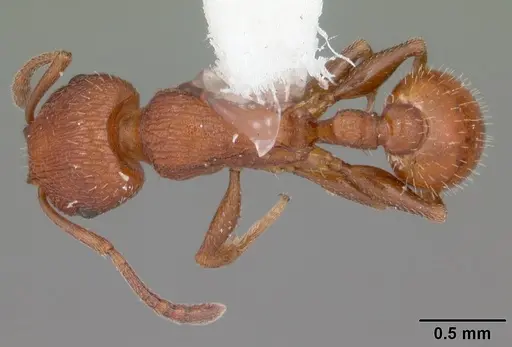
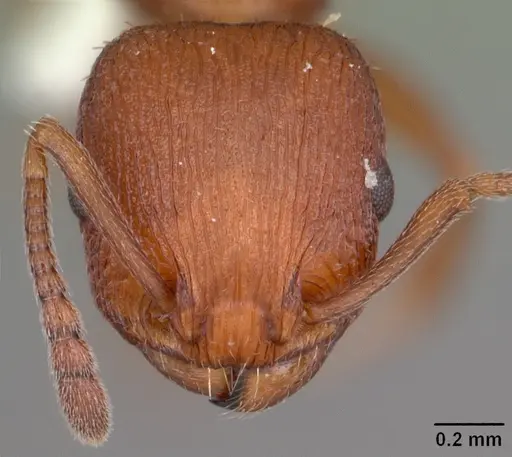
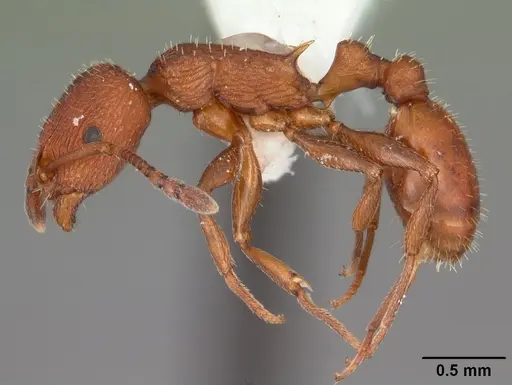
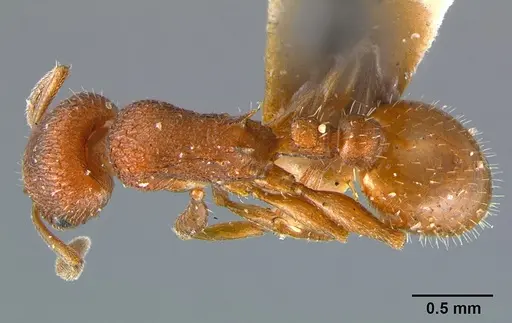
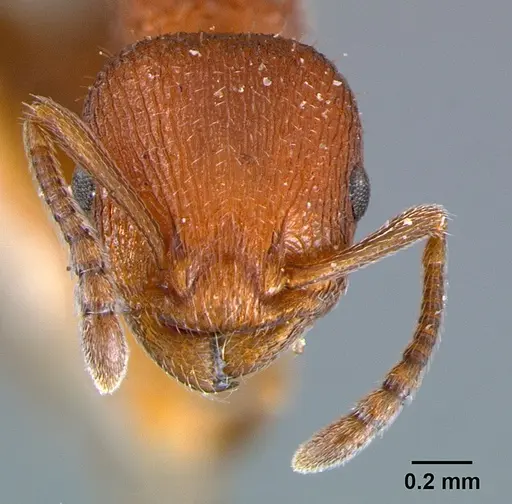
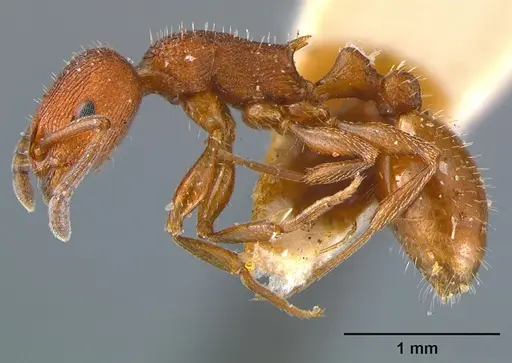
Temnothorax smithi is a tiny ant species from the eastern United States, ranging from Ohio south to Florida and west to Mississippi . Workers measure 2.2-2.9mm, queens 3.9-4.2mm, and they are uniformly reddish-brown with a very rough, coarsely sculptured head . They have 11-segmented antennae and long, slender propodeal spines that are nearly as long as the distance between their tips . These ants are arboreal - they nest in cavities inside dead trees, under loose bark, and in the galleries of weathered logs or old wooden structures exposed to the sun . A standout feature is their polygynous colony structure: nests often contain 2-3 dealate (wingless) queens and up to 40 workers . They also have remarkable desiccation resistance thanks to three rectal pads that absorb water from their feces, an adaptation to their dry, sun-exposed nesting sites .
Quick Summary
- Difficulty: Easy
- Origin & Habitat: Eastern United States (Ohio, Kentucky, Tennessee, North Carolina, South Carolina, Georgia, Florida, Mississippi, Alabama) [1]. Found in open wooded areas, nesting in tree cavities, under bark, and in galleries of weathered logs or old cabins [1][3].
- Colony Type: Polygynous, nests typically contain 2-3 dealate queens working together [1]. This is a rare naturally multi-queen Temnothorax species.
- Size & Growth:
- Queen: 3.9-4.2mm [2]
- Worker: 2.2-2.9mm [2]
- Colony: Up to 40 workers in documented nests [1]
- Growth: Moderate, typical for temperate Temnothorax
- Development: Estimated 6-10 weeks at optimal temperature, based on related Temnothorax [5] (Exact development time is unknown, temperature strongly affects speed. Warmer conditions within safe range speed up growth.)
- Antkeeping:
- Temperature: No exact data from research. Based on their sun-exposed nest sites (weathered logs, dead trees in open areas), they tolerate warm conditions. Keep at 20-24°C and observe [1]. Avoid overheating above 28°C.
- Humidity: Low to moderate, they are very desiccation resistant [2]. Provide a water source and keep the nest substrate mostly dry with a small moist area. Avoid waterlogging, they are adapted to drier microclimates.
- Diapause: Yes, as a temperate species from the eastern US, they need a winter rest. Cool to 5-10°C for 3-4 months (e.g., November to February). Keep substrate slightly moist, not wet, during this time [1].
- Nesting: Arboreal: nests in tree cavities, under bark, or in rotten logs [1][3][4]. In captivity, use Y-tong (AAC) nests with narrow chambers, cork bark slabs, or test tubes with a dark cover. Provide a foraging area with dim lighting.
- Behavior: Shy and secretive, when disturbed they frantically hide in crevices rather than defending [1]. Not aggressive, they flee from threats. Their small size (under 3mm) means good escape prevention is needed. They are most active in low light, so keep the nest area dim.
- Common Issues: queens fighting, naturally polygynous, but combining unrelated queens may cause aggression, keep colony together if they come from the same source, slow colony growth, moderate development may test patience, don't expect rapid worker numbers, desiccation during hibernation, keep nest slightly moist during winter rest, not bone dry, hard to observe, secretive and tiny, they often hide, use a night vision or dim lighting for best viewing, limited availability, rarely collected in the wild [5], may be hard to acquire
Housing and Nest Setup
Temnothorax smithi naturally nests in cavities of dead trees, under loose bark, and in rotten logs exposed to the sun [1][3]. To mimic this, use a Y-tong (AAC) nest with narrow chambers, or offer a setup with cork bark slabs and a dark cover. A test tube with a cotton plug and a darkened foraging area also works well. Because workers are tiny (2.2-2.9mm), make sure any connections are small enough to prevent escapes but large enough for the ants to move freely. Keep the nest area dim, these ants prefer low light and will be more active when shaded. Provide a water source (a small test tube or a moist cotton ball) in the foraging area, the nest substrate can be kept mostly dry with just a slightly damp zone, as they are very desiccation resistant [2].
Feeding and Diet
In the wild, workers have been observed feeding on exuviae (shed skins) of wood-boring beetles [1]. This suggests they are scavengers that accept various protein sources. In captivity, offer small insects like fruit flies, pinhead crickets, or mealworm pieces. They likely also take sugar sources such as honey or sugar water, though this hasn't been studied specifically. Feed protein about twice a week, removing leftovers after 24-48 hours. Provide a constant supply of sugar water or honey. Because of their small size, avoid offering prey that's too large, tiny insects are best.
Temperature and Seasonal Care
No precise temperature requirements are known from research, but since they nest in sun-exposed logs and dead trees, they can handle warm conditions. Keep your colony at 20-24°C during the active season [1]. Avoid exceeding 28°C. As a temperate species from the eastern US, they need a winter diapause. Reduce temperature to 5-10°C for 3-4 months (roughly November to February) to mimic their natural cycle [1]. You can use a refrigerator, cool basement, or garage, but never a freezer. Keep the nest substrate slightly moist, not dry, during this rest period. Gradually warm them up in spring.
Colony Structure and Multi-Queen Care
Temnothorax smithi is one of the few naturally polygynous Temnothorax species. Documented colonies contain 2-3 dealate queens and up to 40 workers [1]. This social structure means multiple queens should coexist peacefully if they come from the same colony. However, combining unrelated foundresses may cause fighting, as their tolerance of other queens likely only extends to nestmates. The presence of multiple queens can boost egg production and colony growth, but this species is still moderate-paced. If you acquire a colony with several queens, give them plenty of brood chambers and feeding space.
Behavior and Observation
These ants are extremely shy and secretive. When you disturb their nest, workers frantically hide in tiny crevices instead of defending [1]. They are not aggressive and pose no threat to you. Their small size (workers under 3mm) means they can slip through tiny gaps, so seal all connections well. They are most active under dim light, so observe them using red film or at dusk. Their desiccation resistance [2] makes them more forgiving of dry conditions than most ants, but they still need access to water. This adaptation suits their arboreal lifestyle in sun-heated dead wood.
Frequently Asked Questions
Are Temnothorax smithi ants good for beginners?
Yes, they are considered easy to keep. Their high desiccation tolerance makes them forgiving of humidity mistakes, and their moderate temperature needs are simple to meet. The main challenges are their tiny size (requires careful escape-proofing) and secretive nature, which means less visible activity compared to larger, bolder ants.
How long does it take for Temnothorax smithi to produce first workers?
Exact timing is unknown for this species, but based on related Temnothorax, expect first workers around 6-10 weeks after the queen lays eggs at 20-24°C [5]. Colder temperatures will slow development.
Can I keep multiple queens together in one colony?
Yes, this species is naturally polygynous, colonies typically have 2-3 queens [1]. However, only queens from the same colony or source should be kept together, combining unrelated queens risks fighting.
Do Temnothorax smithi ants sting?
They have a sting but are not aggressive and rarely use it, they prefer to flee. Their tiny size and mild venom would cause only minor discomfort if they did sting.
What do Temnothorax smithi ants eat?
They are scavengers. Offer small protein sources like fruit flies, pinhead crickets, or mealworm pieces, and a constant sugar source like honey or sugar water [1]. In the wild they scavenge beetle exuviae.
Do Temnothorax smithi ants need hibernation?
Yes, as a temperate species they require a winter rest period. Cool them to 5-10°C for 3-4 months [1]. Keep the nest slightly moist during this time.
What is the best nest type for Temnothorax smithi?
Y-tong (AAC) nests with narrow chambers work well, mimicking their natural cavities in dead wood. Cork bark slabs or test tubes with a dark cover are also good choices [1].
How big do Temnothorax smithi colonies get?
Documented colonies contain up to 40 workers with 2-3 queens [1]. Larger colonies are possible in the wild but not well studied.
Why are my Temnothorax smithi ants hiding all the time?
This is normal, they are shy, secretive ants that prefer darkness [1]. Keep the nest area dim and avoid frequent disturbances. Observe them under low light conditions, like after dusk.
Where is Temnothorax smithi found in the wild?
Eastern United States from Ohio south to Florida, west to Mississippi and Alabama [1]. They inhabit open wooded areas and nest in dead trees, under bark, and in weathered logs [1][3].
Report an Issue
The current care sheet is based fully on literature. See inconsistencies, or something that's incorrect? Please , it will be resolved after review from an admin. Contributing to the blogs tab also helps providing information, to make us be able to further improve the caresheets. Thank you for your support!
References

This caresheet is licensed under CC BY-SA 4.0 .
Community Blogs
Literature
Loading distribution map...Loading products...