
Temnothorax sallei
- Sci. Name
- Temnothorax sallei
- Tribe
- Crematogastrini
- Subfamily
- Myrmicinae
- Author
- Guérin-Méneville, 1852
- Distribution
- Found in 2 countries
Introduction
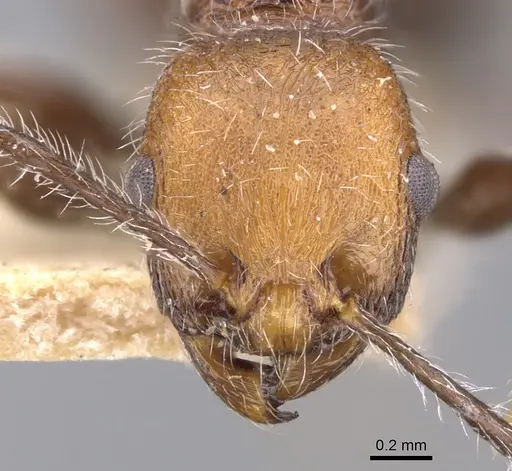
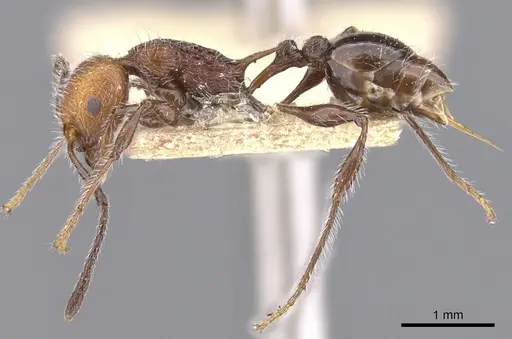
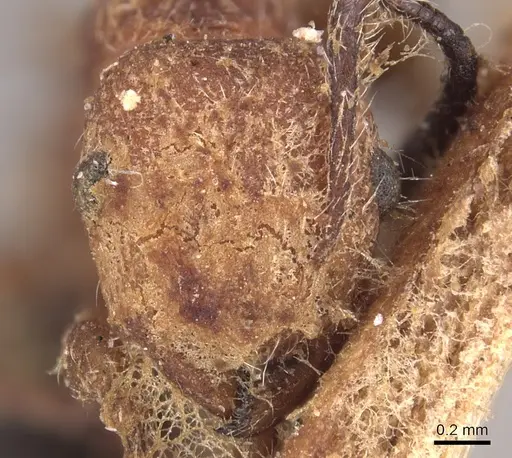
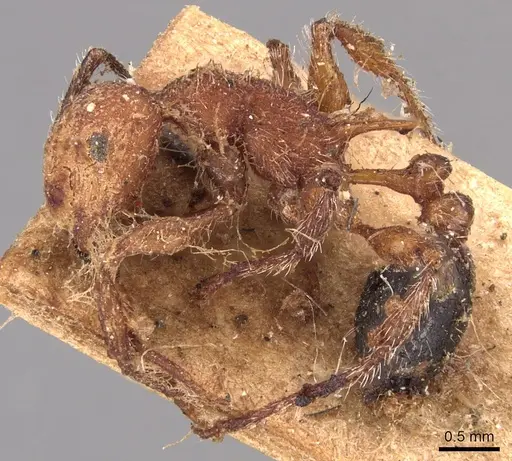
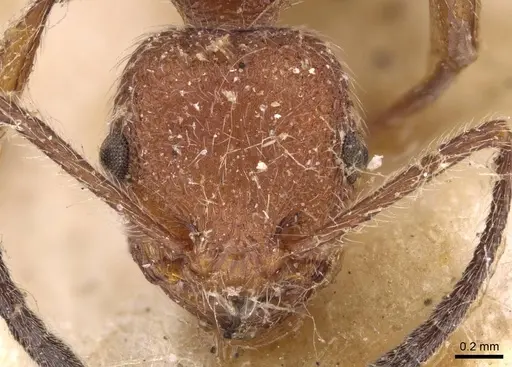
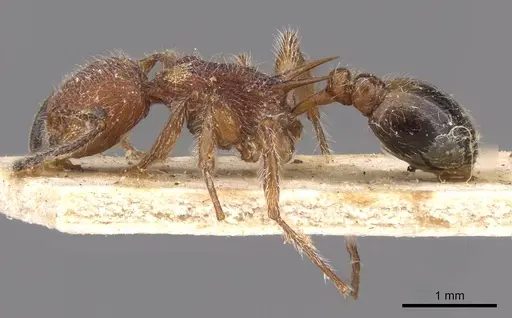
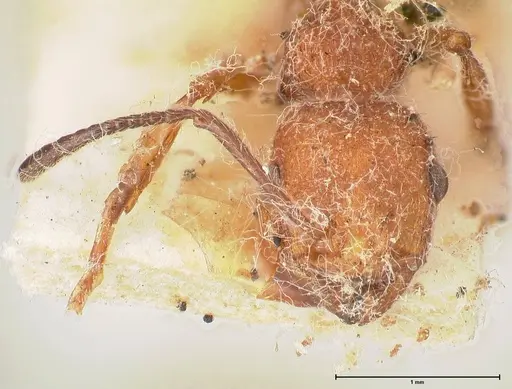
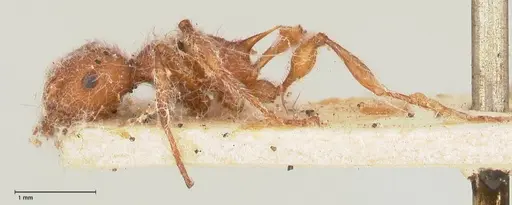
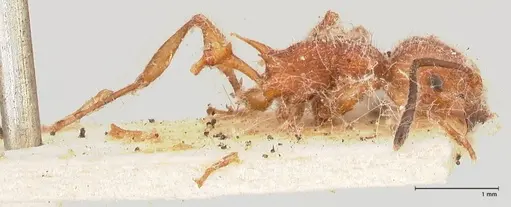
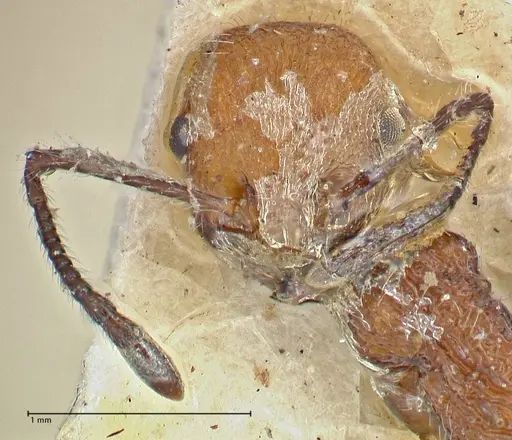
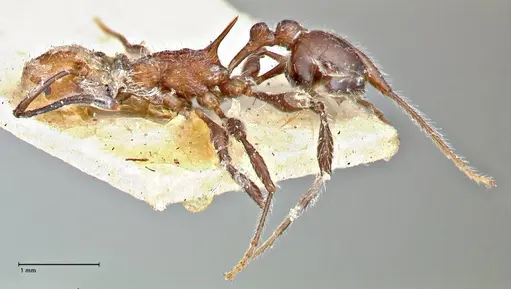
Temnothorax sallei is a large, striking ant species endemic to the Caribbean island of Hispaniola (Haiti and Dominican Republic) . Workers are about 5 mm long and ferruginous red with a black gaster, making them notably larger than most other Temnothorax species . They stand out for their unusual polydomous lifestyle, colonies inhabit numerous carton nests built in trees and shrubs, plus at least one soil nest at the base of a plant, with workers moving freely between all nest sites . This species is famous for its aggressive defense: when disturbed, workers swarm out en masse and deliver painful stings, carrying their gaster bent forward with the sting ready .
Quick Summary
- Difficulty: Medium
- Origin & Habitat: Hispaniola (Haiti and Dominican Republic), found at elevations from 610 to 2,438 m. They inhabit both lowland marshes and mountainous regions, building arboreal carton nests in shrubs and trees, particularly the native Baccharis myrsinites [1].
- Colony Type: Polydomous, colonies spread across multiple carton nests in vegetation plus soil nests at plant bases, with workers moving freely between all sites [1]. Whether a colony has a single queen or multiple queens is unconfirmed.
- Size & Growth:
- Queen: 7.2 mm [2]
- Worker: about 5 mm [2]
- Colony: Very large, hundreds of workers across numerous nests [1]
- Growth: Moderate
- Development: 6-10 weeks at optimal temperature (estimated based on related species) (Development time is estimated from typical Temnothorax patterns, specific data for this species is unavailable.)
- Antkeeping:
- Temperature: Keep at 22-26°C. Based on their elevation range (610-2,438 m) in tropical Hispaniola, they likely tolerate both warm lowland and cooler mountain conditions. Start at room temperature and adjust based on colony activity [1].
- Humidity: Moderate to high, they naturally inhabit both marshy areas and mountainous regions with vegetation. Provide a moisture gradient so ants can choose their preferred zone [1].
- Diapause: Unlikely, as a tropical Caribbean species from Hispaniola, they probably do not require hibernation. No diapause period has been documented [1].
- Nesting: This species naturally builds arboreal carton nests in shrubs and trees. In captivity, a naturalistic setup with vertical surfaces (live or artificial plants) for nest-building works well. They also use soil nests, so a hybrid setup with both arboreal space and a soil area is ideal. Y-tong or plaster nests with additional outworld space can work, but they may attempt to build carton-like structures on surfaces [1].
- Behavior: Highly defensive and aggressive when threatened. Workers swarm rapidly when nests are disturbed and deliver painful stings, often carrying the gaster bent forward with the sting directed forward [1][3][2]. They are diurnal (day-active) and omnivorous, attending aphids and membracids for honeydew, collecting nectar from plant nectaries, and hunting small insects. Workers are active foragers that will scout for food across their territory. Their size (about 5 mm) means escape prevention is important, use tight-fitting lids and fine ventilation mesh. Their polydomous nature means they may spread across multiple connected enclosures.
- Common Issues: painful stings, handle with gloves, these ants defend aggressively when disturbed, polydomous colonies may be hard to contain, they naturally spread across multiple connected nest sites, tropical species may not tolerate cool temperatures, keep above 20°C, arboreal nesting habits may frustrate standard formicaria, provide vertical surfaces and natural materials, colonies can become very large with hundreds of workers, ensure adequate space in several chambers, carton nests in captivity can develop mold if too wet, balance humidity with ventilation
Housing and Nest Setup
Temnothorax sallei naturally builds arboreal carton nests in shrubs and trees, not in pre-made cavities like many ants [1]. In captivity, you'll need to accommodate their nesting instincts. A naturalistic setup with live or artificial plants works well, they will build carton-like structures on branches and leaves. Alternatively, provide a hybrid setup with a nesting area (test tube or small Y-tong/plaster nest) connected to a spacious outworld with vertical surfaces. Multiple connected enclosures can better suit their polydomous nature [1]. Avoid acrylic nests, instead use Y-tong, plaster, soil, or 3D-printed nests. Since they use soil nests in the wild, a small soil area in the outworld may encourage natural behavior. Ensure all connections are escape-proof with fine mesh or glass barriers.
Feeding and Diet
These ants are omnivorous. In the wild, they attend aphids and membracids for honeydew, drink nectar from extrafloral nectaries, and hunt small insects including Orthoptera [1]. In captivity, offer a varied diet: sugar water or honey for energy, small live insects like fruit flies or pinhead crickets for protein, and occasional access to flowering plants if using a naturalistic setup. Feed protein 2-3 times per week and keep sugar water available constantly. They are active foragers, so place food in accessible locations in the outworld.
Temperature and Seasonal Care
Keep your colony at 22-26°C as a starting point. This species comes from Hispaniola at elevations from 610-2,438 m, meaning they experience both warm lowland conditions and cooler highland temperatures [1]. They are likely adaptable but should be kept warm, avoid temperatures below 20°C. As a tropical Caribbean species, they probably do not require hibernation [1]. Maintain stable temperatures without major fluctuations. If your room is naturally in this range, no additional heating is needed. For cooler rooms, a heating cable on one side of the nest (placed on top to avoid drying) can create a gentle gradient.
Behavior and Defense
Temnothorax sallei is notably aggressive and defensive. When their nest is disturbed, workers pour out in mass and will attack the intruder, delivering painful stings [1][3]. Workers have a unique defensive posture: they carry their gaster bent down beneath the thorax with the sting directed forward, ready to sting [2]. This combination of mass swarming and painful stings makes them one of the more defensive Temnothorax species. When working with them, use caution, wear gloves and avoid disturbing nests unnecessarily. They are diurnal, so most activity happens during daylight hours. Workers are active foragers that will search for food across their territory.
Colony Structure and Growth
Temnothorax sallei forms polydomous colonies, a single colony inhabits multiple nests scattered across different plants or locations, with workers moving freely between them [1]. In the wild, colonies can be spread across numerous bushes or small trees, with hundreds of nests in a single colony [1]. At least one nest is typically in the soil at the base of a plant, while others are arboreal carton nests in vegetation [1][3]. This polydomous lifestyle is unusual among ants and means your colony may naturally want to expand to multiple connected enclosures rather than staying in one nest. Growth rate is moderate, expect 6-10 weeks from egg to first worker at optimal temperature, similar to other Temnothorax species. Colonies can become very large with hundreds of workers.
Frequently Asked Questions
Can I keep Temnothorax sallei in a test tube?
A test tube can work as a founding setup, but established colonies will likely need more space. This species naturally builds arboreal carton nests in vegetation, so they may not fully accept a test tube as a permanent nest [1]. Consider a naturalistic setup with plants or a hybrid system with both a nest chamber and spacious outworld.
How long until first workers in Temnothorax sallei?
Expect 6-10 weeks from egg to first worker at optimal temperature (around 24°C). This is an estimate based on typical Temnothorax development, specific development data for this species is unavailable.
Do Temnothorax sallei ants sting?
Yes, they definitely sting, and it's painful. This species is notably aggressive and defensive [1][3]. When disturbed, workers swarm out and deliver painful stings. Handle with care and use gloves when working with established colonies.
Are Temnothorax sallei good for beginners?
No, this species is not ideal for beginners. Their aggressive defensive behavior (painful stings), unusual arboreal/polydomous nesting requirements, and need for specific housing setups make them an intermediate to advanced species. They also require warm tropical conditions [1].
Do Temnothorax sallei need hibernation?
No, they likely do not need hibernation. As a tropical Caribbean species from Hispaniola, they are adapted to year-round warm conditions [1]. No diapause period has been documented.
What do Temnothorax sallei eat?
They are omnivorous. Offer sugar water or honey for energy, small live insects (fruit flies, pinhead crickets) for protein, and they will also attend aphids for honeydew if present in a naturalistic setup [1]. Feed protein 2-3 times per week with sugar available constantly.
How big do Temnothorax sallei colonies get?
Colonies can become very large, hundreds of workers across numerous nests in the wild. They are one of the more populous Temnothorax species, with colonies sometimes spanning hundreds of individual carton nests across multiple plants [1].
Can I keep multiple queens together?
Not enough data exists on their queen arrangement. They are polydomous (multiple nest sites), but whether this involves multiple queens or just one queen with multiple satellite nests is unclear [1]. Combining unrelated queens has not been documented and is not recommended.
Why are my Temnothorax sallei dying?
Common causes include: temperatures below 20°C (they need warmth), too dry conditions (they prefer moderate humidity), disturbance stress (they are sensitive to nest vibrations), or improper escape prevention (they are small and agile). Also ensure you are not overfeeding, which can cause mold issues in their naturalistic setups.
What is the best nest type for Temnothorax sallei?
A naturalistic setup with live or artificial plants works best since they naturally build arboreal carton nests [1]. If using a formicarium, provide vertical surfaces and connect it to a spacious outworld. They may not accept standard horizontal nest setups, they want to build, not just inhabit pre-made tunnels.
When to move to a formicarium?
Move established colonies when they outgrow their founding setup or when you see them attempting to build carton structures in the outworld. Since they prefer arboreal nesting, consider a naturalistic setup rather than a traditional formicarium from the start [1].
Report an Issue
The current care sheet is based fully on literature. See inconsistencies, or something that's incorrect? Please , it will be resolved after review from an admin. Contributing to the blogs tab also helps providing information, to make us be able to further improve the caresheets. Thank you for your support!
References

This caresheet is licensed under CC BY-SA 4.0 .
Community Blogs
CASENT0901797
View on AntWeb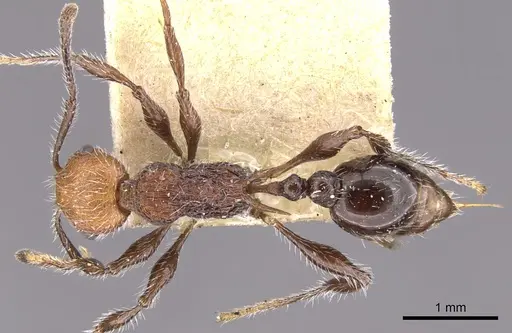
CASENT0904719
View on AntWeb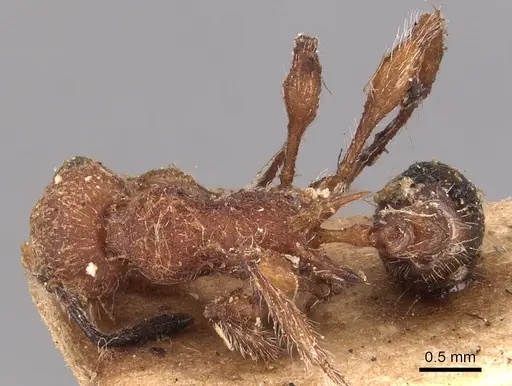
CASENT0908988
View on AntWeb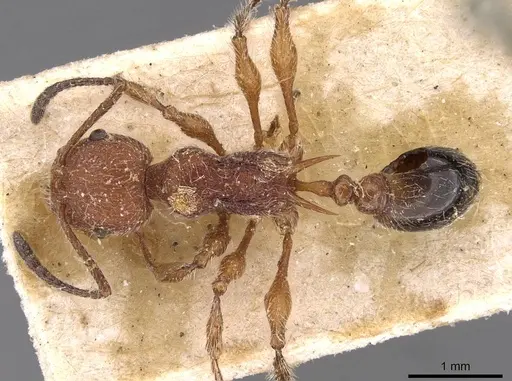
FOCOL0685
View on AntWeb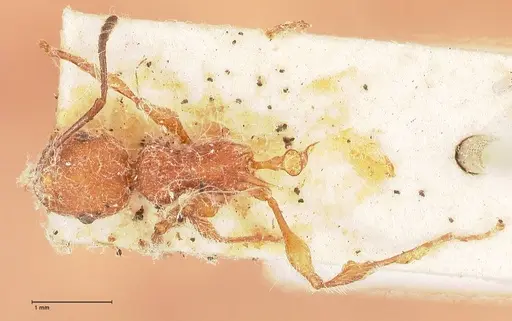
FOCOL2965
View on AntWeb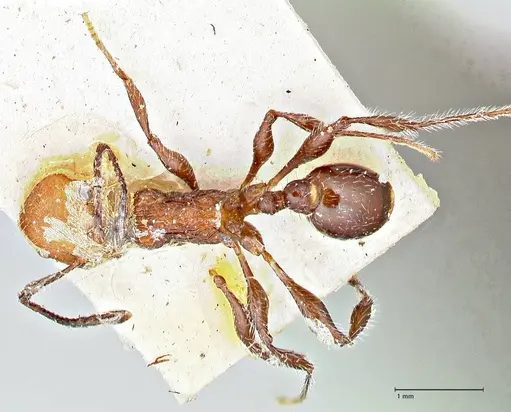
Literature
Loading distribution map...Loading products...