
Temnothorax rugosus
- Sci. Name
- Temnothorax rugosus
- Tribe
- Crematogastrini
- Subfamily
- Myrmicinae
- Author
- Mackay, 2000
- Distribution
- Found in 2 countries
Introduction
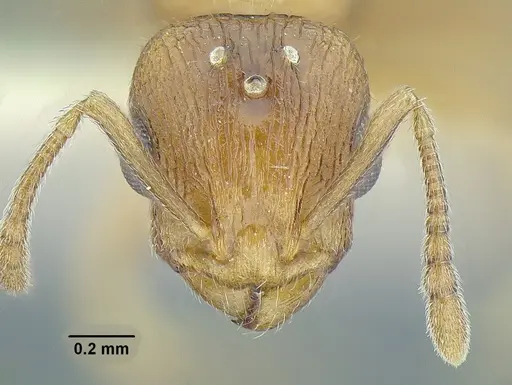
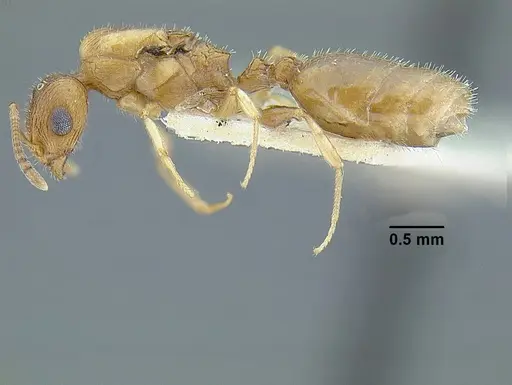
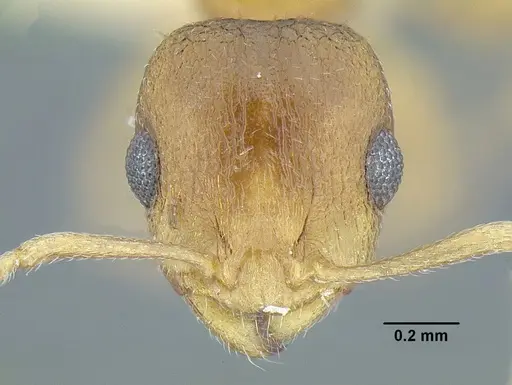
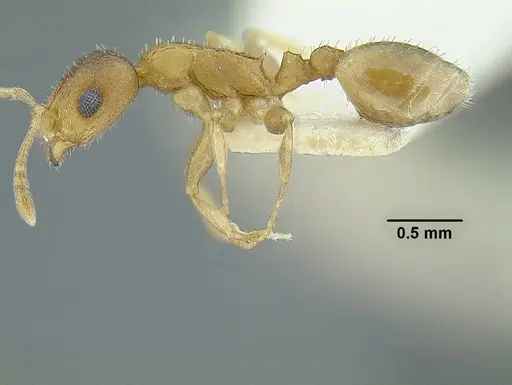
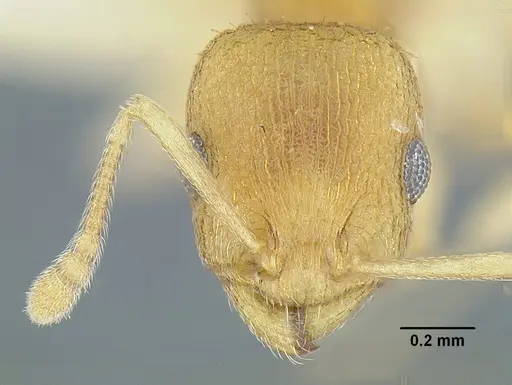
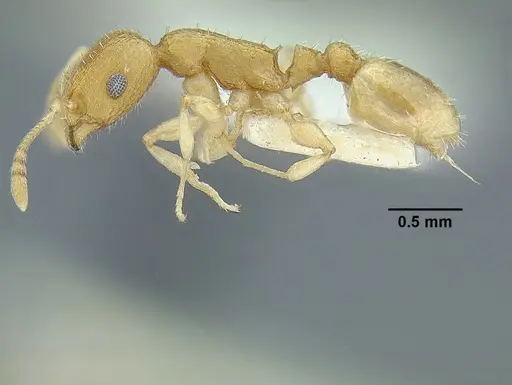
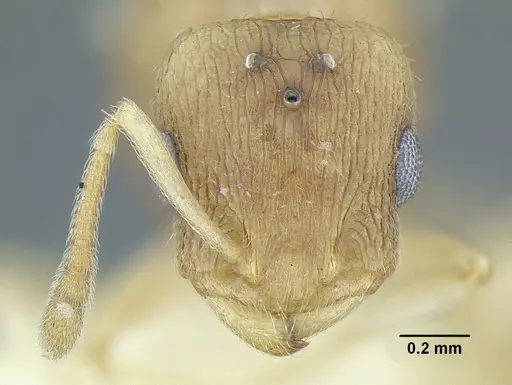
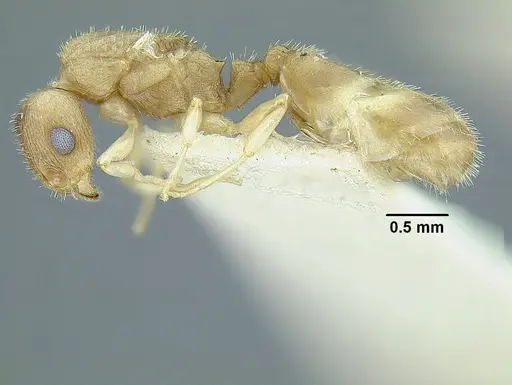
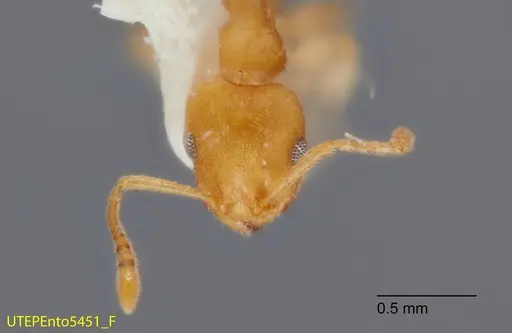
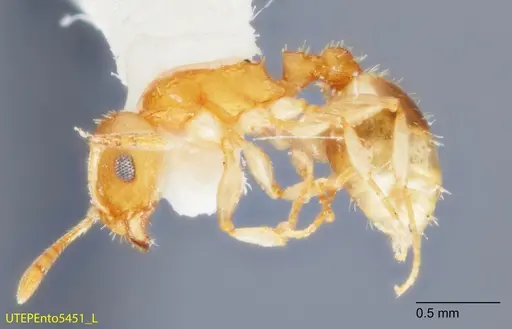
Temnothorax rugosus is a small, light brown ant native to mid-to-high elevations from southwestern Texas to Hidalgo State, Mexico. It lives in oak and oak-pine forests, nesting arboreally in tree branches, often about 2 meters up on steep slopes. The workers have a distinctively wrinkled (rugose) head and thorax, thickened hind legs (femora), and a petiole that looks pinched from above. Queens are slightly larger but similar in color. They have also been found nesting in Tillandsia plants in Mexican cloud forests . What sets this species apart is its fully arboreal lifestyle, unlike many relatives that nest in soil or under rocks, these ants spend their entire lives in tree cavities, making them an interesting choice for keepers wanting to try a tree-nesting species.
Quick Summary
- Difficulty: Medium
- Origin & Habitat: Mid-to-high elevations of southwestern Texas to Hidalgo State, Mexico. Found in oak and oak-pine forests, nesting arboreally in Quercus spp., Cercis reniformis, Rhus spp., and Tillandsia carlos-hankii, typically on steep south-facing slopes at 1-2 meters height [1].
- Colony Type: Unconfirmed, likely single-queen (monogyne) based on typical Temnothorax patterns, but no specific study has confirmed this [1].
- Size & Growth:
- Queen: Size data unavailable (no total length published, inferred from genus, queens roughly 3-4 mm).
- Worker: Size data unavailable (no total length published, inferred from genus, workers roughly 2-3 mm).
- Colony: Unknown, typical Temnothorax colonies reach dozens to a few hundred workers (inferred from genus).
- Growth: Moderate (estimated)
- Development: Unknown for this species, typical Temnothorax egg-to-worker development takes 6-10 weeks at room temperature (inferred from genus patterns). (Development time is an estimation, no specific data exist for this species.)
- Antkeeping:
- Temperature: Unknown, inferred from mid-elevation habitat: keep at stable room temperatures around 20-24°C, avoiding extreme heat or cold. A slight drop at night is likely fine.
- Humidity: Unknown, inferred from arboreal forest habitat: provide a gradient from moderately moist nest substrate to drier areas. Avoid waterlogging, aim for humidity that mimics a tree cavity, not wet, but not bone-dry.
- Diapause: Likely yes, the native range includes temperate latitudes. Provide a mild winter rest period: gradually lower temperature to 15-18°C for 2-3 months (inferred from geographic range).
- Nesting: Arboreal species, use Y-tong (AAC), plaster, or cork nests with narrow chambers that mimic tree cavities. Vertical elements (cork bark, twigs) help simulate branches. Avoid soil-based setups that don't match their natural tree-nesting behavior [1].
- Behavior: Presumed docile (no aggression data). Workers are active foragers that explore vertical spaces. Escape risk is high due to small size, seal all gaps under 1 mm. Defense mechanism: uses a flattened, spatulate stinger to wipe venom onto enemies rather than sting (typical of subfamily Myrmicinae, tribe Crematogastrini).
- Common Issues: arboreal nesting means standard soil nests may not be ideal, provide appropriate nest types., small colony size at maturity means slow growth is normal, don't overfeed or disturb frequently., escape prevention is critical because workers can squeeze through tiny gaps., winter rest is likely needed, but temperature must be lowered gradually and the exact requirements are unknown., founding behavior is unconfirmed, collecting a queen after flight may be necessary, but nuptial flight timing is unknown.
Housing and Nest Preferences
This ant is an obligate arboreal nester, it lives in tree branches, not soil. In captivity, provide a nest that mimics small cavities in wood. Y-tong (AAC) blocks, plaster nests, or cork setups work well. The chambers should be narrow and the overall nest compact, since colonies stay relatively small. Avoid soil-based formicariums. You can also add vertical cork bark or twigs to encourage natural climbing and foraging behavior. Keep the nest substrate slightly moist (but not wet) to maintain humidity, aim for a moisture gradient so ants can choose their preferred level [1].
Feeding and Diet
Temnothorax rugosus is a generalist feeder. Provide small protein sources like fruit flies, pinhead crickets, or tiny mealworms. The type series was collected using Vienna sausage bait, so they readily accept protein-rich foods [1]. Also offer carbohydrates via sugar water or diluted honey on a cotton ball or small dish. Feed 2-3 times per week, removing uneaten prey after 24 hours to avoid mold. Always provide a constant water source (e.g., a test tube plugged with cotton).
Temperature and Seasonal Care
Native to mid-elevation oak forests in Mexico and Texas, this species prefers moderate, stable temperatures. Aim for 20-24°C year-round. Avoid extreme heat or cold. During winter, provide a mild dormancy period: gradually reduce temperature to 15-18°C over 1-2 weeks, then keep cool for 2-3 months. This mimics the cooler season in its native range. Do not shock the colony with sudden temperature drops. If you cannot provide a cool rest, the colony may still survive but brood production could slow. [1]
Behavior and Defense
These ants are not aggressive, they are typical for a small myrmicine species. Workers actively patrol their territory and forage for food. Their small size (workers probably around 2-3 mm) means they can slip through very small gaps, so seal your setup carefully. Like other members of the subfamily Myrmicinae and tribe Crematogastrini, they use a 'smear' defense: a flattened, spatulate stinger that wipes venom onto enemies rather than piercing. This is generally not a threat to humans, but handle with care if you disturb the nest. Queens are slightly larger and can be recognized by their larger thorax and wing scars (if dealate). Colony structure is unconfirmed, but most Temnothorax species are monogyne and claustral [1].
Frequently Asked Questions
What size colony does Temnothorax rugosus form?
Colony size is unknown, but typical Temnothorax colonies reach dozens to a few hundred workers at maturity. They are not large colony formers.
What do Temnothorax rugosus ants eat?
They are generalist feeders. Offer small protein insects (fruit flies, pinhead crickets) and carbohydrates (sugar water, honey). The type series was collected with Vienna sausage bait, showing they readily accept protein [1].
Do Temnothorax rugosus ants need hibernation?
Likely yes. Based on their mid-elevation range in Mexico and Texas, provide a mild winter rest at 15-18°C for 2-3 months. Reduce temperature gradually.
What type of nest is best for Temnothorax rugosus?
Use Y-tong (AAC), plaster, or cork nests with narrow chambers that simulate tree cavities. This is an arboreal species that nests in branches, so avoid soil-based formicariums.
How long does it take for Temnothorax rugosus to develop from egg to worker?
Unknown for this species. Typical Temnothorax development takes 6-10 weeks at room temperature, but no specific data exist.
Are Temnothorax rugosus ants aggressive?
No, they are generally docile. They use a smear defense (wipe venom) rather than sting, and are not aggressive toward keepers. However, they will defend their nest if disturbed.
Where is Temnothorax rugosus found in the wild?
From southwestern Texas to Hidalgo State, Mexico, at mid-to-high elevations. They nest in oak and oak-pine forests, often in branches 1-2 meters high on steep slopes. They have also been found in Tillandsia plants in Oaxaca [1].
Can I keep multiple Temnothorax rugosus queens together?
Colony structure is unconfirmed. Based on typical Temnothorax patterns, they likely form single-queen colonies. Combining unrelated queens is not recommended until more is known.
What temperature do Temnothorax rugosus ants need?
Keep at stable room temperature around 20-24°C. They come from mid-elevation habitats and prefer moderate conditions without extreme heat or cold. Provide a mild winter cool period.
Are Temnothorax rugosus ants hard to keep?
They are rated as medium difficulty. The main challenges are providing appropriate arboreal housing, ensuring escape prevention (small size), and managing unknown colony dynamics. They are not ideal for absolute beginners but are manageable with some experience.
Report an Issue
The current care sheet is based fully on literature. See inconsistencies, or something that's incorrect? Please , it will be resolved after review from an admin. Contributing to the blogs tab also helps providing information, to make us be able to further improve the caresheets. Thank you for your support!
References

This caresheet is licensed under CC BY-SA 4.0 .
Community Blogs
LACMENT323259
View on AntWeb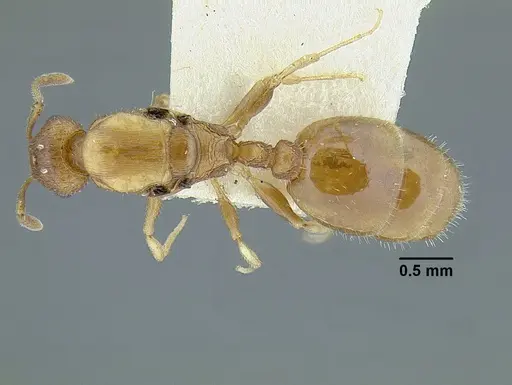
LACMENT323260
View on AntWeb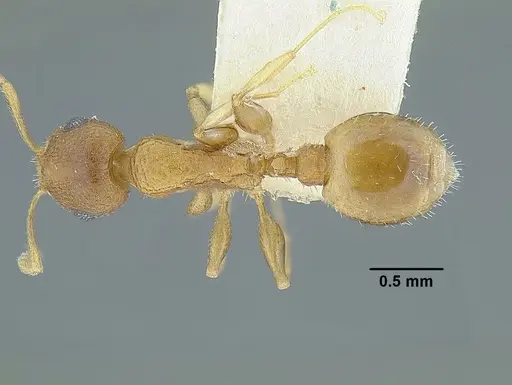
LACMENT323296
View on AntWeb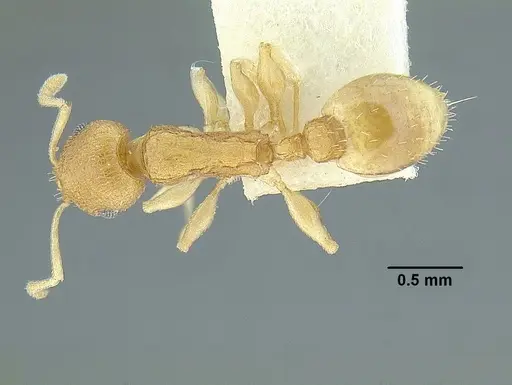
LACMENT323337
View on AntWeb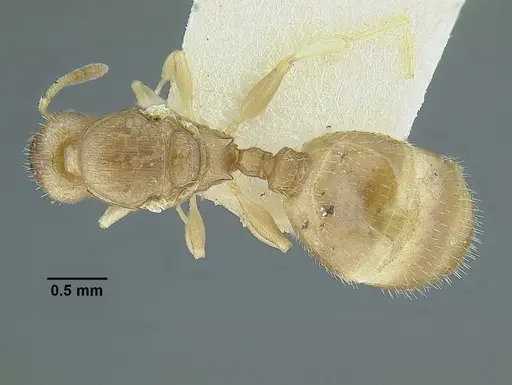
UTEPENTO5451
View on AntWeb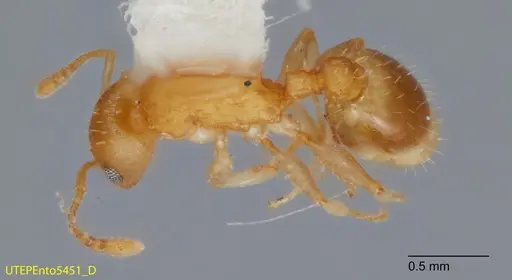
Literature
Loading distribution map...Loading products...