
Temnothorax proteii
- Sci. Name
- Temnothorax proteii
- Tribe
- Crematogastrini
- Subfamily
- Myrmicinae
- Author
- Salata <i>et al.</i>, 2018
- Distribution
- Found in 1 countries
Introduction
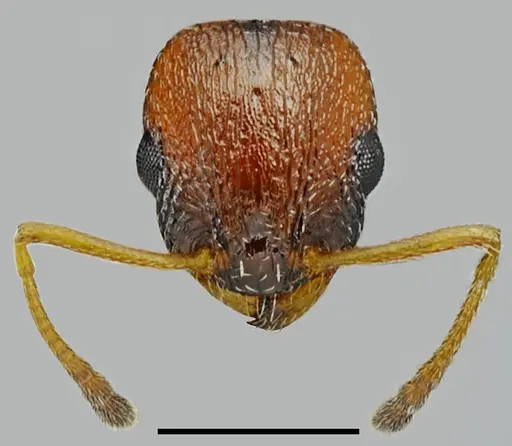
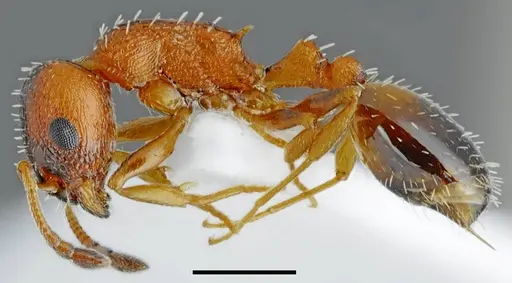
Temnothorax proteii is a tiny ant species endemic to Crete, Greece. Workers are about 2-3mm long (inferred from typical Temnothorax size). They have a rusty brown to orange body with a dark patch on the head, and sport propodeal spines plus longitudinal striation on the head that helps tell them apart from similar species . This species is unusual because its workers vary a lot in size and sculpture - some are larger with thick body sculpture and long spines, while others are smaller with denser sculpture and shorter spines. That's why it was named after Proteus, the shape-shifting sea god . In the wild, it's the most common Temnothorax on Crete and lives in blackberry bushes along roads, deciduous forests, macchia, and bushes overgrowing stream banks. Nests have never been found, but they probably nest in dry branches or galls .
Quick Summary
- Difficulty: Medium
- Origin & Habitat: Endemic to Crete, Greece. Found in blackberry bushes along roads, deciduous forests, macchia, and bushes overgrowing banks of streams or rivers [1][2]. Probably nests in dry branches or galls, no natural nests have ever been found [1].
- Colony Type: Single-queen colonies (monogyne), typical for the genus, though not explicitly confirmed for this species.
- Size & Growth:
- Queen: Unconfirmed, likely 4-6mm (inferred from typical Temnothorax queen size).
- Worker: Approximately 2-3mm total length (inferred from typical Temnothorax worker size) [1].
- Colony: Unknown, typical Temnothorax colonies can reach up to 500 workers (estimated).
- Growth: Moderate, based on typical genus development patterns.
- Development: Estimated 6-10 weeks at optimal temperature, based on related Temnothorax species. (Development time is inferred from genus-level data since no species-specific research exists. Expect slower growth than faster-developing genera like Lasius.)
- Antkeeping:
- Temperature: Keep around 20-24°C based on Mediterranean origin. Provide a gentle temperature gradient so workers can choose their preferred zone.
- Humidity: Keep the nest substrate moderately moist but not waterlogged. Provide a water source in the outworld (e.g., a test tube). Their natural habitat near streams suggests they tolerate varied moisture levels.
- Diapause: Likely required. As a Mediterranean species from Crete, it probably needs a winter rest period of 2-3 months at 10-15°C. This is inferred from typical Temnothorax overwintering behavior.
- Nesting: Probably nests in dry branches or galls in the wild [1]. In captivity, Y-tong (AAC) nests or plaster nests work well for these tiny ants. They prefer tight chambers scaled to their small size.
- Behavior: Generally peaceful and non-aggressive. Like most Temnothorax, they are shy and will flee rather than fight. They belong to the tribe Crematogastrini, whose members have a modified flattened stinger used to smear venom onto enemies rather than stinging. Workers are small but active foragers. Escape prevention is critical due to their minute size, they can squeeze through gaps as small as 0.5mm. Use fine mesh barriers and tight-fitting lids.
- Common Issues: escape prevention is critical due to their very small size, they can slip through tiny gaps, no captive breeding data exists, this is a newly described species with no established husbandry protocols, wild-caught colonies may have parasites or diseases that can wipe out the colony, slow growth compared to common hobby species may lead to beginner impatience, Mediterranean origin suggests they need winter diapause, skipping this may harm the colony long-term
Housing and Nest Setup
Temnothorax proteii needs careful housing because of its tiny workers. Y-tong (AAC) nests or plaster nests work well, they provide the tight chambers these small ants prefer. Avoid large, open spaces, these ants feel safer in snug accommodations. Start a founding queen in a test tube setup, then move to a small formicarium once the colony reaches about 30-50 workers. Escape prevention is absolutely critical, these ants can squeeze through gaps as small as 0.5mm. Use fine mesh on ventilation holes and seal all connections with fluon or similar barriers. The outworld should be simple with minimal decorations to make feeding and observation easier. A small foraging area with a water tube is enough for colonies under 100 workers. [1][2]
Feeding and Diet
Like other Temnothorax species, T. proteii likely accepts a standard ant diet. Offer sugar water or honey water as a constant energy source, these tiny workers need regular carbs. For protein, provide small live prey like fruit flies, springtails, or other micro-arthropods. Since workers are only 2-3mm, prey items should be appropriately sized, much smaller than what you'd feed a Camponotus colony. Feed small amounts 2-3 times per week, removing uneaten food promptly to prevent mold. Their Mediterranean origin suggests a varied wild diet, but no specific dietary studies exist for this species.
Temperature and Seasonal Care
Maintain temperatures around 20-24°C for good colony health and brood development. As a Cretan endemic, this species is adapted to Mediterranean conditions with warm summers and mild winters. During summer, room temperature is likely fine. In winter, provide a diapause period of 2-3 months at 10-15°C, this is typical for temperate ant species and likely necessary for long-term colony health. Place the nest on one side of the enclosure and use a gentle heat gradient so workers can regulate their own temperature by moving between warmer and cooler areas. Avoid temperatures below 10°C or above 30°C. [1]
Colony Establishment
Since this species was only described in 2018 and no natural nests have ever been found [1], there are no established captive protocols. If you obtain a founding queen, expect claustral founding behavior (typical for the genus), she will seal herself in a chamber and survive on stored fat reserves while raising the first brood. The first workers (nanitics) will be smaller than mature workers and may take 6-10 weeks to emerge, based on typical Temnothorax development. Be patient, these colonies grow slowly. Queens are likely 4-6mm (inferred from typical Temnothorax queen size). Wild-caught colonies may carry parasites, so quarantine and observe new colonies carefully before introducing them to established setups.
Behavior and Handling
Temnothorax proteii is likely a peaceful, non-aggressive species, typical of the genus. Workers are small and shy, more likely to flee than to defend the colony. They probably use tandem-running for recruitment, a common behavior in this genus. Watch for workers exploring the outworld and quickly recruiting nestmates when food is discovered. Despite their small size, they are active foragers. Their main defense is a modified flattened stinger that smears venom onto enemies (typical of the Crematogastrini tribe), they do not sting in the usual sense. Handle with care as any ant can bite if threatened, though these tiny ants are unlikely to cause any discomfort.
Frequently Asked Questions
How long does it take for Temnothorax proteii to raise first workers?
Based on typical Temnothorax development, expect 6-10 weeks from egg to first worker at optimal temperature (around 20-24°C). This is an estimate since no species-specific development data exists. The first workers (nanitics) will be smaller than mature workers.
Can I keep multiple Temnothorax proteii queens together?
This species is thought to be monogyne (single-queen colonies) based on genus patterns. Combining unrelated queens is not recommended and has not been documented for this species. If you find multiple queens, house them separately to prevent fighting.
What do Temnothorax proteii ants eat?
Offer sugar water or honey water as a constant carbohydrate source. For protein, provide small live prey like fruit flies, springtails, or tiny insects. Prey should be appropriately sized for these tiny 2-3mm workers.
Do Temnothorax proteii ants need hibernation?
Likely yes. As a Mediterranean species from Crete, they probably need a winter rest period of 2-3 months at 10-15°C. This is inferred from typical Temnothorax overwintering behavior, skipping diapause may harm long-term colony health.
Are Temnothorax proteii good for beginners?
This species is rated Medium difficulty. While not the hardest species, there is no captive breeding data for this newly described species (2018), making established protocols unavailable. Their tiny size also requires excellent escape prevention. Beginners might prefer more established species like Lasius niger or Messor barbarus.
How big do Temnothorax proteii colonies get?
Colony size is unconfirmed for this species. Based on typical Temnothorax colony sizes, expect up to 500 workers at maturity. This is a slow-growing species, so reaching maximum size may take several years.
What size formicarium does Temnothorax proteii need?
Use a small formicarium with tight chambers scaled to their tiny size. Y-tong (AAC) nests or plaster nests work well. Start with a test tube for founding colonies, then move to a small formicarium once the colony reaches 30-50 workers. Avoid large, open spaces.
Can Temnothorax proteii ants sting?
Like other members of the tribe Crematogastrini, they have a modified flattened stinger used to smear venom onto enemies, not a typical piercing sting. They may also bite and spray formic acid. Their defense is minor, and these tiny ants pose no danger to keepers.
Where is Temnothorax proteii found in the wild?
This species is endemic to Crete, Greece, it exists nowhere else on Earth. In the wild, workers are found in blackberry bushes along roads, deciduous forests, macchia, and bushes growing along streams and rivers [1][2].
Why are my Temnothorax proteii dying?
Common causes include: escape through tiny gaps (use fine mesh), improper humidity (too wet or too dry), lack of food (they need regular feeding), or stress from wild-caught origins. Since no captive data exists for this species, observe your colony closely and adjust conditions based on worker activity. If workers are clustering at water sources, humidity may be too low. If mold appears, reduce moisture and clean the nest.
Report an Issue
The current care sheet is based fully on literature. See inconsistencies, or something that's incorrect? Please , it will be resolved after review from an admin. Contributing to the blogs tab also helps providing information, to make us be able to further improve the caresheets. Thank you for your support!
References

This caresheet is licensed under CC BY-SA 4.0 .
Community Blogs
CASENT0845924
View on AntWeb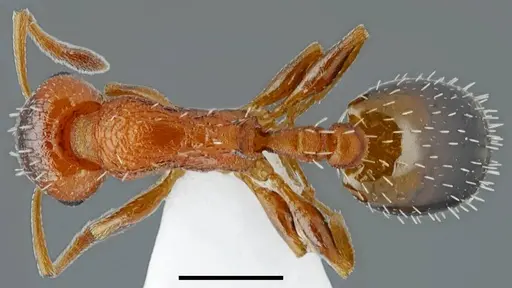
Literature
Loading distribution map...Loading products...