
Temnothorax poeyi
- Sci. Name
- Temnothorax poeyi
- Tribe
- Crematogastrini
- Subfamily
- Myrmicinae
- Author
- Wheeler, 1913
- Distribution
- Found in 1 countries
Introduction
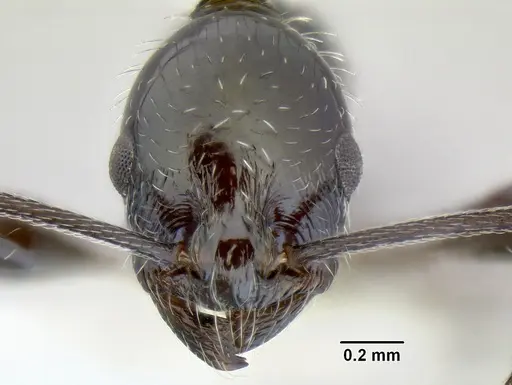
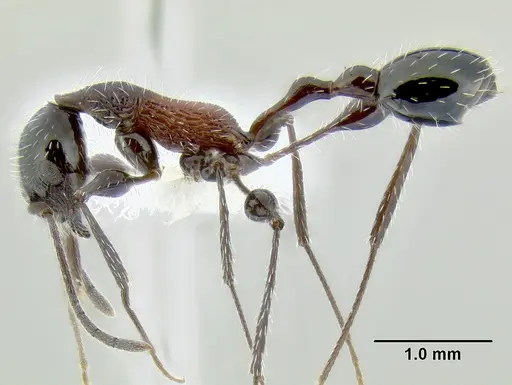
Temnothorax poeyi is a small, terricolous ant species native to Cuba and the Greater Antilles in the Neotropical region . It belongs to the Caribbean sallei-clade of Temnothorax and is morphologically far more divergent from typical temperate species than the social parasites . Workers nest in crevices of limestone rocks or cliffs, often building more or less tubular carton entrances . The species was originally described as Macromischa poeyi in 1913 and later transferred to Temnothorax . Its ecology is typical of Caribbean rock-dwelling ants, but specific details on behavior and colony structure remain undocumented.
Quick Summary
- Difficulty: Hard
- Origin & Habitat: Cuba and the Greater Antilles in the Neotropical region, where it nests in crevices of limestone rocks or cliffs and often constructs tubular carton entrances [3][1]. It is a terricolous species that disperses and forages on the ground [1].
- Colony Type: Unknown, colony structure (single queen vs multiple queens) has not been documented for this species. Most Temnothorax are monogyne, but this is not confirmed for T. poeyi.
- Size & Growth:
- Queen: Size data unavailable, no total length measurements are recorded for this species.
- Worker: Size data unavailable, no total length measurements are recorded for this species.
- Colony: Unknown, no colony size data exists for this species.
- Growth: Unknown, no data on growth rate.
- Development: Unknown, no specific development data for T. poeyi. (In related Caribbean Temnothorax, development from egg to worker takes roughly 6-10 weeks at warm temperatures, but this is an estimate and not confirmed for T. poeyi.)
- Antkeeping:
- Temperature: Infer from tropical Caribbean habitat: maintain warm, stable conditions around 24-28°C. Avoid prolonged temperatures below 22°C as the species is adapted to consistently warm environments [1].
- Humidity: Provide a moisture gradient, keep the nest substrate lightly moist but not waterlogged. Since the species naturally nests in limestone crevices with some airflow, avoid constant high humidity. A test tube setup with a water reservoir and dry section works well.
- Diapause: No, this is a tropical Caribbean species that does not require hibernation. Maintain warm temperatures year-round [1].
- Nesting: Temnothorax poeyi nests naturally in tight rock crevices, often with carton tubes at the entrance [3]. In captivity, test tubes with a water reservoir are ideal, as they mimic secure crevices. Small plaster or 3D-printed nests with narrow chambers also work well. Avoid large open spaces.
- Behavior: Temnothorax poeyi is generally docile and non-aggressive, typical of the genus. Its defense mechanism is smearing venom using a modified spatulate stinger, a trait of the tribe Crematogastrini. Workers are active foragers on the ground. Their small size (under 4 mm) means escape prevention is critical, use fluon or similar barriers even though they are not particularly known as escape artists.
- Common Issues: temperature sensitivity, extended periods below 22°C can cause decline or death, small colony size makes founding colonies vulnerable to stress and disturbance, humidity balance, too wet can promote mold, too dry can desiccate the colony, limited availability, this is a rarely kept Caribbean endemic, sourcing colonies or queens is difficult
Housing and Nest Setup
Temnothorax poeyi naturally nests in tight limestone rock crevices with carton entrances [3]. In captivity, test tubes with a water reservoir work well because they mimic secure, enclosed spaces. Use a standard test tube filled about one-third with water and sealed with a cotton plug. The ants will nest in the dry portion. As the colony grows, you can connect multiple test tubes. Small plaster nests or 3D-printed nests with narrow chambers also work, but avoid large, open cavities. Always use a secure outworld container with fluon or oil barriers, these ants are small enough to squeeze through thin gaps. Provide a small piece of bark or stone that mimics natural rock surfaces to help them feel secure.
Feeding and Diet
No specific dietary data exists for Temnothorax poeyi. Based on related Temnothorax and typical small ant diets, provide small protein sources (e.g., fruit flies, pinhead crickets, small mealworms) and carbohydrates (sugar water, honey, diluted honey). Offer protein every 2-3 days and keep a constant sugar source available. Portion sizes should be tiny, a single fruit fly or a drop of honey is enough. Remove uneaten protein after 24 hours to prevent mold. A small test tube outworld or a flat dish works well for feeding. Note that natural foraging habits are unknown, so adjust based on colony acceptance.
Temperature and Seasonal Care
Temnothorax poeyi is a tropical Caribbean species [1]. It requires consistently warm conditions year-round. Keep the nest area at 24-28°C. A heating cable on one side of the nest can create a gentle gradient. Avoid placing the colony near air conditioning vents or cold drafts. Sudden drops below 22°C can stress or kill the colony. This species does NOT require hibernation or winter cooling. Maintain tropical conditions throughout the year. Monitor activity, if workers become sluggish, increase temperature slightly. Room temperature may be sufficient if your home stays above 24°C.
Colony Founding and Growth
Founding behavior for Temnothorax poeyi is unconfirmed. For most Temnothorax, queens found colonies claustrally (sealing themselves in a chamber and raising the first brood on stored reserves), but this has not been studied for T. poeyi. If you have a queen, provide a test tube setup in complete darkness and minimal disturbance. Do not feed the queen during the founding phase. The first workers (nanitics) will emerge after an unknown period, based on related species, roughly 6-10 weeks at warm temperatures. Colony growth rate and maximum size are unknown. Founding colonies are vulnerable to stress, avoid checking on them frequently. Once workers appear, you can begin feeding tiny amounts.
Behavior and Observation
Temnothorax poeyi is docile and non-aggressive, typical of the genus. Its primary defense is smearing venom with a modified stinger, a trait of the tribe Crematogastrini. Workers are active ground foragers and likely use chemical trails to recruit nestmates. The colony will establish regular foraging routes. Due to their small size (size data unavailable, but likely under 4 mm as typical for Temnothorax), they are fascinating to observe under magnification. They show typical division of labor: workers tend brood, forage, and maintain the nest. The colony is not known to be aggressive, but handling should be minimal. Use a fine paintbrush or aspirator for any transfers.
Frequently Asked Questions
How long does it take for Temnothorax poeyi to raise their first workers?
Unknown for this species. Based on related Caribbean Temnothorax, development from egg to worker likely takes 6-10 weeks at 24-28°C, but this is an estimate and not confirmed for T. poeyi. The queen probably raises the first brood alone (claustral founding is typical for the genus, but not confirmed).
Do Temnothorax poeyi ants need hibernation?
No, this is a tropical Caribbean species and does not require hibernation. Keep them warm year-round at 24-28°C. They are adapted to consistently warm conditions and will decline if exposed to prolonged cold [1].
What do Temnothorax poeyi ants eat?
No specific dietary data exists. By genus patterns, they likely accept small insects (fruit flies, pinhead crickets, small mealworms) and carbohydrates (sugar water, honey). Offer protein every 2-3 days and a constant sugar source. Adjust based on colony acceptance.
Can I keep Temnothorax poeyi in a test tube?
Yes, test tubes work excellently. They naturally nest in tight rock crevices, so a test tube with a water reservoir provides an ideal captive environment. Use a standard setup with a cotton-plugged water reservoir [3].
How big do Temnothorax poeyi colonies get?
Unknown, no colony size data exists for this species. Related Temnothorax species often have colonies of a few hundred workers, but this is an estimate. Maximum colony size is not documented.
What temperature do Temnothorax poeyi ants need?
Keep them at 24-28°C. This tropical species prefers warm, stable conditions. Avoid temperatures below 22°C. A heating cable on one side of the nest can create a gentle gradient [1].
Are Temnothorax poeyi ants aggressive?
No, they are generally docile and non-aggressive. They are not known to bite or sting and make peaceful colony inhabitants. Their defense is smearing venom with a modified stinger, typical of the tribe Crematogastrini.
Where is Temnothorax poeyi native to?
This species is native to Cuba and the Greater Antilles in the Neotropical region. It is a Caribbean endemic, adapted to warm, rocky limestone habitats [1][3].
How often should I feed my Temnothorax poeyi colony?
No specific data, but based on typical Temnothorax, offer protein (small insects) every 2-3 days and keep a constant sugar source (honey or sugar water). Remove uneaten protein after 24 hours to prevent mold.
Is Temnothorax poeyi a good species for beginners?
This is a hard-difficulty species. It is not recommended for beginners due to the lack of documented care information, specific temperature requirements, and scarcity. Only experienced keepers with proper heating and humidity control should attempt it.
Report an Issue
The current care sheet is based fully on literature. See inconsistencies, or something that's incorrect? Please , it will be resolved after review from an admin. Contributing to the blogs tab also helps providing information, to make us be able to further improve the caresheets. Thank you for your support!
References

This caresheet is licensed under CC BY-SA 4.0 .
Community Blogs
CASENT0106241
View on AntWeb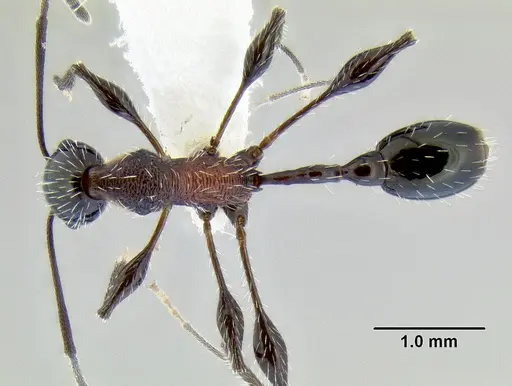
Literature
Loading distribution map...Loading products...