
Temnothorax minutissimus
- Sci. Name
- Temnothorax minutissimus
- Tribe
- Crematogastrini
- Subfamily
- Myrmicinae
- Author
- Smith, 1942
- Distribution
- Found in 1 countries
Introduction
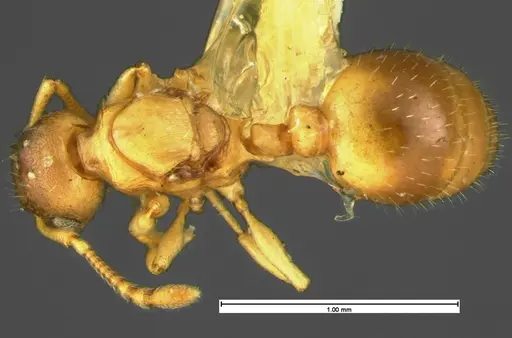
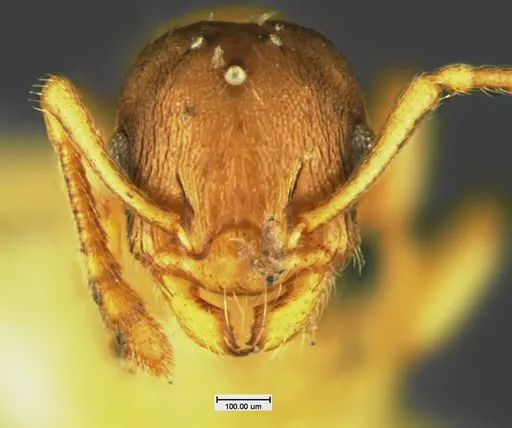
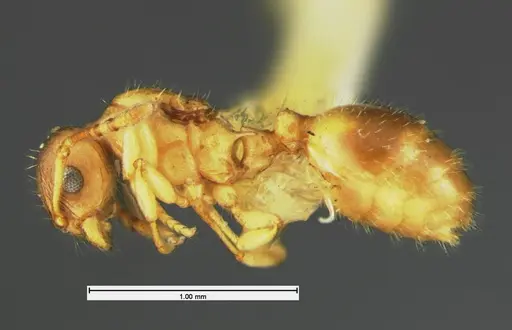
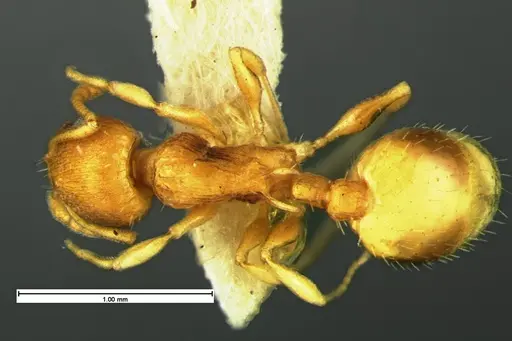
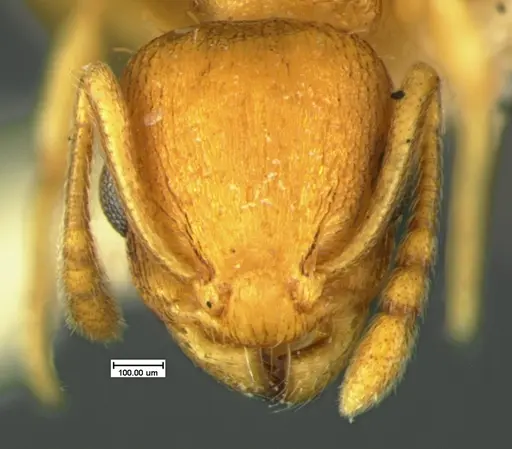
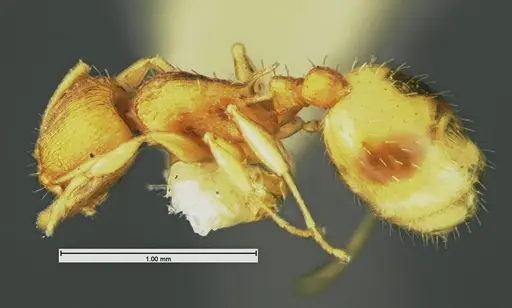
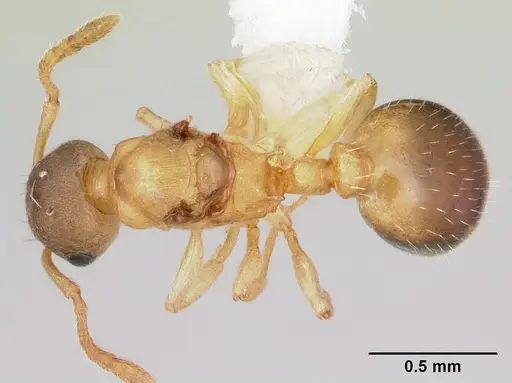
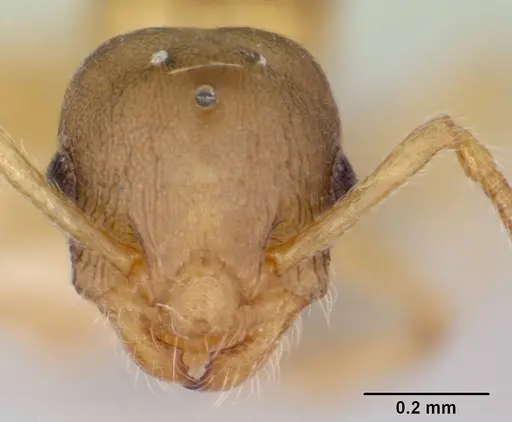
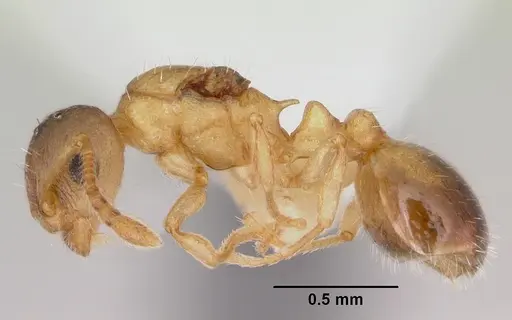
Temnothorax minutissimus is a rare workerless ant that lives entirely as an inquiline parasite inside colonies of its host, Temnothorax curvispinosus . The queen is tiny, about 3 mm long, pale yellow to light brown with darker markings on the head, thorax sutures, and gaster . It has blunt propodeal spines that are the same width from base to tip, which helps tell it apart from similar species . The name 'minutissimus' means 'very tiny, ' a nod to its small size compared to its host . This species does not produce any workers at all, it only exists as queens and males, relying entirely on host workers for food, shelter, and care . The queens chemically mimic their host queen by grooming her, which helps them get accepted into the colony . This is not a species you can keep like a normal ant; it requires an established host colony to survive.
Quick Summary
- Difficulty: Expert
- Origin & Habitat: Eastern United States: known from the District of Columbia, Indiana, Michigan, New York, Ohio, West Virginia, and North Carolina [6][2][7]. Lives in woodlands and forest edges, often near the base of large oak trees [1]. It always nests inside host colonies, which themselves nest in acorns, hollow twigs, sticks, and dead roots in leaf litter [3].
- Colony Type: Workerless obligatory inquiline, no workers exist. Lives as a social parasite inside Temnothorax curvispinosus colonies. The parasite is facultatively polygynous: multiple parasitic queens can share the same host colony, and host colonies can have one or more host queens [1]. The parasite tolerates the host queen and does not kill her [1].
- Size & Growth:
- Queen: ~3 mm [3]
- Worker: Workerless species, no workers exist [4]
- Colony: Colony size refers to the host colony. Temnothorax curvispinosus colonies can reach several hundred workers. Within a parasitized colony, you may find multiple Temnothorax minutissimus queens (both dealate and alate) [1].
- Growth: Unknown for this species specifically
- Development: N/A, workerless species [4] (This species only produces reproductives (males and new queens), never workers. Development occurs after the host produces its own sexual brood [1].)
- Antkeeping:
- Temperature: Keep the host colony at temperatures typical for eastern woodland Temnothorax species: around 20–24°C. Stable room temperature usually works.
- Humidity: Moderate humidity, similar to woodland conditions, keep the nest substrate damp but not waterlogged. Aim for around 50–70% relative humidity.
- Diapause: Likely yes, following the host's seasonal cycle. In the wild, mated females overwinter inside host colonies (Intranidal Mated Offspring Hibernation) [1]. Give both host and parasite a cool period (10–15°C) for 2–3 months in winter.
- Nesting: You cannot keep this species alone. First you need a healthy Temnothorax curvispinosus colony. The host nests in small cavities like acorns, hollow twigs, sticks, and dead roots. A naturalistic setup with several small nest chambers works best [3].
- Behavior: Extremely docile, this species has no workers to defend it, so it relies entirely on host acceptance. Parasitic queens spend much of their time riding on or flanking the host queen, grooming her to pick up her colony's chemical odor [5]. They sometimes eat host eggs, which may help control the host's reproduction [1]. Males are produced in late summer and have unusual features: reduced antenna segments (9–11 instead of 12) and smaller eyes [1]. This species has a modified stinger for smearing venom (typical of Crematogastrini), but it is not effective against humans, the queens are practically defenseless.
- Common Issues: this species cannot survive without a host colony, you cannot keep Temnothorax minutissimus alone, introducing the parasite to a host colony may fail, host workers often attack and kill intruders, the host colony may decline under the parasite's burden over time, finding Temnothorax minutissimus to purchase is extremely difficult, it is one of the rarest North American ants, if the host colony dies, the parasite colony dies too, you cannot rescue them separately, the parasite's reliance on a single host species makes it very vulnerable to host colony loss
Understanding This Species
Temnothorax minutissimus is one of the most unusual ants you could ever try to keep, it is a workerless obligatory inquiline, meaning it has lost the worker caste completely and cannot survive without a host colony [4]. Unlike slave‑making ants that raid other species for workers, this ant does not take slaves, it simply has no workers of its own. It lives entirely inside nests of Temnothorax curvispinosus, eating food that host workers bring in and depending on them for everything [1]. The queens are pale yellow to light brown, about 3 mm long, with blunt propodeal spines that are the same width from base to tip, a key identification feature [2]. They are extremely rare in the wild, with only about 3% of host colonies parasitized [1]. This is not a species for beginners or even most intermediate keepers. It is an expert‑level challenge that first requires you to establish a healthy host colony.
The Host Species: Temnothorax curvispinosus
Before you can keep Temnothorax minutissimus, you must keep and maintain a colony of Temnothorax curvispinosus, its only viable host in captivity [1]. Temnothorax curvispinosus is a small, reddish‑brown ant native to the eastern United States. It nests in acorns, hollow twigs, sticks, and other small cavities in woodland leaf litter [3]. It is a common species that makes decent pets, but all Temnothorax are small and need fine escape prevention. The host colony should be established and healthy before you try any introduction. Keep Temnothorax curvispinosus at room temperature (20–24 °C) with moderate humidity. Feed them standard ant foods: sugar water or honey, and protein sources like small insects or fruit flies. Once you have a thriving colony, with a healthy queen and a good worker population, you can attempt to introduce the parasite.
Introducing the Parasite
If you somehow obtain Temnothorax minutissimus queens, introducing them to a host colony is a delicate process with no guarantee of success. Research shows that mated young queens can be accepted by host colonies in both spring and fall, but acceptance is hit‑or‑miss [1]. The parasite queens groom the host queen to chemically mimic her colony odor, which helps them get in [5]. Some sources report that many Temnothorax minutissimus females can coexist in one host colony, Ohio colonies have been found with 14 to 32 parasitic females [2]. Start by introducing a single dealate female to a well‑established host colony and watch closely for aggression. The host workers may attack and kill the intruder, or they may accept her. There is no guaranteed method, successful introductions in captivity are extremely rare.
Breeding and Reproduction
Temnothorax minutissimus has one of the strangest reproductive systems among ants. It produces only sexuals, males and new queens, never workers [1]. The sex ratio is strongly female‑biased: in the lab about 10 males for every 100 females [1]. Males appear in August and September and have odd features: they have 9–11 antenna segments instead of the usual 12,smaller eyes, and a more feminine body shape [1]. Mating happens inside the nest (intranidal mating), and mated females stay in the colony over winter, a behavior called Intranidal Mated Offspring Hibernation (IMOH) [1]. In spring, the mated young queens leave on foot to find and invade new host colonies [1]. Captive breeding would require keeping both the host colony and the parasite through multiple seasons, an extraordinary challenge.
Legal and Ethical Considerations
Temnothorax minutissimus is native to the eastern United States and must never be released outside its natural range [6]. Because of its extreme rarity (only about 3% of host colonies are parasitized) and its specialized life history, collecting wild queens is discouraged, it can harm already small populations. Always check your local laws before acquiring this species. Ethically, consider that keeping a workerless parasite means total dependence on a host colony. If the host dies, the parasite dies too. This is not a species for casual hobbyists. If you are interested for research or education, contact a university or museum that studies social parasitism in ants.
Frequently Asked Questions
Can I keep Temnothorax minutissimus as a pet?
Not in the usual sense. This is a workerless obligatory inquiline, it cannot survive without a host colony of Temnothorax curvispinosus. You would first need to establish a healthy Temnothorax curvispinosus colony, then try to introduce the parasite. That is an expert‑level challenge with no guaranteed success. Also, Temnothorax minutissimus is one of the rarest ants in North America and is not available through commercial ant sellers.
Does Temnothorax minutissimus have workers?
No. This is a workerless species, no workers have ever been found [4]. It exists only as queens and males. All colony tasks, foraging, feeding, brood care, are done by the host species' workers.
What does Temnothorax minutissimus eat?
It eats whatever the host workers feed it. Like all inquiline parasites, Temnothorax minutissimus is completely dependent on host workers for food. The host workers collect food and then regurgitate it to the parasites, just as they feed their own queen. You do not feed the parasite directly, you feed the host colony.
How do I start a colony of Temnothorax minutissimus?
You cannot start a colony from scratch. First you need an established colony of Temnothorax curvispinosus, then you must introduce Temnothorax minutissimus queens. Obtaining the parasite is extremely hard, it is one of the rarest North American ants, found in only about 3% of host colonies. There is no commercial source. This is not a species for hobbyist ant keeping.
Will the host colony accept the parasite?
Not always. Research shows that mated young queens can be accepted in both spring and fall, but rejection is common [1]. The parasite queens groom the host queen to pick up her colony's scent, which helps with acceptance [5]. However, host workers may attack and kill intruders. Even if acceptance happens at first, the relationship may not stay stable.
Can I keep multiple Temnothorax minutissimus queens together?
Yes, the species is facultatively polygynous, so multiple parasitic queens can coexist in one host colony. Ohio colonies have been found with 14–32 Temnothorax minutissimus females [2]. But this only applies after successful introduction to a host colony, you cannot keep them together without a host.
Does Temnothorax minutissimus sting?
No. This tiny species has no workers to defend the colony. The queens have a modified stinger for smearing venom (typical of Crematogastrini), but it is not effective against humans. They are essentially defenseless and rely on chemical mimicry for survival.
Do I need to hibernate Temnothorax minutissimus?
Yes, likely, following the host's seasonal cycle. In the wild, mated females overwinter inside host colonies (Intranidal Mated Offspring Hibernation) [1]. Give both the host colony and any parasites a cool period (10–15°C) for about 2–3 months in winter.
How rare is Temnothorax minutissimus?
Extremely rare. Only about 3% of Temnothorax curvispinosus colonies are parasitized (one study found 3.3% in 2003 and 2.3% in 2004) [1]. It is known from only a handful of states: District of Columbia, Indiana, Michigan, New York, Ohio, West Virginia, and North Carolina [6][2][7].
Report an Issue
The current care sheet is based fully on literature. See inconsistencies, or something that's incorrect? Please , it will be resolved after review from an admin. Contributing to the blogs tab also helps providing information, to make us be able to further improve the caresheets. Thank you for your support!
References

This caresheet is licensed under CC BY-SA 4.0 .
Community Blogs
Literature
Loading distribution map...Loading products...