
Temnothorax marocanus
- Sci. Name
- Temnothorax marocanus
- Tribe
- Crematogastrini
- Subfamily
- Myrmicinae
- Author
- Santschi, 1909
- Distribution
- Found in 1 countries
Introduction
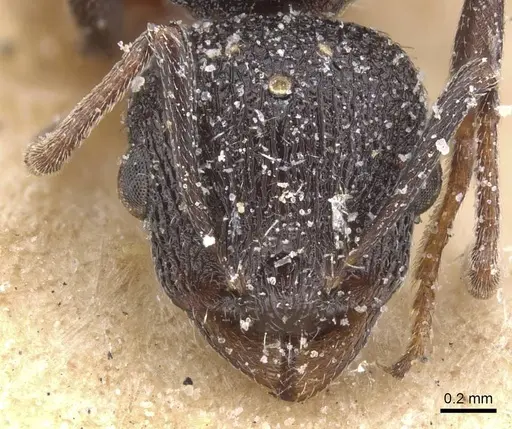
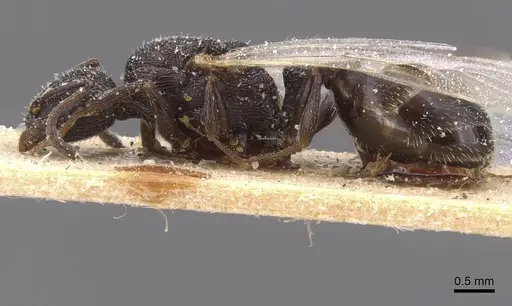
Temnothorax marocanus is a small ant species endemic to Morocco. Its distribution covers from Agadir to the western and central High Atlas mountains . Very little is known about its biology; most care advice is inferred from related Temnothorax species. Workers are tiny, typical of the genus, and the species belongs to the Myrmicinae subfamily, tribe Crematogastrini, which uses a smearing venom defense (a modified stinger wipes venom onto enemies). Captive care is largely experimental.
Quick Summary
- Difficulty: Medium
- Origin & Habitat: Morocco, endemic to western and central High Atlas mountains, from Agadir to Ajdir and Zad pass [1]. Habitat details are unknown but likely rocky areas with small cavities under stones.
- Colony Type: Unknown. No data on social structure. Many Temnothorax are monogyne (single queen), but this is unconfirmed for T. marocanus.
- Size & Growth:
- Queen: Size data unavailable, inferred from Temnothorax genus (~4-5 mm)
- Worker: Size data unavailable, inferred from Temnothorax genus (~2-4 mm)
- Colony: Inferred from Temnothorax genus, up to several hundred workers at maturity
- Growth: Moderate (inferred from genus)
- Development: Inferred from Temnothorax genus, roughly 6-10 weeks at optimal temperature (Species-specific data missing, timeline is a rough estimate based on related species.)
- Antkeeping:
- Temperature: Unknown, no species-specific studies. Based on Moroccan origin, likely tolerant of warm conditions. Start at room temperature (20-24°C) and observe colony response. Provide a temperature gradient if possible.
- Humidity: Unknown, for most Temnothorax, moderate humidity with a moist but not waterlogged substrate is recommended. Since T. marocanus likely nests in small cavities, keep nest substrate slightly damp.
- Diapause: Unknown, Morocco's climate varies from mild coastal to cold highlands. Some Temnothorax benefit from a mild winter rest (2-3 months at 10-15°C), but no data confirms this for T. marocanus. If attempted, carefully monitor health.
- Nesting: Small nest cavities suited to tiny ants, Y-tong (AAC) with narrow chambers, test tubes with dark wrap, or small plaster nests. Provide a dark, confined space.
- Behavior: Temperament is likely peaceful, typical of Temnothorax. Workers are non-aggressive but will use smearing venom if threatened. Due to their small size (inferred ~2-4 mm), escape risk is high, use fine mesh (0.5 mm or smaller) and tight seals.
- Common Issues: escape prevention is critical due to tiny worker size, use fine mesh and tight-fitting lids (0.5 mm or smaller)., unknown care requirements make it challenging, keepers must be prepared to experiment., colony may be slow to establish or fail due to lack of species-specific knowledge., 30°C.
Housing and Nest Setup
Temnothorax marocanus is a tiny ant, so a small-scale nest is appropriate. Y-tong (AAC) nests with narrow chambers, test tubes wrapped in dark material, or small plaster nests all work well. There is no species-specific research on preferred nest type, but based on the genus, they likely prefer tight cavities. A small outworld (e.g., plastic box with fine mesh ventilation) connected by a short tube works for foraging. Ensure all openings are sealed with fine mesh (0.5 mm or smaller) to prevent escapes. [1][2]
Temperature and Heating
No temperature preferences have been studied for this species. Based on its Moroccan origin, especially the High Atlas mountains, which have warm summers but can get cold, a moderate temperature range is likely suitable. Start at room temperature (20-24°C). If you want to boost activity, use a gentle heat mat on the side of the nest to create a gradient, but avoid direct heat on the nest that might dry it out too fast. Keep temperatures below 30°C, as most tiny ants cannot handle extreme heat. Observe your colony: if workers pile near the heat source, it may be too cool, if they avoid it, too warm. Adjust accordingly. [1]
Feeding and Diet
Like other Temnothorax, this species is probably omnivorous. Offer small live prey such as Drosophila melanogaster (fruit flies), small pinhead crickets, or tiny mealworms. Sugar sources (honey water or sugar water diluted 1:4) should be available at all times. Feed protein 2-3 times per week for colonies with brood. Remove uneaten prey after 24-48 hours to avoid mold. No species-specific diet information exists, so adjust based on colony response. [2]
Colony Development and Founding
The founding method is unknown for T. marocanus. Many Temnothorax are claustral (queen seals herself in and raises first brood without foraging), but this is not confirmed. Queens likely rely on stored fat reserves during founding. Development from egg to worker is estimated at 6-10 weeks, based on other Temnothorax species. After the first workers (nanitics) emerge, the colony grows gradually. Patience is required, as growth may be moderate. No species-specific timeline has been published.
Winter Care and Diapause
Diapause requirements are unknown. T. marocanus is from Morocco, where winters vary from mild coastal to cold mountain. Some keepers may choose to offer a mild cooling period (2-3 months at 10-15°C) as many Temnothorax benefit from it, but there is no evidence that this species requires it. If you attempt diapause, reduce temperature gradually, keep the nest slightly moist, do not feed, and avoid freezing. Monitor health, if workers become active during diapause, it may be unnecessary or too warm. [1]
Escape Prevention
Because workers are very small (inferred ~2-4 mm), escape prevention is critical. Use fine stainless steel mesh (0.5 mm aperture) on all ventilation holes and outworld connections. Test tube setup should have a tight cotton plug secured with tape. Barriers like fluon or olive oil on the rim of the outworld can provide backup. Check all seals regularly, these ants can squeeze through gaps that seem impossibly small.
Frequently Asked Questions
How long does it take for Temnothorax marocanus to get their first workers?
There is no species-specific data. Based on related Temnothorax species, first workers (nanitics) may emerge 6-10 weeks after egg-laying at optimal temperatures. This is just an estimate.
Can I keep Temnothorax marocanus in a test tube?
Yes, test tubes are a good option for founding. Use a small tube with a water reservoir (not too large to avoid flooding). Wrap in dark material. No species-specific preference is known, but it works for most small ants.
Do Temnothorax marocanus ants sting?
They belong to the Myrmicinae subfamily, tribe Crematogastrini, which uses a smearing venom defense, they wipe venom onto enemies using a modified stinger, rather than injecting it. This is unlikely to be noticeable to humans.
What temperature do Temnothorax marocanus need?
Unknown. Start at room temperature (20-24°C). Provide a gradient if possible. Avoid extremes above 30°C or below 10°C for extended periods.
Are Temnothorax marocanus good for beginners?
Not recommended for beginners. Care requirements are poorly known, and the tiny size demands meticulous escape prevention. Only keep if you have experience with small ant species and are prepared to experiment.
How big do Temnothorax marocanus colonies get?
There are no colony size records for this species. Based on genus patterns, colonies might reach several hundred workers at maturity, but this is speculative.
Do they need hibernation?
Unknown. Some keepers provide a mild winter rest (2-3 months at 10-15°C), but it may not be necessary for a Moroccan species. Monitor your colony's natural rhythm.
What do Temnothorax marocanus eat?
Likely omnivorous: small live prey (fruit flies, small crickets) and sugar sources (honey water). No species-specific diet data.
Why are my Temnothorax marocanus escaping?
Their inferred tiny size (2-4 mm) allows them to get through very small gaps. Use fine mesh (0.5 mm or smaller) on all openings, seal connections with tape or petroleum jelly, and consider barrier fluids on outworld rims.
When should I move my colony to a formicarium?
When the test tube becomes crowded (e.g., after 20-30 workers). Move to a small formicarium with narrow chambers. There is no standard guideline, you can move earlier or later.
Report an Issue
The current care sheet is based fully on literature. See inconsistencies, or something that's incorrect? Please , it will be resolved after review from an admin. Contributing to the blogs tab also helps providing information, to make us be able to further improve the caresheets. Thank you for your support!
References

This caresheet is licensed under CC BY-SA 4.0 .
Community Blogs
CASENT0912961
View on AntWeb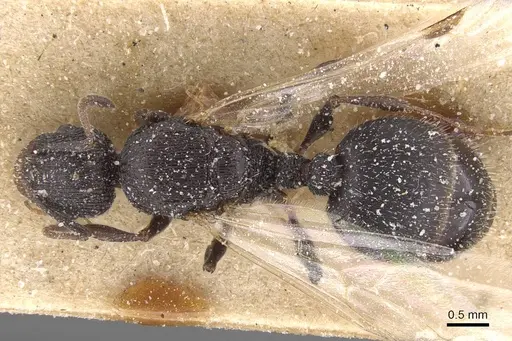
Literature
Loading distribution map...Loading products...