
Temnothorax liebi
- Sci. Name
- Temnothorax liebi
- Tribe
- Crematogastrini
- Subfamily
- Myrmicinae
- Author
- Mackay, 2000
- Distribution
- Found in 1 countries
Introduction
Temnothorax liebi is a tiny, pale yellow to nearly white ant from the Chihuahuan Desert of southwestern Texas . Its most striking feature is its unusually large, dark eyes, which are an adaptation for nocturnal activity . Despite being described as nocturnal, specimens have been observed foraging at nest entrances during the day . Workers are small and soft‑bodied, and the species is known only from a few collections in far West Texas, making it a rare find for antkeepers . Only the worker caste has been formally described, so colony structure in the wild remains poorly documented .
Quick Summary
- Difficulty: Hard
- Origin & Habitat: Chihuahuan Desert in southwestern Texas, USA. Found nesting in soil within creosote bush scrub [1].
- Colony Type: Unconfirmed, only the worker caste is known. Based on genus patterns, single‑queen (monogyne) colonies are likely.
- Size & Growth:
- Queen: Not described, size data unavailable [1]
- Worker: Only the worker caste is known, total body length has not been recorded. AntWiki describes them as 'small, pale yellow' [1]
- Colony: Unknown, not documented in the wild [1]
- Growth: Unknown, likely moderate based on related Temnothorax species, but unconfirmed
- Development: Estimated 6-10 weeks based on related Temnothorax species at optimal temperature (Development time inferred from genus‑level data, no species‑specific studies available)
- Antkeeping:
- Temperature: Desert species, keep warm around 22-26°C with a gentle gradient. No precise optimal range has been published [1].
- Humidity: Low to moderate, allow the nesting substrate to dry partially between waterings. This is a dry‑adapted species [1].
- Diapause: Likely yes, this temperate desert species probably benefits from a cool winter period (around 15-18°C for 2-3 months) [1].
- Nesting: Soil‑nesting species. A naturalistic setup with sandy‑loamy substrate or a Y‑tong nest with tight, small chambers works well. Keep the nesting area relatively dry [1].
- Behavior: Generally peaceful and non‑aggressive, typical of the genus [1]. Workers are active foragers despite their tiny size. Their large eyes suggest good low‑light vision [2]. Escape prevention is essential, use fine mesh barriers because workers are very small. They belong to the tribe Crematogastrini and possess a modified spatulate stinger used to smear venom rather than pierce (smear defense).
- Common Issues: tiny size makes escape likely without fine mesh barriers, limited distribution means wild colonies are rarely available, only the worker caste is known, queen behavior and founding remain unconfirmed, desert species may be sensitive to overwatering, keep nesting area dry, colony size and growth rate are unstudied, so expectations should be conservative
Housing and Nest Setup
Temnothorax liebi is a soil‑nesting desert species [1]. A naturalistic setup with sandy‑loamy substrate works well, allowing the ants to dig chambers. Alternatively, a Y‑tong (AAC) nest with appropriately sized small chambers is suitable for this tiny species. Because they come from the dry Chihuahuan Desert, keep the nesting area relatively dry, allow the substrate to dry out partially between waterings. A thin layer of substrate (1-2 inches) is enough for founding colonies. For the outworld, a small container is sufficient. Escape prevention is critical: these ants are very small and can squeeze through standard gaps. Use fine mesh on ventilation holes and seal all connections [1].
Feeding and Diet
Like most Temnothorax species, T. liebi likely accepts a varied diet of small insects and sugar sources. Offer small live prey such as fruit flies, pinhead crickets, or mealworm pieces. Since the ants are tiny, prey should be no larger than their own body. Sugar water, honey, or diluted jam can be provided as an energy source. In the wild they probably forage for small arthropods and collect honeydew [1]. Feed small amounts 2-3 times per week and remove uneaten prey after 24 hours to prevent mold.
Temperature and Seasonal Care
As a desert species from the Chihuahuan Desert, T. liebi prefers warm temperatures around 22-26°C [1]. Provide a temperature gradient in the nest so ants can choose their preferred zone. A heating cable on one side of the nest can create this gradient, but avoid direct heat on the nest. During winter months, a cooling period around 15-18°C is likely beneficial, mimicking natural seasonal cycles. This species occurs in temperate West Texas where winters are cool, so some form of winter rest is probably important for colony health [1]. Monitor colony activity, if workers become sluggish, a slight temperature reduction may be appropriate.
Behavior and Colony Dynamics
Temnothorax liebi workers are small but active. Their large eyes suggest good vision, possibly adapted for low‑light conditions, though they can be active during the day [2][1]. The species appears relatively peaceful, typical of the genus. Only the worker caste has been formally described, so queen behavior and colony founding are unconfirmed [1]. Based on genus patterns, if the queen is claustral (sealing herself in a chamber during founding), she would raise the first workers alone on stored reserves. Be patient during founding, small species often take longer to produce their first workers. This species belongs to the tribe Crematogastrini and uses a smear defense: workers have a modified, flattened stinger used to wipe venom onto enemies rather than piercing.
Frequently Asked Questions
How long does it take for Temnothorax liebi to produce first workers?
Based on related Temnothorax species, expect 6-10 weeks from egg to first worker at optimal temperature (around 24°C). Smaller species often develop slightly faster than larger ants, but this varies. Be patient during founding, queens may take time to lay eggs and raise brood.
What do Temnothorax liebi ants eat?
They likely accept small live prey like fruit flies, tiny crickets, and mealworm pieces, plus sugar sources like honey water or sugar water. Keep prey items small since these ants are very tiny. Offer protein 2-3 times weekly and provide constant access to sugar water.
Can I keep multiple queens together?
Not recommended, there is no data on polygyny in this species, and most Temnothorax species are single‑queen (monogyne). If you obtain multiple foundresses, house them separately to avoid fighting.
Do Temnothorax liebi ants sting?
They have a functional stinger but it is modified for smearing venom rather than piercing (smear defense). The ants are very small, so any sting would be very mild and is not dangerous to humans.
What temperature is best for Temnothorax liebi?
Keep them at 22-26°C with a gentle gradient allowing workers to choose their preferred temperature. A heating cable on part of the nest can create this gradient. They can tolerate brief variations but avoid extremes [1].
Do they need hibernation or diapause?
Probably yes, this species comes from temperate West Texas where winters are cool. A winter rest period at 15-18°C for 2-3 months is likely beneficial. Reduce feeding during this period and allow the colony to slow down naturally [1].
Why are my Temnothorax liebi dying?
Common causes include: overwatering (keep nesting area dry for this desert species), escape due to tiny size (use fine mesh), temperature extremes (avoid direct heat), or poor nutrition (offer varied diet). Also ensure they have quiet, undisturbed space, frequent vibrations can stress small colonies.
Are Temnothorax liebi good for beginners?
No, they are a hard species to keep. Their tiny size requires careful escape prevention, and their rarity means wild colonies are hard to find. Additionally, the queen and founding behavior are not documented, so husbandry relies heavily on inference. Only try this species if you have some experience with small desert ants.
When should I move them to a formicarium?
Wait until the colony reaches at least 20-30 workers. For a tiny species like this, a small Y‑tong nest or naturalistic setup works well from the start. Test tube setups work for founding colonies, transition when the colony grows or if the test tube becomes crowded.
How big do Temnothorax liebi colonies get?
Unknown, colony size has not been documented in the wild. Based on related species, it may stay under a few hundred workers, but this is speculation [1].
Report an Issue
The current care sheet is based fully on literature. See inconsistencies, or something that's incorrect? Please , it will be resolved after review from an admin. Contributing to the blogs tab also helps providing information, to make us be able to further improve the caresheets. Thank you for your support!
References

This caresheet is licensed under CC BY-SA 4.0 .
Community Blogs
CASENT0103164
View on AntWeb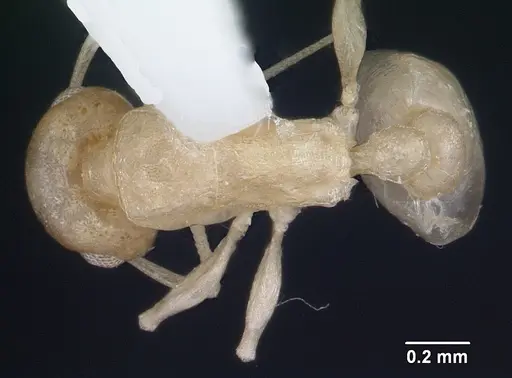
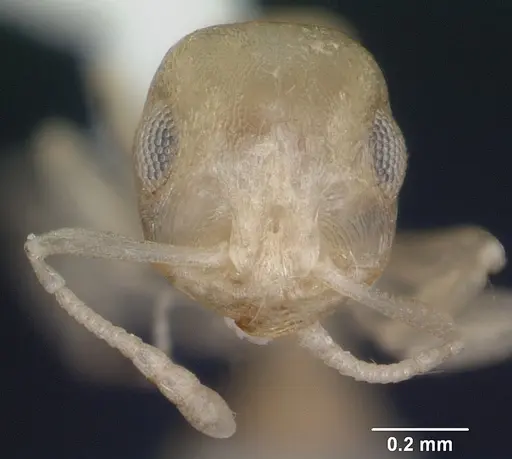
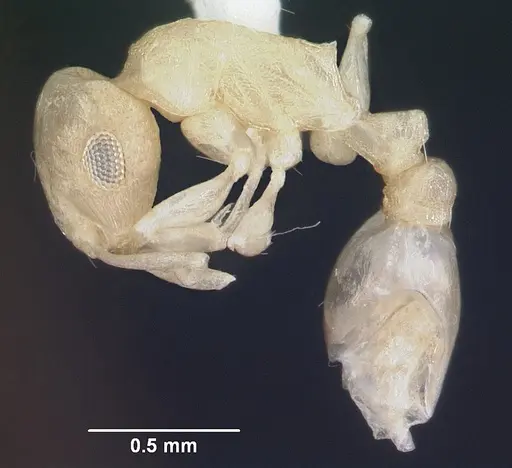
UTEPENTO14817
View on AntWeb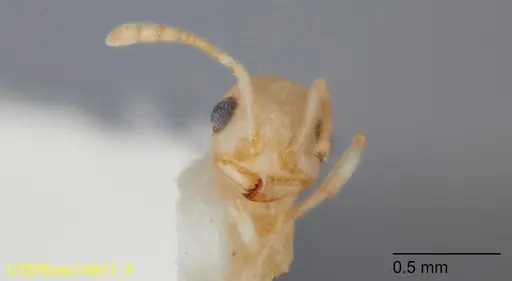
Literature
Loading distribution map...Loading products...