
Temnothorax ikarosi
- Sci. Name
- Temnothorax ikarosi
- Tribe
- Crematogastrini
- Subfamily
- Myrmicinae
- Author
- Salata <i>et al.</i>, 2018
- Distribution
- Found in 1 countries
Introduction
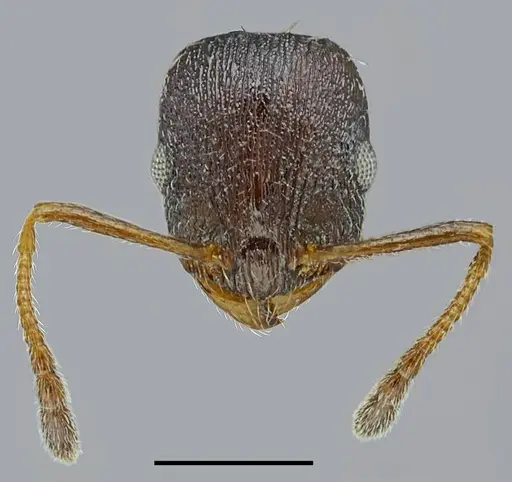
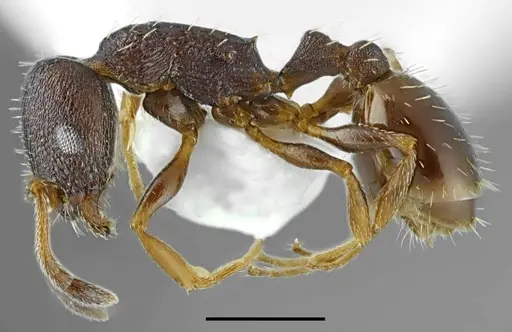
Temnothorax ikarosi is a tiny, dark-colored ant endemic to the Greek island of Crete. Only a single worker has ever been found in the wild, so almost nothing is known about its biology. Its body is uniformly dark brown, and its whole head is covered in thick, longitudinal striation - a key feature that sets it apart from similar Cretan Temnothorax like T. daidalosi and T. anodontoides . This species also has short, triangular propodeal spines and lacks smooth patches between the ridges on its head . The one known worker was discovered in 2000 on the Limnakarou Plateau at 1750 m elevation, on a shelter wall overgrown by a blackberry bush at the edge of an orchard . Because there is so little data, most care advice has to be guessed from what little we know about its habitat and from patterns seen in other Temnothorax species.
Quick Summary
- Difficulty: Hard
- Origin & Habitat: Endemic to Crete, Greece, only known from Limnakarou Plateau at 1750 m elevation. The single specimen was collected on a wall of a shelter overgrown by blackberry bush at the edge of an orchard [1][3]. This high-altitude setting suggests cooler, stable conditions compared to coastal areas.
- Colony Type: Colony structure is unconfirmed, only a single worker has ever been documented. Based on typical patterns in the genus Temnothorax, they are likely monogyne (single queen) with small colonies.
- Size & Growth:
- Queen: Unknown, no queen has ever been described. Estimated around 4-5 mm based on related Temnothorax species (inferred).
- Worker: Size data unavailable, only head measurements exist (not body length). Inferred from genus to be around 2-3 mm.
- Colony: Unknown, only a single worker has ever been collected. Related species have colonies of up to a few hundred workers.
- Growth: Moderate, typical for small Temnothorax.
- Development: Estimated 6-10 weeks at optimal temperature, based on related species [1]. (Timeline is unconfirmed for this species, based on genus-level data.)
- Antkeeping:
- Temperature: Likely prefers cooler conditions, given the high-altitude origin. Aim for 18-22 °C, room temperature is usually fine. Avoid overheating [1][3].
- Humidity: Provide moderate humidity. The mountain plateau habitat is relatively dry, so don't soak the nest. A water source (e.g., test tube with cotton) will let the colony choose their preferred humidity.
- Diapause: Likely yes, high-elevation Mediterranean species usually need a winter rest. Provide 2-3 months at 10-15 °C during winter [1].
- Nesting: Tiny nests are best, test tubes work great for founding, and later Y‑tong (AAC) or plaster nests with small chambers. Because they are so small, use fine mesh or tight seals to prevent escapes.
- Behavior: These are peaceful, non‑aggressive ants. Workers are tiny and move slowly, foraging individually. They are not known to sting (Myrmicinae with a spatulate stinger used for smearing venom), and they pose no danger to humans. Their small size requires excellent escape prevention, they can slip through tiny gaps. They will flee rather than fight [1][3].
- Common Issues: escape prevention is critical due to their tiny size, use fine mesh and tight-fitting lids, almost nothing is known about their biology, so husbandry is guesswork, high-altitude origin means they likely need cooler temperatures than most Mediterranean ants, colony growth is slow, don't overfeed or disturb frequently, winter diapause appears necessary, colonies that skip hibernation may decline
Housing and Nest Setup
Because of their tiny size, Temnothorax ikarosi needs a snug, escape‑proof home. Start a new colony in a test tube with a water reservoir, use a narrow tube (10-12 mm diameter) so the queen feels secure. Keep it dark and quiet. Once the colony has 20-30 workers, you can connect a small Y‑tong (AAC) or plaster nest with very small chambers. Avoid large open spaces that make small colonies nervous. The most important thing is tight seals: these ants can squeeze through gaps that look invisible. Use fine mesh or fluon on the edges of the outworld. A simple test‑tube setup with a small outworld is perfect for a young colony [1][3].
Temperature Management
Keep these ants on the cool side. Their home at 1750 m on Crete suggests they prefer temperate conditions, 18-22 °C is a good range. Room temperature usually works well. Avoid using heating cables unless your room is very cold, overheating can stress the colony. If you do provide a heat gradient, make sure there's always a cool area to escape to. Stability matters more than exact degrees, sudden temperature swings are worse than a steady mild temperature [1][3].
Feeding and Diet
Like most Temnothorax, these ants are omnivorous. Offer small protein sources twice a week: fruit flies, small mealworms, or pieces of cricket. Provide a sugar source (honey water or sugar water) regularly. In the wild they probably tended aphids for honeydew. Remove uneaten food after 24-48 hours to prevent mold. Keep a constant water supply, a water tube works perfectly. Don't overfeed small colonies, they can be overwhelmed by large prey [1].
Winter Care and Diapause
Based on their high‑altitude home, Temnothorax ikarosi almost certainly needs a winter rest. Gradually lower the temperature to 10-15 °C for 2-3 months, usually from late autumn through winter. During this time reduce feeding, the colony will be less active. A cool basement, garage, or refrigerator (set above freezing) works well. Do not freeze them. The rest period is important for colony health and future reproduction. Resume normal temperatures slowly in spring [1][3].
Colony Establishment
Setting up a colony of this species will be a challenge because only one wild specimen has ever been collected. If you get a queen, place her in a quiet, dark test tube and leave her alone. She will likely seal herself in and start laying eggs without feeding, this is typical claustral founding. Do not disturb her for at least 4-6 weeks. Checking too early can cause her to eat the eggs. Once the first tiny workers (nanitics) appear, start offering small pieces of food. Patience is key, small Temnothorax colonies grow slowly [1][3].
Frequently Asked Questions
How long does it take for Temnothorax ikarosi to produce first workers?
Based on related species, expect 6-10 weeks from egg to first worker at around 20 °C. The exact timeline is unknown for this species [1].
What temperature is best for keeping Temnothorax ikarosi?
Aim for 18-22 °C, room temperature is usually fine. They come from a high‑altitude plateau and likely prefer cooler conditions than most Mediterranean ants [1][3].
Do Temnothorax ikarosi ants sting?
They belong to the myrmicine tribe Crematogastrini, which has a modified stinger used for smearing venom rather than piercing skin. They are not known to sting humans and are completely harmless to keepers.
How big do Temnothorax ikarosi colonies get?
Colony size is unknown since only one worker has ever been found. Related Temnothorax species can have up to a few hundred workers [1][2].
Can I keep multiple queens together?
This has not been documented for this species. Most Temnothorax are monogyne (single queen). If you get multiple queens, house them separately to avoid aggression [1].
Do Temnothorax ikarosi need hibernation?
Yes, a winter diapause is very likely. Keep them at 10-15 °C for 2-3 months during winter [1][3].
What do Temnothorax ikarosi eat?
They are omnivorous. Offer small insects (fruit flies, mealworms) twice a week and sugar water or honey water regularly. Remove uneaten food to prevent mold [1].
Are Temnothorax ikarosi good for beginners?
No, this species is rated Hard. Very little is known about its care, and it likely needs specific cooler temperatures and a winter dormancy. Only experienced keepers should try it [1][3].
How do I prevent Temnothorax ikarosi from escaping?
Escape prevention is critical. Use tight‑fitting test tube plugs, fine mesh on outworlds, and apply fluon to potential escape routes. Check for gaps that look too small, these ants can fit through them [1].
When should I move Temnothorax ikarosi to a formicarium?
Wait until the colony has at least 20-30 workers before considering a move. Use a gentle relocation method: connect the test tube to the new nest and let them move on their own. Forced transfers stress the colony [1].
Report an Issue
The current care sheet is based fully on literature. See inconsistencies, or something that's incorrect? Please , it will be resolved after review from an admin. Contributing to the blogs tab also helps providing information, to make us be able to further improve the caresheets. Thank you for your support!
References

This caresheet is licensed under CC BY-SA 4.0 .
Community Blogs
CASENT0845912
View on AntWeb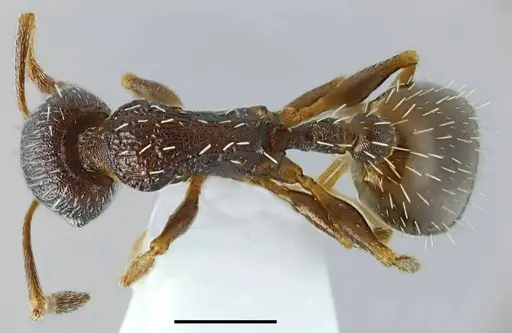
Literature
Loading distribution map...Loading products...