
Temnothorax gordiagini
- Sci. Name
- Temnothorax gordiagini
- Tribe
- Crematogastrini
- Subfamily
- Myrmicinae
- Author
- Ruzsky, 1902
- Distribution
- Found in 1 countries
Introduction
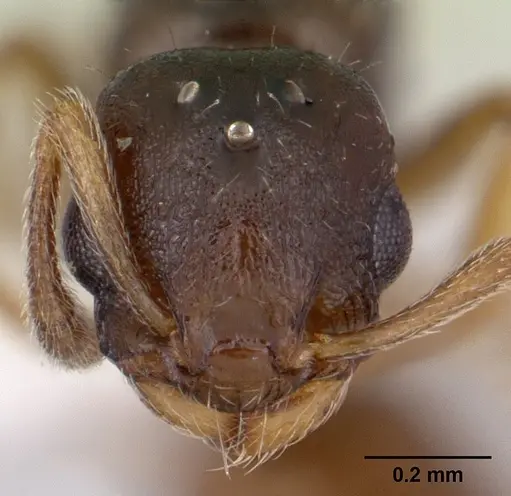
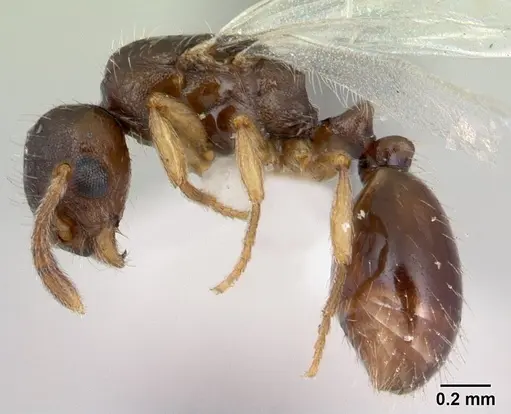
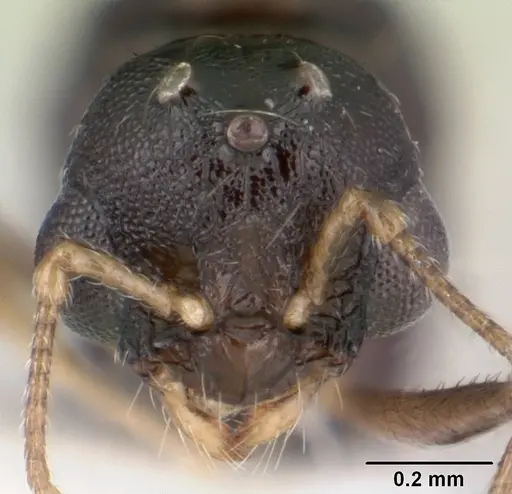
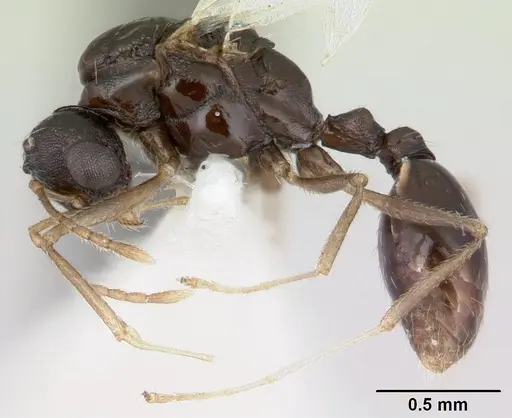
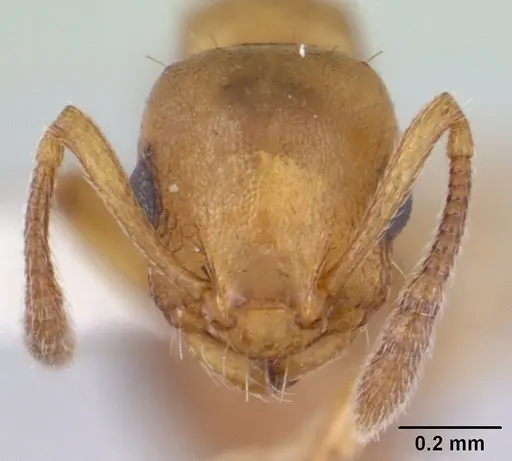
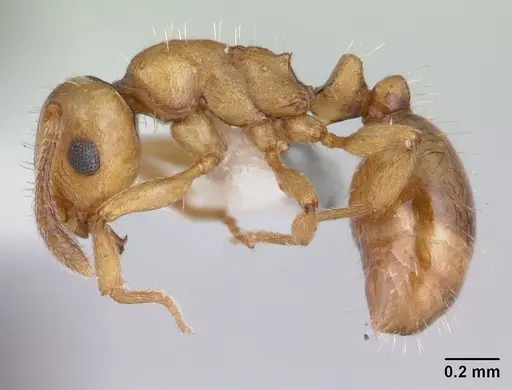
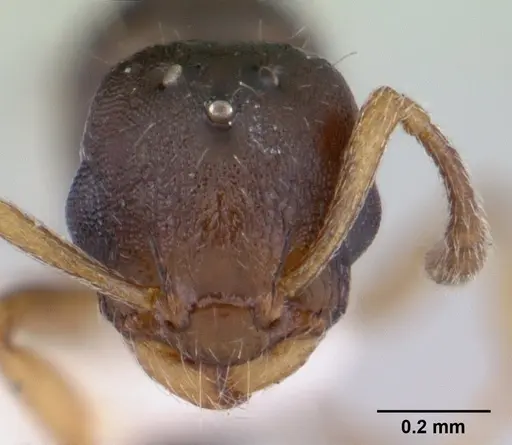
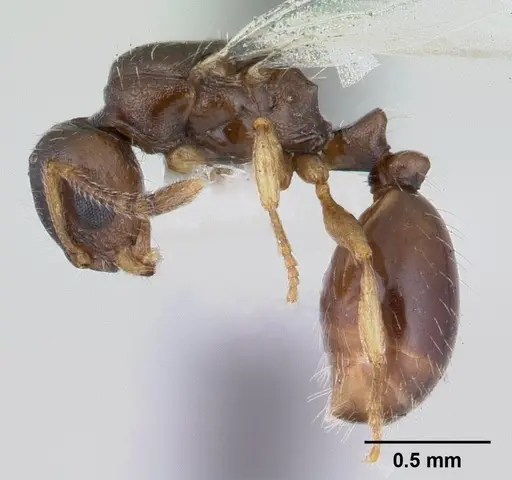
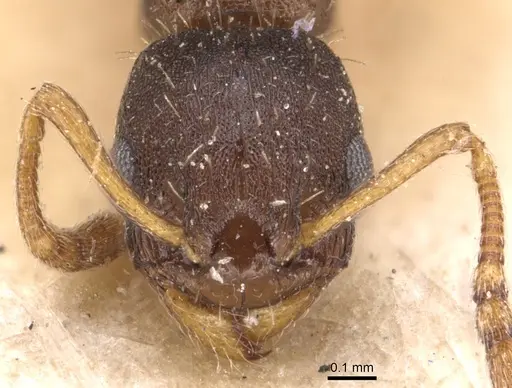
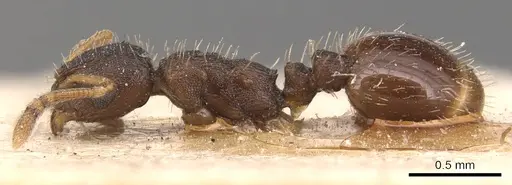
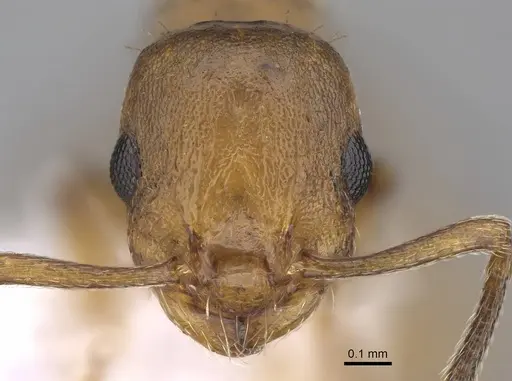
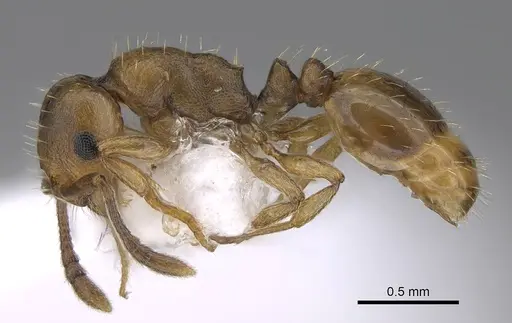
Temnothorax gordiagini is a small, socially parasitic ant originally described from near Kokshetau, Kazakhstan . Workers measure 2-3 mm and are dark brown with brown‑yellow mandibles, antennae, and legs . Recent taxonomic revision (Báthori et al. 2024) removed it from synonymy with Temnothorax menozzii, which means almost all behavioral and ecological notes previously attributed to T. gordiagini now refer to T. menozzii . For T. gordiagini proper, only the holotype worker is known; the queen and male remain undescribed . This makes it one of the most poorly‑known ant species in the Palearctic - a tiny, enigmatic social parasite that has never been kept in captivity.
Quick Summary
- Difficulty: Expert
- Origin & Habitat: Described from the Kokshetau region of northern Kazakhstan [1][2]. Báthori et al. (2024) state it is known only from the type locality, while Dubovikoff & Yusupov (2017) and Bracko (2010) also report records from western Siberia, Sweden, Estonia, and European Russia [3]. The natural habitat is likely steppe or rocky slopes, as the host in Kazakhstan is Temnothorax serviculus [3][2].
- Colony Type: Unknown, no reliable colony observations exist for the true T. gordiagini. Earlier descriptions of monogyne colonies and slave‑making behavior are now attributed to T. menozzii [3].
- Size & Growth:
- Queen: Unknown, gyne is not described [2].
- Worker: 2-3 mm (from the type description) [1].
- Colony: Unknown, no data for this species [3].
- Growth: Unknown
- Development: Unknown, no observations exist. (Because T. gordiagini is a social parasite, any development would depend on host workers, but details are lacking.)
- Antkeeping:
- Temperature: No data, all earlier temperature guidance referred to T. menozzii. If attempting to keep (not recommended), use room temperature (18-24 °C) as a starting point.
- Humidity: Unknown. Based on steppe habitat, likely low to moderate.
- Diapause: Unknown, the original type locality has cold winters, so a diapause is possible, but no studies exist.
- Nesting: No captive data. In the wild, colonies of T. serviculus (the only known host) nest under stones [3]. Any setup would require a host colony of T. serviculus, but this has never been attempted.
- Behavior: Virtually unknown. The one known host is Temnothorax serviculus [2], suggesting a parasitic relationship, but specifics (e.g., queen entry, slave‑raiding) are unconfirmed for true T. gordiagini. Earlier descriptions of slave‑making now apply to T. menozzii. Escape risk is low due to small size, but this species is not available in the hobby.
- Common Issues: all behavioral data from earlier literature now belongs to T. menozzii, do not apply to T. gordiagini, only the holotype worker is scientifically known, captive keeping is not feasible, no host colony is available commercially, T. serviculus is also obscure, any attempts to keep this species would be purely experimental with no guidelines
Taxonomic Confusion and Status
For most of the 20th century, Temnothorax gordiagini was considered a widespread slave‑making ant across southern Europe, the Balkans, and western Asia. However, Báthori et al. (2024) showed that the true T. gordiagini is known only from the type locality in Kazakhstan, and all other records belong to a separate species, T. menozzii [3][2]. This means that essentially all biological data, host species, colony structure, slave‑raiding behavior, queen sizes, nuptial flights, published before 2024 actually refer to T. menozzii. For T. gordiagini proper, we have only the original description of the worker (2-3 mm, dark brown with brown‑yellow appendages) and the association with Temnothorax serviculus as its host [1][2]. The queen and male are undescribed. This is a classic case of a poorly‑known species that was conflated with a more common relative.
Known Host Species
The only host recorded for the true T. gordiagini is Temnothorax serviculus (Ruzsky,1902), based on the original type series [2]. All other host records (e.g., T. lichtensteini, T. korbi, T. bulgaricus) are now attributed to T. menozzii [3]. T. serviculus is itself a poorly‑known species, making any captive maintenance of T. gordiagini extremely difficult.
Why You Cannot Keep This Species
Temnothorax gordiagini is not available in the ant‑keeping hobby. The only physical specimen is the holotype worker in a museum collection. No living colonies have ever been found that can be unambiguously assigned to this species after the 2024 revision. Even if one could locate a colony in Kazakhstan (if it still exists), the queen is unknown, and host requirements (T. serviculus) are unstudied. Attempting to collect, transport, and establish such a colony would be scientifically irresponsible and likely illegal. This species should be considered off‑limits for ant‑keeping, and any offers of 'T. gordiagini' for sale almost certainly represent T. menozzii or another misidentified species [3].
Defense Mechanism
As a member of the subfamily Myrmicinae and tribe Crematogastrini, T. gordiagini is expected to possess a modified, flattened stinger used for smearing venom onto enemies, a defense mechanism known as 'smearing.' No specific observations of stinging behavior exist for this species.
Conservation and Legal Status
The earlier conservation status (Vulnerable D2 in Bulgaria) applied to the European populations now recognized as T. menozzii, not to T. gordiagini [4][5][3]. The true T. gordiagini may be extremely rare or even extinct at its type locality. No IUCN assessment exists for this taxon. Any collection of ants in Kazakhstan would require appropriate permits and ethical oversight.
Frequently Asked Questions
Can I keep Temnothorax gordiagini as a pet?
No. This species is known only from a single type locality in Kazakhstan, with no living colonies available in the hobby. All behavioral data previously attributed to it now belong to Temnothorax menozzii. It is not feasible to keep T. gordiagini in captivity [3][2].
What does Temnothorax gordiagini eat?
Unknown. As a social parasite, it would rely on host workers (T. serviculus) for food, but no dietary observations exist for true T. gordiagini [3].
How big do Temnothorax gordiagini colonies get?
Unknown, colony size has never been recorded for true T. gordiagini [3].
Are Temnothorax gordiagini dangerous to humans?
No. Even if they have a stinger (typical of Myrmicinae), they are far too small to pose any threat. Their behavior in nature is unknown [3].
Is Temnothorax gordiagini suitable for beginners?
Absolutely not. This species is not kept in captivity and is only known from a single locality. Beginners should start with common, easily available species like Lasius niger or Camponotus spp. [3].
Does Temnothorax gordiagini need hibernation?
Almost certainly yes if it occurs in Kazakhstan’s cold steppe climate, but no specific studies exist. Any captive attempt (not recommended) would require mimicking natural cold periods [3].
How do Temnothorax gordiagini colonies start?
Unknown. Earlier descriptions of queen entry and host‑queen killing are now attributed to Temnothorax menozzii. For true T. gordiagini, the founding method is undocumented [3][2].
Why are my supposed 'Temnothorax gordiagini' dying in captivity?
If you have ants sold as T. gordiagini, they are almost certainly Temnothorax menozzii or another misidentified species. True T. gordiagini is not available. Check with the seller and consult the 2024 revision by Báthori et al. [3].
What is the difference between T. gordiagini and T. menozzii?
Before Báthori et al. (2024), T. gordiagini was thought to be a widespread European slave‑maker. The revision separated the Kazakh population as T. gordiagini (with host T. serviculus) and assigned all European records to T. menozzii (with hosts like T. lichtensteini, T. korbi, etc.). True T. gordiagini has only a worker holotype, the queen is unknown. T. menozzii has fully documented biology [3][2].
Report an Issue
The current care sheet is based fully on literature. See inconsistencies, or something that's incorrect? Please , it will be resolved after review from an admin. Contributing to the blogs tab also helps providing information, to make us be able to further improve the caresheets. Thank you for your support!
References

This caresheet is licensed under CC BY-SA 4.0 .
Community Blogs
CASENT0178548
View on AntWeb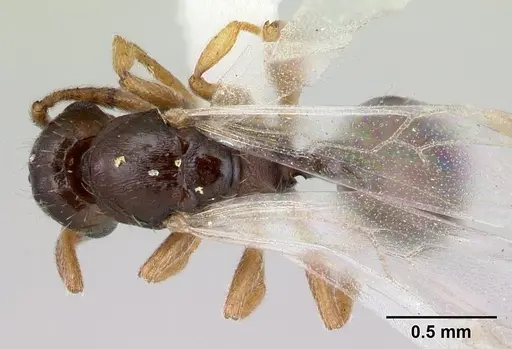
CASENT0178549
View on AntWeb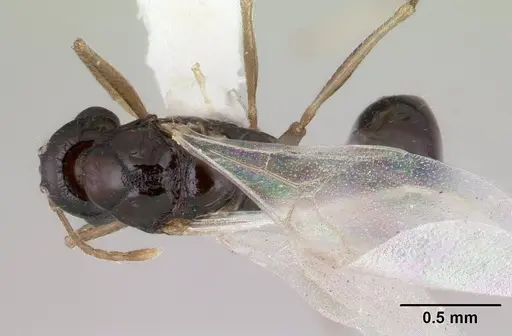
CASENT0178550
View on AntWeb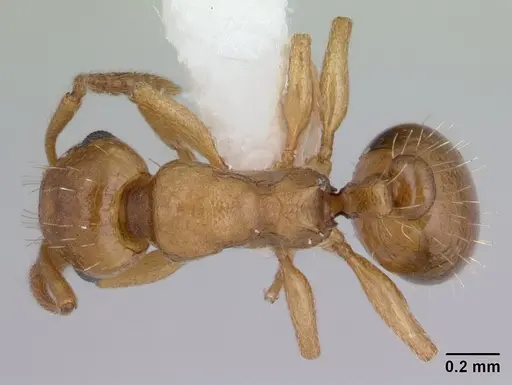
CASENT0178551
View on AntWeb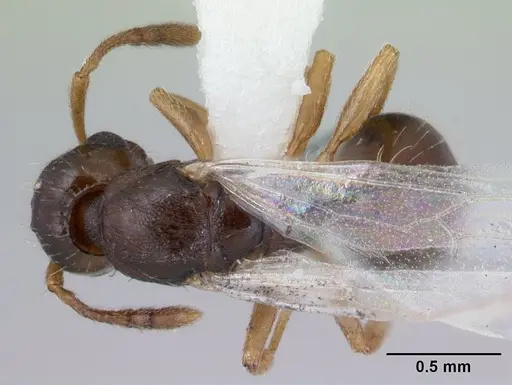
CASENT0904773
View on AntWeb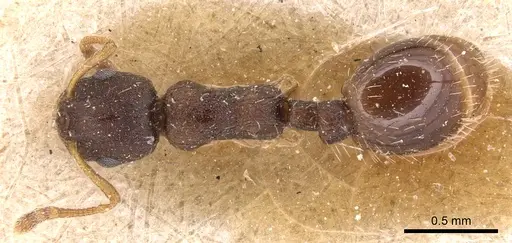
CASENT0922702
View on AntWeb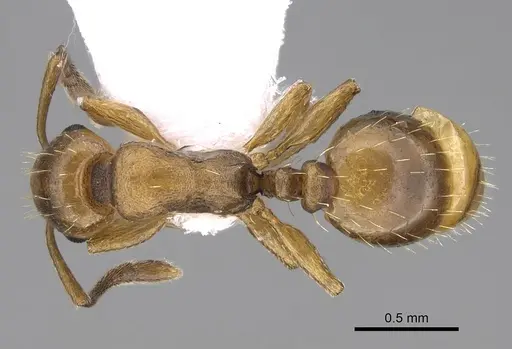
Literature
Loading distribution map...Loading products...