
Temnothorax flavispinus
- Sci. Name
- Temnothorax flavispinus
- Tribe
- Crematogastrini
- Subfamily
- Myrmicinae
- Author
- André, 1883
- Distribution
- Found in 1 countries
Introduction
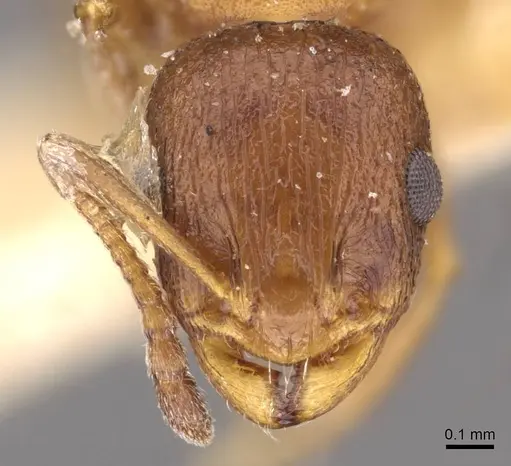
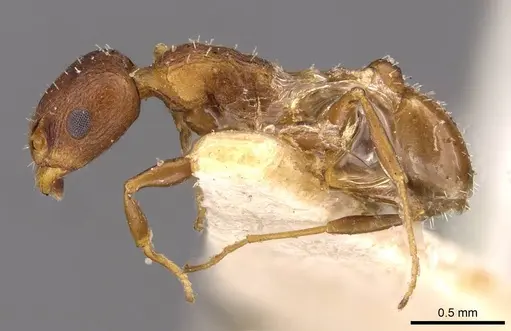
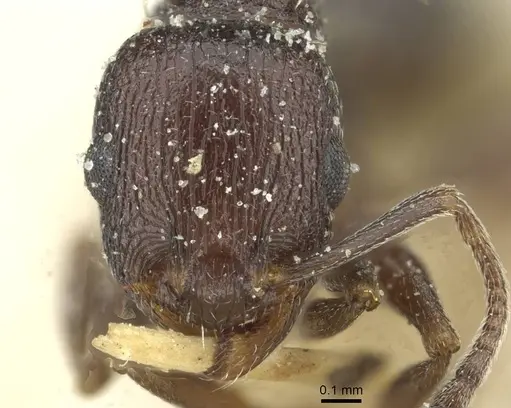
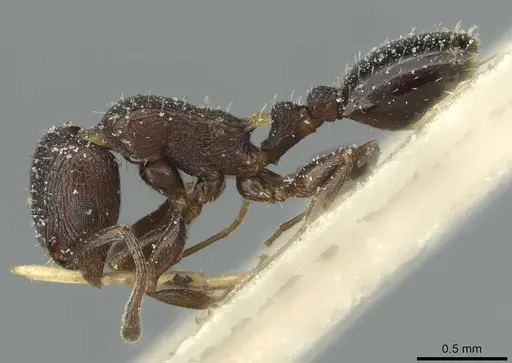
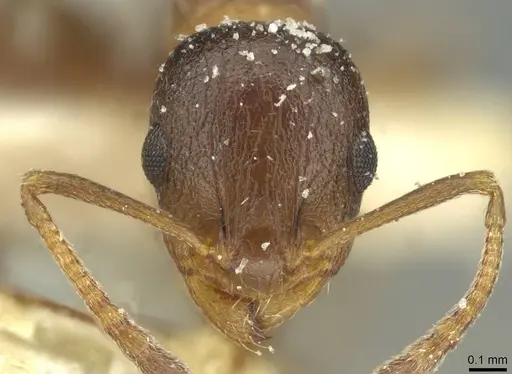
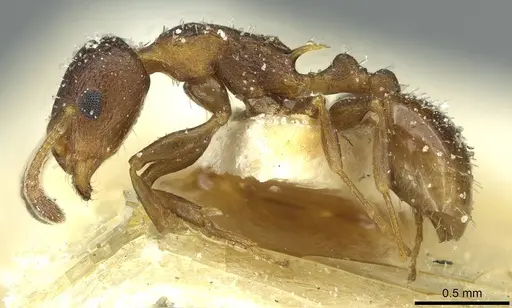
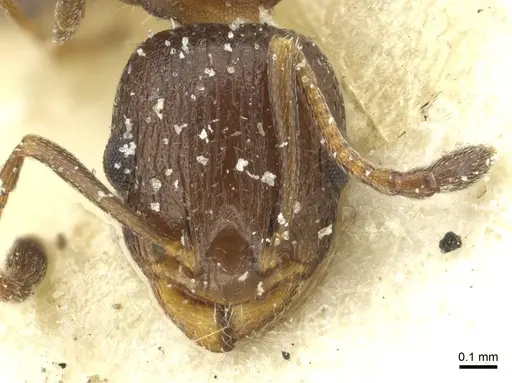
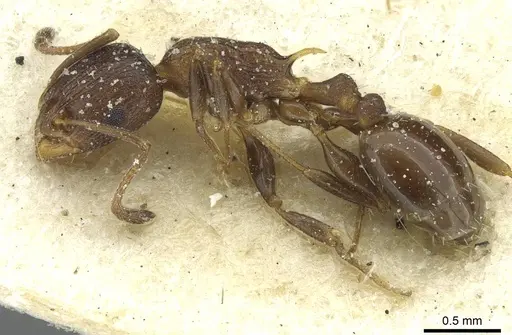
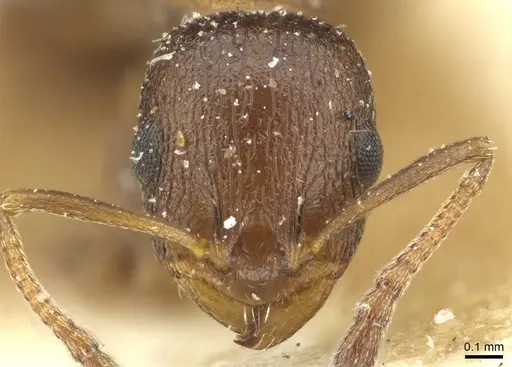
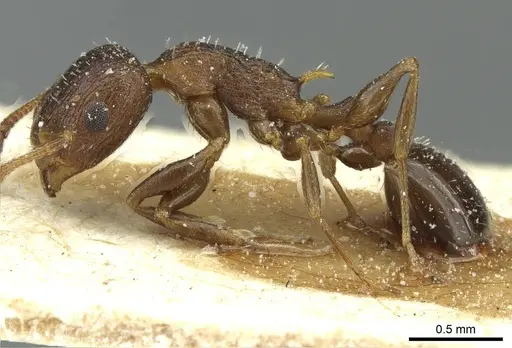
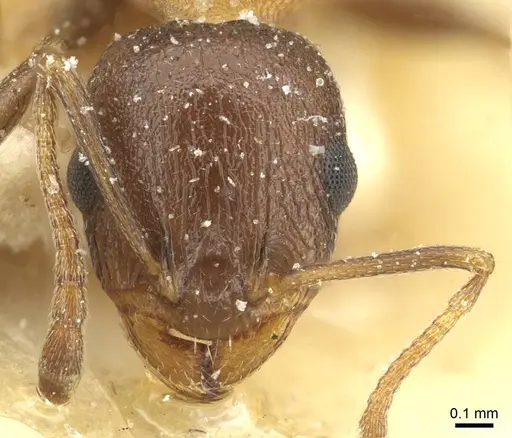
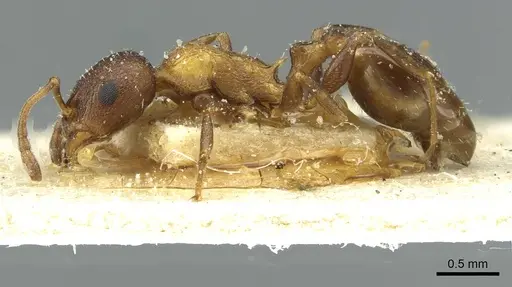
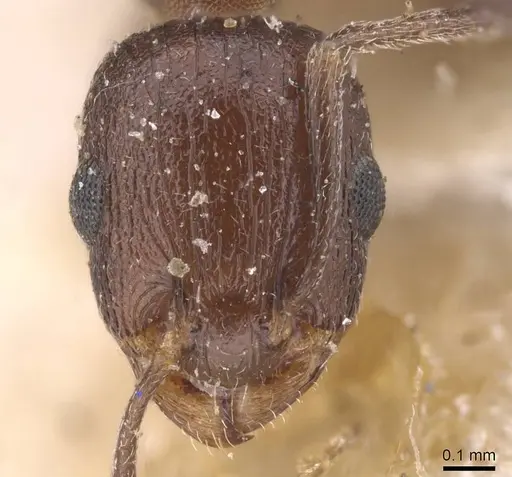
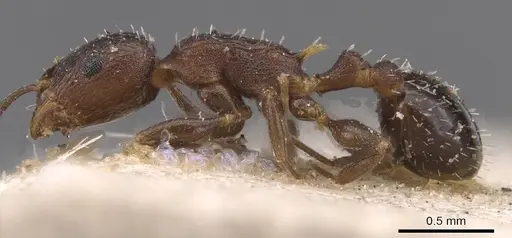
Temnothorax flavispinus is a tiny Mediterranean ant species, with workers measuring just 2mm in length . They have a distinctive appearance: a ferruginous brown body with an almost black head, dark brown abdomen and metanotum, and very long, strongly curved spines at the rear of their body . These ants are found across the Palaearctic region, from Gibraltar and Spain through North Africa (Tunisia, Algeria, Morocco) to the Middle East (Israel, Syria, Jordan, Saudi Arabia) . In the wild, they nest in trunks, branches, and under the bark of various trees, including tamarisk trees at higher elevations in the Sahara . This species has several subspecies distributed across its range, with some taxonomic revision still needed . What makes T. flavispinus interesting is its preference for nesting in woody microhabitats - they're tree-dwelling ants that naturally live under bark and in decaying branches rather than in soil . This gives you good guidance for captive setups: they do best in nests that mimic these conditions, like wood-based or cork setups rather than typical soil colonies. Their tiny size and relatively peaceful temperament make them suitable for observation colonies where you can watch their behavior in tight, natural-looking spaces.
Quick Summary
- Difficulty: Easy
- Origin & Habitat: Mediterranean and Middle Eastern regions including Gibraltar, Iberian Peninsula, Spain, Tunisia, Algeria, Morocco, Israel, Syria, and Jordan [2][3]. Natural habitat is woody, they nest in trunks, branches, and under bark of various trees, including tamarisk [4][5]. Found at elevations up to ~1800m in the Sahara (Hoggar) [5].
- Colony Type: Unknown, no specific research on colony structure for this species. Typical Temnothorax are often monogyne, but this is not confirmed for T. flavispinus.
- Size & Growth:
- Queen: Size data unavailable
- Worker: 2mm [1]
- Colony: Unknown, estimated up to a few hundred workers based on genus patterns
- Growth: Moderate (inferred from genus)
- Development: 6-10 weeks estimated based on typical Temnothorax development at 20-24°C (Development time inferred from genus patterns, no specific study for this species. Expect nanitics (first workers) to be smaller than normal workers.)
- Antkeeping:
- Temperature: Since specific preferences are unstudied, start around 20-24°C, a Mediterranean species that prefers warmth but not extreme heat. Provide a gradient so workers can choose their preferred temperature.
- Humidity: Keep the nest substrate damp but not waterlogged. They naturally nest in wood which retains some moisture, so avoid overly dry conditions.
- Diapause: Yes, being a Mediterranean species, they likely need a winter rest period. Reduce temperature to 10-15°C for 2-3 months during winter. Inferred from their native climate.
- Nesting: Prefers woody nesting conditions, cork nests, Y-tong (AAC) nests, or naturalistic setups with wood or bark work well. Avoid pure soil setups since they naturally nest under bark, not in the ground.
- Behavior: Generally peaceful and non-aggressive. Workers are tiny (2mm) and active, foraging for small prey items. Due to their size, escape prevention is critical, they can squeeze through remarkably small gaps. This species has a modified stinger used to smear venom (common to its tribe), but they are harmless to humans.
- Common Issues: escape prevention is critical due to their tiny 2mm size, use fine mesh and tight-fitting barriers, colonies can be slow to establish, beginners may lose patience during the founding phase, winter diapause is likely essential for long-term colony health, skipping hibernation may weaken colonies, dry conditions will cause colony decline, monitor humidity in wood-based nests carefully, wild-caught colonies may carry parasites that can devastate captive colonies
Housing and Nest Preferences
Temnothorax flavispinus naturally nests under bark and in decaying wood, so your captive setup should mimic this [4]. Y-tong (AAC) or cork nests are excellent choices, they provide a woody environment that suits these ants. Avoid large, open spaces, these ants prefer tight chambers and narrow passages scaled to their tiny 2mm body size [1].
For the outworld, keep it simple. A shallow foraging area with a small water tube and feeding dish is sufficient. The key is ensuring your escape barriers are excellent, these ants can squeeze through gaps you'd never expect a 2mm ant to fit through. Fluon on the rim of the foraging area is essential.
Some keepers successfully keep them in naturalistic setups with small pieces of wood or bark as nesting material. If you go this route, ensure the wood is not too wet or you'll get mold problems. The nest should be kept in darkness most of the time, these are cavity nesters that prefer dim conditions.
Feeding and Diet
No specific diet study exists for T. flavispinus, but based on typical Temnothorax behavior, they likely prey on small arthropods. In captivity, offer small live prey like fruit flies, springtails, and tiny crickets. They are too small to tackle large prey, focus on items that are 1-2mm or smaller.
Beyond protein, they may accept honeydew and sugar sources. Offer a small drop of diluted honey or sugar water occasionally, though protein should be the main food. Feed 2-3 times per week with small prey items, removing any uneaten food promptly to prevent mold. Fruit flies (Drosophila) are an ideal staple, they are the right size and readily accepted. Avoid large mealworms as they are simply too big for workers to handle.
Temperature and Seasonal Care
Since specific temperature preferences are unstudied, start around 20-24°C during the active season. This Mediterranean species tolerates a range of temperatures but likely performs best in the low-to-mid 20s. A small heating cable on one side of the nest can create a temperature gradient, allowing workers to choose their preferred spot.
Winter care is essential. Reduce temperatures to 10-15°C for 2-3 months during winter to provide their natural diapause period, this is inferred from their Mediterranean climate. This can be done in a cellar, garage, or refrigerator (if using a fridge, use a thermometer to monitor and ensure it stays above freezing). Do not feed during diapause, the colony will be mostly dormant and won't consume food.
Resume normal temperatures and feeding gradually in spring. A sudden temperature jump can trigger premature activity before the colony is ready. The hibernation period is likely crucial for colony health, colonies that are kept warm year-round often decline over time.
Colony Development and Growth
Founding behavior is unconfirmed for this species. Based on typical Temnothorax patterns, a newly mated queen may seal herself into a small chamber and lay her first eggs without leaving to forage, living on stored fat reserves while raising the first brood. This founding phase likely takes 4-8 weeks depending on temperature.
The first workers (nanitics) will be smaller than normal workers but should immediately begin foraging for prey to feed the colony. After this point, the queen stops foraging and focuses on egg-laying. Growth is moderate, expect the colony to reach 30-50 workers within the first year under good conditions.
Full colony size for Temnothorax species is typically a few hundred workers. This species is not a rapid grower, but colonies are long-lived once established. Patience is key during the founding phase, many keepers lose colonies by disturbing them too much or giving up too soon.
Behavior and Observation
Temnothorax flavispinus workers are active and alert, though not aggressive. They are a pleasure to watch in a well-set-up observation nest. Workers communicate through chemical trails and will recruit nestmates to good food sources, likely using tandem running, one worker leads another directly to the food (common in the genus).
Their tiny size makes them excellent escape artists. Even with good barriers, periodically check for escapes, especially around water tubes and feeding dishes. They are not a dangerous species, they lack a potent stinger and are too small to cause any meaningful bite.
In the nest, you'll see division of labor: workers tend the brood, forage for food, and maintain the nest. The queen remains in the nest chamber laying eggs. These ants are clean, they designate specific areas for waste and keep their tunnels tidy.
Frequently Asked Questions
How long does it take for Temnothorax flavispinus to raise their first workers?
Expect 6-10 weeks from egg to first worker at optimal temperature (20-24°C). This is typical for Temnothorax species. The queen likely seals herself in during founding (inferred from genus), be patient and don't disturb the founding chamber.
Can I keep Temnothorax flavispinus in a test tube?
Yes, test tubes work well for founding colonies. Use a small test tube with a water reservoir (cotton ball) and keep it horizontal in a dark place. The queen will likely seal herself into the dark end. Once you have 15-20 workers, consider moving to a small Y-tong (AAC) or cork nest.
Do Temnothorax flavispinus ants sting?
No, this species is not considered to have a functional stinger for piercing. They belong to the tribe Crematogastrini, which uses a modified stinger to smear venom onto enemies rather than sting through skin. They are completely harmless to humans. Their tiny size (2mm workers) means they can't penetrate skin even if they tried [1].
What do Temnothorax flavispinus eat?
They likely primarily eat small live prey like fruit flies, springtails, and tiny crickets (inferred from typical Temnothorax). Offer protein 2-3 times per week. They may also accept sugar sources like diluted honey occasionally, but protein should be the main food.
Do Temnothorax flavispinus need hibernation?
Yes, they likely need a winter rest period. Reduce temperature to 10-15°C for 2-3 months during winter. This mimics their natural Mediterranean climate and is likely essential for long-term colony health, inferred from their geographic range [3].
How big do Temnothorax flavispinus colonies get?
Colony size is unknown, but estimated up to a few hundred workers at most based on genus patterns. Workers are only 2mm [1]. They are not rapid growers, but colonies can live for many years once established.
Are Temnothorax flavispinus good for beginners?
Yes, they can be a good beginner species. They are small, peaceful, and don't require elaborate setups. The main challenges are escape prevention (due to their tiny size) and providing proper winter diapause. With attention to these details, beginners can successfully keep this species.
When should I move my colony to a formicarium?
Move from test tube to a small nest (Y-tong AAC or cork) once you have 15-20 workers and the test tube is getting crowded. Don't rush the move, Temnothorax prefer tight spaces and can be stressed by premature transfers. Make sure the new nest is appropriately sized with small chambers.
Why are my Temnothorax flavispinus dying?
Common causes include: too-dry conditions (they need humidity in the nest), escape-related losses (check your barriers), disturbance during founding (don't open the test tube), and lack of winter diapause. Also check for parasites if the colony was wild-caught.
Can I keep multiple queens together?
Not recommended for this species. While some Temnothorax can found colonies together (pleometrosis), combining unrelated queens of this species has not been documented and typically results in fighting. Start with a single mated queen for best success.
Report an Issue
The current care sheet is based fully on literature. See inconsistencies, or something that's incorrect? Please , it will be resolved after review from an admin. Contributing to the blogs tab also helps providing information, to make us be able to further improve the caresheets. Thank you for your support!
References

This caresheet is licensed under CC BY-SA 4.0 .
Community Blogs
CASENT0909029
View on AntWeb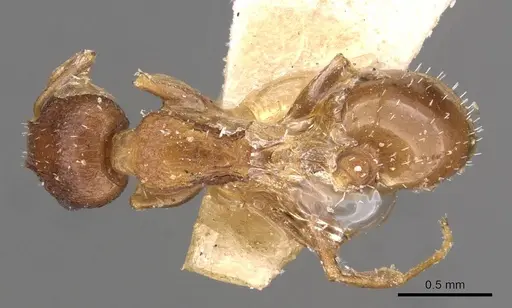
CASENT0912929
View on AntWeb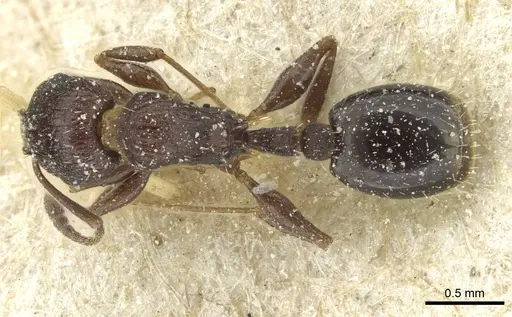
CASENT0912930
View on AntWeb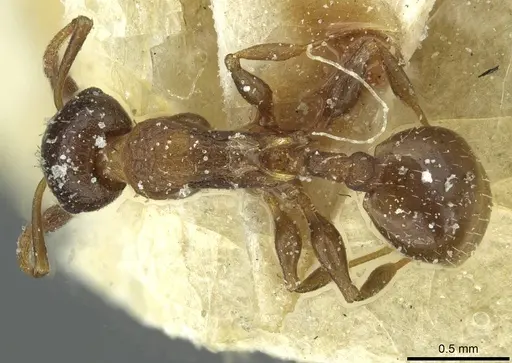
CASENT0912932
View on AntWeb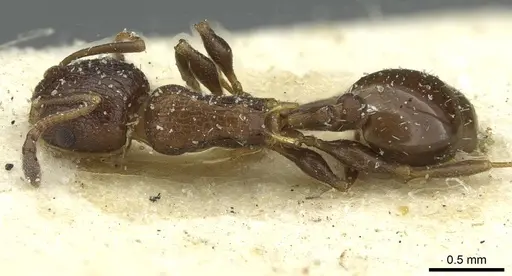
CASENT0912934
View on AntWeb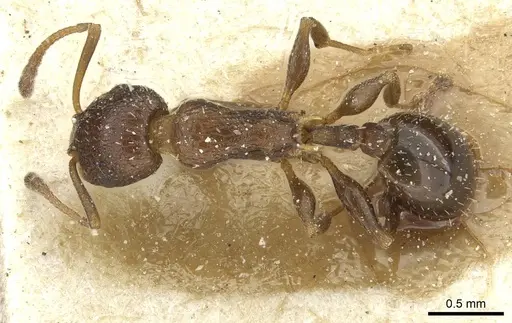
CASENT0912935
View on AntWeb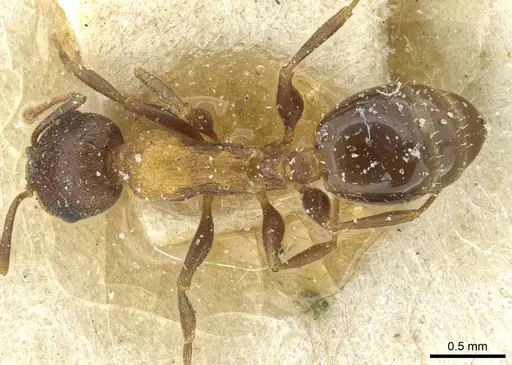
CASENT0915397
View on AntWeb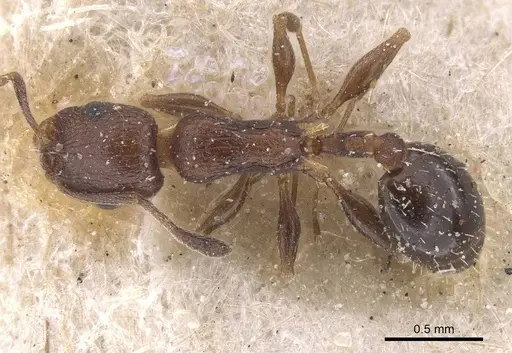
Literature
Loading distribution map...Loading products...