
Temnothorax creolus
- Sci. Name
- Temnothorax creolus
- Tribe
- Crematogastrini
- Subfamily
- Myrmicinae
- Author
- Baroni Urbani, 1978
- Distribution
- Found in 1 countries
Introduction
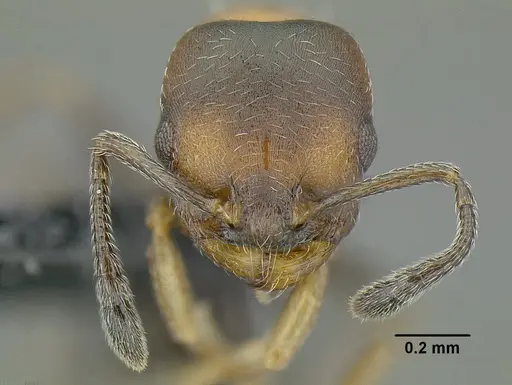
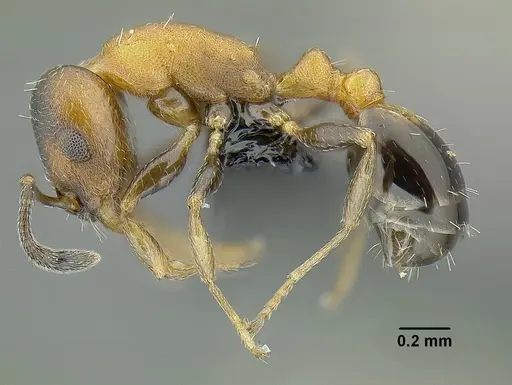
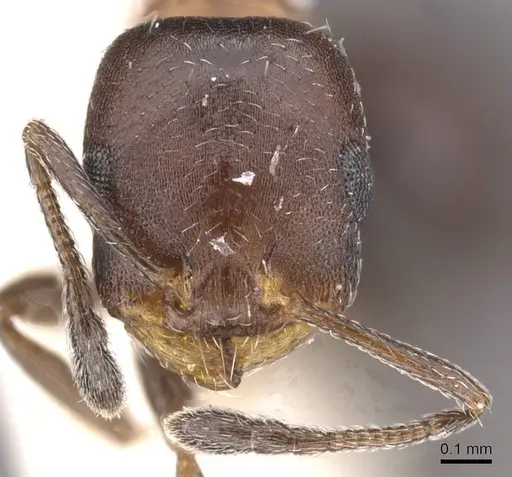
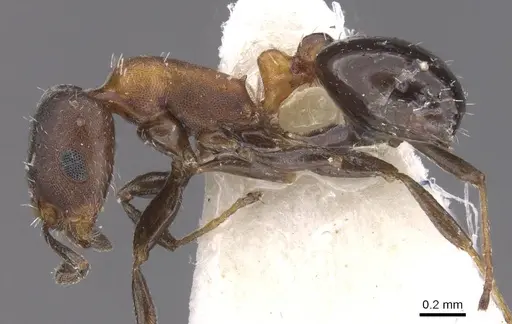
Temnothorax creolus is a tiny ant species endemic to the island of Hispaniola, specifically the Dominican Republic. Workers measure 2.9 mm and have a distinctive appearance: a dark brownish-black head and gaster contrast sharply with a bright red mesosoma and peduncle. They have blocky pronotal shoulders and relatively large eyes for a Temnothorax . This species belongs to the obturator-clade and represents a lineage that dispersed to the Caribbean from the Nearctic during the early Miocene . In the wild, these ants have been collected from nests in hollow twigs within various forest habitats, at elevations ranging from 65 m to 2,030 m . Like other acorn ants, they form small colonies and are relatively peaceful, making them good observational subjects. Their small size and preference for twig cavities make them a unique species to keep.
Quick Summary
- Difficulty: Easy
- Origin & Habitat: Endemic to the Dominican Republic on Hispaniola Island. Found in various forest habitats at elevations between 65 and 2,030 meters [3][4].
- Colony Type: Colony structure is not documented in the literature. Based on typical Temnothorax patterns, likely monogyne (single-queen).
- Size & Growth:
- Queen: size data unavailable
- Worker: 2.9 mm [1]
- Colony: Unknown, typically small for the genus (up to a few hundred workers, inferred from genus patterns).
- Growth: Moderate
- Development: Estimated 6-10 weeks based on related Temnothorax species (Development time is inferred, may vary with temperature.)
- Antkeeping:
- Temperature: Room temperature (20-25°C) should be suitable. Avoid extremes. Based on typical forest habitat.
- Humidity: Moderate: keep the nest substrate slightly moist but not waterlogged, mimicking forest floor conditions.
- Diapause: Unknown due to tropical origin. A brief cool period (15-18°C for 1-2 months) could be attempted but is not required.
- Nesting: In captivity, test tubes, Y-tong (AAC) blocks, or naturalistic setups with small twigs or cork bark work well. They prefer tight, appropriately sized chambers that mimic hollow twigs [3][4].
- Behavior: Peaceful and non-aggressive. Workers forage actively. They have a stinger modified for smearing venom (not piercing), so they pose no danger to keepers. Their tiny 2.9 mm size means escape prevention is critical: use fine mesh and tight barriers.
- Common Issues: escape prevention is critical due to their tiny 2.9 mm size, they can squeeze through small gaps, colonies remain small, do not expect large worker numbers, wild-caught colonies may carry parasites that can affect captive populations, test tube water reservoirs must be properly sized to avoid flooding the nest, the founding phase can be slow, the queen may take weeks to produce the first workers
Housing and Nest Setup
Temnothorax creolus is best housed in setups that mimic their natural hollow-twig nesting preference. Test tubes work well for founding colonies, use a small test tube with a water reservoir separated by a cotton plug. The chamber should be snug for the queen and her initial brood. As the colony grows, you can transition to a Y-tong (AAC) nest or a naturalistic setup with small cork bark pieces or actual twigs. The key is providing tight, appropriately sized chambers, these tiny ants feel secure in small spaces. Avoid large, open formicaria that can make them feel exposed. A small piece of cork bark in a naturalistic terrarium creates an ideal setup that lets you observe their natural twig-nesting behavior [3][4].
Feeding and Diet
No specific dietary data is available for this species. Based on typical Temnothorax, they are omnivorous with a preference for small protein sources. Offer small live prey such as fruit flies, pinhead crickets, or tiny mealworms. They will also accept sugar water, honey, or diluted honey as an energy source. Feed protein prey 2-3 times per week, and keep a sugar source available at all times. Remove uneaten prey after 24 hours to prevent mold. Given their tiny 2.9 mm worker size, prey items should be appropriately scaled, very small insects or pre-killed pieces work better than large live prey they cannot tackle.
Temperature and Seasonal Care
Keep your colony at room temperature, ideally between 20-25°C. They can tolerate a broader range from 18-26°C but avoid extremes. A gentle temperature gradient allows ants to self-regulate. Since this species comes from a tropical origin but ranges up to 2,030 m elevation [3][4], it may tolerate slight seasonal cooling. For now, keeping them at stable room temperature year-round is the safest approach. If you want to simulate a cycle, a slight reduction to 15-18°C for 1-2 months in winter may be beneficial but is not strictly required.
Colony Founding and Growth
The founding behavior of Temnothorax creolus has not been documented in the literature. Based on related Temnothorax species, queens are thought to be claustral (sealing themselves in a chamber to raise the first brood without foraging), but this is speculative. Keepers should provide a secure, dark chamber for the queen and minimal disturbance during the founding phase. The first workers (nanitics) typically emerge within 6-10 weeks depending on temperature and other factors. After the first workers harden, the queen resumes egg-laying and the colony begins to grow at a moderate pace. Colonies remain relatively small, typically under a few hundred workers even at maturity. Patience is key, rapid growth should not be expected.
Behavior and Observation
Temnothorax creolus is a peaceful, docile species that makes an excellent observational subject. Workers actively forage and can be seen searching surfaces for food. Their relatively large eyes [1] may indicate enhanced visual navigation, though this has not been studied specifically. They are not aggressive and do not pose a stinging risk to keepers, they possess a stinger but it is modified for smearing venom rather than piercing. The contrast between their dark gaster and red mesosoma makes them visually distinctive.
Frequently Asked Questions
How long does it take for Temnothorax creolus to produce first workers?
Expect first workers (nanitics) to emerge in 6-10 weeks after the queen lays eggs, assuming temperatures around 22-24°C. This is typical for the genus. The exact timeline depends on temperature, warmer conditions speed up development, cooler temperatures slow it down.
What size colony does Temnothorax creolus reach?
Colonies remain relatively small, typically reaching up to a few hundred workers at maturity. This is typical for Temnothorax species, which are known for their modest colony sizes compared to larger ant genera.
Do Temnothorax creolus ants sting?
They have a stinger, but it is modified for smearing venom rather than piercing. They are not dangerous to keepers and are completely harmless to handle.
Can I keep Temnothorax creolus in a test tube?
Yes, test tubes are an excellent choice for founding colonies. Use a small test tube with an appropriately sized water reservoir. Ensure the cotton barrier is tight enough to prevent escapes, these tiny 2.9 mm ants can squeeze through surprisingly small gaps. Once the colony reaches roughly 30-50 workers, consider transitioning to a small Y-tong or naturalistic setup.
What do Temnothorax creolus eat?
They are omnivorous. Offer small live prey like fruit flies, tiny mealworms, or pre-killed insect pieces as protein. Provide a constant sugar source such as sugar water, honey, or diluted honey. Feed protein 2-3 times per week and remove uneaten food promptly.
Do Temnothorax creolus need hibernation?
This is uncertain given their Caribbean origin. While some temperate Temnothorax benefit from winter cooling, this species comes from Hispaniola where temperatures remain mild. A slight temperature reduction to 15-18°C for 1-2 months may be beneficial but is not strictly required. Monitor your colony's activity, if they remain active year-round, normal room temperature is fine.
Are Temnothorax creolus good for beginners?
Yes, they are a good beginner species due to their small size, peaceful nature, and straightforward care requirements. They are forgiving of minor temperature fluctuations and don't require elaborate setups. The main challenges are escape prevention (due to their tiny size) and patience with their slow founding phase.
Why are my Temnothorax creolus escaping?
Their tiny 2.9 mm size means they can escape through remarkably small gaps. Use excellent escape prevention: apply Fluon or similar barrier to the rim of your setup, use fine mesh (0.5 mm or smaller) for any ventilation, and ensure all lids fit tightly. Check seams and edges regularly.
When should I move my colony to a formicarium?
Move from a test tube to a larger setup when the colony reaches roughly 30-50 workers or when the test tube becomes crowded. A small Y-tong nest or naturalistic terrarium works well. They prefer tight chambers, so avoid oversized formicaria with large open spaces.
Where is Temnothorax creolus found in the wild?
This species is endemic to the Dominican Republic on Hispaniola Island. It lives in various forest habitats at elevations between 65 and 2,030 meters, nesting in hollow twigs [3][4].
Report an Issue
The current care sheet is based fully on literature. See inconsistencies, or something that's incorrect? Please , it will be resolved after review from an admin. Contributing to the blogs tab also helps providing information, to make us be able to further improve the caresheets. Thank you for your support!
References

This caresheet is licensed under CC BY-SA 4.0 .
Community Blogs
CASENT0755643
View on AntWeb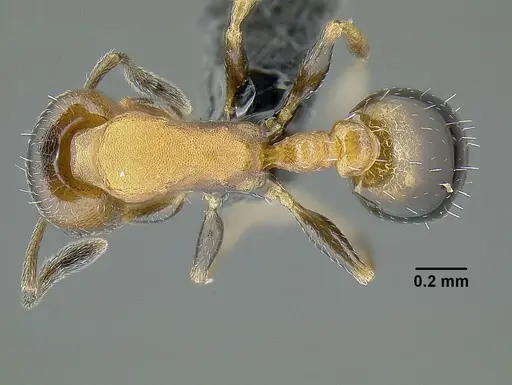
CASENT0912921
View on AntWeb
Literature
Loading distribution map...Loading products...