
Temnothorax congruus
- Sci. Name
- Temnothorax congruus
- Tribe
- Crematogastrini
- Subfamily
- Myrmicinae
- Author
- Smith, 1874
- Distribution
- Found in 2 countries
Introduction
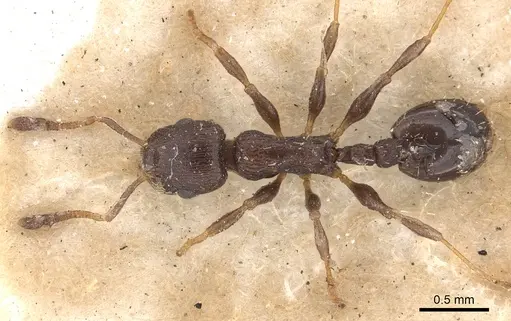
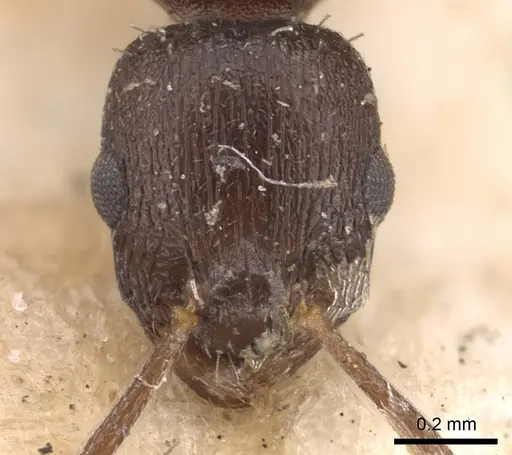
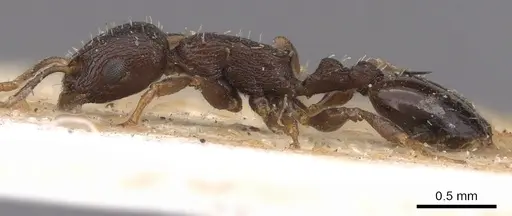
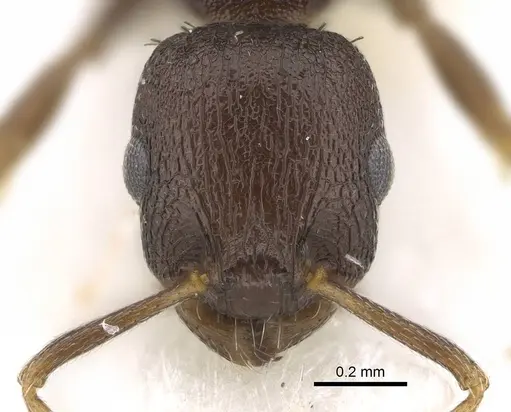
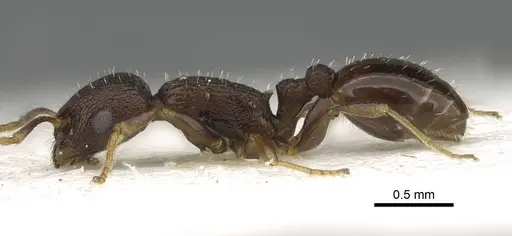
Temnothorax congruus is a tiny arboreal ant native to East Asia, found across Japan, Korea, northeastern China, and the Russian Far East . Workers measure just 2.5-3 mm and are uniformly black to blackish-brown, with short antennae that don't reach the back of the head and small triangular spines on the propodeum . This species belongs to the Palearctic clade of acorn ants and is the namesake of the congruus-group . What makes T. congruus especially interesting is its sophisticated nest-site selection. In experiments, colonies strongly prefer tubes with narrow entrances (≈6 mm) and few openings, they even build collars to shrink entrance size in natural bamboo grass stems . More strikingly, these tiny ants actively avoid nesting near their competitor Crematogaster teranishii, choosing lower-quality nests far from competitors over higher-quality ones nearby . They navigate using only light intensity, not color, and don't form permanent trails, each foraging trip takes a new path .
Quick Summary
- Difficulty: Easy
- Origin & Habitat: Native to Japan (Honshu, Shikoku, Kyushu, rare in Hokkaido), Korea, northeastern China, and the Russian Far East [2][3]. Inhabits forest edges, bushes, gardens, and grassland. Nests in hollow dead branches, dead grass stems, and rotten wood, also sometimes under stones [5][2].
- Colony Type: Monogyne, one queen per colony [5]. Colonies contain up to about 200 workers, with a median of 59 workers in wild colonies [5].
- Size & Growth:
- Queen: Size data unavailable (no total length measured from research)
- Worker: 2.5-3 mm total length [1][2]
- Colony: Up to about 200 workers [5]
- Growth: Moderate
- Development: 6-10 weeks (estimated based on typical Palearctic Temnothorax development) (Development likely depends on temperature and food availability. Precise timing is not documented for this species.)
- Antkeeping:
- Temperature: Room temperature 20-24°C is suitable. As a temperate species, avoid extreme heat or cold. Specific optimal range is not studied but inferred from its Palearctic habitat.
- Humidity: Keep nest substrate moderately moist but not waterlogged. Arboreal nests in dead wood naturally have moderate humidity, provide a moist area (e.g., plaster section or water tube) but allow drier zones.
- Diapause: Yes, requires winter hibernation. As a temperate Japanese species, provide 2-3 months of cool temperatures (10-15°C) during winter. This is inferred from its natural climate.
- Nesting: Prefers narrow, tube-like nests with small entrances. In captivity use Y-tong (AAC), plaster, or soil nests with narrow chambers, or test tubes. Avoid large open spaces. They will modify entrances by building collars [5].
- Behavior: Generally peaceful toward humans but can display threat behaviors (mandible opening) toward competitors. They are capable of killing rival ants (e.g., Crematogaster teranishii) by biting [5]. Foraging is not trail-based, each trip uses a new path [6]. Escape risk is HIGH due to small size (2.5-3 mm), use fine mesh and fluon barriers.
- Common Issues: tiny size means escapes are possible without very fine mesh and tight seals, colonies are relatively small, don't expect rapid growth or huge worker counts, winter hibernation is required for long-term health, skipping may reduce queen lifespan, may be outcompeted or stressed by more aggressive species if housed nearby, wild-caught colonies may contain parasites or be stressed from collection
Housing and Nest Setup
Because T. congruus nests inside dead twigs and hollow stems, your setup should mimic these tight, narrow spaces [1]. Use a Y-tong (AAC) or plaster nest with narrow chambers, research shows they strongly prefer entrances around 6 mm wide [5]. They will even build collars to shrink entrances further, so don't be surprised if they modify their nest [5].
Humidity can be moderate: provide a moist plaster area or a water tube, but allow the nest to have drier zones. Avoid excessive wetness. Connect the nest to an outworld where they can forage. Tiny gaps (
Feeding and Diet
T. congruus is omnivorous. Offer sugar water or honey for carbohydrates, and small protein sources like fruit flies, pinhead crickets, or bits of mealworm. They hunt small prey and collect honeydew in nature [2]. Feed appropriately sized items, oversized food will be ignored. Remove uneaten protein after 24-48 hours to prevent mold. Provide a constant sugar source, changed every few days. A varied diet supports brood production and colony health. No specific feeding studies exist for this species, so these guidelines follow general Temnothorax care.
Temperature and Seasonal Care
Keep the colony at typical room temperature,20-24°C. Being a Palearctic species, they don't need extra heat in most homes. Winter hibernation is essential, provide 2-3 months at 10-15°C each winter (inferred from their temperate distribution). Reduce feeding during this period and keep the nest cool (basement, unheated room, or refrigerator if necessary). Resume normal temperatures gradually in spring. Nuptial flights occur in mid-July in Japan [1][7], so if your colony produces alates, you may see them around that time.
Navigation and Light Perception
A remarkable feature of T. congruus is its navigation. Experiments show that workers do not see color, they are sensitive only to light intensity and use the brightest light source to orient [6][8]. They do not establish permanent foraging trails, each journey between nest and food uses a new path [6]. When light direction changes frequently, they switch to relying on odour [6]. This makes them unlike many trail-following ants and means their environment's lighting can influence their movement.
Colony Founding
Founding behavior is unconfirmed for this species. Based on other Temnothorax species, it is likely claustral (the queen seals herself in a small chamber and raises the first brood on stored reserves) but no direct research confirms this. After mating (mid-July in Japan [1]), a queen seeks a suitable hollow twig or stem, seals the entrance, and begins laying eggs. The first nanitic workers emerge after several weeks. Keep founding setups undisturbed, in a quiet dark place until workers appear.
Frequently Asked Questions
How long does it take for Temnothorax congruus to have first workers?
If founding is claustral, first workers likely emerge 6-10 weeks after egg laying, based on typical Temnothorax development. This timing is estimated, not directly documented.
Do Temnothorax congruus ants sting?
Like other Temnothorax species, they belong to Myrmicinae which typically have a sting, but T. congruus uses a modified spatulate stinger for smearing venom rather than piercing. The sting is ineffective against humans and the ants are harmless.
Can I keep multiple Temnothorax congruus queens together?
No, this species is monogyne, colonies have only one queen. Multiple unrelated queens will fight. House them separately if you catch several after nuptial flights [5].
What do Temnothorax congruus eat?
They are omnivorous. Provide sugar water or honey for energy, and small protein sources like fruit flies, tiny crickets, or mealworms. Remove uneaten prey after 1-2 days to avoid mold.
Do Temnothorax congruus need hibernation?
Yes, as a temperate species from Japan they need a winter rest period. Provide 2-3 months at 10-15°C each winter. Skipping hibernation may harm colony health.
How big do Temnothorax congruus colonies get?
Mature colonies can reach about 200 workers [5], with wild colonies often smaller (median 59 workers) [5]. This is modest compared to many ant species.
Are Temnothorax congruus good for beginners?
Yes, they are easy to keep: tolerant of room temperature, moderate humidity, and straightforward feeding. Their small size and interesting behaviors (nest selection, navigation) make them rewarding.
What size nest do Temnothorax congruus need?
They prefer narrow chambers with small entrances (about 6 mm diameter) [5]. Use a Y-tong or plaster nest with compact rooms. Avoid large open spaces.
Where is Temnothorax congruus found?
It is native to Japan (Honshu, Shikoku, Kyushu, rare in Hokkaido), Korea, northeastern China, and the Russian Far East [2][3].
Why do my T. congruus keep escaping?
They are only 2.5-3 mm and can squeeze through tiny gaps. Use fine mesh on ventilation, apply fluon to container rims, and seal all connections between nest and outworld. Check for gaps larger than 1 mm.
Report an Issue
The current care sheet is based fully on literature. See inconsistencies, or something that's incorrect? Please , it will be resolved after review from an admin. Contributing to the blogs tab also helps providing information, to make us be able to further improve the caresheets. Thank you for your support!
References

This caresheet is licensed under CC BY-SA 4.0 .
Community Blogs
CASENT0901786
View on AntWeb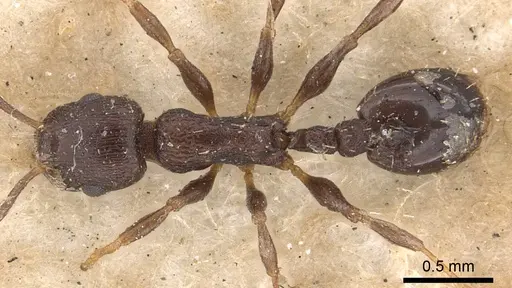
CASENT0922110
View on AntWeb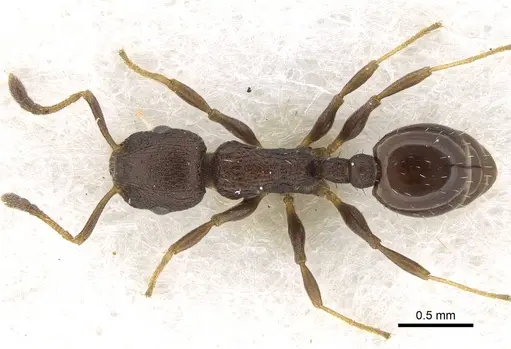
Literature
Loading distribution map...Loading products...