
Temnothorax chandleri
- Sci. Name
- Temnothorax chandleri
- Tribe
- Crematogastrini
- Subfamily
- Myrmicinae
- Author
- Mackay, 2000
- Distribution
- Found in 1 countries
Introduction
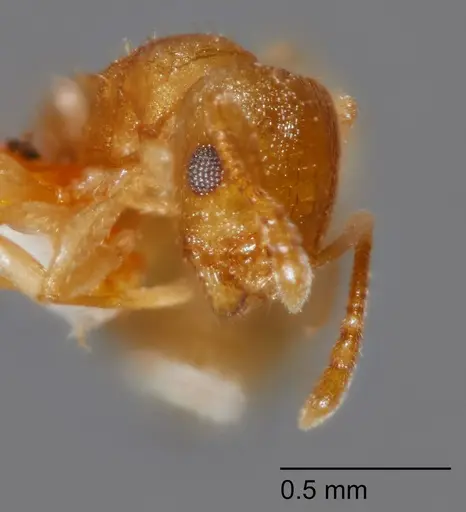
Temnothorax chandleri is a tiny, light yellow-brown ant from the Myrmicinae subfamily. Workers have a heavily sculptured head with punctures and striae, except for a smooth central strip on the head that's shiny. The petiole has a very sharp apex - a key feature for ID . It's closely related to Temnothorax nitens and might just be the same species . Known only from a few spots in California, it seems to be a riparian specialist, collected from oak leaf litter and rotten logs near lakes and sloughs . Because so little is known about this ant, keeping it in captivity is basically uncharted territory. No queens have ever been found, and its full life cycle is a mystery. If you manage to get a colony, you'd be pioneering the husbandry for a rare California endemic.
Quick Summary
- Difficulty: Expert
- Origin & Habitat: Endemic to California, USA. Found in riparian woodland along lakes and sloughs, plus oak leaf litter in damp areas. Type series from Samson Slough, Tehama County, another collection from a rotten log in riparian woodland [2][1].
- Colony Type: Unknown, no queens or colony structure have been documented. Based on related Temnothorax, likely small, single-queen colonies.
- Size & Growth:
- Queen: No queens known for this species [1]
- Worker: Size data unavailable, total length not documented. Head width is about 0.53-0.62 mm [1], but that's not body size.
- Colony: Unknown. Related Temnothorax form colonies of up to a few hundred workers, but actual size for this species is unconfirmed.
- Growth: Unknown, likely moderate if typical of small Temnothorax
- Development: Unknown, estimated 6-10 weeks based on related species at warm temperatures (No direct data exists for this species.)
- Antkeeping:
- Temperature: Keep around 20-24°C, typical room temperature. It comes from a temperate region with mild winters, avoid overheating above 28°C.
- Humidity: High humidity is needed, this species lives in damp leaf litter and rotting wood near water. Keep the nest substrate consistently moist but not waterlogged, and provide a humidity gradient so the ants can choose their preferred spot [2].
- Diapause: Likely yes, its temperate origin suggests a winter rest. If you choose to provide one, aim for 2-3 months at 10-15°C, but specific requirements are unconfirmed.
- Nesting: Use a small nest that holds moisture well, like a Y-tong (AAC) nest with tight chambers, or a test tube setup with a water plug. Add bits of rotting wood or leaf litter to mimic the natural habitat. Keep the nest dark and humid [2][1].
- Behavior: Docile and non‑aggressive, typical of the genus. They won't bother humans. Their defense uses a modified flattened stinger to smear venom onto attackers instead of stinging. Because they are so tiny, escape proofing is critical: use fine mesh and seal every gap.
- Common Issues: escape is a big risk, these ants are so small they can slip through nearly any gap, use fine mesh and seal everything., captive husbandry is undocumented, you'll be figuring things out from scratch., high humidity can cause mold if ventilation is poor, balance moisture with airflow., getting hold of a colony is extremely hard, only a handful of collections exist., no queens have ever been found, so raising a colony from a mated queen is impossible today.
Housing and Nest Setup
Temnothorax chandleri needs a small, humid nest. A Y‑tong (AAC) nest with narrow chambers works well, or you can use a simple test tube setup with a water reservoir. The nest must stay dark and consistently moist, not waterlogged. Add a little rotting wood or oak leaf litter from its natural habitat to make it feel at home [1][2]. Because the ants are so small, avoid large open spaces, tight tunnels and small chambers help them feel secure. Ensure good ventilation to stop mold from taking over the damp nest.
Feeding and Diet
Feeding preferences aren't directly known, but based on related Temnothorax, these ants likely hunt small live prey and collect honeydew. Offer tiny insects like fruit flies, springtails, or pinhead crickets. A small drop of honeywater or sugar water can supplement their diet. Feed small amounts every few days and remove uneaten food quickly to avoid mold. All prey should be smaller than the ants themselves. [1]
Temperature and Seasonal Care
Keep the nest at a steady 20-24°C, normal room temperature is fine. Avoid temperatures above 28°C, which could stress the colony. Because the species comes from California's mild, temperate climate, a winter diapause of 2-3 months at 10-15°C is likely beneficial, though not proven. Place the nest away from direct sunlight and heating vents to keep conditions stable [2].
Obtaining Colonies
This is the hardest part, Temnothorax chandleri is known from only a handful of sites in California and is almost never available in the ant trade. If you live in its range (Tehama County, etc.), you could try searching for nests in damp leaf litter or rotten wood along sloughs and lake edges, but expect a long search. Any wild‑caught colony might be stressed or carry parasites. Since no queens have ever been found, you'd need to collect a complete colony. Be ready for a lot of trial and error [2][3].
Defense and Handling
Like other ants in the tribe Crematogastrini, Temnothorax chandleri uses a 'smear' defense: they have a modified, spatulate stinger that wipes venom onto attackers instead of piercing. But they are completely harmless to humans, too small and docile to be a problem. You can handle them safely with a soft brush or aspirator. The real risk is losing them through tiny cracks.
Frequently Asked Questions
How do I obtain Temnothorax chandleri ants?
They are among the rarest North American ants in the hobby. Known only from a few collections in California, you would need to find a specialized supplier or collect a wild colony yourself if you are in the right area (e.g., Tehama County). No captive‑bred stock exists [2][3].
What do Temnothorax chandleri ants eat?
Exact diet is unknown, but similar Temnothorax species eat small insects (fruit flies, springtails) and sweet liquids like honeydew. Offer tiny live prey and a sugar solution every few days.
What size colony do Temnothorax chandleri form?
No data exists for this species. Related Temnothorax can reach a few hundred workers, but without any collected nests of T. chandleri, we can't say for sure [2].
Do Temnothorax chandleri ants sting?
They have a modified stinger adapted for smearing venom, not piercing. To humans they are completely harmless and will not sting. They are very docile [1].
What temperature do Temnothorax chandleri need?
Keep them at 20-24°C, average room temperature is good. Avoid heat over 28°C. A winter rest at 10-15°C for 2-3 months is recommended but not proven [2].
Are Temnothorax chandleri good for beginners?
No. This is an expert‑level species because it is extremely rare, has unknown colony structure, no captive breeding history, and requires high humidity. Only experienced keepers with a taste for a challenge should attempt it [2][3].
How long do Temnothorax chandleri live?
Unknown, no queens have ever been documented. For related Temnothorax, queens can live several years and workers a few months to a year.
Do Temnothorax chandleri need hibernation?
Likely yes, its California homeland has cool winters. A 2-3 month diapause at 10-15°C during winter is suggested, but we have no confirmation. If you skip it, the colony might not thrive [2].
Why is Temnothorax chandleri so rare?
It may be a true riparian specialist with a tiny distribution, or it's just overlooked due to its miniature size. Only a few collections exist, all from northern California. It was described in 2000 [2][3].
Can I keep multiple Temnothorax chandleri queens together?
Unknown, no queens have been found for this species. Don't try combining unrelated queens without knowing the colony structure [2].
Report an Issue
The current care sheet is based fully on literature. See inconsistencies, or something that's incorrect? Please , it will be resolved after review from an admin. Contributing to the blogs tab also helps providing information, to make us be able to further improve the caresheets. Thank you for your support!
References

This caresheet is licensed under CC BY-SA 4.0 .
Community Blogs
CASENT0005688
View on AntWeb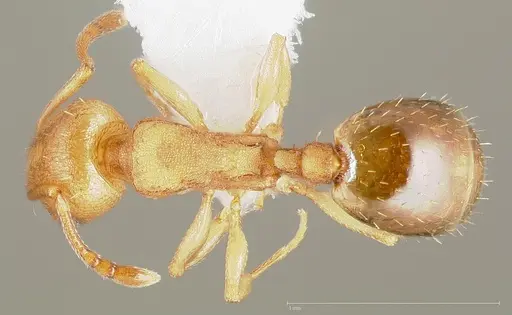
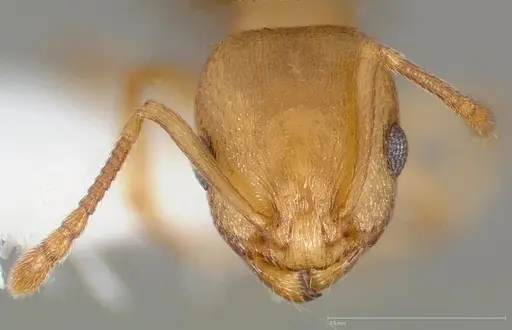
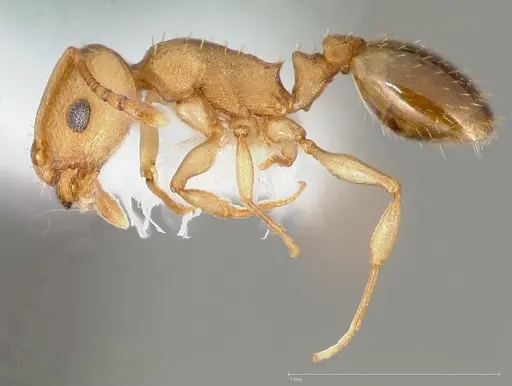
UTEPENTO60002
View on AntWeb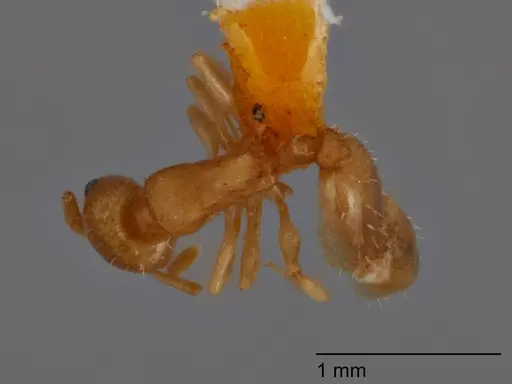
Literature
Loading distribution map...Loading products...