
Temnothorax bimbache
- Sci. Name
- Temnothorax bimbache
- Tribe
- Crematogastrini
- Subfamily
- Myrmicinae
- Author
- Espadaler, 2007
- Distribution
- Found in 1 countries
Introduction
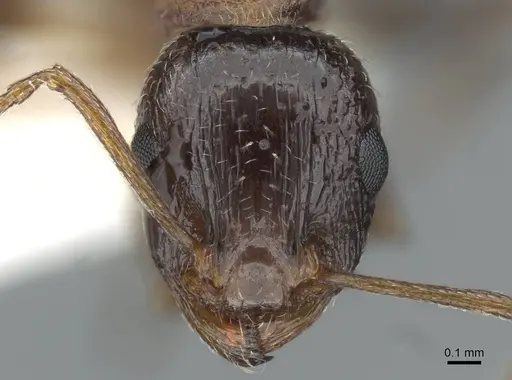
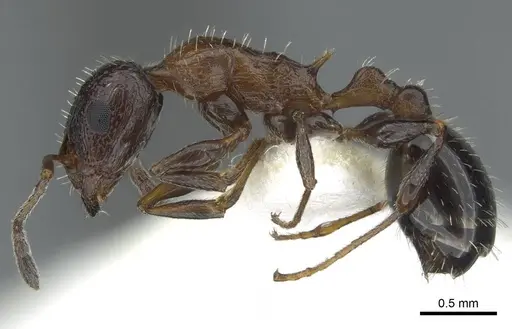
Temnothorax bimbache is a small, colorful ant species endemic to El Hierro in the Canary Islands. Workers measure 3.4-4.1mm and queens reach 4.9-5.5mm, making them typical of the genus in size . Their bicolored pattern is distinctive: the head and gaster are deep brown, while the mesosoma is orange-reddish, and the legs are brownish with orange mandibles and antennae . They have long propodeal spines and large eyes with 16-19 ommatidia in the longest row . This species was described in 2007 and named after the 'bimbaches', the aboriginal cave-inhabitants of El Hierro . In the wild, they nest under small volcanic stones, occupying the first 2cm of soil and the holes and voids within the porous rock . Nests show a specific orientation: stones must be protected by vegetation and placed on the northern face of the terrain . Winged queens emerged in the lab during April and May, suggesting spring nuptial flights . This species is only known from El Hierro, making it a rare find for antkeepers.
Quick Summary
- Difficulty: Medium
- Origin & Habitat: El Hierro in the Canary Islands. They nest under small volcanic stones in shallow soil and rock voids, typically in protected spots with vegetation on northern-facing slopes [1].
- Colony Type: Likely monogyne (single queen) based on typical Temnothorax patterns. Founding behavior is unconfirmed but probably claustral.
- Size & Growth:
- Queen: 4.9-5.5mm [1]
- Worker: 3.4-4.1mm [1]
- Colony: Unknown. Based on typical Temnothorax patterns, colonies may reach up to 500 workers.
- Growth: Moderate, typical for small Myrmicinae ants
- Development: Estimated 6-10 weeks based on typical Temnothorax development at room temperature (Development time is an estimate since specific timing has not been documented for this species)
- Antkeeping:
- Temperature: Room temperature (20-24°C) suits them, based on their subtropical origin. A slight gradient is beneficial.
- Humidity: Moderate. Keep the nest substrate lightly moist but not waterlogged, with a dry area available. In nature they nest under stones in volcanic rock, so they tolerate some dryness but need access to moisture.
- Diapause: Probably not required. Being from a subtropical island, they likely remain active year-round with a slight slowdown in cooler months. Not studied.
- Nesting: Y-tong (AAC), plaster tests, or test tube setups work well. Provide tight, small chambers scaled to their tiny size. Add a small flat stone to mimic their natural volcanic stone habitat.
- Behavior: Peaceful and non-aggressive. Workers forage actively but do not bite strongly. Escape prevention is critical due to their small size (under 4mm). They are not known to sting.
- Common Issues: small size means escapes are likely without fine mesh barriers, limited distribution makes wild collection difficult and potentially harmful to populations, recently described species with limited captive care information, slow colony growth can frustrate beginners, queen mortality during founding is common if disturbed
Housing and Nest Setup
Temnothorax bimbache does well in Y-tong (AAC) nests, which provide the tight chambers and smooth surfaces these small ants prefer. Test tube setups also work well, especially for founding colonies. Provide chambers scaled to their tiny 3-4mm worker size, avoid large, open spaces. In nature, they nest under volcanic stones and in rock voids, so adding a small flat stone or piece of porous material to the outworld helps them feel at home. Keep the nest area dark or dimly lit, as they prefer sheltered locations [1].
Feeding and Diet
Like other Temnothorax species, these ants are omnivorous. Offer small insects like fruit flies, pinhead crickets, and other tiny prey for protein. Sugar sources are also important, diluted honey, sugar water, or ant-friendly sugar gels work well. They likely collect honeydew in the wild, so both protein and sugar matter. Feed small amounts a few times per week and remove any uneaten prey after 24 hours to prevent mold. A constant sugar source is recommended for established colonies.
Temperature and Seasonal Care
Being from El Hierro in the Canary Islands (subtropical), these ants prefer warmer conditions than many European Temnothorax species. Keep them at 20-24°C for optimal activity and brood development. Room temperature is usually suitable. Winged queens emerged in the lab during April and May, suggesting they are active in warm months [1]. They likely do not need a true diapause, but you can reduce temperatures slightly in winter (to around 15-18°C) to simulate slower seasonal activity. Avoid temperatures below 15°C or above 28°C. A heating cable on one side of the nest creates a beneficial gradient.
Colony Founding
Founding behavior has not been directly observed for Temnothorax bimbache. Based on typical Temnothorax patterns, it is likely claustral, the queen seals herself in a small chamber and raises the first workers on stored fat reserves. She does not leave to forage during this time. Queens measure 4.9-5.5mm, with substantial body reserves [1]. The first workers should emerge in an estimated 6-10 weeks depending on temperature. During founding, keep the queen undisturbed in a dark, stable environment.
Behavior and Temperament
Temnothorax bimbache is a peaceful species. Workers are active and will forage in the outworld for food. They are not aggressive and rarely bite. Their small size (workers only 3.4-4.1mm) means they can escape through tiny gaps, use fine mesh on ventilation holes and ensure tight lid seals. As a member of the Crematogastrini tribe, they may possess a modified stinger for smearing venom, but they are not aggressive toward humans. Colonies are likely single-queen (monogyne) based on genus patterns. [1]
Frequently Asked Questions
How long does it take for Temnothorax bimbache to raise their first workers?
Based on typical Temnothorax development, expect 6-10 weeks from egg to first worker at room temperature (around 22°C). This is an estimate since specific timing has not been documented for this species.
What do Temnothorax bimbache ants eat?
They are omnivorous. Offer small insects (fruit flies, pinhead crickets, small mealworms) for protein and sugar sources (honey water, sugar water, ant jelly) for carbohydrates. Feed a few times per week and remove uneaten prey promptly.
Do Temnothorax bimbache ants sting?
They are generally docile and not known to sting humans. As members of the Crematogastrini tribe, they may have a modified stinger for smearing venom, but this is not a concern for keepers.
What temperature do Temnothorax bimbache need?
Keep them at 20-24°C. Being from the Canary Islands, they prefer warmer conditions than many temperate Temnothorax species. Room temperature is typically suitable.
Are Temnothorax bimbache good for beginners?
They are moderate difficulty. Their small size requires good escape prevention, and being a newly described species, there is less known about their specific care. However, they are generally hardy and follow typical Temnothorax care patterns.
How big do Temnothorax bimbache colonies get?
Colony size is not documented for this species. Based on typical Temnothorax patterns, colonies likely reach up to 500 workers. They are not among the largest ant species.
Do Temnothorax bimbache need hibernation?
Probably not a true diapause. Being from the subtropical Canary Islands, they may only slow down slightly in winter rather than entering full hibernation. You can reduce temperatures to 15-18°C in winter if desired, but this is likely optional.
What kind of nest should I use for Temnothorax bimbache?
Y-tong (AAC) nests work well for these small ants. Test tube setups are also suitable, especially for founding colonies. Provide tight chambers scaled to their 3-4mm worker size and a dark, sheltered nesting area.
Why are my Temnothorax bimbache escaping?
Their small size (under 4mm) means they can squeeze through tiny gaps. Check all ventilation holes, lid seals, and connection points. Use fine mesh and ensure everything fits tightly. Escape prevention must be excellent.
Where is Temnothorax bimbache found in the wild?
This species is endemic to El Hierro in the Canary Islands. They nest under small volcanic stones in shallow soil and rock voids, typically in protected spots with vegetation on northern-facing slopes [1].
Report an Issue
The current care sheet is based fully on literature. See inconsistencies, or something that's incorrect? Please , it will be resolved after review from an admin. Contributing to the blogs tab also helps providing information, to make us be able to further improve the caresheets. Thank you for your support!
References

This caresheet is licensed under CC BY-SA 4.0 .
Community Blogs
CASENT0911246
View on AntWeb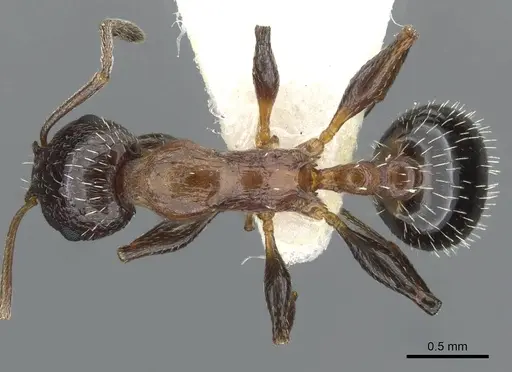
Literature
Loading distribution map...Loading products...