
Temnothorax bestelmeyeri
- Sci. Name
- Temnothorax bestelmeyeri
- Tribe
- Crematogastrini
- Subfamily
- Myrmicinae
- Author
- Mackay, 2000
- Distribution
- Found in 1 countries
Introduction
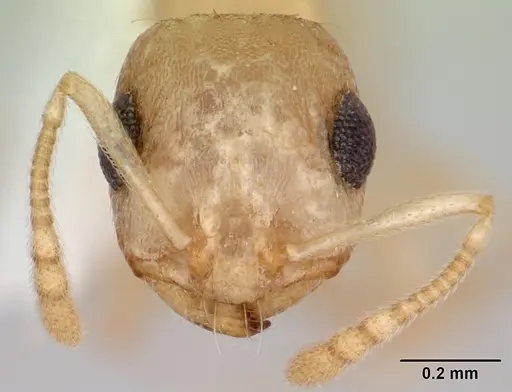
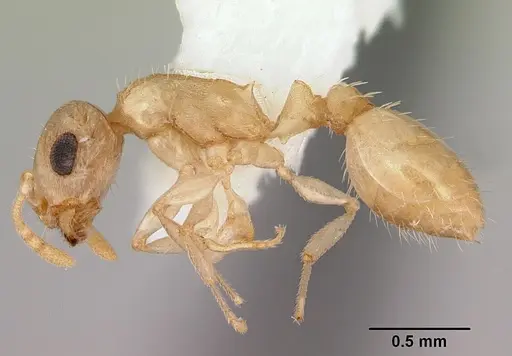
Temnothorax bestelmeyeri is a tiny, pale yellow ant species known only from a single worker collected in the desert grasslands of southern New Mexico. Its most striking feature is the large, black eyes - unusually big for a Temnothorax, which strongly suggests nocturnal or crepuscular activity . The worker has 12-segmented antennae, fine rugae on the mesosoma, and a moderately sharp petiolar node. The postpetiole is notably wide, more than 1.5 times the width of the petiole . This species belongs to the sallei-clade and was described in 2000 from a single specimen found in a pitfall trap, making it one of the rarest ants in the United States.
Quick Summary
- Difficulty: Expert
- Origin & Habitat: Southern New Mexico, USA, desert grassland at the Jornada Experimental Range, approximately 37km north of Las Cruces [2]
- Colony Type: Unknown, only a single worker has ever been collected, so colony structure is undocumented. Based on related species in the sallei-clade, likely single-queen colonies.
- Size & Growth:
- Queen: Unknown, queen has never been described or collected
- Worker: Unknown, total length not reported for the single known worker. Inferred from similar Temnothorax species to be around 2-3mm.
- Colony: Unknown, only one worker ever collected, possibly fewer than 100 workers based on typical Temnothorax patterns
- Growth: Unknown, no colony development data exists
- Development: Unknown, estimate 6-10 weeks based on typical Temnothorax development at warm temperatures (No direct data exists. Related species in the genus develop from egg to worker in 6-10 weeks.)
- Antkeeping:
- Temperature: Likely 20-24°C based on desert grassland habitat, the large eyes and pale coloration suggest possible nocturnal activity, so provide a temperature gradient with a cooler area [1].
- Humidity: Low to moderate, desert grassland habitat suggests drier conditions than forest-dwelling Temnothorax. Allow substrate to dry partially between waterings.
- Diapause: Likely required, temperate desert species from New Mexico probably needs a winter rest period of 2-3 months at 10-15°C, inferred from related temperate Temnothorax species [2].
- Nesting: Probably prefers dry, enclosed spaces, likely nests in small cavities under stones or in rotting wood in arid habitats. A small Y-tong or 3D-printed nest with tight chambers would be appropriate.
- Behavior: Almost nothing is known about their behavior. The large eyes suggest they may be active during dawn, dusk, or night. Related Temnothorax species are generally peaceful, non-aggressive, and form small colonies. Their defense mechanism is typical of the subfamily Myrmicinae: they use a modified stinger to smear venom rather than sting. Escape prevention is critical due to their tiny size, they can squeeze through standard mesh barriers.
- Common Issues: Extreme rarity in the wild means virtually no captive colonies exist, you likely cannot obtain this species., Complete lack of biological data makes proper care extremely difficult to determine., Tiny size requires excellent escape prevention, use fine mesh and tight-fitting lids., Desert habitat requirements mean they likely need drier conditions than typical forest Temnothorax., No established feeding protocols exist, start with typical Temnothorax foods (small insects, honey) and observe acceptance.
Discovery and Rarity
Temnothorax bestelmeyeri is one of the rarest ant species in North America. The entire scientific knowledge comes from a single worker collected by Brandon Bestelmeyer in a pitfall trap on the Jornada Experimental Range in southern New Mexico in July 1996 [2]. William Mackay formally described the species in 2000,and no additional specimens have been found since. This makes it effectively unavailable to antkeepers, no established captive colonies exist. The species is named in honor of its discoverer.
Identification and Distinguishing Features
This species is identified by its pale yellow color and unusually large black eyes, a feature that sets it apart from most other Chihuahuan Desert Temnothorax. The eyes are proportionally larger than in T. terrigena, T. furunculus, and T. andrei. Workers have 12-segmented antennae, fine rugae on the mesosoma, and a postpetiole more than 1.5 times the width of the petiole. The petiolar node is moderately sharp in profile, and the subpeduncular process is well developed. It could be confused with T. andersoni, T. cokendolpheri, T. liebi, or T. coleenae, but the large eyes are a reliable distinguishing feature [2].
Habitat and Distribution
Temnothorax bestelmeyeri is known only from the type locality in Dona Ana County, New Mexico, about 37 kilometers north of Las Cruces. The habitat is desert grassland, a semi-arid environment with grasses and sparse vegetation between the Chihuahuan Desert and surrounding mountains. The single specimen was collected in late July 1996,during the monsoon season when summer rains increase insect activity. Extensive ant surveys in the region have not yielded additional specimens [2].
Eye Structure and Activity Pattern
Research on eye structure across Temnothorax species shows that T. bestelmeyeri has a relative eye size of 0.0303, significantly larger than typical for the genus [1]. Its very pale coloration (brightness value 75.0) further suggests a nocturnal or crepuscular activity pattern [1]. This matches evolutionary patterns where pale, nocturnal species develop larger eyes and corneal facets to capture more light. In captivity, this would mean providing lower light conditions and likely focusing feeding during dawn or dusk.
Defense Mechanism
As a member of the subfamily Myrmicinae (tribe Crematogastrini), Temnothorax bestelmeyeri likely has a modified, flattened spatulate stinger used to wipe or smear venom onto enemies rather than piercing flesh. This is typical for the tribe and no specific observations exist for this species. Given its small size, the sting would be negligible to humans. The ants likely rely on fleeing rather than stinging.
Keeping an Extremely Rare Species
Honest assessment: this species is essentially impossible to keep in captivity. Only a single worker has ever been collected [2], meaning there are no established captive colonies, no documented care requirements, and no legal collection records. Even if a colony were somehow discovered, the lack of biological data makes proper care nearly impossible to determine. For antkeepers interested in rare Temnothorax, consider better-documented species like Temnothorax ambiguus, Temnothorax curvispinosus, or other species from the sallei-clade that have established captive populations. If you somehow obtain specimens labeled as this species, treat them as experimental and document any observations carefully.
Frequently Asked Questions
Can I keep Temnothorax bestelmeyeri ants?
No, this species is essentially impossible to keep. Only a single worker has ever been collected in the wild, and no captive colonies exist. There are no documented care requirements, no established breeding protocols, and no legal collection records [2].
How big do Temnothorax bestelmeyeri colonies get?
Unknown, only a single worker has ever been collected. Based on typical Temnothorax patterns, colonies are likely small (under 100 workers), but this is purely speculative [2].
What do Temnothorax bestelmeyeri ants eat?
Unconfirmed, no feeding observations exist. Based on related desert-dwelling Temnothorax species, they likely accept small insects (fruit flies, pinhead crickets) and honeydew or sugar water [2].
What temperature do Temnothorax bestelmeyeri ants need?
Likely 20-24°C based on desert grassland habitat. The large eyes and pale coloration suggest possible nocturnal activity, so providing a temperature gradient with a cooler side would be wise [1].
Do Temnothorax bestelmeyeri ants need hibernation?
Likely yes, as a temperate desert species from New Mexico, they probably require a winter rest period. Related temperate Temnothorax species typically need 2-3 months at 10-15°C [2].
Where does Temnothorax bestelmeyeri live?
Only known from the Jornada Experimental Range in southern New Mexico, USA, desert grassland habitat. This is the only confirmed location in the world [2].
Are Temnothorax bestelmeyeri good for beginners?
No, this species is not suitable for any keeper, beginner or experienced. No captive colonies exist, and all care requirements are unknown [2].
How long does it take for Temnothorax bestelmeyeri to develop from egg to worker?
Unknown, no colony development has ever been documented. Based on typical Temnothorax development, estimate 6-10 weeks at warm temperatures, but this is purely speculative [2].
Report an Issue
The current care sheet is based fully on literature. See inconsistencies, or something that's incorrect? Please , it will be resolved after review from an admin. Contributing to the blogs tab also helps providing information, to make us be able to further improve the caresheets. Thank you for your support!
References

This caresheet is licensed under CC BY-SA 4.0 .
Community Blogs
CASENT0172986
View on AntWeb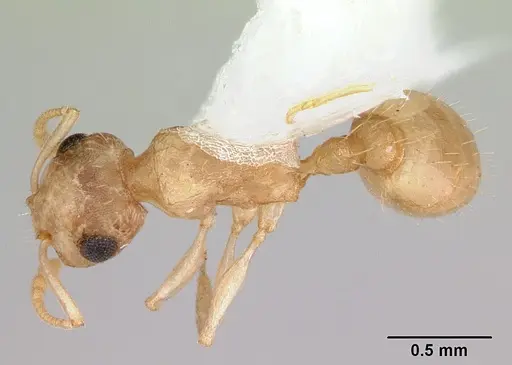
Literature
Loading distribution map...Loading products...