
Temnothorax arcanus
- Sci. Name
- Temnothorax arcanus
- Tribe
- Crematogastrini
- Subfamily
- Myrmicinae
- Author
- Kutter, 1973
- Distribution
- Found in 2 countries
Introduction
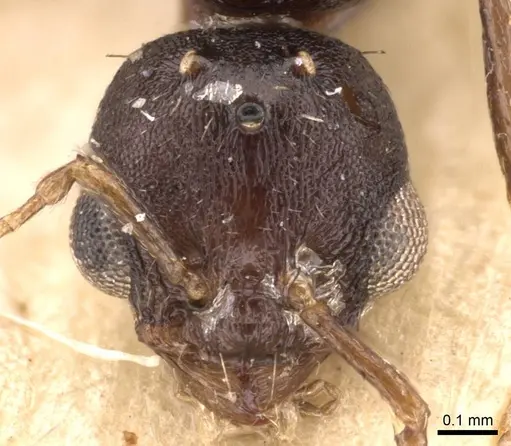
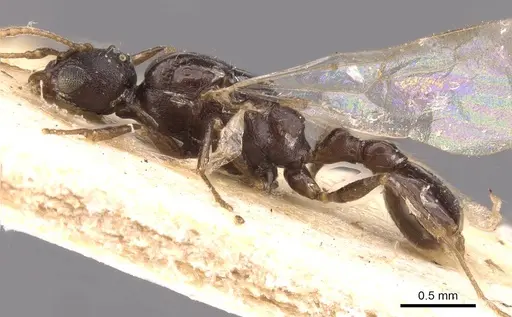
Temnothorax arcanus is a tiny ant from the Swiss Alps. Only the male caste has been scientifically described, it measures 3.4 mm and has a black-brown body with lighter legs and antenna segments . The workers and queens remain unknown. This species was originally placed in _Leptothorax_ before being moved to _Temnothorax_ by Bolton in 2003 . It is known from a single location: Saas‑Tal valley in Valais, Switzerland, at about 2400 m elevation . At that altitude, summers are short and cool, and winters are long and cold. These ants likely nest in small cavities under stones or in rock crevices, like other high‑altitude _Temnothorax_.
Quick Summary
- Difficulty: Unknown
- Origin & Habitat: Native to the Swiss Alps (Palaearctic region). Specimens collected at ~2400 m in Saas‑Tal valley, Valais, Switzerland [1]. High‑altitude Alpine: cool summers, long winters, rocky terrain.
- Colony Type: Unknown, only the male caste has been described. Based on typical _Temnothorax_ patterns, colonies likely have a single queen (monogyne) with possible ergatoid replacement reproductives [2].
- Size & Growth:
- Queen: Unknown, queens have not been described [1].
- Worker: Unknown, workers have not been described [1].
- Colony: Unknown. Inferred from related _Temnothorax_: likely 100-500 workers [2].
- Growth: Unknown, no colony development data exists for this species.
- Development: Unknown. Based on related _Temnothorax_ species, estimate 6-10 weeks at optimal temperature [2]. (No direct development data exists. Estimate based on genus‑level patterns for similar small Myrmicinae.)
- Antkeeping:
- Temperature: Based on their high‑altitude origin (2400 m), they likely prefer cool conditions, roughly 15-22 °C. Start at room temperature (18-21 °C) and observe colony activity. Avoid temperatures above 25 °C.
- Humidity: Moderate humidity typical of Alpine rock cavities. Keep nest substrate slightly moist but not waterlogged. Provide a moisture gradient so ants can choose their preferred zone.
- Diapause: Likely yes, high‑altitude Alpine species typically need a winter dormancy. A 2-3 month hibernation at 5-10 °C is recommended, based on typical temperate Alpine ant patterns [2].
- Nesting: Inferred from typical _Temnothorax_: they nest in pre‑existing cavities (cracks in rocks, under stones, rotting wood). In captivity, use a small Y‑tong (AAC) or plaster nest with tight chambers. Avoid large, open spaces.
- Behavior: Behavior is unstudied but likely similar to other _Temnothorax_: docile, non‑aggressive, foraging individually on ground and low vegetation for honeydew and small prey. This species belongs to the tribe Crematogastrini, which uses a smear defense: a modified spatulate stinger wipes venom onto enemies rather than piercing. Escape prevention is critical due to their tiny size, use fine mesh (≤0.5 mm) and tight barriers.
- Common Issues: escape prevention is critical due to tiny, unmeasured workers, use fine mesh barriers, no documented care requirements exist, keepers must adapt from genus‑level knowledge, high‑altitude origin means overheating is a serious risk, keep cool, hibernation requirements are unconfirmed but likely necessary based on origin, very limited availability, this species is rarely kept in captivity, workers and queens have never been scientifically described, so all care advice is inferred
Species Background and Identification
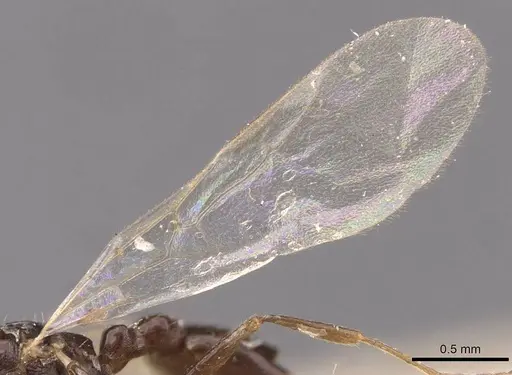
Temnothorax arcanus was originally described by H. Kutter in 1973 as Temnothorax arcanus, based on male specimens collected from Saas‑Tal valley, Switzerland, at ~2400 m [1]. The species was moved to Temnothorax by Bolton in 2003 [1]. Workers and queens have never been scientifically described, making this one of the most poorly known Temnothorax. The only documented caste is the male, which measures 3.4 mm and has a relatively long scape (as long as the first four funicular segments combined), black‑brown coloration with lighter legs, and a broad,8‑toothed sagitta [1]. This species represents a major knowledge gap, the full caste series (queen, worker, male) has never been documented together.
Natural Habitat and Distribution
Known only from the Swiss Alps: Saas‑Tal valley in Valais (VS) at ~2400 m [1]. This high‑altitude Alpine setting suggests adaptation to cool, harsh conditions. The limited distribution (endemic to a single region) makes it rare and of conservation interest. In the Alpine zone, temperatures are cool year‑round, with short summers and long winters. The active season is probably short, and ants likely need winter hibernation. The microhabitat probably consists of rocky terrain with sparse vegetation, where they nest under stones or in small ground cavities.
Housing and Nesting
Since workers have never been described, specific nesting preferences are unknown. Based on typical Temnothorax behavior, these ants likely nest in pre‑existing cavities rather than excavating their own. Recommended captive setups include small Y‑tong (AAC) nests with tight chambers scaled to their tiny size, or plaster nests that maintain consistent humidity. Avoid large, open formicaria, these small ants do best in compact spaces with narrow passages. Keep the nest in a cool location away from direct heat. A small outworld for foraging completes the setup. Escape prevention is critical, use fine mesh (≤0.5 mm) on all openings. [2]
Temperature and Seasonal Care
Based on their origin at 2400 m in the Swiss Alps, T. arcanus almost certainly needs cool conditions and likely requires hibernation. Keep the nest at room temperature (18-21 °C) as a starting point, avoid temperatures above 25 °C. During the active season (spring through fall), room temperature is likely ideal. For winter, provide a 2-3 month hibernation period at 5-10 °C, similar to other temperate Alpine ant species. This can be done by moving the colony to a cool basement or refrigerator (not freezer). Monitor for stress if temperatures exceed 25 °C. [2]
Feeding and Nutrition
No species‑specific feeding data exists. Based on typical Temnothorax diet, they likely feed on honeydew from aphids and small soft‑bodied insects. In captivity, offer sugar water or honey water as a constant energy source. For protein, provide small live prey such as fruit flies, springtails, or small mealworm pieces. Feed small amounts 2-3 times per week, removing uneaten prey after 24 hours. Freshly killed insects are often more readily accepted by small colonies. Always keep a sugar source available. [2]
Colony Structure and Reproduction
The colony structure of T. arcanus is completely unknown, only males have ever been documented [1]. Based on typical Temnothorax patterns, colonies likely have a single queen (monogyne) with ergatoid (wingless) replacement reproductives that can take over if the primary queen dies [2]. Nuptial flight timing is unknown but likely occurs in summer, typical for temperate Alpine ants. Founding behavior is unconfirmed, but most Temnothorax queens are claustral (seal themselves in a chamber and raise first workers on stored body fat). The complete absence of described workers and queens represents the major gap in our knowledge of this species.
Frequently Asked Questions
How do I keep Temnothorax arcanus ants?
Care requirements are not well documented since workers have never been scientifically described. Based on typical Temnothorax care, use a small nest (Y‑tong or plaster) with tight chambers, keep at cool room temperature (18-21 °C), provide moderate humidity, and offer sugar water plus small live prey. Escape prevention is critical due to their tiny size. Consider a 2-3 month winter hibernation at 5-10 °C [2].
What do Temnothorax arcanus ants eat?
No species‑specific feeding data exists. Based on typical Temnothorax diet, they likely accept sugar sources (honey water, sugar water) and small soft‑bodied insects (fruit flies, springtails, small mealworm pieces). Feed small amounts 2-3 times weekly and remove uneaten prey after 24 hours [2].
How big do Temnothorax arcanus colonies get?
Colony size is unknown, only males have been described [1]. Based on typical Temnothorax genus patterns, colonies likely reach 100-500 workers. This is an estimate based on related species, not documented data for this specific species [2].
Do Temnothorax arcanus ants need hibernation?
Likely yes, their origin at 2400 m in the Swiss Alps strongly suggests they require a winter dormancy period. Provide 2-3 months at 5-10 °C during winter, similar to other temperate Alpine ant species [1][2].
What temperature is best for Temnothorax arcanus?
Keep at cool room temperature, roughly 18-21 °C. Avoid temperatures above 25 °C. Their high‑altitude Alpine origin indicates they are poorly adapted to heat. This is an estimate based on their origin, not documented species‑specific requirements [1][2].
Are Temnothorax arcanus ants good for beginners?
Not recommended for beginners. This is one of the most poorly known Temnothorax species, workers and queens have never been scientifically described, so no established care guidelines exist. Keeping this species successfully would require advanced antkeeping experience and willingness to experiment [1].
How long does it take for Temnothorax arcanus to develop from egg to worker?
Unknown, no development data exists for this species. Based on typical Temnothorax genus patterns, estimate 6-10 weeks from egg to first worker at optimal temperature. This is a rough estimate, not documented data [2].
Can I keep multiple Temnothorax arcanus queens together?
Colony structure is unconfirmed for this species. Based on typical Temnothorax patterns, colonies likely have a single queen (monogyne). Combining unrelated queens is not recommended since this has not been studied for this species [2].
Do Temnothorax arcanus ants sting?
Like other members of the tribe Crematogastrini, Temnothorax arcanus likely uses a smear defense, a modified spatulate stinger that wipes venom onto enemies rather than piercing. They are generally docile and unlikely to attack humans. Their tiny size means any sting would be very mild. They are not considered dangerous.
Where is Temnothorax arcanus found?
This species is known only from the Swiss Alps, specifically the Saas‑Tal valley in Valais, Switzerland at approximately 2400 m elevation [1]. It is endemic to this region.
Report an Issue
The current care sheet is based fully on literature. See inconsistencies, or something that's incorrect? Please , it will be resolved after review from an admin. Contributing to the blogs tab also helps providing information, to make us be able to further improve the caresheets. Thank you for your support!
References

This caresheet is licensed under CC BY-SA 4.0 .
Community Blogs
CASENT0907574
View on AntWeb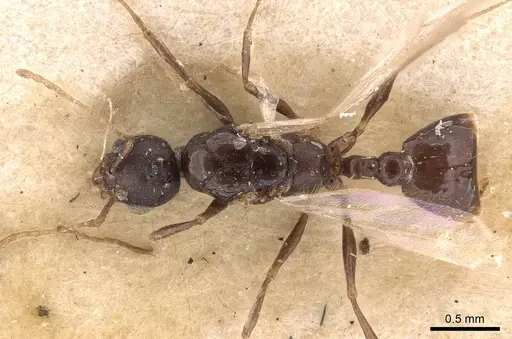
Literature
Loading distribution map...Loading products...