
Temnothorax anacanthus
- Sci. Name
- Temnothorax anacanthus
- Tribe
- Crematogastrini
- Subfamily
- Myrmicinae
- Author
- Santschi, 1912
- Distribution
- Found in 1 countries
Introduction
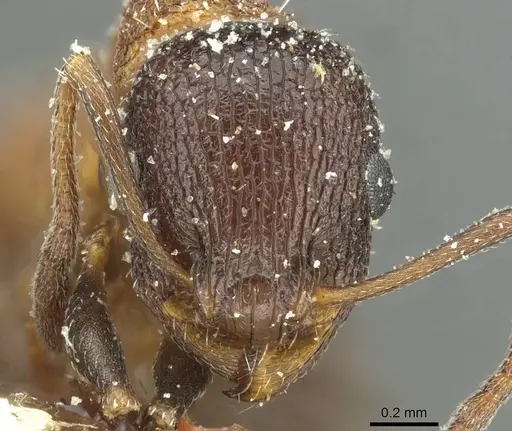
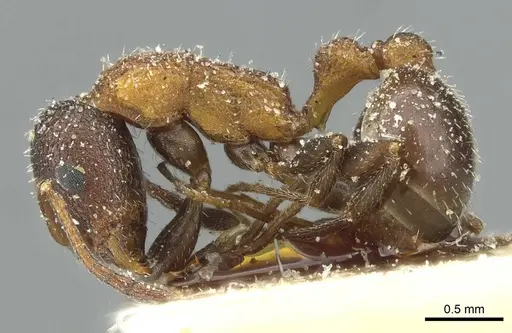
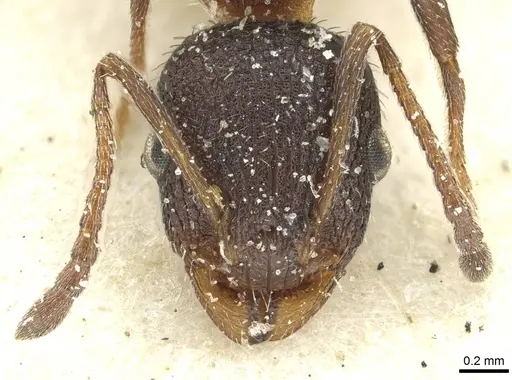
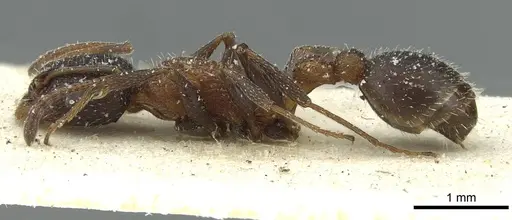
Temnothorax anacanthus is a small, bicolored ant belonging to the rottenbergii species group. Workers have a distinctive appearance with a dark brown to black head and gaster contrasting against a light brown to reddish brown mesosoma (middle body section) . This species is one of three spineless species in its group . The species is endemic to Morocco, found from the Atlantic coast to the Atlas Mountains up to Ifrane . In the wild, they nest under stones in open shrubland (matorral) with sparse vegetation of Calycotome villosa and Pistacia lentiscus, often in areas with little ground litter and surrounded by farmland . This species is closely related to Temnothorax hesperius (found in the Canary Islands) and Temnothorax lailae, from which it can be distinguished by its bicolored pattern and geographic distribution . As a Moroccan endemic, Temnothorax anacanthus represents a species of interest for keepers looking to observe a less commonly kept ant, though specific care data are sparse.
Quick Summary
- Difficulty: Medium
- Origin & Habitat: Endemic to Morocco, from the Atlantic coast to the Atlas Mountains up to Ifrane [2]. Found in open matorral (shrubland) habitat, nesting under stones in areas with Calycotome villosa and Pistacia lentiscus vegetation, typically lacking ground litter [1].
- Colony Type: Likely monogyne (single-queen colonies) based on genus patterns, but this is unconfirmed from direct study [1].
- Size & Growth:
- Queen: size data unavailable, inferred from Temnothorax genus, approximately 3-5mm
- Worker: size data unavailable, inferred from Temnothorax genus, approximately 2-4mm
- Colony: Unknown
- Growth: Unknown
- Development: Unknown (No published data on development time for this species.)
- Antkeeping:
- Temperature: No specific data. Based on Moroccan habitat, aim for 20-25°C during the active season and provide a gradient so ants can self-regulate. If the colony slows down in winter, provide a cooler period at 10-15°C.
- Humidity: They nest in dry shrubland, keep the nest substrate mostly dry with a small moist area to create a gradient. Avoid constant wetness.
- Diapause: Unconfirmed but likely needed due to temperate origin. If the colony reduces activity in winter, provide a cooling period (10-15°C) for a few months.
- Nesting: Naturalistic setups with flat stones or soil, or Y-tong (AAC)/plaster nests with small chambers work well, reflecting their natural nesting under stones [1].
- Behavior: Peaceful and not aggressive. Defense mechanism is smearing venom from a modified stinger, typical of the Crematogastrini tribe. Escape prevention is critical due to their small size, they can slip through standard test tube cotton.
- Common Issues: escape prevention is critical due to their tiny size, they can squeeze through standard test tube cotton, colonies may suffer if humidity is too high, their natural habitat is relatively dry, winter dormancy requirements are unconfirmed, monitor colony and provide a cool rest if they slow down, wild-caught colonies may carry parasites that can decimate captive populations, sparse care information means keepers must be prepared to adapt conditions based on observation
Housing and Nest Setup
Temnothorax anacanthus is a small species that needs appropriately scaled housing. In the wild, they nest under stones in relatively dry shrubland, so your setup should mimic these conditions [1]. A Y-tong (AAC) nest with narrow chambers works well, as does a plaster nest or a naturalistic setup with flat stones laid on soil. The chambers should be tight, these tiny ants feel exposed in large open spaces. Test tubes can work for founding colonies but may need modification to prevent escapes due to their small size. Use a water tower or hydration system that allows you to control moisture without flooding the colony. A small outworld area for foraging completes the setup [1].
Feeding and Diet
Like many small omnivorous ants, this species likely accepts a variety of foods. Offer sugar water or honey water as a constant energy source. For protein, provide small live prey such as fruit flies, pinhead crickets, or mealworm pieces. No specific dietary preferences are documented for this species, so observe your colony and adjust. Feed small amounts 2-3 times per week, removing uneaten prey after 24 hours to prevent mold.
Temperature and Seasonal Care
No published temperature requirements exist for this species. Based on the Mediterranean climate of Morocco, keep the colony at typical room temperature (20-25°C) during the active season. A temperature gradient is ideal, place a heating cable on one side so workers can move between warmer and cooler areas. If the colony becomes inactive in winter, reduce temperatures to 10-15°C for a few months to provide a natural rest period. Do not feed during diapause and minimize disturbance. Return to normal temperatures gradually in spring.
Colony Development and Growth
There is no specific data on colony development or growth rate for this species. Based on general patterns in Temnothorax, a newly mated queen will likely seal herself in a small chamber and lay eggs, raising the first brood on her body reserves. The colony probably grows slowly, but timelines and mature sizes are unknown. Patience and adaptation to observed behavior are key.
Behavior and Observation
Temnothorax anacanthus is a peaceful species that relies on escape or smearing venom rather than stinging, typical of its tribe (Crematogastrini). Workers are active foragers that will venture out to collect food. They are not aggressive and may feign death when threatened. Their small size makes escape prevention a priority. They do best with minimal disturbance during the founding phase.
Frequently Asked Questions
How long does it take for Temnothorax anacanthus to raise first workers?
No published data. Related Temnothorax species may take 6-10 weeks at optimal temperature, but this is speculation. Observe your colony and do not disturb during founding.
Do Temnothorax anacanthus ants sting?
Their primary defense is smearing venom from a modified stinger, not piercing stings. This is typical of the Crematogastrini tribe. They are not aggressive and rarely react to disturbance.
What temperature do Temnothorax anacanthus need?
No specific data. Aim for 20-25°C during the active season with a gradient. If the colony becomes inactive in winter, provide a cooler period at 10-15°C.
Can I keep multiple Temnothorax anacanthus queens together?
Unconfirmed, but likely single-queen colonies as is typical for the genus. Combining queens is not recommended unless documented otherwise.
How big do Temnothorax anacanthus colonies get?
Unknown. No published records of colony size for this species. Expect slow growth and adjust expectations based on observation.
Do Temnothorax anacanthus need hibernation?
Likely needed due to temperate origin, but unconfirmed. If the colony slows down in winter, provide a cooling period (10-15°C) for a few months. If they remain active, continue normal care.
What do Temnothorax anacanthus eat?
General omnivore. Offer sugar water or honey water constantly, and small live prey (fruit flies, pinhead crickets) for protein. No specific dietary data exists for this species.
Are Temnothorax anacanthus good for beginners?
Medium difficulty. Their small size requires careful escape prevention, and the lack of published care data means keepers must be prepared to adapt. Not a beginner species, but manageable for intermediate keepers.
When should I move my Temnothorax anacanthus to a formicarium?
No specific advice. General practice: wait until the colony has around 20 workers before moving from a test tube to a small formicarium. Moving too early can stress the colony.
Why is my Temnothorax anacanthus colony dying?
Possible causes include: too high humidity (they prefer dry conditions), inadequate escape prevention leading to losses, or parasites from wild-caught colonies. Since specific data is sparse, carefully review your setup and note any environmental issues.
Report an Issue
The current care sheet is based fully on literature. See inconsistencies, or something that's incorrect? Please , it will be resolved after review from an admin. Contributing to the blogs tab also helps providing information, to make us be able to further improve the caresheets. Thank you for your support!
References

This caresheet is licensed under CC BY-SA 4.0 .
Community Blogs
CASENT0912891
View on AntWeb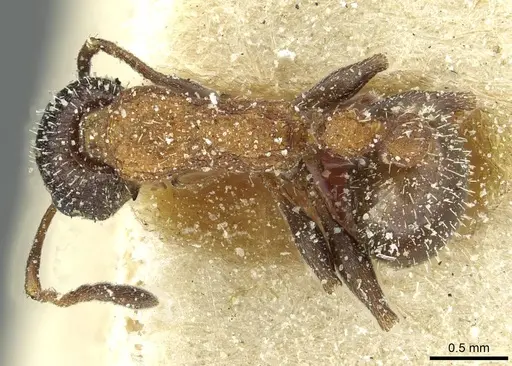
CASENT0912892
View on AntWeb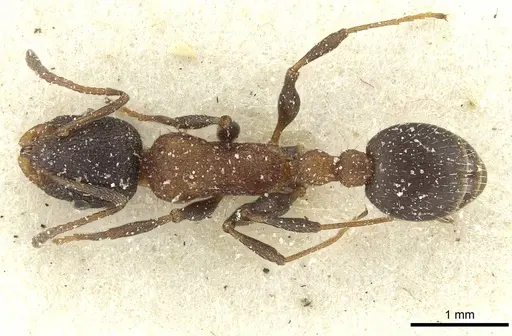
Literature
Loading distribution map...Loading products...