
Temnothorax alienus
- Sci. Name
- Temnothorax alienus
- Tribe
- Crematogastrini
- Subfamily
- Myrmicinae
- Author
- Schulz <i>et al.</i>, 2007
- Distribution
- Found in 1 countries
Introduction
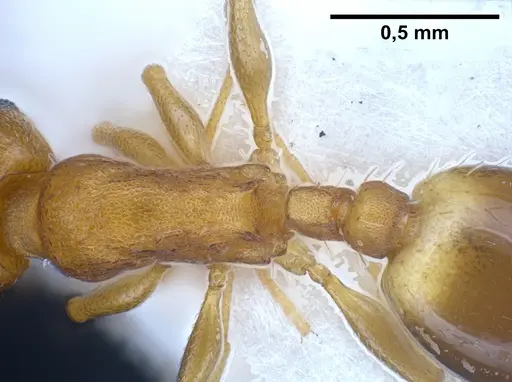
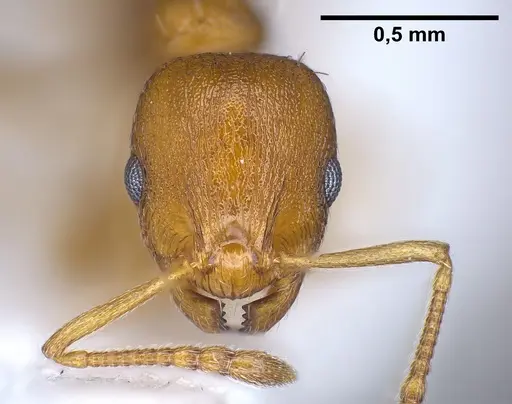
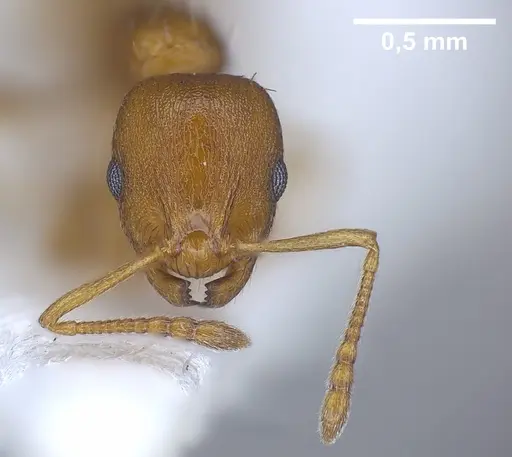
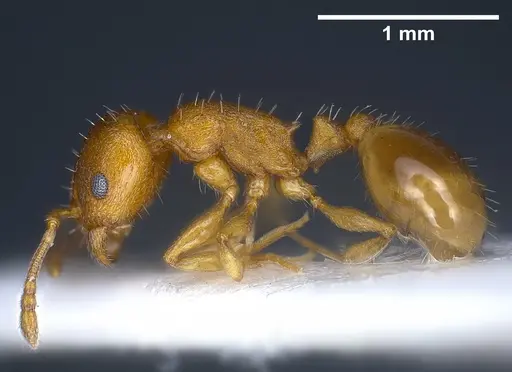
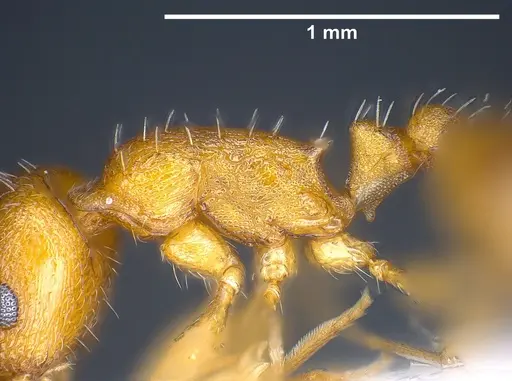
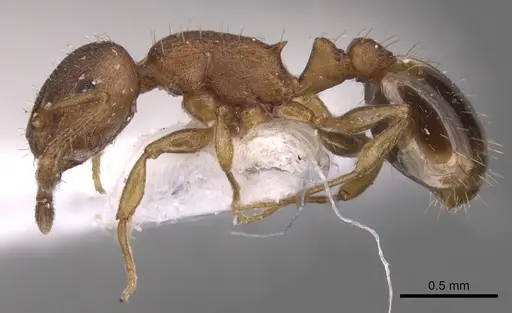
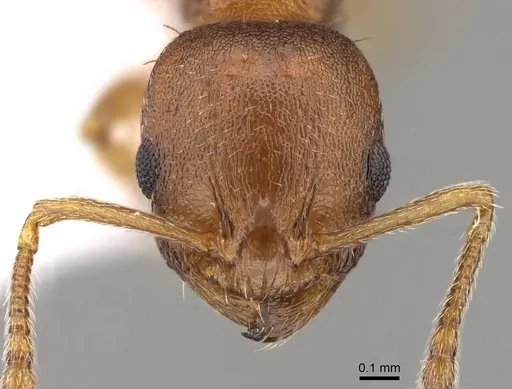
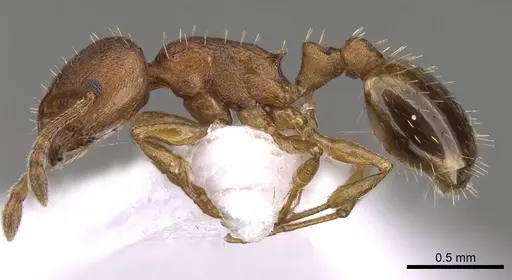
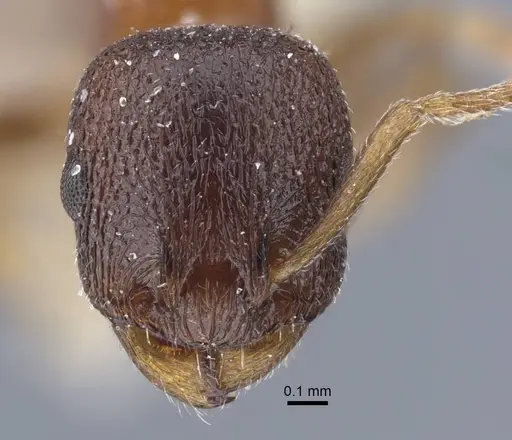
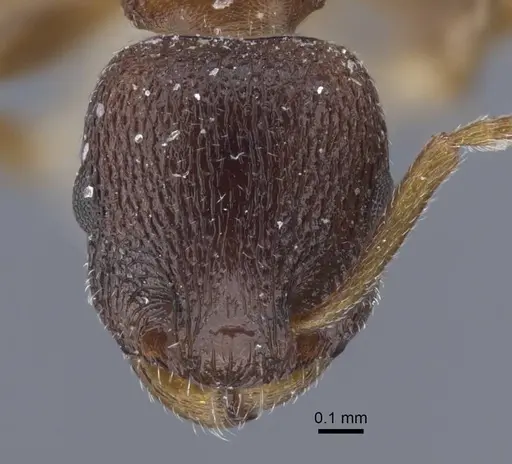
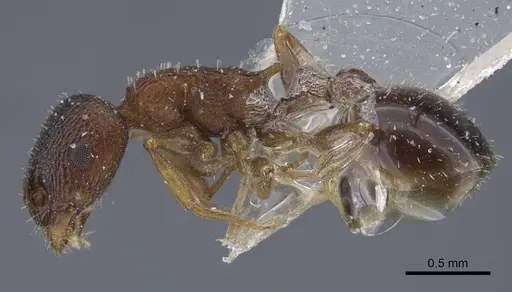
Temnothorax alienus is a tiny yellow-orange ant endemic to southern and central Italy. Workers are very small, typical for the genus Temnothorax, but exact total length has not been documented. Queens are slightly larger, likely around 3-4 mm based on related species, but specific body measurements are unavailable. The workers have a distinctive uniform light yellow-orange colour, without the darker antennal clubs seen in many other Temnothorax species, and they lack the metanotal groove (a small groove on the back) that helps tell them apart from similar species like Temnothorax nylanderi . This species was only described scientifically in 2007 , and its nests have been found in dead sticks and twigs lying on the ground in forests with oak and laurel trees at elevations of 630-730 m in Italy .
Quick Summary
- Difficulty: Medium
- Origin & Habitat: This species is endemic to middle and southern Italy, especially the Campania region including the Parco Nazionale del Cilento area [1][2]. Nests were collected in forests with Quercus (oak) and Laurus (laurel) trees at the base of hills, where the ground was covered with rocks and ivy [1][3]. A second site had sparse vegetation with scattered Castanea (chestnut) and Corylus (hazel) trees [1]. Elevations range from about 630 to 730 m [1].
- Colony Type: Colony structure is unconfirmed for this species. Based on related Temnothorax, they are likely monogyne (single queen), but this has not been verified.
- Size & Growth:
- Queen: Queens likely measure about 3-4 mm total length, inferred from related Temnothorax species, exact body measurements are not documented.
- Worker: Workers are very small, likely about 2-3 mm total length based on genus patterns, exact measurements are unavailable.
- Colony: Colony size is unknown. Related Temnothorax species typically have up to 500 workers at maturity, but this is speculative for T. alienus.
- Growth: Unknown, but likely moderate based on related species.
- Development: Unknown. Inferred from related Temnothorax: about 6-10 weeks at optimal temperature, but this has not been documented for T. alienus. (Development time is an estimate from typical Temnothorax patterns.)
- Antkeeping:
- Temperature: Specific temperature requirements are unknown. Based on its Mediterranean forest habitat at 630-730 m [1], a range of 20-24 °C is likely suitable. Avoid prolonged temperatures above 28 °C or below 16 °C.
- Humidity: No precise data. Since the species nests in dead sticks on forest floors, moderate humidity is recommended, keep the nest substrate slightly moist but not waterlogged.
- Diapause: Likely required as a temperate species, but exact duration is unknown. A winter rest period of 2-3 months at 10-15 °C is inferred from related Italian Temnothorax species.
- Nesting: Naturally nests in dead sticks on the ground [1][3]. In captivity, Y‑tong (AAC) nests with narrow chambers, plaster nests, or test tube setups work well. Avoid acrylic nests.
- Behavior: Peaceful and docile, they are not aggressive and pose no danger to keepers. As a member of the Crematogastrini tribe, they have a modified stinger used to smear venom rather than pierce skin, so they are harmless to humans. Their tiny size makes escape a high risk, use fine mesh or fluon on all openings. Workers are active foragers that likely collect small insects and honeydew, but specific foraging behavior has not been studied.
- Common Issues: tiny size means escapes are likely without fine mesh barriers, they can squeeze through gaps larger ants cannot., lack of published care data means keepers must experiment cautiously, what works for related Temnothorax may not apply., limited availability, the species is endemic to Italy and was only described in 2007, wild‑caught colonies may carry parasites or suffer from collection stress
Housing and Nest Setup
Temnothorax alienus is a tiny ant so needs appropriately scaled housing. A test tube setup works well for founding colonies, use a small tube with a cotton water plug. For established colonies, Y‑tong (AAC) nests with narrow chambers, plaster nests, or small wooden formicaria are suitable [1]. The key is tight chambers and passages scaled to their tiny worker size. They naturally nest in dead sticks on the ground [1][3], so wood‑based nests mimic their natural home. Avoid large, open spaces in the formicarium as they can stress small colonies. A modest outworld for foraging is enough, they do not need extensive space.
Feeding and Diet
No detailed feeding studies exist for this species. Based on related Temnothorax, they likely accept small insects such as fruit flies, pinhead crickets, or small mealworms, plus sugary liquids like honey water or sugar water. Offer tiny prey items appropriate to their size. Remove uneaten prey after 24 h to avoid mould. Offer sugar water continuously as a carbohydrate source.
Temperature and Seasonal Care
Maintain nest areas at 20-24 °C if possible, this range is inferred from the species’ Mediterranean forest habitat at 630-730 m [1]. Avoid extremes above 28 °C or below 16 °C. A gentle heat gradient using a heating cable on one side of the nest can help if room temperature runs cool. During winter, provide a diapause period of about 2-3 months at 10-15 °C, mimicking the natural seasonal cycle of central‑southern Italy. Reduce feeding during diapause and keep the nest slightly cooler but not cold.
Colony Founding
Founding behaviour is unconfirmed for Temnothorax alienus. Most Temnothorax species are claustral (queens seal themselves in and raise first workers without foraging), but this has not been verified for T. alienus. If queens are claustral, expect a founding period of around 6-10 weeks to first workers, based on related species. Keep founding queens in a dark, quiet place, in a small test tube with a water reservoir. Minimise disturbance. [1]
Behavior and Observation
These ants are peaceful and docile, they do not sting in the usual sense and are harmless to humans. Workers are small but active, foraging individually or in small groups. They are best observed with good lighting and a magnifying lens or macro camera. Colonies likely remain modest even at maturity, allowing close‑up observation of social behaviours. Because they are tiny, use fine mesh or fluon on all openings to prevent escapes. [1]
Escape Prevention
Despite their small size, these ants can escape through the tiniest gaps. Use excellent escape prevention: apply fluon (insect barrier) to all rim edges, use fine mesh (at least 0.5 mm) on any ventilation holes, and ensure all connections between nest and outworld are tight. Check seals regularly. Even seemingly sealed containers may have gaps invisible to the human eye. A thin layer of petroleum jelly or fluon around the rim of the outworld provides an effective barrier.
Frequently Asked Questions
How long does it take for Temnothorax alienus to go from egg to first worker?
Unknown. Based on related Temnothorax species, expect about 6-10 weeks at optimal temperatures (around 22-24 °C), but this has not been documented for T. alienus.
What do Temnothorax alienus ants eat?
Their natural diet is unknown. Based on related species, they likely accept small insects like fruit flies and pinhead crickets, plus sugar water or honey water. Offer prey sized for their tiny workers. Remove uneaten food after 24 h.
Do Temnothorax alienus ants sting?
They have a modified stinger used for smearing venom (common to the Crematogastrini tribe), not for piercing. They are harmless to humans, no painful sting.
Are Temnothorax alienus good for beginners?
Rated as medium difficulty. They are peaceful and small, but the lack of published care data, their tiny size (requiring careful escape prevention), and limited availability make them better suited for keepers with some experience.
What temperature do Temnothorax alienus need?
Specific data is unknown. Based on its Mediterranean forest habitat [1] a range of 20-24 °C is likely ideal. Avoid extremes above 28 °C or below 16 °C.
Do Temnothorax alienus need hibernation?
Probably yes, as a temperate species from central‑southern Italy, a winter rest period is likely. In practice, give them about 2-3 months at 10-15 °C. Reduce feeding during this time.
How big do Temnothorax alienus colonies get?
Colony size is unknown. Related Temnothorax species often reach 100-500 workers at maturity, but this is speculation for T. alienus.
Can I keep multiple Temnothorax alienus queens together?
Probably not, most related Temnothorax are monogyne (single queen). If you have multiple foundresses, house them separately. This has not been tested for T. alienus.
What is the best nest type for Temnothorax alienus?
Small Y‑tong (AAC) nests with narrow chambers, plaster nests, or test tubes work well. They naturally live in dead sticks [1], so wood‑based nests mimic nature. Avoid large, open spaces.
Why are my Temnothorax alienus escaping?
Their tiny size lets them slip through the smallest gaps. Use fine mesh (at least 0.5 mm) on ventilation, fluon on rim edges, and ensure tight connections. Check regularly.
Report an Issue
The current care sheet is based fully on literature. See inconsistencies, or something that's incorrect? Please , it will be resolved after review from an admin. Contributing to the blogs tab also helps providing information, to make us be able to further improve the caresheets. Thank you for your support!
References

This caresheet is licensed under CC BY-SA 4.0 .
Community Blogs
ANTWEB1041296
View on AntWeb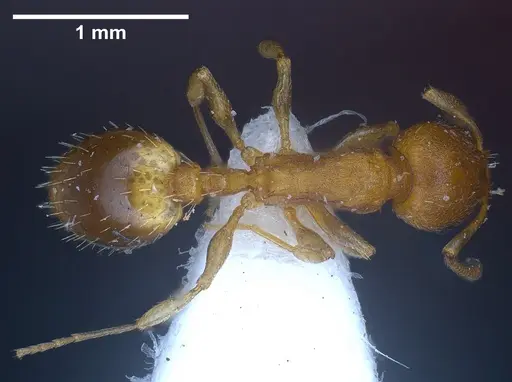
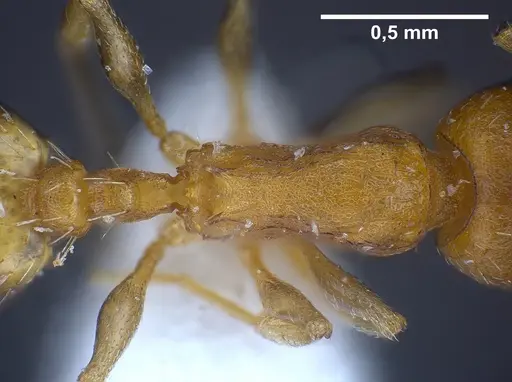
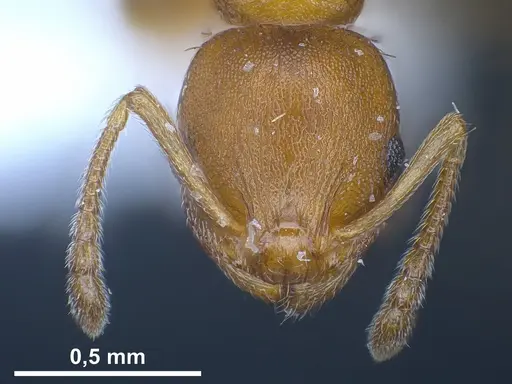
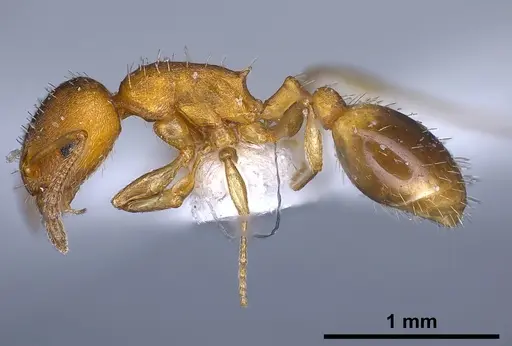
ANTWEB1041297
View on AntWeb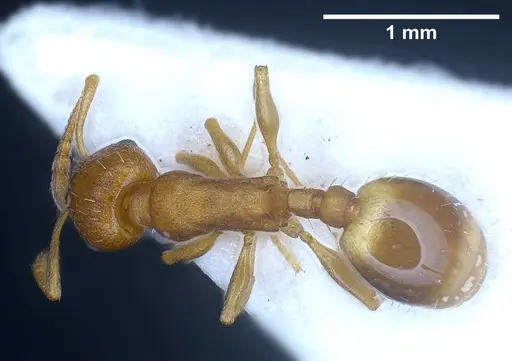
CASENT0904557
View on AntWeb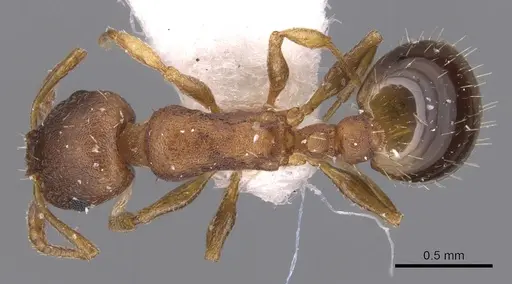
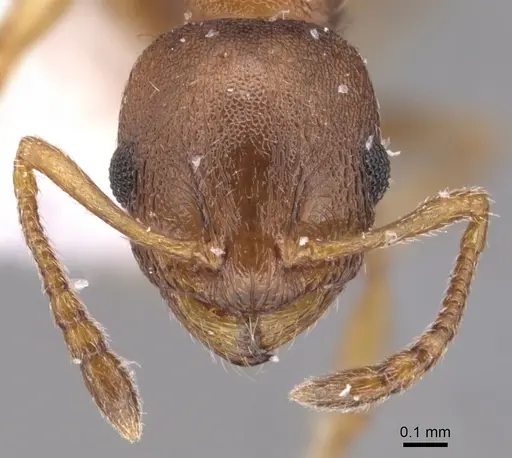
CASENT0914420
View on AntWeb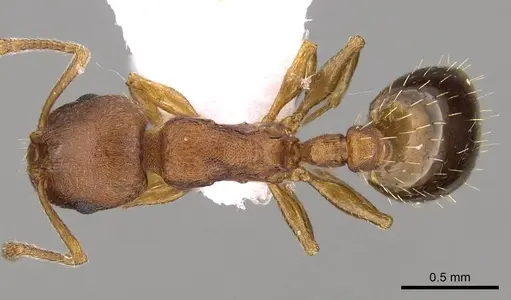
CASENT0917439
View on AntWeb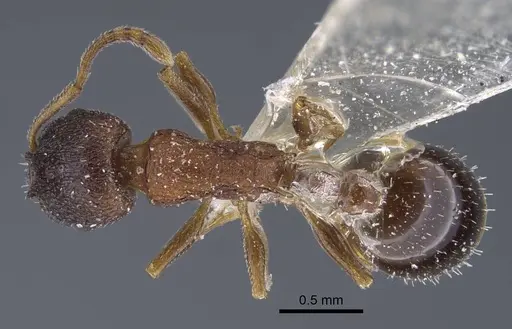
Literature
Loading distribution map...Loading products...