
Temnothorax algiricus
- Sci. Name
- Temnothorax algiricus
- Tribe
- Crematogastrini
- Subfamily
- Myrmicinae
- Author
- Forel, 1894
- Distribution
- Found in 6 countries
Introduction
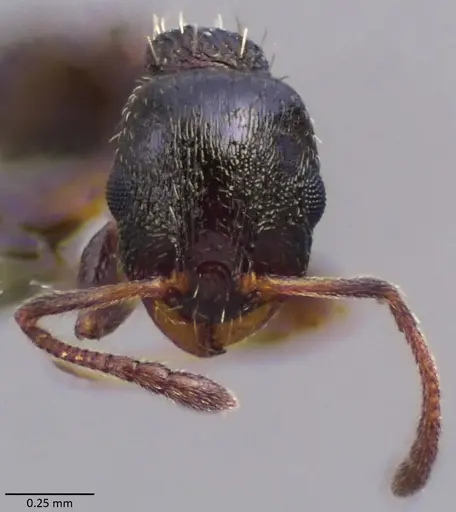
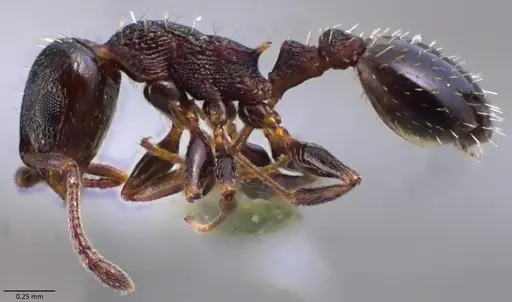
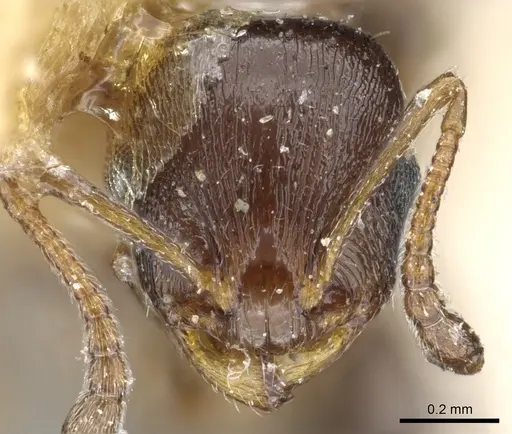
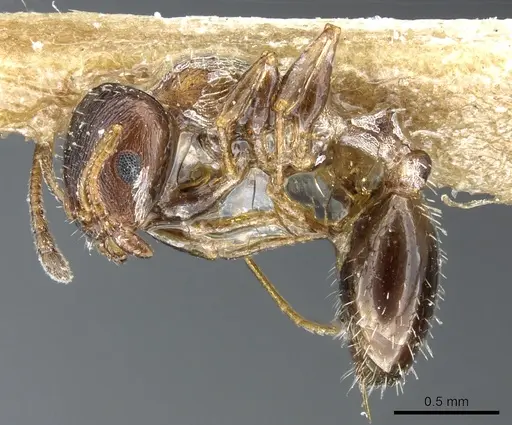
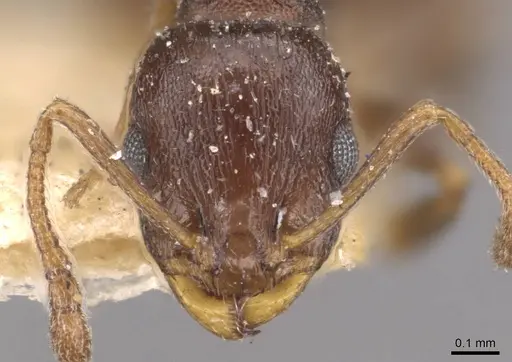
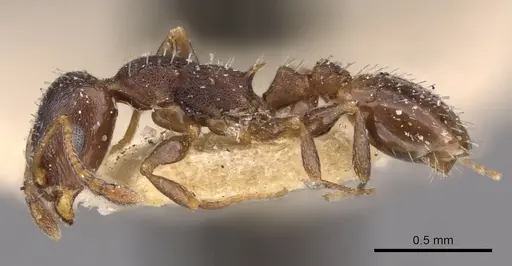
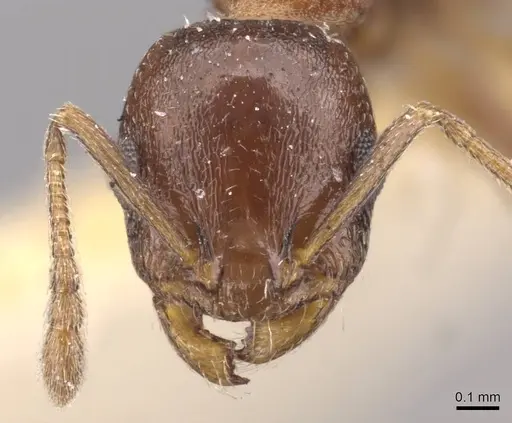
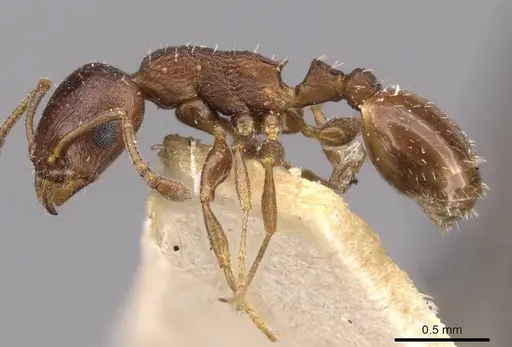
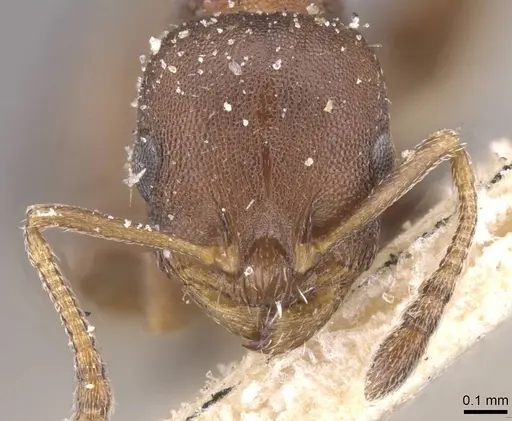
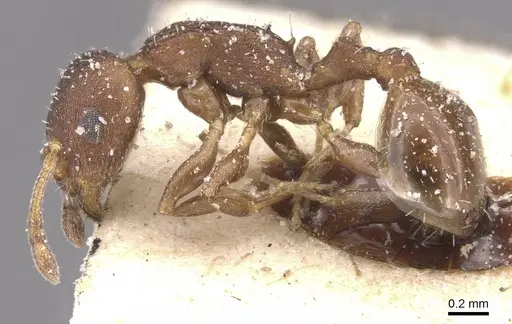
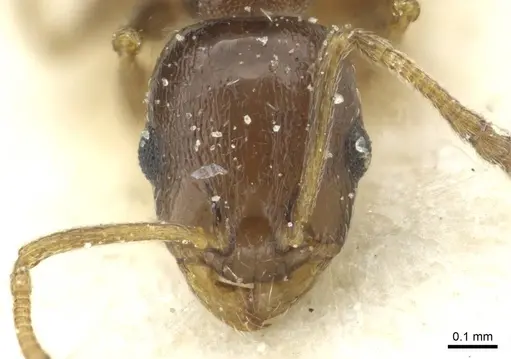
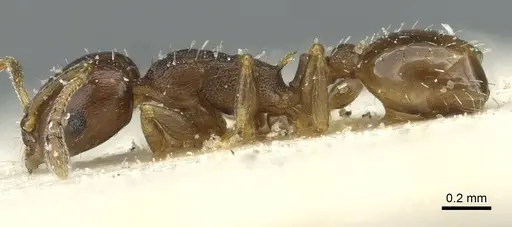
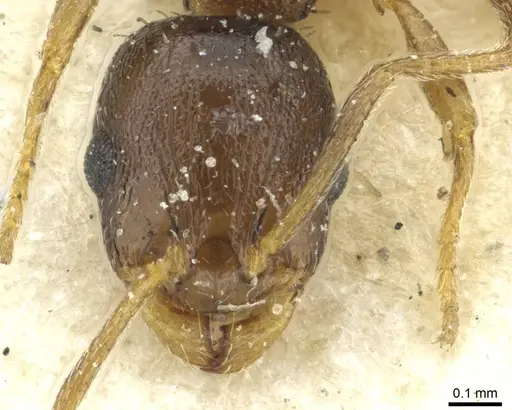
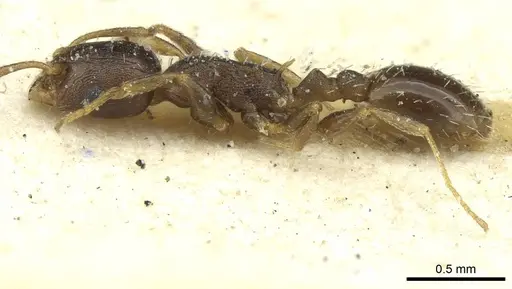
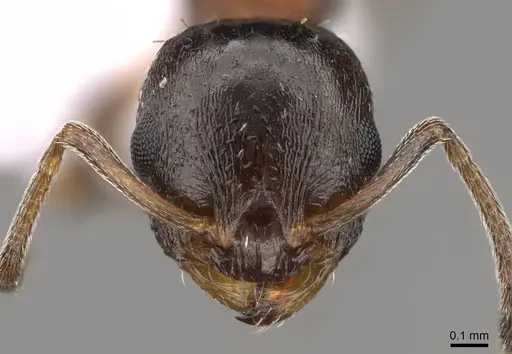
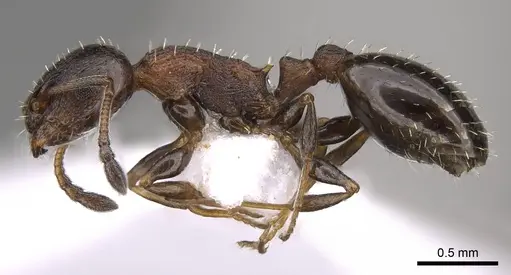
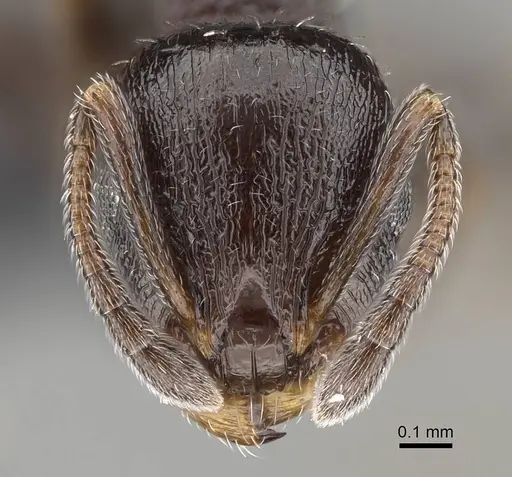
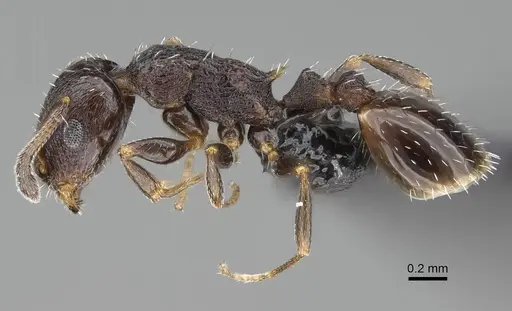
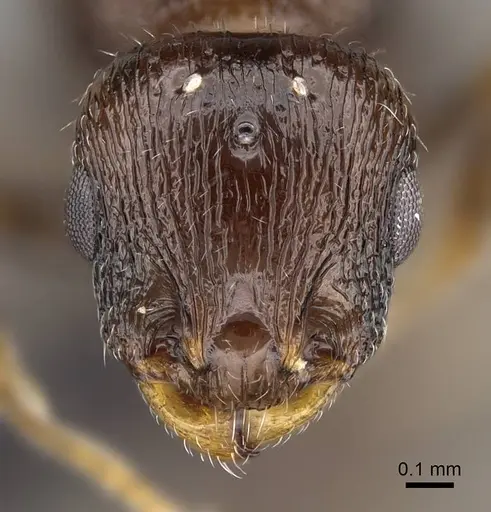
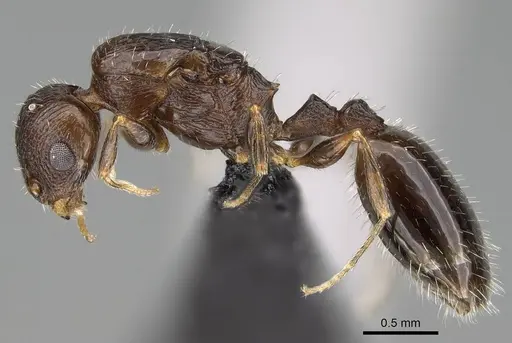
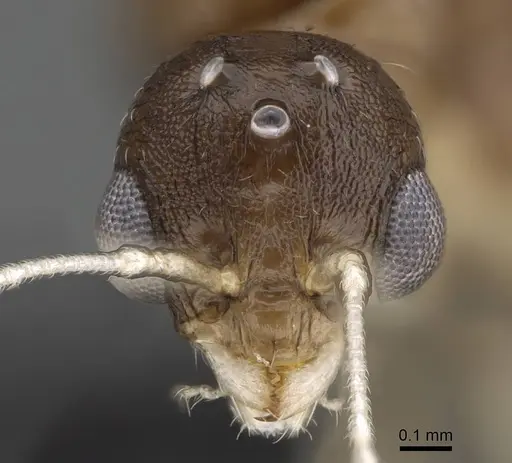
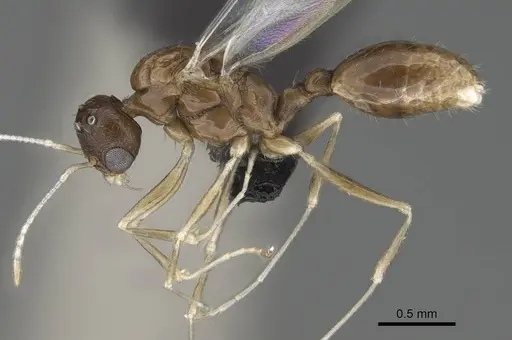
Temnothorax algiricus is a tiny arboreal ant from the angustulus species group. Workers are small (size data unavailable; typical Temnothorax workers are 2-3 mm) with a dark brown to blackish body, though some populations show a bicolored pattern with reddish mesosoma and nodes contrasting against a dark head and gaster . This species was previously confused with related taxa like Temnothorax angustulus and Temnothorax mediterraneus until recent taxonomic revisions merged several synonyms . It belongs to the tuberum-group . Found across the western Mediterranean: southern Spain, Balearic Islands, Sicily, Sardinia, Corsica, the Italian peninsula, and North Africa (Morocco, Algeria, Tunisia), with isolated records in Croatia and Malta . These ants are arboreal, nesting exclusively in small cavities inside dead twigs and branches on trees and shrubs .
Quick Summary
- Difficulty: Easy
- Origin & Habitat: Western Mediterranean region, from low-altitude forests and coastal areas. Recorded at elevations of 10-170 m [5]. Typical habitats include pine forests, mixed oak forests, and maquis with strawberry trees, often in dead twigs on trees [4][6].
- Colony Type: Single-queen colonies (monogyne). Wild nests have been found with a queen and 22-34 workers, living inside dead twigs on trees [6][4].
- Size & Growth:
- Queen: Size data unavailable, no published measurements.
- Worker: Size data unavailable, based on the Temnothorax genus, workers are typically 2-3 mm (inferred).
- Colony: Up to 34 workers recorded in wild nests [6], likely stays small at maturity.
- Growth: Moderate
- Development: Estimated 6-8 weeks at optimal temperature based on related Mediterranean species. (Specific development data for this species are not published.)
- Antkeeping:
- Temperature: Keep at 20-26°C. Room temperature within this range suits them well, reflecting their Mediterranean origin [3].
- Humidity: Provide a moisture gradient: keep the nest chamber mostly dry with one small damp area. Avoid waterlogging, as an arboreal species, they prefer drier conditions than ground-nesting ants.
- Diapause: Yes, a winter rest of 2-3 months at 10-15°C is likely beneficial for long-term health, inferred from its Mediterranean origin [3].
- Nesting: Arboreal setup is essential. Use narrow cavities in Y-tong (AAC) blocks, plaster, or natural twigs. They naturally nest in small dead twigs and branches [4][3].
- Behavior: Generally docile and non‑aggressive. Workers are tiny and active, foraging on vegetation and tree surfaces. Escape risk is moderate due to their small size, use fine mesh or fluon on openings. They are arboreal and will climb on vertical structures if provided [3].
- Common Issues: colonies are small, wild nests have up to 34 workers, so don't expect rapid expansion [6]., arboreal nesting means they need vertical structures or twigs, horizontal test tubes alone may not be ideal., tiny workers can escape through standard mesh, use fluon or very fine mesh., winter dormancy is likely important, skipping diapause may weaken colonies over time (inferred)., overfeeding can cause mold, offer small portions appropriate to colony size.
Housing and Nest Setup
Temnothorax algiricus is an arboreal species that naturally lives in small cavities inside dead twigs and branches [4][3]. For captive care, use a Y-tong (AAC) nest with narrow chambers, these tiny ants prefer tight, enclosed spaces. You can also create a naturalistic setup with actual twigs or small branches. If using test tubes, choose narrow diameters to match their small size. Provide vertical structures in the outworld so workers can climb and forage naturally. Escape prevention is vital: use fluon on container edges and fine mesh on ventilation openings, as these ants are tiny [4][3].
Feeding and Diet
Like most Temnothorax species, T. algiricus is omnivorous with a preference for sweet liquids and small protein sources. Offer sugar water, honey, or diluted maple syrup as a constant carbohydrate source. For protein, provide small prey such as fruit flies, pinhead crickets, or other tiny insects. They have been observed foraging on extrafloral nectaries in the wild, so they readily accept sweet substances [7]. Feed small prey 2-3 times per week and keep a sugar source available at all times. Remove uneaten prey after 24 hours to prevent mold. Because colonies remain small, overfeeding is common, adjust portions to your colony’s size.
Temperature and Seasonal Care
As a Mediterranean species, T. algiricus prefers warm conditions in the range of 20-26°C [3]. Room temperature within this range is usually suitable. During winter, a diapause period of 2-3 months at 10-15°C is likely beneficial for long‑term health, inferred from its natural Mediterranean climate. Reduce feeding during this rest and avoid disturbing the colony. If your room stays above 18°C year‑round, move the colony to a cooler location (like an unheated garage or basement) for winter dormancy [3].
Colony Structure and Growth
Temnothorax algiricus forms single‑queen (monogyne) colonies. Wild nests have been found with a queen and 22-34 workers in small twig cavities [6][4]. Their small size indicates slow growth, expect about 6-10 months from founding to first workers, with another year or two to reach a modest colony size. These ants prioritize stability over rapid expansion. Minimize disturbance, especially during founding. Workers are tiny and relatively long‑lived for their size [4][6].
Frequently Asked Questions
What do Temnothorax algiricus eat?
They accept sugar water, honey, or maple syrup for carbohydrates, and small live or dead insects (fruit flies, pinhead crickets, mealworms) for protein. They also forage on sweet liquids and have been observed feeding on extrafloral nectaries in the wild [7].
How big do Temnothorax algiricus colonies get?
Wild colonies are small, up to 34 workers have been recorded in a single nest [6]. Mature colonies likely stay well under 100 workers.
Do Temnothorax algiricus need hibernation?
A winter rest (diapause) of 2-3 months at 10-15°C is recommended based on their Mediterranean origin [3]. Skipping it may weaken colonies over time.
Report an Issue
The current care sheet is based fully on literature. See inconsistencies, or something that's incorrect? Please , it will be resolved after review from an admin. Contributing to the blogs tab also helps providing information, to make us be able to further improve the caresheets. Thank you for your support!
References

This caresheet is licensed under CC BY-SA 4.0 .
Community Blogs
ANTWEB1060053
View on AntWeb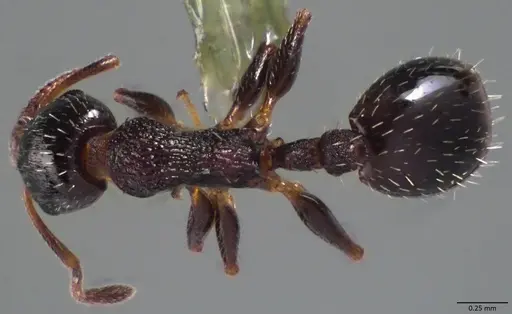
CASENT0904755
View on AntWeb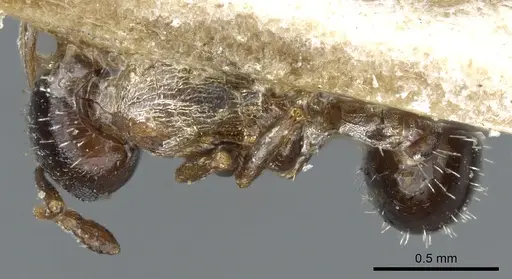
CASENT0909011
View on AntWeb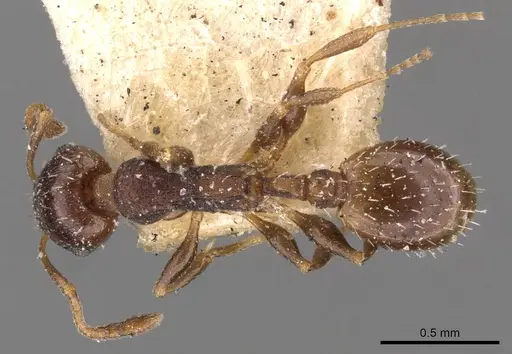
CASENT0909012
View on AntWeb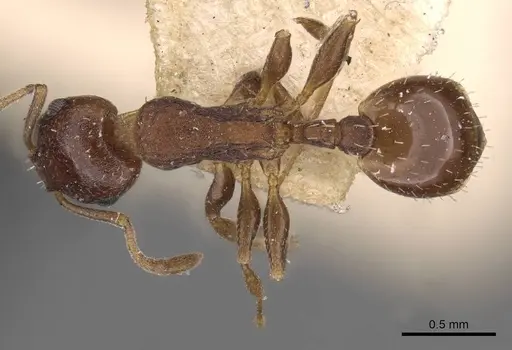
CASENT0912920
View on AntWeb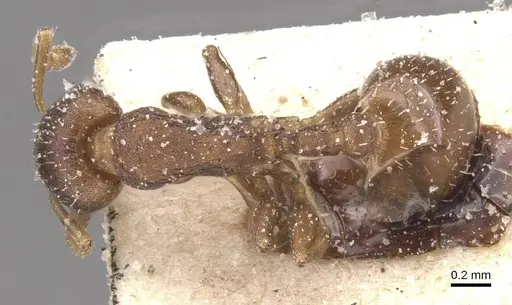
CASENT0912940
View on AntWeb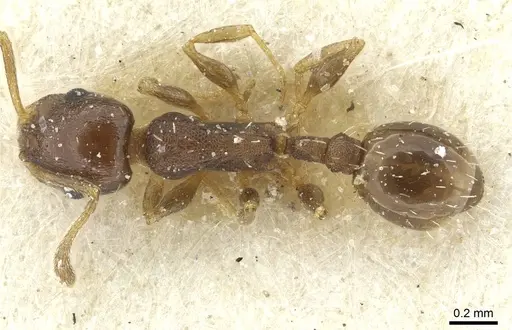
CASENT0912941
View on AntWeb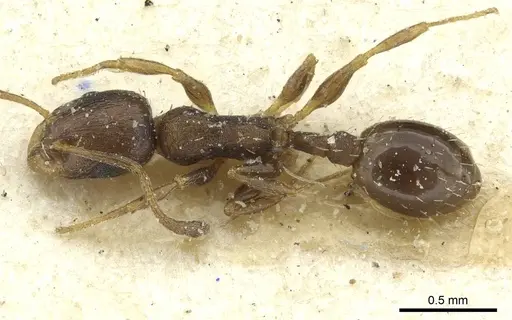
CASENT0914411
View on AntWeb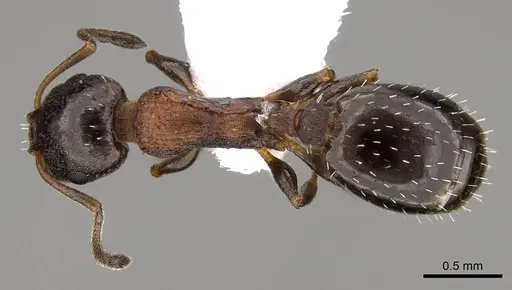
KG00881-2
View on AntWeb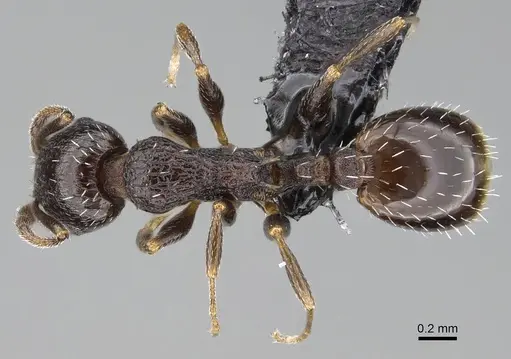
KG00881-3
View on AntWeb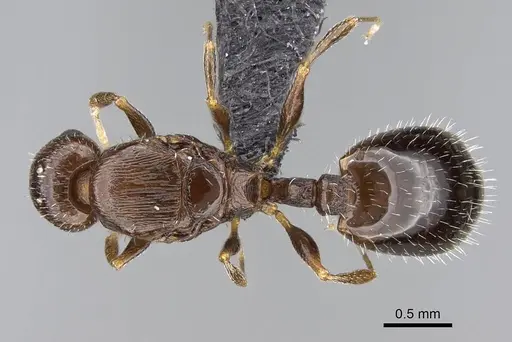
KG00881-4
View on AntWeb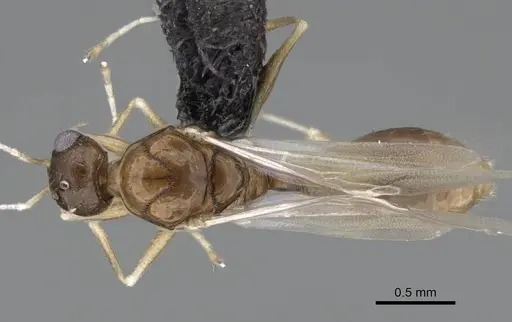
Literature
Loading distribution map...Loading products...