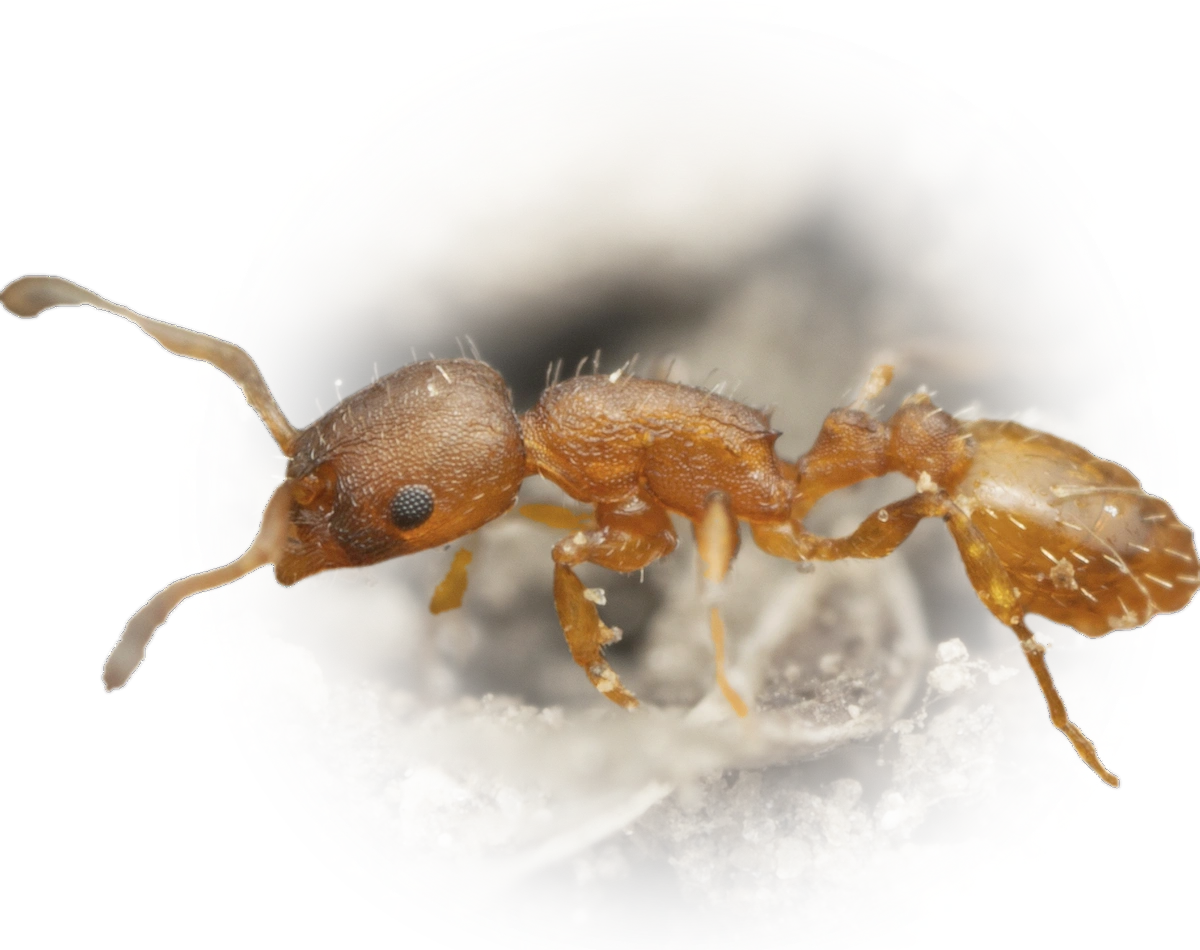
Temnothorax albipennis
- Sci. Name
- Temnothorax albipennis
- Tribe
- Crematogastrini
- Subfamily
- Myrmicinae
- Author
- Curtis, 1854
- Distribution
- Found in 10 countries
Introduction
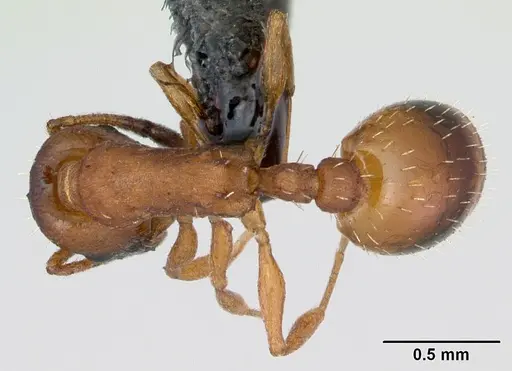
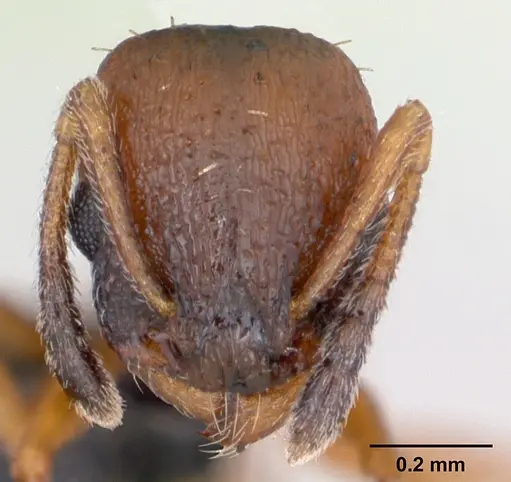
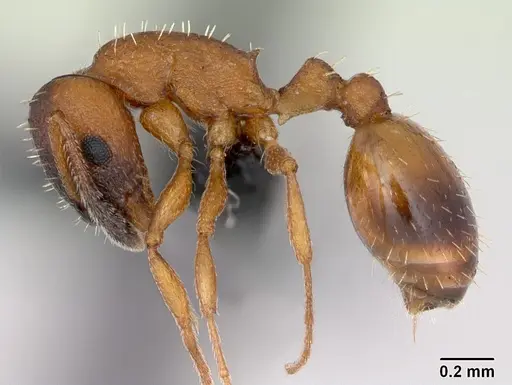
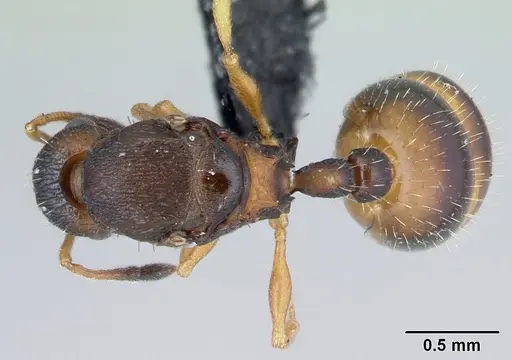
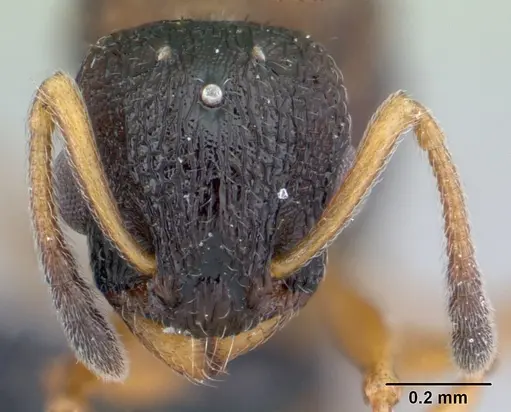
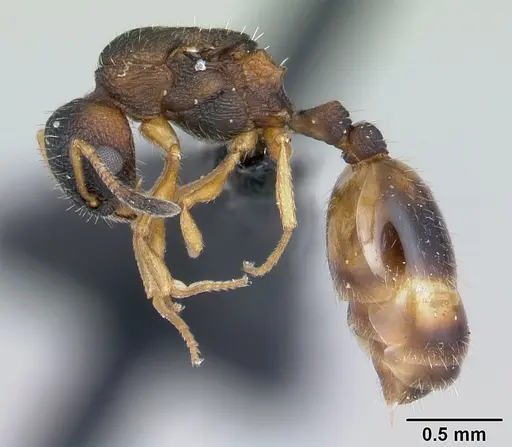
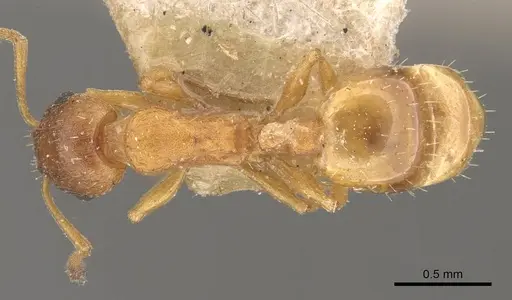
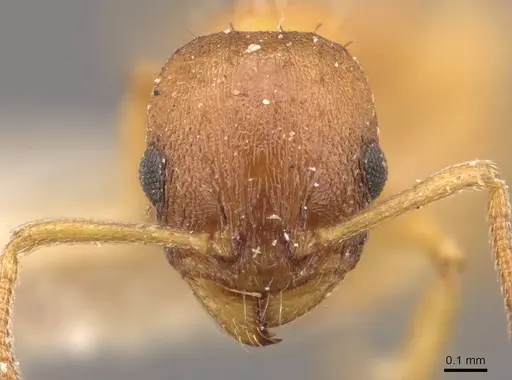
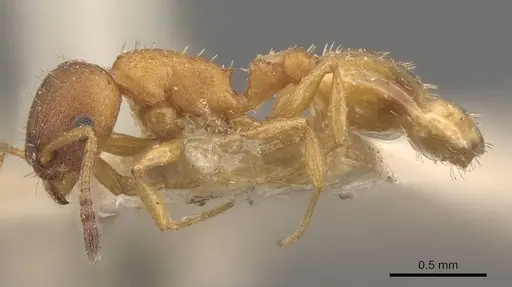
Temnothorax albipennis is a small ant native to Europe and the UK. Workers are just 2 mm long with a distinctive appearance - the gaster is almost entirely yellow with a narrow dark transverse band . Queens are slightly larger at 3.2-3.4 mm and have a brown body with a yellow mark on the front of the gaster . They are called rock ants because they naturally nest in rock crevices, rubble, tree stumps, and dry fallen branches . They prefer grasslands and light scrub on lime-rich soils . This species is best known for its sophisticated collective decision-making. They use a recruitment method called tandem running, where an informed worker physically leads a nestmate to a new food source or nest site . Colonies can survive up to eight months without food and workers can live up to six years in laboratory conditions . They evaluate nest sites based on cavity size, darkness, and entrance width, and choose the best option through a quorum-sensing mechanism .
Quick Summary
- Difficulty: Easy
- Origin & Habitat: Native to Europe and the UK, including England, Wales, The Netherlands, Germany, Switzerland, France, Spain, Italy, and others [3]. Inhabits grasslands, light scrub, and dunes, especially on lime-rich subsoil. Nests in rock crevices, rubble, tree stumps, and dry fallen branches [3][8]. Prefers xerothermic (hot, dry) conditions [3].
- Colony Type: Typically monogyne (single queen), but a wild colony with multiple dealate (wingless) queens has been found, suggesting possible facultative polygyny [3]. May form temporary polydomous systems (multiple connected nest sites) [8].
- Size & Growth:
- Queen: 3.2-3.4 mm [1]
- Worker: 2 mm [2]
- Colony: Up to 200 workers (wild colonies) [3], laboratory colonies range from 12 to 268 workers [9]
- Growth: Moderate
- Development: Estimated from related Temnothorax species: approximately 6-10 weeks at 20-24°C (exact timing unconfirmed in published literature) [6] (Development time is temperature-dependent. Keeping colonies at a stable 20-24°C should support steady growth.)
- Antkeeping:
- Temperature: A thermophilous (warmth-loving) species [10][11]. Maintain temperatures in the 20-24°C range for best activity and brood development. Avoid prolonged temperatures below 15°C. Provide a temperature gradient if possible.
- Humidity: Low to moderate. These ants inhabit dry, xerothermic habitats [3]. Keep the nest chamber mostly dry but provide a small water reservoir in the outworld. A gradient with a slightly moist area is acceptable, but avoid waterlogging.
- Diapause: Yes, inferred from temperate distribution. Reduce temperature to 10-15°C for 2-3 months during winter (November-February in the Northern Hemisphere). This rest period supports colony health.
- Nesting: Best kept in nests that mimic tight rock crevices. Y-tong (AAC) nests with narrow passages (2-3 mm wide), plaster nests, or test tube setups work well. They readily build walls from small particles [12]. Escape prevention is critical, use fluon on container edges and fine mesh on ventilation.
- Behavior: Peaceful to humans. They have a modified stinger used to smear venom (smear defense), but it poses no threat to humans. The bite is negligible due to their tiny size. Workers are active foragers and use tandem running to recruit nestmates to food sources and new nest sites [4]. They are skilled visual navigators [2]. Escape risk is high because of their small size, use fine fluon and tight seals. Colonies are highly starvation-resistant and can survive months without food [5]. They are non-aggressive and can be kept in mixed-species setups with caution.
- Common Issues: extremely small size (2 mm) makes escape common without fine fluon barriers and tight lids., colonies may not survive without a winter diapause period, provide 2-3 months of cooler temperatures if the species is from temperate regions., overfeeding leads to mold in small nest cavities, remove uneaten protein promptly., wild-caught colonies may carry the parasitic fungus Myrmicinosporidium durum, which can kill the colony in captivity [12]. Quarantine new wild colonies.
Housing and Nest Setup
Temnothorax albipennis adapts well to various captive setups. Y-tong (AAC) nests with narrow chambers (2-3 mm wide) are ideal because they mimic the tight rock crevices these ants naturally inhabit [5]. Plaster nests and test tube setups also work well. The nest should have chambers scaled to their tiny size, passages that are too wide may discourage natural wall-building behavior. Provide fine sand or small particles, these ants collect and use them to build nest walls [12]. Escape prevention is critical: use fluon on container edges and fine mesh on ventilation. A shallow water reservoir in the outworld provides drinking water, but keep the nest area mostly dry to match their natural xerothermic habitat [3].
Feeding and Diet
Temnothorax albipennis is a generalist feeder. In the wild, they prey on small arthropods in leaf litter and scavenge [13]. Offer a mix of sugar water (1:10 honey to water ratio) or pure honey, and protein sources like fruit flies, pinhead crickets, or other tiny insects. They are highly starvation-resistant and can survive up to eight months without food [5], but regular feeding (2-3 times per week for established colonies) promotes growth. Remove uneaten food promptly to prevent mold. The colony regulates foraging based on need, leaner ants are more likely to leave the nest to forage [14].
Temperature and Seasonal Care
This thermophilous (warmth-loving) species prefers temperatures in the 20-24°C range [10][11]. They can tolerate brief periods outside this range but prolonged cold should be avoided. During winter (roughly November-February in the Northern Hemisphere), a diapause period is recommended. Reduce temperatures to 10-15°C for 2-3 months to simulate natural seasonal cycles. This rest period supports colony health and may trigger reproductive activity in spring. Avoid rooms that stay below 15°C year-round. A small heating cable on one side of the setup can create a temperature gradient if your room runs cool.
Colony Behavior and Emigrations
One of the most interesting traits of T. albipennis is their complex colony decision-making during nest relocation. When the old nest is damaged or a better option is found, scouts search for new sites and assess quality based on cavity size, darkness, and entrance width [7]. They recruit nestmates using tandem running, a leader physically guides a follower to the new site [4]. Once enough ants have assessed and accepted a site (reaching a quorum of about 5-20 ants), the colony switches to rapid carrying of brood and queen [15]. This species can choose a better nest even when it is much farther away, colonies have chosen a good nest 9 times farther over a poor nearby one [16]. In captivity, they may readily relocate if you provide a better nest option. They also perform 'move-to-improve' emigrations to better nests even when the current nest is intact.
Growth and Development
Colony growth is moderate. Founding queens raise their first brood alone in about 6-10 weeks under warm conditions (estimated from related Temnothorax species). Workers are long-lived, up to 6 years in laboratory conditions [6], though field lifespans are likely shorter. Colonies typically reach 100-200 workers in the wild [3]. Task allocation is flexible: workers may specialize but can switch tasks based on colony needs [17]. Younger workers tend to stay inside the nest while older, more experienced workers take on foraging and scouting roles [6]. The colony adjusts worker task allocation based on both short-term factors (location in the nest) and longer-term factors (fat stores and physiological condition) [18].
Frequently Asked Questions
How long does it take for Temnothorax albipennis to raise their first workers?
Exact timing is unconfirmed in published literature, but based on related Temnothorax species, it likely takes about 6-10 weeks from egg to first worker at 20-24°C. The founding method is unconfirmed, the queen may seal herself in or forage weakly during founding.
Can I keep Temnothorax albipennis in a test tube setup?
Yes, test tube setups work well for founding colonies and small established colonies. Make sure the tube is dark (wrap with foil) and provide a water reservoir. As colonies grow, you may need to connect additional test tubes or move them to a proper formicarium with multiple chambers [5].
Do Temnothorax albipennis ants sting?
They have a modified stinger used to smear venom on enemies (smear defense), but it is not a piercing stinger and poses no threat to humans. Their bite is negligible due to their tiny size.
How big do Temnothorax albipennis colonies get?
Wild colonies typically reach 100-200 workers [3]. In captivity, with good care, colonies can potentially exceed this. They are considered small to medium-sized colonies, much smaller than species like Formica or Camponotus.
Do they need hibernation?
Yes, a winter diapause is recommended. Reduce temperatures to 10-15°C for 2-3 months during winter (November-February). This mimics their natural seasonal cycle and supports colony health. They are quite cold-tolerant and can handle brief periods near freezing.
What do Temnothorax albipennis eat?
They accept a varied diet: sugar sources (honey water, sugar water) and protein (small insects like fruit flies, pinhead crickets, mealworms). They are generalist feeders and will scavenge. Remove uneaten food promptly to prevent mold [13][5].
Are Temnothorax albipennis good for beginners?
Yes, they are considered a good beginner species. They are small, peaceful, and adapt well to various nest types. They are forgiving of minor care mistakes and can survive long periods without food. The main challenges are their tiny size (escape prevention is important) and relatively slow colony growth compared to some species.
Why is my colony not growing?
Patience is key, they grow more slowly than many common species. Ensure proper temperature (20-24°C), adequate feeding, and that the queen is still laying eggs. Check for signs of stress or parasites. Wild-caught colonies may take time to adjust to captivity. If the colony seems healthy but slow, this is normal for the species.
How do they recruit to new nest sites?
They use tandem running, an informed scout leads a single follower to the new site by maintaining antennal contact [4]. The leader slows down and waits for the follower, which is a form of teaching behavior. Once enough ants have assessed the site (reaching quorum), they switch to carrying brood and nestmates rapidly to the new location [15].
Report an Issue
The current care sheet is based fully on literature. See inconsistencies, or something that's incorrect? Please , it will be resolved after review from an admin. Contributing to the blogs tab also helps providing information, to make us be able to further improve the caresheets. Thank you for your support!
References

This caresheet is licensed under CC BY-SA 4.0 .
Community Blogs
Literature
Loading distribution map...Loading products...