
Technomyrmex textor
- Sci. Name
- Technomyrmex textor
- Tribe
- Tapinomini
- Subfamily
- Dolichoderinae
- Author
- Forel, 1909
- Distribution
- Found in 1 countries
Introduction
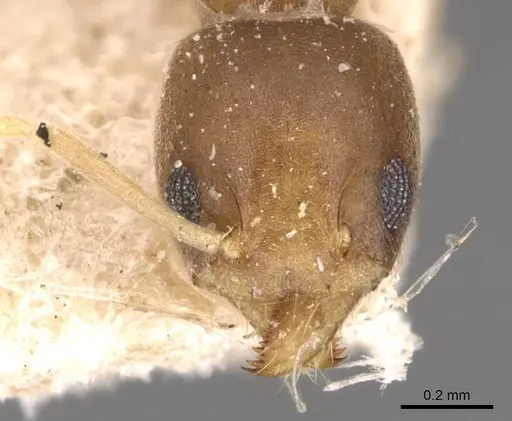
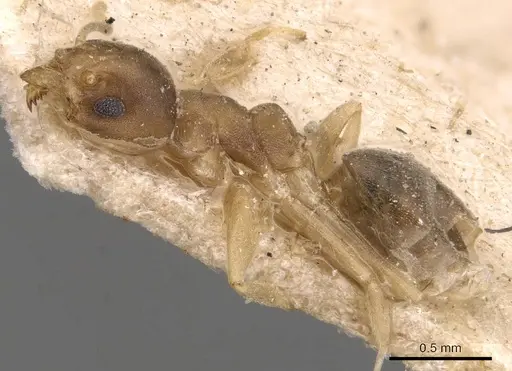
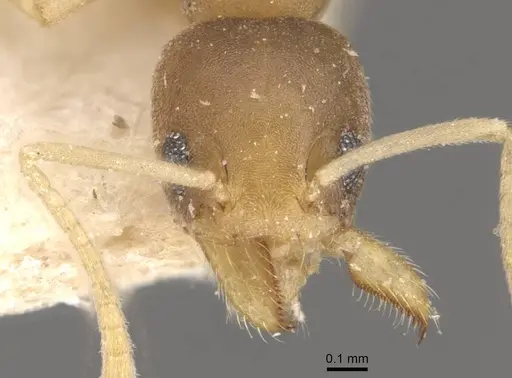
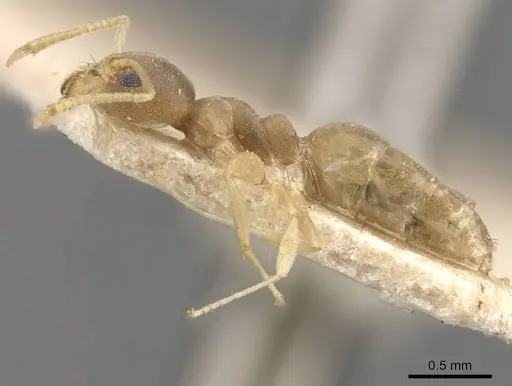
Technomyrmex textor is a small yellow ant from Southeast Asia . Workers measure 2.5-2.9mm in total length and belong to a species complex with T. gilvus and T. dubius, sharing a complete lack of bristles on the head, thorax, and gaster . It's found across Borneo, Indonesia, Malaysia, the Philippines, and Singapore, inhabiting tropical rainforests with some tolerance to habitat disturbance . Like other dolichoderines, it lacks a functional sting and defends by excreting sticky, foul-smelling compounds from anal glands. There is an old report that this ant uses silk to build nests , but that observation has been questioned; more recent work shows related Technomyrmex species occupy pre‑made silk shelters of spiders and caterpillars .
Quick Summary
- Difficulty: Medium
- Origin & Habitat: Southeast Asia, Borneo, Indonesia, Malaysia, Philippines, Singapore [1]. Found in tropical rainforests and shows some tolerance to habitat change [2].
- Colony Type: Unconfirmed, no literature data available for this species.
- Size & Growth:
- Queen: Unknown, only workers have been described in the literature [1].
- Worker: 2.5-2.9mm (total length) [1].
- Colony: Unknown, no specific data available for this species.
- Growth: Moderate (inferred from its tropical origin).
- Development: Unknown, no specific data for this species. (Development timeline is speculative, typical small tropical dolichoderines might take 6‑8 weeks at 25‑28°C, but this is not confirmed.)
- Antkeeping:
- Temperature: 24-28°C (inferred from tropical origin). Provide a slight temperature gradient if possible. Avoid prolonged temperatures below 20°C.
- Humidity: Moderate to high, keep the nest substrate consistently moist but not waterlogged. Good ventilation is important to prevent mold.
- Diapause: No, tropical species, does not require hibernation.
- Nesting: Y‑tong (AAC) or plaster nests with tight chambers work well. In the wild they use pre‑made silk shelters of spiders and caterpillars [3], you can offer a small, clean silk‑lined area if desired. Avoid acrylic nests.
- Behavior: Peaceful and non‑aggressive. Lacks a sting, defends with anal gland secretions (cyclopentanoid monoterpenes). Very small (under 3mm), so use fine mesh (≤0.5mm) on ventilation openings and tight lids to prevent escapes. Active foragers that search for sugars and small prey.
- Common Issues: limited biological data makes care recommendations uncertain, some aspects are inferred from genus patterns., small size (under 3mm) requires fine mesh for escape prevention., tropical humidity needs may cause mold problems if ventilation is poor., wild‑caught colonies may carry hard‑to‑detect parasites., disturbance during the early founding stage can cause the queen to fail., if using silk shelters, ensure they are clean and free of contaminants.
Housing and Nest Setup
Because Technomyrmex textor workers are under 3mm, choose a nest with snug chambers. Y‑tong (AAC) or plaster nests with moisture reservoirs work well. Avoid acrylic nests. For founding, a test tube setup is ideal, provide a water reservoir separated by a cotton plug. Once the colony reaches 20‑30 workers, you can connect a small formicarium. In the wild, this species (or close relatives) nest in pre‑formed silk shelters made by spiders and caterpillars [3]. You can mimic this by offering a small piece of clean silk or a hollowed‑out twig, most keepers, however, use standard artificial nests. Always ensure there are no escape gaps, the ants can squeeze through extremely small openings.
Temperature and Heating
As a tropical species, T. textor needs warmth year‑round. Keep the nest at 24‑28°C [1]. Room temperature (22‑25°C) is acceptable but may slow development, a slight warmth gradient (e.g., using a heating cable on top of one side of the nest) can boost activity. Never let the nest drop below 20°C for extended periods. Unlike temperate ants, no hibernation or diapause is required. Watch for ants clustering away from warm areas, that signals the heat is too high.
Feeding and Diet
Technomyrmex textor is omnivorous, like most dolichoderines. In nature they likely feed on honeydew from aphids and scale insects, as well as small arthropods. In captivity, provide sugar water or honey several times a week, and small protein sources such as fruit flies, tiny mealworms, or mashed cricket. A varied diet supports colony growth. Remove uneaten food after 24‑48 hours to prevent mold. Always keep a fresh water source available (e.g., a small test tube with cotton wick). [1]
Humidity Requirements
These tropical ants need moderate to high humidity. The nest substrate should feel damp to the touch but not waterlogged. You can maintain this with a moisture reservoir in a Y‑tong or plaster nest, or by misting the outworld occasionally. Good ventilation is essential, stagnant, overly wet air promotes mold. If condensation pools constantly, increase ventilation, if the substrate dries out too fast, mist more often or reduce airflow. A water source in the outworld (e.g., a small water tube) is also recommended. [1]
Behavior and Temperament
Technomyrmex textor is a docile, non‑aggressive species. Like all Dolichoderinae, they have no functional sting and instead exude sticky, foul‑smelling cyclopentanoid monoterpenes from their anal glands as a defense. This is harmless to humans but can be annoying if the colony is disturbed. Workers are active foragers and will explore any connected outworld for food. Their small size (under 3mm) means they can slip through the tiniest cracks, so use fine mesh (0.5mm or smaller) on all ventilation holes and ensure lids fit snugly. They are not known to be jumpers or aggressive escape artists, but diligence is required. [1]
Colony Establishment
Very little is known about founding in T. textor. Based on typical dolichoderine patterns (e.g., Technomyrmex), the queen likely seals herself into a chamber and raises the first brood on her own reserves. However, this is not confirmed for this species [3]. Founding colonies should be left completely undisturbed for at least 4‑8 weeks after capture. Do not offer food during that time, just a small water source. Once the first nanitic workers appear (usually tiny versions of the workers), you can offer minimal food and gradually expand the setup. Because the biology is poorly studied, be prepared to adjust care based on the colony's behavior. Always source colonies ethically and legally, wild‑caught queens may have higher survival rates than bought ones, but check local regulations.
Frequently Asked Questions
How long does it take for Technomyrmex textor to produce first workers?
This has not been documented for T. textor. Based on similar tropical species, first workers may appear after 6‑8 weeks at 25‑28°C, but you should monitor your own colony rather than rely on that estimate.
Can I keep Technomyrmex textor in a test tube setup?
Yes. A small test tube with a water reservoir and cotton plug is perfect for founding colonies. Once the colony reaches 20‑30 workers, you can connect a larger formicarium.
What do Technomyrmex textor eat?
They are omnivorous. Offer sugar water or honey regularly, plus small protein sources like fruit flies, tiny mealworms, or other small insects. Remove uneaten food after 24‑48 hours.
Are Technomyrmex textor good for beginners?
We rate them Medium difficulty. They are generally hardy but the lack of specific biological data means you may need to adapt care based on observation. Their small size also demands careful escape proofing.
Do Technomyrmex textor need hibernation?
No. Being a tropical species, they do not require hibernation or a diapause period. Keep them warm all year.
How big do Technomyrmex textor colonies get?
Colony size is unknown for this species. Related Technomyrmex species can have several hundred workers, but this is speculative.
Why are my Technomyrmex textor dying?
Common reasons include: disturbance during founding, humidity too low, temperature outside 24‑28°C, or parasites from wild‑caught colonies. Review each factor. Limited biological data makes diagnosis harder.
When should I move my colony to a formicarium?
Move when the colony reaches 20‑30 workers or when the test tube becomes cramped. Make sure the new nest has similar humidity and appropriately sized chambers.
Can I keep multiple Technomyrmex textor queens together?
This has not been documented. Based on typical Technomyrmex patterns, they are likely monogyne (single queen). Combining unrelated queens is not recommended without evidence.
Report an Issue
The current care sheet is based fully on literature. See inconsistencies, or something that's incorrect? Please , it will be resolved after review from an admin. Contributing to the blogs tab also helps providing information, to make us be able to further improve the caresheets. Thank you for your support!
References

This caresheet is licensed under CC BY-SA 4.0 .
Community Blogs
CASENT0905072
View on AntWeb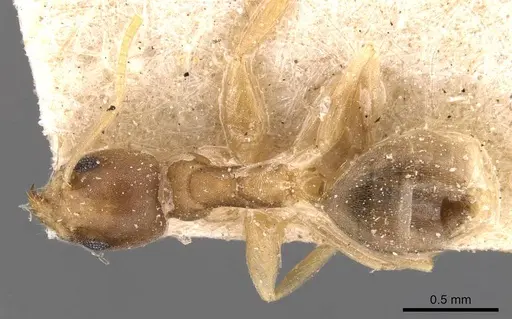
CASENT0909795
View on AntWeb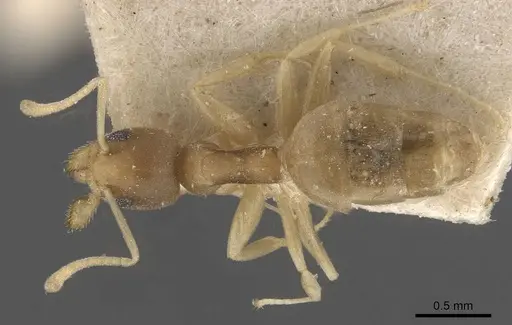
Literature
Loading distribution map...Loading products...