
Technomyrmex nigriventris
- Sci. Name
- Technomyrmex nigriventris
- Tribe
- Tapinomini
- Subfamily
- Dolichoderinae
- Author
- Santschi, 1910
- Distribution
- Found in 5 countries
Introduction
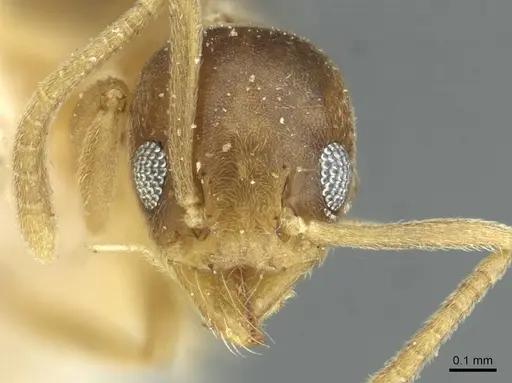
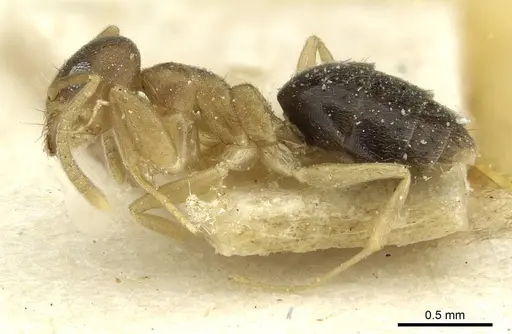
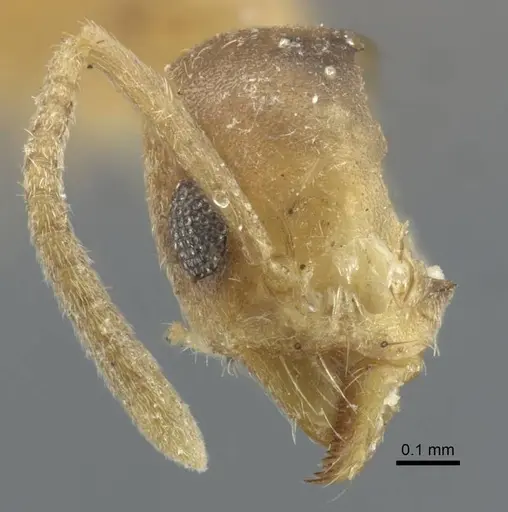
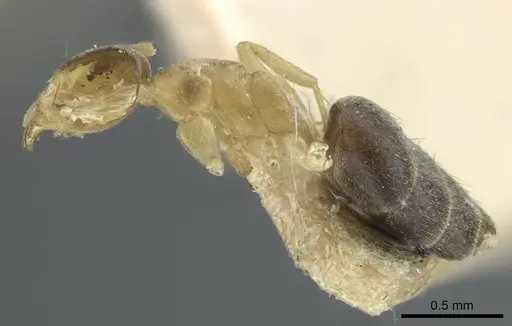
Technomyrmex nigriventris is a tiny ant from the Afrotropical region, found in countries like Nigeria, Ghana, Cameroon, Congo, Democratic Republic of Congo, Kenya, and Uganda . Workers measure just 2.2-2.7 mm, making them one of the smallest ant species . They belong to the Technomyrmex albipes group and are identified by their colour pattern and the arrangement of head hairs . These ants forage mainly in leaf litter and topsoil, occasionally climbing low vegetation. They nest under bark flakes near the base of living trees or in rotten wood within the soil . Intercastes (intermediate forms between workers and queens) are known but uncommon . As a Dolichoderinae, they lack a sting and instead exude a sticky, foul-smelling chemical from an anal gland when threatened.
Quick Summary
- Difficulty: Medium
- Origin & Habitat: Afrotropical region: Nigeria, Ghana, Cameroon, Central African Republic, Congo, Democratic Republic of Congo, Kenya, Uganda [1]. Lives in leaf litter and topsoil, nests under bark or in rotting wood near tree bases [1].
- Colony Type: Unknown, intercastes occur but queen number and social structure are not documented [1].
- Size & Growth:
- Antkeeping:
- Temperature: Tropical species, no precise data, but keep at 24-28°C with a gentle heat gradient [1].
- Humidity: Moderate to high, keep nest substrate consistently moist but not waterlogged, as they inhabit leaf litter and topsoil [1].
- Diapause: No, as a tropical species from equatorial Africa, they remain active year-round.
- Nesting: Prefers nesting under bark or in rotting wood [1]. In captivity, test tubes or small-chambered nests with damp substrate are suitable.
- Behavior: Small, cryptic ants that are not aggressive and will flee rather than fight. They forage mainly in leaf litter and topsoil. Escape prevention is critical due to their tiny size (2.2-2.7 mm) [1].
- Common Issues: escape prevention is critical, at 2.2-2.7 mm they can squeeze through gaps smaller than 1 mm., colony development is slow and founding success may be low due to lack of specific care data., dry conditions cause rapid decline, monitor nest moisture closely., they are easily lost during transfers or cleaning due to small size and speed., overheating above 32°C can be fatal, avoid direct sun or unregulated heat mats.
Housing and Nest Setup
Because workers are only 2.2-2.7 mm, escape prevention is the top priority. Use test tubes for founding colonies, the narrow opening helps contain them. Connect a foraging container once the colony is established. For larger groups, use nests with small chambers (e.g., Y-tong or plaster) rather than large open spaces. Apply a fluon or oil barrier to the foraging area and check for any gaps. Provide a moist substrate in the nest (e.g., damp cotton or soil) to match their leaf-litter habitat [1].
Feeding and Diet
No specific dietary data exists for this species, but related Technomyrmex feed on honeydew and small arthropods. Offer a constant carbohydrate source (sugar water or honey) and small protein items like fruit flies, pinhead crickets, or chopped mealworms. Scale food to their tiny size, leftover protein will mold quickly, so remove uneaten portions within 24 hours. Feed protein 2-3 times per week and adjust based on consumption.
Temperature and Humidity
Keep the colony at 24-28°C, use a heat mat on one side of the nest to create a gradient. Avoid temperatures above 32°C or below 20°C. Humidity is essential: the nest substrate should be consistently moist (but not waterlogged). A water tube or damp cotton at the nest entrance helps maintain moisture. Monitor for mold, which can be a problem if conditions are too wet [1].
Handling and Observation
These ants are not aggressive and rarely bite. When threatened, they may exude a sticky, foul-smelling chemical, harmless to humans but can irritate eyes. They are fast and tiny, so use gentle transfer methods (connect containers and let them walk over). Observing them requires patience, they are most active in low light. A magnifying glass helps check brood development. Because they are cryptic, provide leaf litter or small pebbles in the foraging area for enrichment [1].
Colony Development
No published data exists on colony founding or development for this species. Based on typical Dolichoderinae patterns, queens may found claustrally, but this is unconfirmed. Intercastes (worker-queen intermediates) have been observed but are uncommon. Growth rate and colony size are unknown, treat this species as experimental and document your own observations. [1]
Frequently Asked Questions
How long does it take for Technomyrmex nigriventris to produce first workers?
This is unknown, no published data exists. If you are keeping this species, record your own observations and share them with the antkeeping community.
What do Technomyrmex nigriventris eat?
Specific dietary data is unavailable, but related Technomyrmex species feed on honeydew and small insects. In captivity, provide sugar water or honey and small protein items like fruit flies or chopped mealworms.
Are Technomyrmex nigriventris good for beginners?
They are rated medium difficulty mainly because their tiny size makes escape prevention challenging and their care data is limited. Experienced keepers who enjoy small, cryptic species may find them interesting, but they are not recommended for absolute beginners.
How big do Technomyrmex nigriventris colonies get?
Colony size is unknown, no published records exist for this species. Based on related Technomyrmex, they may reach several hundred workers, but this is speculative.
Do Technomyrmex nigriventris need hibernation?
No, as a tropical species from equatorial Africa, they remain active year-round and do not require diapause. Keep them warm (24-28°C) throughout the year.
Can I keep multiple Technomyrmex nigriventris queens together?
Queen number and tolerance are undocumented. Based on genus patterns, polygyny may be possible, but there is no data for this species. Keep separate colonies isolated unless you observe integration.
Why are my Technomyrmex nigriventris escaping?
Their tiny size (2.2-2.7 mm) lets them slip through gaps of 1 mm or less. Use fine mesh on all openings, apply fluon or oil barriers, and double-check connections. Even a pinhole can be an escape route.
What temperature is best for Technomyrmex nigriventris?
No specific temperature data exists, but as a tropical species, keep the nest at 24-28°C with a gentle heat gradient. Avoid extended exposure below 20°C or above 32°C.
When should I move my colony to a formicarium?
There is no rule of thumb because colony growth is unknown. Wait until the current container (e.g., test tube) is visibly crowded with workers and brood. Then connect a larger nest with small chambers.
Report an Issue
The current care sheet is based fully on literature. See inconsistencies, or something that's incorrect? Please , it will be resolved after review from an admin. Contributing to the blogs tab also helps providing information, to make us be able to further improve the caresheets. Thank you for your support!
References

This caresheet is licensed under CC BY-SA 4.0 .
Community Blogs
CASENT0094453
View on AntWeb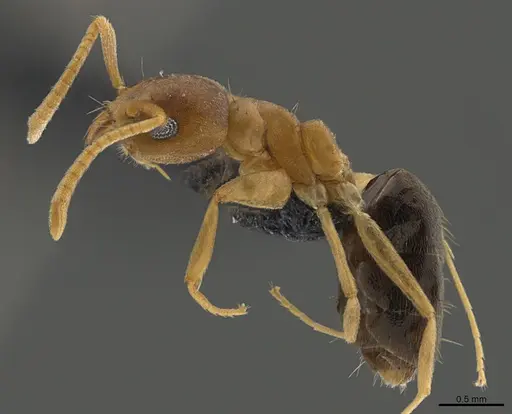
CASENT0178279
View on AntWeb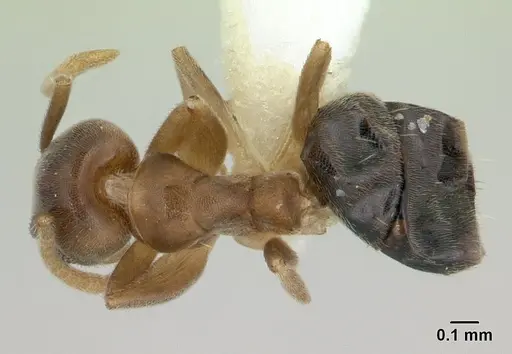
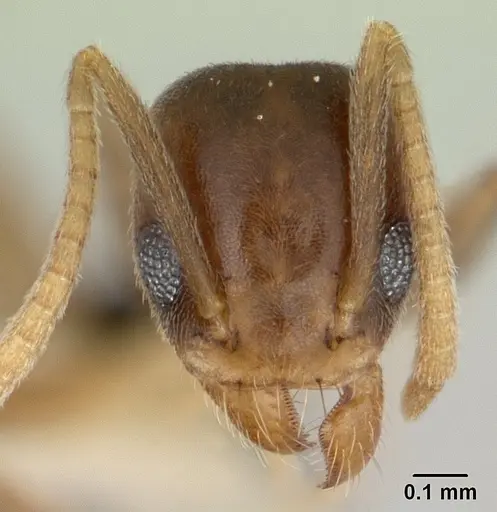
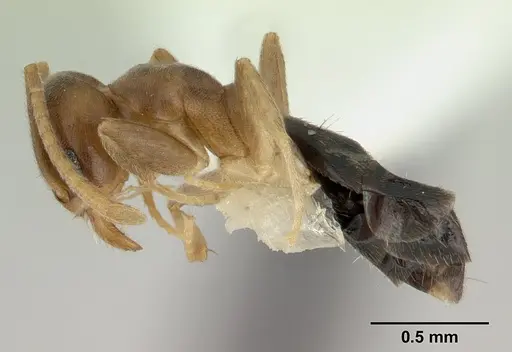
CASENT0911591
View on AntWeb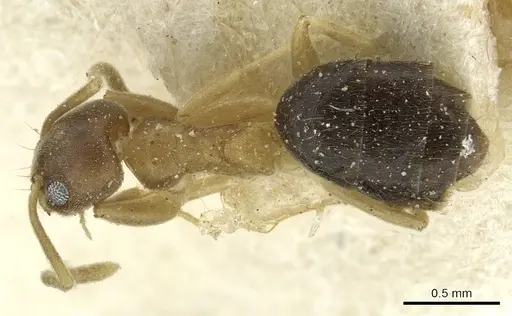
CASENT0917129
View on AntWeb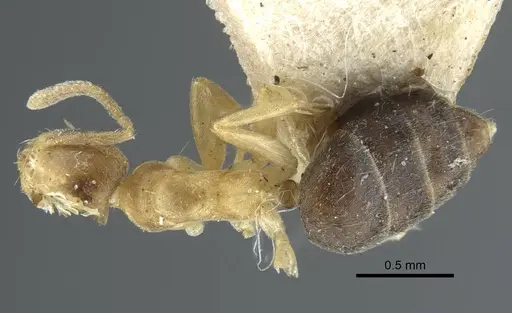
Literature
Loading distribution map...Loading products...