
Technomyrmex mixtus
- Sci. Name
- Technomyrmex mixtus
- Tribe
- Tapinomini
- Subfamily
- Dolichoderinae
- Author
- Bolton, 2007
- Distribution
- Found in 1 countries
Introduction
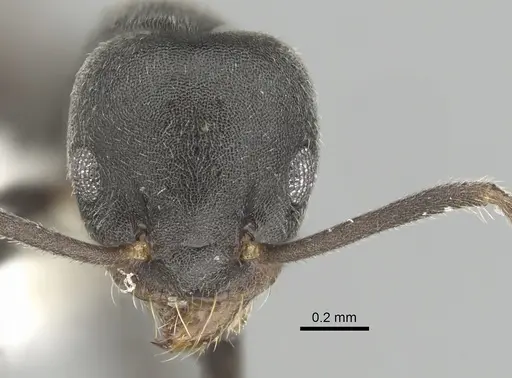
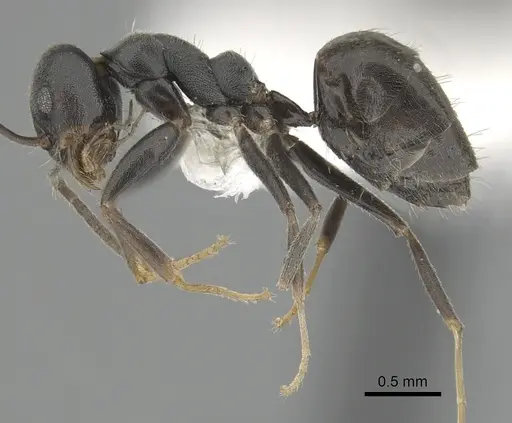
Technomyrmex mixtus is a small, dark ant from New Guinea. Workers are about 3.2-3.3 mm, with a black head and body, blackish-brown gaster, and yellowish tarsi . They belong to the Dolichoderinae subfamily, so they lack a functional stinger and rely on a chemical spray defense. These ants are arboreal and live in higher-elevation rainforests and montane forests, often nesting in trees and epiphytic plants like live Hydnophytum . They were described by Bolton in 2007 and are part of the Technomyrmex albipes group . These ants show a slight preference for middle-aged forest and were the fourth most abundant arboreal ant species in a New Guinea study, occupying many trees across different successional stages . Their distribution is limited to New Guinea, with records from around 2200 m elevation in montane rainforest .
Quick Summary
- Difficulty: Medium
- Origin & Habitat: New Guinea, higher elevation rainforest and montane forests, arboreal nesting in trees and live Hydnophytum plants [1][2]
- Colony Type: Colony structure is unconfirmed, no direct observations documented. Likely single-queen based on typical genus patterns, but this is not verified.
- Size & Growth:
- Queen: undescribed, estimated ~4-5 mm based on worker size and genus patterns
- Worker: 3.2-3.3 mm [1]
- Colony: unknown, likely moderate, up to several hundred workers based on related arboreal species
- Growth: estimated moderate
- Development: unconfirmed, estimated 6-8 weeks based on typical Dolichoderinae development at tropical temperatures (no specific data available for this species)
- Antkeeping:
- Temperature: keep at 24-28°C, these are tropical ants from New Guinea highlands. Provide a gradient so ants can choose warmer or cooler areas.
- Humidity: high humidity, keep nest substrate consistently moist but not waterlogged, mimicking rainforest canopy conditions.
- Diapause: no, these are tropical ants, maintain warm conditions year-round.
- Nesting: arboreal species, they naturally nest in trees and plants. Y-tong (AAC) or plaster nests with multiple chambers work well. Provide vertical climbing structures and avoid fully enclosed test tubes long-term.
- Behavior: Technomyrmex mixtus is docile and non-aggressive. As Dolichoderinae, they lack a stinger and use chemical spray for defense. Their small size (3.2 mm) means escape prevention is critical, fine mesh and barriers are essential. They are active foragers, likely feeding on honeydew and small insects.
- Common Issues: small size (3.2 mm) means escapes are likely without fine mesh barriers, arboreal nature requires vertical climbing space and appropriate nest design, tropical temperature requirements may need heating in cooler climates, no documented founding behavior, claustral vs semi-claustral unknown, limited availability in the hobby, rarely available
Housing and Nest Setup
Since Technomyrmex mixtus is arboreal, your setup should mimic their tree-dwelling lifestyle. Use Y-tong (AAC) or plaster nests with multiple chambers. Provide vertical climbing structures like twigs, cork bark, or artificial plants in the outworld. Because workers are only 3.2 mm, escape prevention is critical: use fine mesh on ventilation and apply fluon or barrier tape around lid edges. A test tube can work for founding, but move them to a more spacious formicarium once the colony has a few dozen workers. The outworld should have both horizontal foraging area and vertical climbing space.
Feeding and Diet
In the wild, Technomyrmex species feed on honeydew from aphids and scale insects, plus small insects. In captivity, offer a steady supply of sugar water or honey (via a cotton ball or feeder) and small protein sources like fruit flies, tiny crickets, or mealworms 2-3 times a week. Prey should be no larger than the workers themselves. Remove uneaten protein after 24 hours to prevent mold. Some colonies may also accept commercial ant jelly.
Temperature and Humidity
These tropical ants need warm, humid conditions. Keep the nest area at 24-28°C with a gradient if possible, place a heating cable on one side so ants can choose. Avoid heating from below to prevent drying out the substrate. Humidity should be high: keep the nest substrate moist but not waterlogged. Check daily and add water as needed. Use a water reservoir in the outworld to help maintain humidity. Good ventilation prevents mold, but avoid strong drafts that dry things out.
Colony Development and Growth
Specific development data is unavailable, but based on typical Dolichoderinae patterns, expect 6-8 weeks from egg to first worker at optimal temperatures. The first workers (nanitics) will likely be smaller than normal. Growth rate is moderate, not as fast as some tropical species but faster than slow-growing Camponotus. Colonies likely reach several hundred workers, though exact maximum is unknown. Be patient with founding colonies: the queen may take 2-3 months to raise her first brood. Once workers appear, growth usually speeds up.
Behavior and Temperament
Technomyrmex mixtus is docile and non-aggressive. They lack a stinger and defend by spraying chemical irritants, safe to handle, but the spray can irritate eyes and skin. Workers are active foragers and explore the outworld readily. They are arboreal, so they spend more time climbing than ground-nesting ants. They may tend honeydew-producing insects if available in the enclosure. Their small size means they can slip through tiny gaps, so escape prevention must be excellent.
Frequently Asked Questions
How long does it take for Technomyrmex mixtus to produce first workers?
Exact timing is unconfirmed, but based on typical Dolichoderinae development, expect 6-8 weeks from egg to first worker at around 26°C. The queen may take 2-3 months to raise her first brood.
What do Technomyrmex mixtus ants eat?
They feed on honeydew and small insects. In captivity, offer sugar water or honey constantly, plus small soft-bodied insects like fruit flies or small crickets 2-3 times per week. Make sure prey is sized for their 3.2 mm workers.
What temperature do Technomyrmex mixtus need?
Keep them at 24-28°C. These are tropical ants from New Guinea highlands and need consistent warmth year-round. No hibernation is required.
Are Technomyrmex mixtus good for beginners?
They are rated Medium difficulty. While docile and safe, their specific needs (high humidity, tropical heat, arboreal setup) and small size make them better for keepers with some experience. Escape prevention challenges can be tough for complete beginners.
How big do Technomyrmex mixtus colonies get?
Exact maximum colony size is unknown. Based on related arboreal species, colonies likely reach several hundred workers. They do not form massive supercolonies.
Can I keep Technomyrmex mixtus in a test tube?
Test tubes can work for founding, but since these are arboreal ants, move them to a Y-tong or plaster nest once the colony has a few dozen workers to provide better climbing space.
Do Technomyrmex mixtus need hibernation?
No, these are tropical ants that do not require hibernation. Keep them warm year-round. Cooling them can stress or kill the colony.
Why are my Technomyrmex mixtus escaping?
Their 3.2 mm size means they can squeeze through tiny gaps. Use fine mesh on all ventilation, apply fluon or barrier tape around lid edges, and check for gaps. Excellent escape prevention is essential.
What humidity level do Technomyrmex mixtus need?
High humidity, keep the nest substrate moist but not waterlogged, similar to rainforest conditions. Good ventilation helps prevent mold while maintaining humidity.
Report an Issue
The current care sheet is based fully on literature. See inconsistencies, or something that's incorrect? Please , it will be resolved after review from an admin. Contributing to the blogs tab also helps providing information, to make us be able to further improve the caresheets. Thank you for your support!
References

This caresheet is licensed under CC BY-SA 4.0 .
Community Blogs
CASENT0249794
View on AntWeb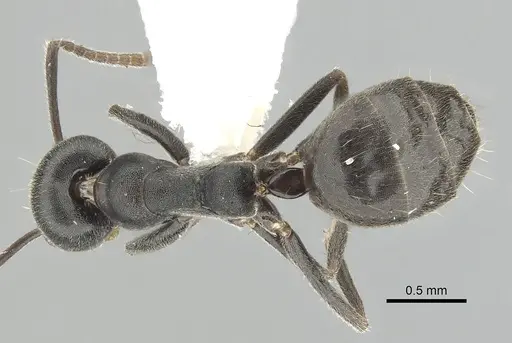
Literature
Loading distribution map...Loading products...