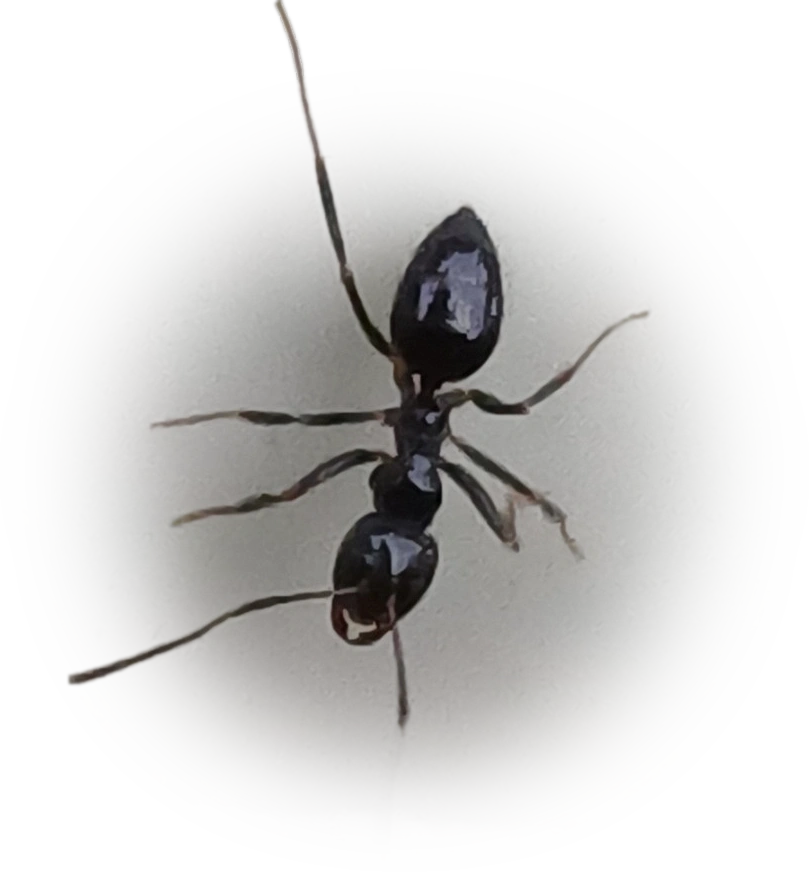
White-footed House Ant
Technomyrmex jocosus
- Sci. Name
- Technomyrmex jocosus
- Tribe
- Tapinomini
- Subfamily
- Dolichoderinae
- Author
- Forel, 1910
- Common Name
- White-footed House Ant
- Distribution
- Found in 3 countries
Introduction
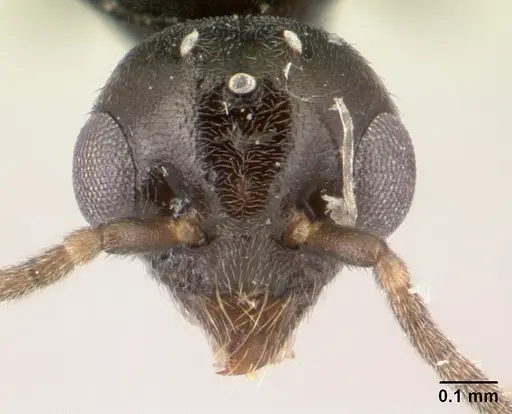
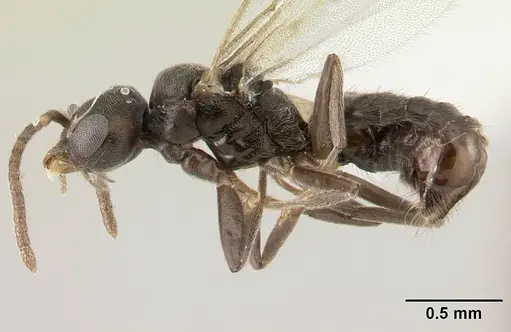
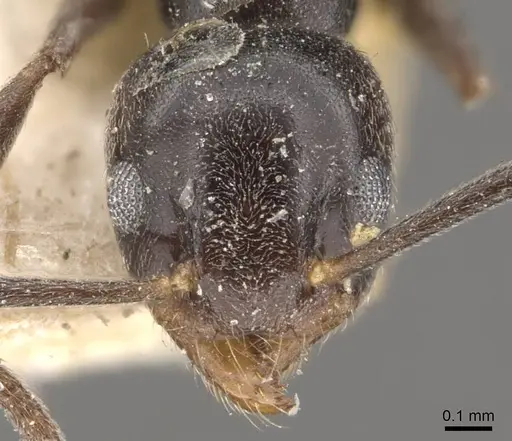
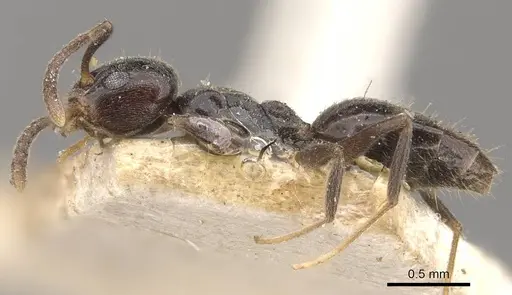
Technomyrmex jocosus is a small, dark ant. Workers measure 2.5-3.1mm total length . They are uniformly blackish brown to black, with a relatively smooth and shiny head that helps tell them apart from the similar exotic species Technomyrmex albipes . They belong to the subfamily Dolichoderinae, meaning they lack a functional stinger and instead defend themselves by smearing sticky, foul-smelling chemicals from an anal gland. What makes this species especially interesting is its dual nature: it's native to parts of Australia but has become an introduced pest in New Zealand. Workers form distinct foraging trails and often enter homes through tiny cracks, earning the nickname 'black house ant' . In its native Australian range, it can be found in huge numbers on forest trees, while in urban areas it trails along fences and tree trunks . This species also has worker-queen intercastes and ergatoid (wingless) males .
Quick Summary
- Difficulty: Expert
- Origin & Habitat: Native to mainland Australia (Victoria, Western Australia, Queensland) and also found on Lord Howe Island. Introduced in New Zealand and Norfolk Island [1][3]. In Australia it lives in diverse habitats: rainforests, Banksia woodland, karri and tingle forests, and also in disturbed urban areas like parks and gardens [2]. In New Zealand it's mostly found around ports and urban areas, on vegetation, buildings, and lights [4].
- Colony Type: Colony structure is not fully documented. Worker-queen intercastes occur, meaning some workers can develop queen-like traits. Ergatoid (wingless) males also occur [1]. The number of queens per colony is unknown.
- Size & Growth:
- Antkeeping:
- Temperature: Keep at 22-26°C. They are adapted to warm temperate to subtropical conditions in Australia [1]. Room temperature is usually fine, but avoid prolonged drops below 20°C.
- Humidity: Moderate humidity (nest substrate slightly moist, not wet). They tolerate drier conditions well thanks to their arboreal and house-entering habits [2].
- Diapause: No true hibernation required. Activity may slow in cooler months, but they are active year-round in their native range [4].
- Nesting: In the wild they nest in dead wood, under bark, and in tree cavities [1]. In captivity, Y-tong (AAC) or plaster nests work well. They adapt to various setups.
- Behavior: Workers are active foragers that form distinct trails between nest and food [1]. They are not aggressive and lack a stinger, their defense is smearing a foul-smelling chemical from the anal gland. Their tiny size (under 4mm) means escape prevention is critical – they can squeeze through very small gaps. In urban settings they are often seen trailing on fences and tree trunks [2].
- Common Issues: small size makes escapes likely without fine mesh or tight seals, introduced pest in New Zealand – release is prohibited and could harm native ecosystems [4], colony founding success is uncertain due to lack of documented care data, wild colonies may carry parasites like the scuttle fly Microselia texana [5], house-entering behavior in wild colonies can make them stress-sensitive in captivity initially
Housing and Nest Setup
Technomyrmex jocosus adapts to various setups. A Y-tong (AAC) nest or plaster nest works well for established colonies. Test tubes are fine for founding queens and small colonies. In the wild they nest in dead wood, under bark, and in tree cavities [1], so providing dark, enclosed spaces helps them feel secure. They don't need high humidity like some tropical species – standard moderate moisture is fine. Make sure the outworld (foraging area) is escape-proof: these tiny ants can slip through gaps that seem impossibly small. Use fluon or a similar barrier on smooth surfaces.
Feeding and Diet
They are opportunistic omnivores. Offer sugar water or honey as a constant energy source – they exploit nectar and honeydew in the wild. For protein, provide small insects like fruit flies, small crickets, or mealworms. Workers form distinct foraging trails, so they are active hunters [1]. Feed protein 2-3 times per week for growing colonies. Remove uneaten prey after 24 hours to prevent mold.
Temperature and Seasonal Care
Keep your colony at 22-26°C, matching their Australian temperate to subtropical origin [1]. Room temperature is fine in most homes. Unlike temperate species, they don't need true hibernation, though activity may slow in winter [4]. A heating cable is not usually needed unless the room drops below 20°C. They tolerate brief temperature swings.
Behavior and Colony Dynamics
Workers are known for forming distinct foraging trails, traveling in lines between nest and food sources [1]. They show flexible caste determination, with worker-queen intercastes and ergatoid (wingless) males [1]. They are not aggressive and will flee rather than fight. Their defense is smearing a foul-smelling chemical from the anal gland (typical of Dolichoderinae). They do not sting.
Escape Prevention
With workers only 2.5-3.1mm, escape prevention is critical. They can squeeze through gaps you wouldn't think possible – even the space between a lid and container rim. Use fine mesh on ventilation holes, apply fluon or petroleum jelly barriers on smooth surfaces, and check all connections regularly. This is one of the main challenges for keepers of small species. [1]
Frequently Asked Questions
Can I keep Technomyrmex jocosus in a test tube?
Yes, test tubes work well for founding colonies and small groups. Make sure the cotton is packed tightly and add a water reservoir section for humidity. Transfer to a larger nest (like Y-tong or plaster) once the colony reaches 50+ workers.
How long until first workers appear?
Based on related Dolichoderinae species, expect about 6-8 weeks from egg to first worker at optimal temperature (around 24°C). Development may be faster or slower depending on exact temperature and feeding.
Are Technomyrmex jocosus good for beginners?
No, they are not recommended for beginners. They are an introduced pest species in New Zealand and should only be kept by experienced keepers who can guarantee no escapes. Their tiny size also makes escape prevention challenging.
What do Technomyrmex jocosus eat?
They are opportunistic omnivores. Offer sugar water or honey continuously for energy, and provide small insects (fruit flies, small crickets, mealworms) 2-3 times per week for protein. They form foraging trails to food sources [1].
Do they need hibernation or diapause?
No, they don't require true hibernation. As an Australian subtropical/temperate species, they stay active year-round in their native range. They may reduce activity slightly in cooler months but no special winter care is needed [4].
How big do colonies get?
Specific colony size data is not available, but related Technomyrmex species typically reach several thousand workers. Expect moderate growth over 1-2 years.
Can I keep multiple queens together?
Combining unrelated queens has not been documented for this species. Based on typical Dolichoderinae behavior, it is not recommended. The number of queens in a colony is unknown.
Why are my ants escaping?
Their tiny size (2.5-3.1mm) means they can squeeze through very small gaps. Check all seams, use fine mesh on ventilation, and apply fluon barriers. Even a pinhole-sized gap is enough for them.
Report an Issue
The current care sheet is based fully on literature. See inconsistencies, or something that's incorrect? Please , it will be resolved after review from an admin. Contributing to the blogs tab also helps providing information, to make us be able to further improve the caresheets. Thank you for your support!
References

This caresheet is licensed under CC BY-SA 4.0 .
Community Blogs
CASENT0172043
View on AntWeb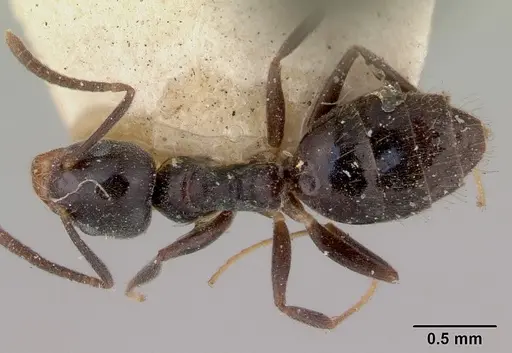
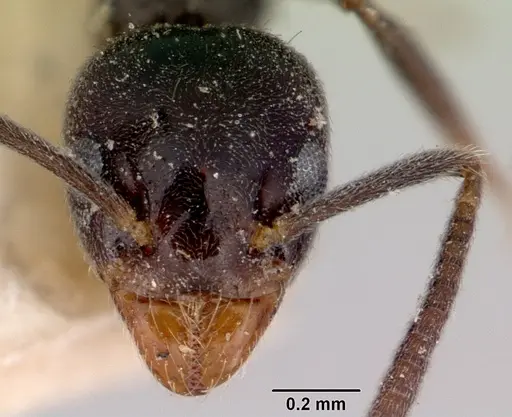
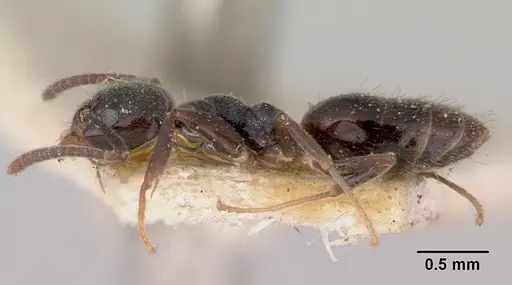
CASENT0178864
View on AntWeb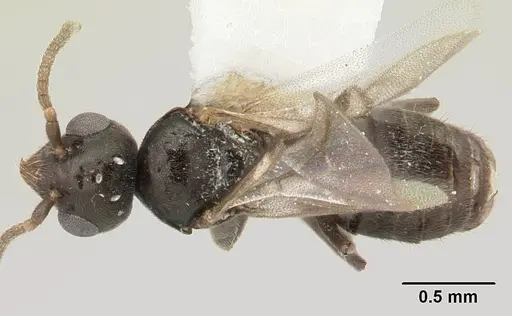
CASENT0249788
View on AntWeb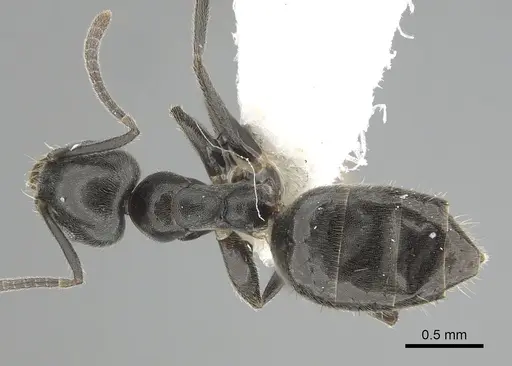
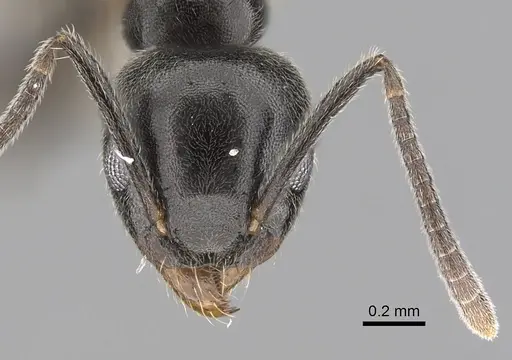
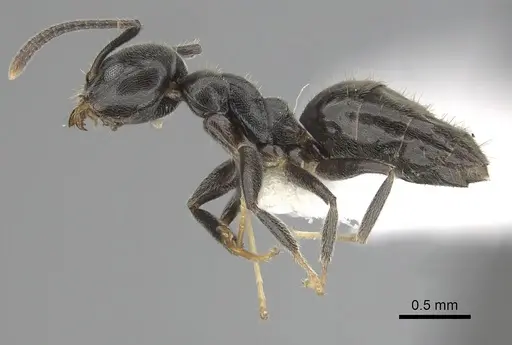
CASENT0909800
View on AntWeb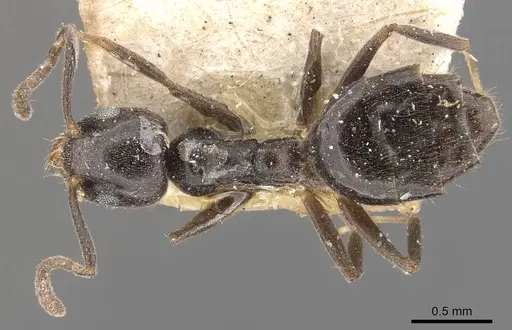
Literature
Loading distribution map...Loading products...