
Technomyrmex camerunensis
- Sci. Name
- Technomyrmex camerunensis
- Tribe
- Tapinomini
- Subfamily
- Dolichoderinae
- Author
- Emery, 1899
- Distribution
- Found in 2 countries
Introduction
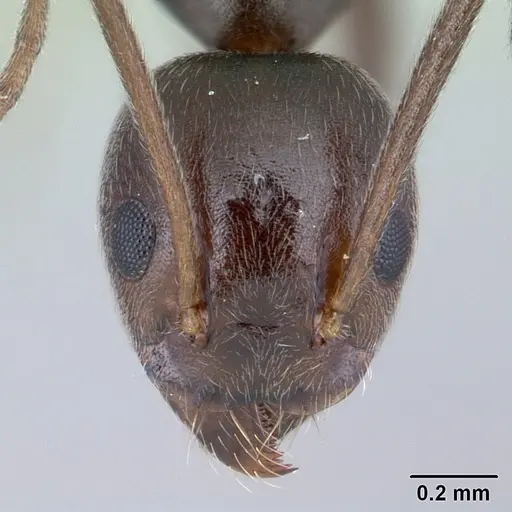
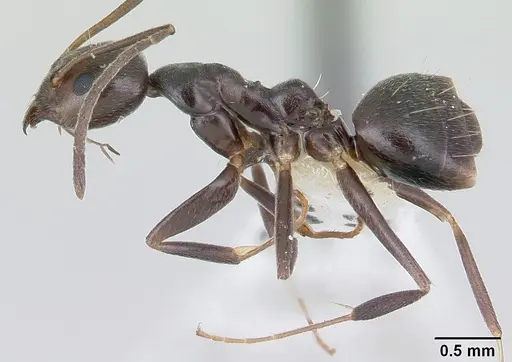
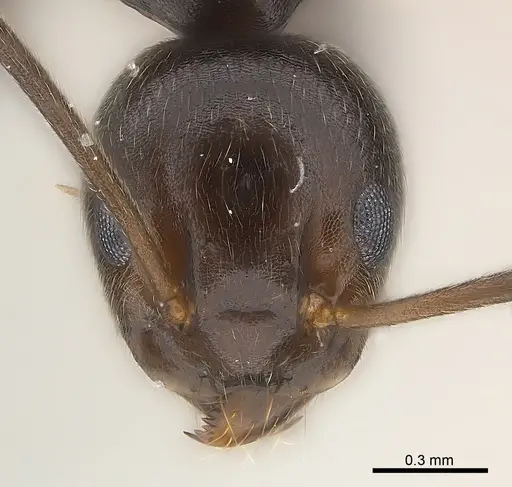
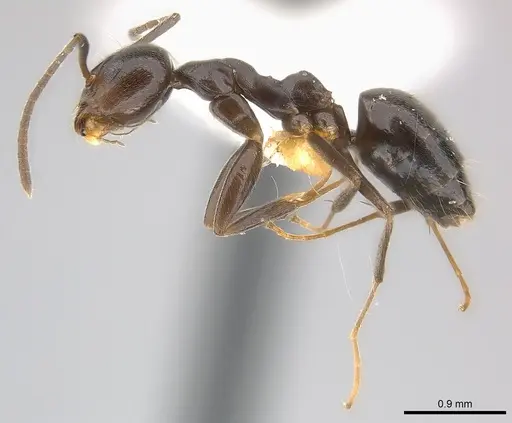
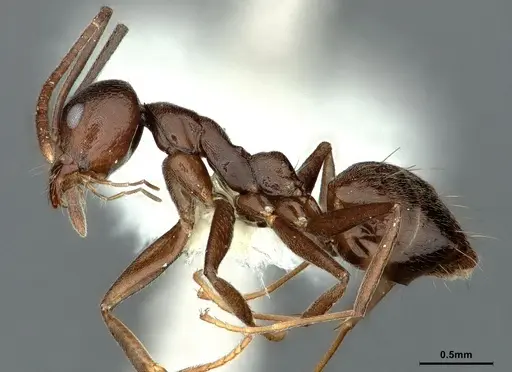
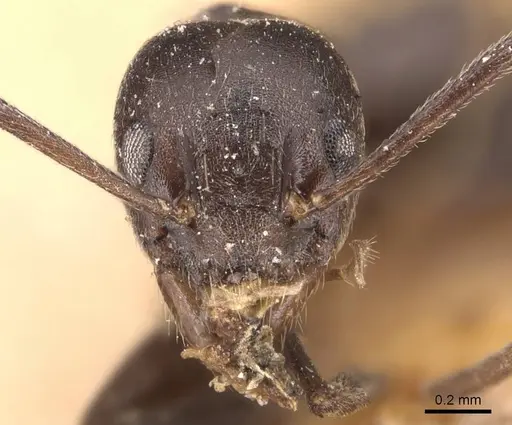
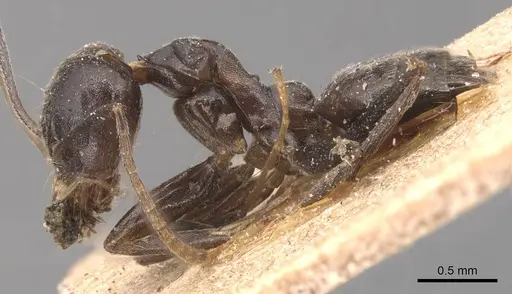
Technomyrmex camerunensis is a small ant species native to Central Africa, documented in the Democratic Republic of Congo . Workers are dark brown to black with pale tarsi (feet), a hallmark of the 'white-footed ants' genus. They belong to the Dolichoderinae subfamily, so they lack a functional stinger. When threatened, they release sticky, foul-smelling secretions from an anal gland. As with most Technomyrmex, they have a single petiolar node and a smooth, glossy body. This tropical species likely inhabits forested areas. They are generalist foragers, feeding on honeydew from aphids and scale insects as well as small insects and other protein. Like some closely related tramp species, they may nest in human structures. However, specific data on their natural history is scarce.
Quick Summary
- Difficulty: Hard
- Origin & Habitat: Democratic Republic of Congo, Central Africa [1]. Likely tropical forests, possibly nesting in rotting wood, under bark, or in human structures.
- Colony Type: Unknown, social structure has not been studied. Based on genus patterns, possibly monogyne (single queen), but this is speculative.
- Size & Growth:
- Queen: Size unknown, inferred from Technomyrmex genus: queens likely around 4-5 mm.
- Worker: Size unknown, inferred from genus: workers typical 2.5-3.5 mm.
- Colony: Unknown, genus patterns suggest up to a few thousand workers, but not confirmed.
- Growth: Unknown, likely moderate given tropical climate, but no data.
- Development: Unknown, estimate based on related Technomyrmex species: possibly 4-6 weeks at 25-28 °C, but this is speculative. (No specific study on T. camerunensis development exists. Times given are rough estimates from the genus.)
- Antkeeping:
- Temperature: Unknown, as a tropical species, warm temperatures (24-28 °C) are a reasonable starting point. Maintain stable heat year-round.
- Humidity: Likely needs high humidity, but not confirmed. Keep the nest substrate consistently moist, not waterlogged.
- Diapause: No, tropical species, keep warm all year.
- Nesting: Unknown, likely prefer enclosed spaces. In captivity, use Y-tong (AAC), plaster, soil, or 3D-printed nests. Avoid large chambers. Provide cover and darkness.
- Behavior: Technomyrmex camerunensis is generally calm and not aggressive. Their defense is releasing sticky, foul-smelling anal gland secretions (not formic acid). This can stain surfaces and has a strong odor, but is harmless to humans. Workers are active foragers, likely nocturnal/crepuscular. Their small size (~3 mm) makes them potential escape artists, use fine mesh and barriers like fluon.
- Common Issues: very little specific care data available, care is based on genus estimates, which may be inaccurate, requires warm, stable temperatures year-round, monitor closely, small size increases escape risk, use fine barriers and tight seals, unknown founding behavior, claustral founding is assumed but not confirmed, defensive secretions can stain surfaces and produce a strong odor
Housing and Nest Setup
With little species-specific data, start with a simple test tube setup for a founding queen. Once the colony grows, move them to a Y-tong, plaster, soil, or 3D-printed nest. Avoid acrylic nests. The chambers should be small to match the workers' size (~3 mm). Provide a water reservoir or moisture chamber to keep the substrate consistently moist. Place the nest in a warm, dark area away from drafts and direct sunlight.
Feeding and Diet
Offer a varied diet: constant sugar source (sugar water, honey, or maple syrup) and protein feedings (fruit flies, small crickets, mealworms) several times a week. Remove uneaten food after 24-48 hours. They will also take honeydew from aphids if available. The diet is based on general Technomyrmex traits.
Temperature and Seasonal Care
As a tropical species, maintain temperatures around 24-28 °C (75-82 °F) year-round. Temperatures below 22 °C likely slow development. No diapause needed. Use a heating mat on one side to create a gradient. Monitor with a thermometer.
Behavior and Handling
These ants are generally calm. They defend by exuding sticky, foul-smelling secretions from an anal gland, not formic acid. The secretion can stain surfaces and has a strong odor but is not dangerous. Workers are active foragers. Their small size means they can escape through tiny gaps, use barriers like fluon and ensure connections are tight when moving the colony.
Colony Growth and Development
Founding behavior is unconfirmed. If claustral (as suspected), the queen will seal herself in and raise the first small workers (nanitics) on stored reserves. The development timeline is unknown, likely 4-6 weeks from egg to worker at warm temperatures, based on related species. Colony growth is not documented but probably moderate. Expect a slow start and gradual increase.
Frequently Asked Questions
How long does it take for Technomyrmex camerunensis to have first workers?
Unknown. If claustral, first workers likely appear after 4-6 weeks at 25-28 °C, but this is an estimate from related species. No specific data exists.
What temperature do Technomyrmex camerunensis need?
Keep them warm at 24-28 °C (75-82 °F) year-round. Lower temperatures will probably slow them down. No exact preference is known.
Can I keep Technomyrmex camerunensis in a test tube?
Yes, test tubes work well for founding and early colonies. Use a water reservoir with a cotton plug. Move to a larger nest when the colony grows beyond what the test tube can hold.
What do Technomyrmex camerunensis eat?
Generalist diet: constant sugar source (honey, sugar water) and protein (small insects like fruit flies, crickets). Feed small amounts and remove leftovers after 24-48 hours.
Do Technomyrmex camerunensis need hibernation?
No, tropical species, keep active year-round with stable warmth.
How big do Technomyrmex camerunensis colonies get?
Unknown. Closely related Technomyrmex species can reach thousands of workers, but no data exists for this species.
Are Technomyrmex camerunensis good for beginners?
No, they are challenging due to scarce care data and high temperature/humidity needs. Only try if you have experience with tropical species.
Why are my Technomyrmex camerunensis dying?
Likely causes: temperatures too low (below 22 °C), humidity too low, or poor ventilation. Verify temperature is stable 24-28 °C and substrate is consistently moist but not soggy.
Will Technomyrmex camerunensis escape from their nest?
Their small size (~3 mm) makes them potential escape artists. Use fine-mesh ventilation and apply fluon to test tube rims. Keep connections secure.
Report an Issue
The current care sheet is based fully on literature. See inconsistencies, or something that's incorrect? Please , it will be resolved after review from an admin. Contributing to the blogs tab also helps providing information, to make us be able to further improve the caresheets. Thank you for your support!
References

This caresheet is licensed under CC BY-SA 4.0 .
Community Blogs
CASENT0178275
View on AntWeb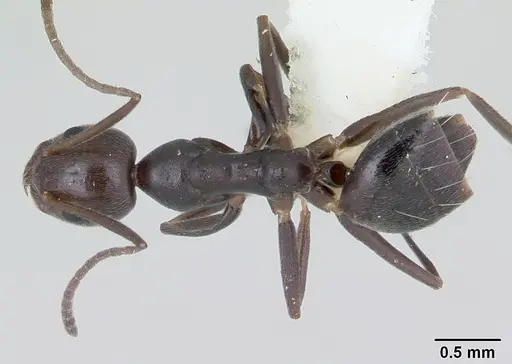
CASENT0217129
View on AntWeb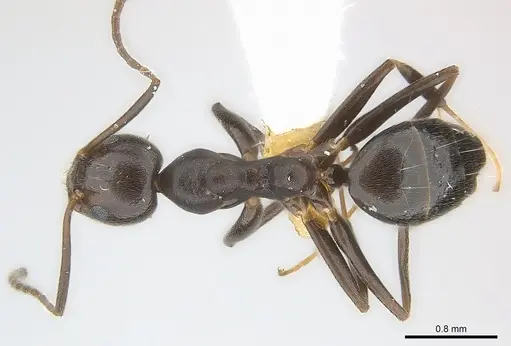
CASENT0886044
View on AntWeb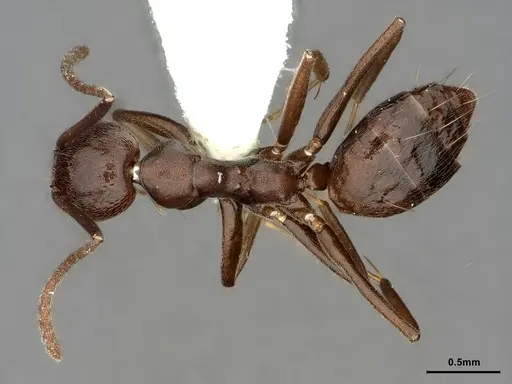
CASENT0905068
View on AntWeb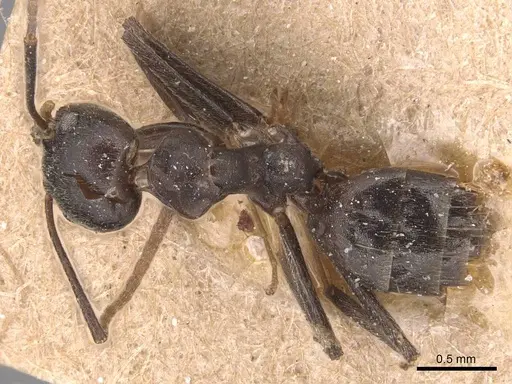
Literature
Loading distribution map...Loading products...