
Tapinoma pygmaeum
- Sci. Name
- Tapinoma pygmaeum
- Tribe
- Tapinomini
- Subfamily
- Dolichoderinae
- Author
- Dufour, 1857
- Distribution
- Found in 3 countries
Introduction
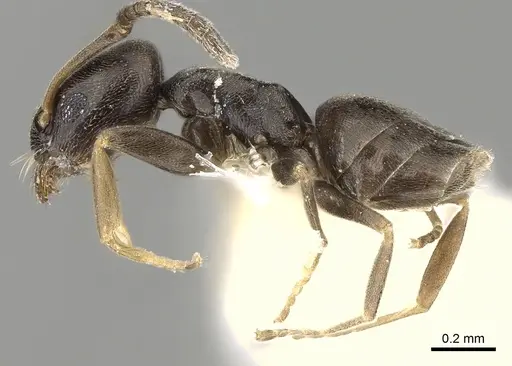
Tapinoma pygmaeum is among the smallest ants you can keep, workers measure roughly 1.6-2.1 mm in total body length , with a very tiny head (cephalic size ~0.5 mm) . They have a dark brown head and mesosoma and noticeably lighter antennae and legs. Unlike stinging ants, they belong to the Dolichoderinae subfamily and lack a functional sting; instead they exude sticky, foul‑smelling defensive compounds from anal glands (smear defense). Originally described from Saint‑Sever in southwest France by Dufour in 1857 (as *Micromyrma pygmaea*), the species was long confused with the similar *Plagiolepis pygmaea*, which explains why it was considered rare for so long . What makes *T. pygmaeum* stand out is its adaptability: it occurs from sea level up to almost 2000 m in the Pyrenees, showing good frost resistance . Colonies often have multiple queens (polygynous) and relocate frequently to follow food sources .
Quick Summary
- Difficulty: Medium
- Origin & Habitat: Native to the Mediterranean region (Spain, southern France, Italy) with recent findings in Switzerland, Belgium, the Netherlands, and southern England. Lives in diverse habitats: riparian forests, mountain meadows, city parks, and gardens. Nests under stones, in rock crevices, dead dry wood, hollow stems, and even inside active beehives [2][3].
- Colony Type: 10 queens and likely 300-400 workers. French colonies typically stay under 100 workers. They frequently move their entire nest to get better access to food [2].
- Size & Growth:
- Queen: ~3 mm (estimated from other *Tapinoma* queens, no direct measurements available)
- Worker: ~1.6-2.1 mm (0.75-1 line) [1], head capsule about 0.5 mm
- Colony: Up to 400 workers in some populations, but usually under 100 [2]
- Growth: Moderate (inferred from small colony sizes)
- Development: Estimated 6-8 weeks at room temperature (based on typical *Tapinoma* species, not directly studied) (Development may slow in cool conditions.)
- Antkeeping:
- Temperature: Room temperature (18-24 °C) works well. This species tolerates cool conditions, at high altitudes January temperatures drop to −4 °C [2]. Avoid overheating above 28 °C.
- Humidity: Moderate, nests in varied conditions from relatively dry to damp areas. Keep substrate slightly moist but not waterlogged. Provide a moisture gradient so ants can choose.
- Diapause: Yes, wild colonies experience winter cold. A cool period (10-15 °C) for 2-4 months is beneficial. Indoor colonies kept warm year‑round may not need formal hibernation but natural cycles help.
- Nesting: Owing to their tiny size, use small nest chambers: test tubes for founding, then Y‑tong (AAC), plaster, or 3D‑printed nests with narrow passages. Do not use acrylic nests. They often relocate, so give them stable, undisturbed homes.
- Behavior: Generally peaceful and non‑aggressive. Workers forage actively for honeydew and small prey. Because they are tiny (1.6-2.1 mm), escape prevention is critical, they squeeze through microscopic gaps. They do not sting, their defense is smearing foul‑smelling compounds. Colonies are naturally polygynous, with multiple queens laying eggs.
- Common Issues: escape prevention is critical, use fine mesh and tightly sealed joints, check under magnification for gaps., slow colony growth, don't expect rapid expansion, be patient with small numbers of workers., frequent nest relocation may stress the colony if disturbed too often, provide undisturbed conditions., may be confused with *Plagiolepis* species, verify identification using key traits., wild‑caught colonies may carry parasites that can devastate small populations.
Housing and Escape Prevention
Housing Tapinoma pygmaeum requires attention to their minute size (workers ∼1.6-2.1 mm). Use test tubes with cotton barriers for founding colonies. Once the colony reaches 20-30 workers, move them to a Y‑tong (AAC), plaster, or 3D‑printed nest with very small chambers, these ants prefer tight spaces. NEVER use acrylic nests. Apply fluon or petroleum jelly barriers on all potential escape routes. Check regularly under magnification, gaps invisible to the naked eye are large enough for them to escape [2][1].
Feeding and Diet
Like other Tapinoma, this species feeds on honeydew and small insects. In captivity, provide a constant source of diluted honey or sugar water. For protein, offer tiny prey: fruit flies, aphids, pinhead crickets, or small pieces of mealworm, scale prey to their tiny size. Feed protein 2-3 times per week. Remove uneaten prey within 24 h to prevent mold. They also accept commercial insect jellies [3].
Temperature and Seasonal Care
This species shows remarkable temperature tolerance. Wild colonies survive at altitudes up to 1944 m where January temperatures drop to −4 °C [2]. Keep colonies at room temperature (18-24 °C) for normal activity. If you want to simulate seasonal cycles, provide a cool period around 10-15 °C for 2-4 months during winter, this matches their natural conditions and may improve long‑term health. Avoid temperatures above 28 °C. A heating cable on one side of the nest creates a useful temperature gradient [2].
Colony Structure and Multi‑Queen Care
10 in one nest) [2]. The queens coexist and all lay eggs, which can boost colony growth compared to single‑queen species. In the wild, French colonies typically stay under 100 workers, but introduced populations in Belgium reached several hundred workers, showing the potential for larger colonies in optimal conditions [2]. When keeping this species, you don't need to separate queens, they coexist naturally. However, colony founding may involve pleometrosis (multiple queens starting together), monitor closely for aggression when combining unrelated foundresses.
Identification and Similar Species
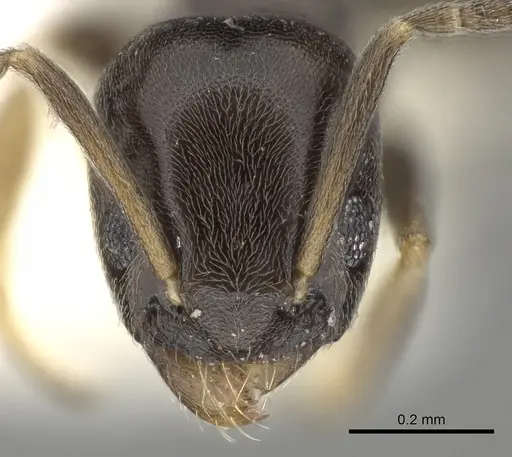
Correct identification is crucial because T. pygmaeum is easily confused with Plagiolepis species, leading to historical under‑recording [2][3]. Key features: very small total body length (∼1.6-2.1 mm), dark brown head and mesosoma with lighter antennae and legs, very short antennal scapes, four conspicuous long setae on the front of the clypeus, and a very large postocular distance (space behind eyes). The clypeal excision is extremely shallow or absent. If your ant has a distinctly lighter gaster contrasting with the head and mesosoma, it might be a color morph of T. pygmaeum (formerly called T. pithecorum) or the similar T. melanocephalum [2].
Growth Expectations and Patience
Don't expect rapid colony growth. Wild colonies rarely exceed 100 workers, and they frequently relocate their nest [2]. Your colony will likely stay modest in size compared to species like Lasius or Camponotus. The tiny workers mean each individual contributes less to colony function. Be patient, a healthy founding colony may take a year or more to reach 50 workers. The reward is an interesting species with unusual behaviors: polygyny, frost tolerance, and the habit of living in beehives. These ants are best for keepers who enjoy observing subtle behaviors rather than those wanting rapid colony expansion [2].
Frequently Asked Questions
How long does it take for Tapinoma pygmaeum to produce first workers?
Based on typical Tapinoma development, expect the first nanitic workers about 6-8 weeks after the queen lays eggs at room temperature (20-24 °C). Development time has not been directly studied for this species, so this is an estimate.
Can I keep multiple Tapinoma pygmaeum queens together?
Yes, this species is naturally polygynous. Multiple queens coexist in the same nest [2]. However, when combining unrelated foundresses, monitor for aggression during the initial establishment period. It's safest to let a single queen found a colony and introduce additional queens carefully when the colony is small [2].
Why are my Tapinoma pygmaeum escaping?
Their tiny size (∼1.6-2.1 mm body length) allows them to squeeze through microscopic gaps. Check lid seams, tubing connections, and nest cracks under magnification. Apply fluon or petroleum jelly barrier to all potential escape routes. Inspect regularly using a magnifying glass.
Do Tapinoma pygmaeum need hibernation?
Yes, they benefit from a cool period. Wild colonies at high altitudes experience winter temperatures well below freezing, showing good frost resistance [2]. A cool period around 10-15 °C for 2-4 months during winter mimics natural conditions. Indoor colonies may survive without formal hibernation, but a slight temperature reduction helps maintain healthy cycles [2].
How big do Tapinoma pygmaeum colonies get?
Natural colonies usually stay under 100 workers, though some documented populations reach 300-400 workers [2]. Do not expect large colonies, these are tiny ants with modest population sizes.
What do Tapinoma pygmaeum eat?
They feed on honeydew, nectar, and small insects. In captivity, offer sugar water or honey water constantly, plus tiny protein sources like fruit flies, aphids, or small pieces of cricket. Scale prey to their size, even a fruit fly is substantial for these workers [3].
Is Tapinoma pygmaeum good for beginners?
Medium difficulty, not ideal for absolute beginners because of the extreme escape‑prevention requirements, but otherwise easygoing. They tolerate a wide temperature range and don't require specialized heating. The main challenges are preventing escapes and being patient with slow growth. If you can provide secure housing, they are rewarding to keep.
When should I move my Tapinoma pygmaeum to a formicarium?
Wait until the colony has 30-50 workers and the test tube is becoming crowded. Choose a nest with very small chambers (Y‑tong, plaster, or 3D‑printed). They often relocate, so don't be surprised if they move to different nest areas.
Why is my Tapinoma pygmaeum colony dying?
Common causes: escape (check for tiny gaps), stress from over‑disturbance, parasites (especially in wild‑caught colonies), and poor nutrition. Ensure constant sugar water and regular protein feeding. Small colonies are vulnerable to sudden collapse. Also verify identification, they are often confused with Plagiolepis.
Report an Issue
The current care sheet is based fully on literature. See inconsistencies, or something that's incorrect? Please , it will be resolved after review from an admin. Contributing to the blogs tab also helps providing information, to make us be able to further improve the caresheets. Thank you for your support!
References

This caresheet is licensed under CC BY-SA 4.0 .
Community Blogs
CASENT0280679
View on AntWeb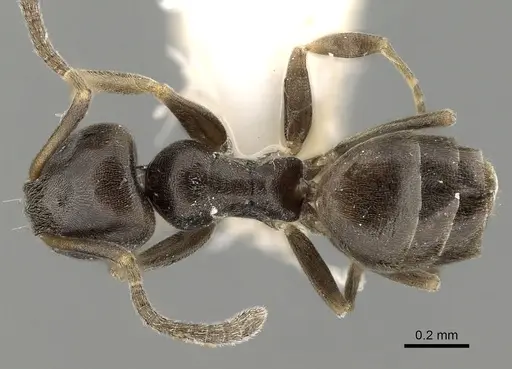
Literature
Loading distribution map...Loading products...