
Tapinoma panamense
- Sci. Name
- Tapinoma panamense
- Tribe
- Tapinomini
- Subfamily
- Dolichoderinae
- Author
- Wheeler, 1934
- Distribution
- Found in 2 countries
Introduction
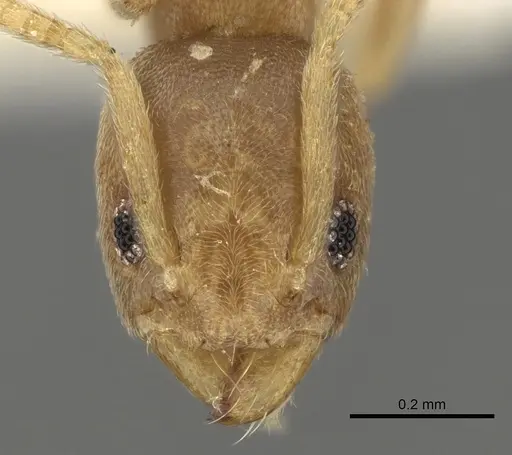
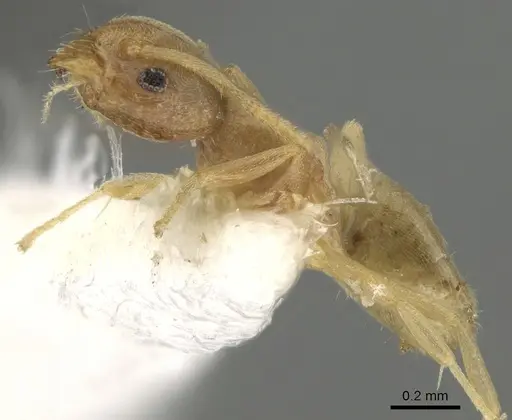
Tapinoma panamense is a tiny ant species native to Panama, with workers measuring 1-1.2mm and dealated queens 1.8mm . Workers are pale brownish yellow with very fine punctulate sculpture and sparse pale yellow hairs. The head is subrectangular, slightly longer than broad, with small flattened eyes placed far from the front of the head. The petiole is very small and flat, completely hidden under the large first gastric segment. This species was originally described by Wheeler in 1934 from specimens collected on Barro Colorado Island, Panama, nesting inside a cauline swelling of the tree Cordia alliodora . This species belongs to the Dolichoderinae subfamily, so workers lack a functional stinger and instead rely on chemical defenses. When threatened, they exude sticky, foul-smelling compounds from an anal gland. Tapinoma panamense is quite distinct from related Caribbean and Central American species like T. ramulorum, T. atriceps, T. heyeri, and T. litorale .
Quick Summary
- Difficulty: Easy
- Origin & Habitat: Panama (Neotropical region) – specifically Barro Colorado Island. In nature, they nest inside plant stem swellings of Cordia alliodora, a tropical tree [2][1]. This suggests they prefer humid, shaded microhabitats with access to plant structures.
- Colony Type: Colony structure is not documented in scientific literature. Based on typical Tapinoma patterns, they could be polygynous (multiple queens) with modest colony sizes, but this is unconfirmed for this species.
- Size & Growth:
- Queen: 1.8mm (dealated – a queen that has shed her wings after mating) [1]
- Worker: 1-1.2mm [1]
- Colony: Unknown – likely up to a few hundred workers based on related species, but no firm data.
- Growth: Moderate – based on typical small Dolichoderinae development
- Development: Likely 6–8 weeks at optimal tropical temperatures (24–28°C), based on genus-level data for small tropical ants. Direct data unavailable. (Development estimates from related Tapinoma species, specific timeline not known.)
Housing and Nest Setup
For such tiny ants (workers 1–1.2mm), you'll need carefully scaled housing. Test tubes with small cotton plugs work well for founding colonies – use a narrow diameter tube (10–12mm) rather than standard 15mm tubes. For established colonies, a Y-tong (AAC) nest with very narrow chambers, or a plaster nest, or a 3D-printed nest with tight tolerances is essential. The key requirement is excellent escape prevention: standard barrier gaps are too large. Apply Fluon or similar barriers to all connection points, and use fine mesh (0.5mm or smaller) on any ventilation holes. A naturalistic setup mimicking their plant-swelling nesting preference could include small cork pieces or artificial plant stems, but this is optional – they do well in simple test tube setups. Keep the nest dark (cover with a red film or cloth) as they prefer dark, sheltered conditions [1].
Feeding and Diet
In the wild, Tapinoma panamense likely forages for honeydew from aphids and scale insects, plus small insects and nectar. In captivity, offer sugar water (1:4 sugar to water) or honey water (1:3 honey to water) constantly – these ants have high energy needs. For protein, offer tiny prey items: fruit flies, pinhead crickets, small mealworms, or freshly killed insects cut into microscopic pieces. Because of their size, prey should be no larger than their head width. Feed protein 2–3 times per week, and keep sugar sources available at all times. Remove uneaten prey within 24–48 hours to prevent mold. Many keepers find Tapinoma species readily accept sweet liquids, so honey water is a reliable staple [1].
Temperature and Humidity
As a tropical species from Panama, Tapinoma panamense requires warm, humid conditions. Keep the nest area at 24–28°C year-round – this is warmer than most temperate species need. A small heating cable placed on one side of the nest can create a thermal gradient so ants can regulate themselves. Place the heating cable on top of the nest, not underneath, to prevent excessive drying. For humidity, keep the nest substrate consistently moist but not waterlogged. Their natural nesting in plant stem swellings indicates they need a humid microclimate. Use a water tube in test tube setups, and mist the outworld occasionally. Avoid placing the nest near air conditioning vents or in rooms with temperature fluctuations [1].
Colony Establishment and Growth
Starting a colony from a wild-caught queen is the most common approach. If you find a dealated queen (already mated, wings removed), place her in a test tube setup with a small water reservoir. The queen will likely seal herself in a chamber (claustral founding) and survive on her stored fat reserves until the first workers emerge. First workers (nanitics) will be very tiny, even smaller than normal workers. Growth rate is moderate – expect roughly 6–8 weeks from egg to first worker at optimal temperatures, based on related Tapinoma species (specific data not available). Colonies likely grow to up to a few hundred workers over 1–2 years. During founding, avoid disturbing the queen – vibrations and light can cause her to abandon or eat her brood. Only offer food after the first workers emerge, and keep offerings very small initially [1].
Handling and Temperament
These ants are not aggressive and pose no danger to keepers. As Dolichoderinae, they lack a functional stinger – their defense mechanism is spraying chemical secretions, which may have an unpleasant odor (hence the common name 'odorous ants' for the genus). When servicing the nest, use gentle techniques and avoid crushing any ants, as this releases their chemical defenses. Their small size makes them fragile, so minimize colony disturbance, especially during founding. They are fast-moving and will bolt when exposed to light, so work quickly but carefully. There is no pain risk – the main concern is preventing escapes due to their minute size.
Frequently Asked Questions
How long does it take for Tapinoma panamense to produce first workers?
Expect roughly 6–8 weeks from egg to first worker at optimal temperatures (24–28°C). This is based on typical development times for small tropical Dolichoderinae ants, as specific data for this species is not available. The first workers (nanitics) will be very tiny, even smaller than the 1–1.2mm typical worker size [1].
What size colony do Tapinoma panamense colonies reach?
The maximum colony size is not documented. Based on typical Tapinoma species, colonies likely reach up to a few hundred workers over 1–2 years, but this is an estimate. Specific colony size data for this species is not available [1].
Can I keep multiple Tapinoma panamense queens together?
This has not been documented for this specific species. Many Tapinoma species are polygynous (multiple queens), but combining unrelated queens always carries the risk of aggression. If you want to try multi-queen colonies, introduce them at the founding stage (pleometrosis), but success is not guaranteed. Single-queen colonies are the safest approach for beginners [1].
What do Tapinoma panamense eat?
They are omnivorous with a preference for sweets. Offer sugar water or honey water constantly, plus small protein sources like fruit flies, tiny mealworms, or small insects. Their tiny size means prey items must be appropriately scaled – no larger than their head width [1].
Do Tapinoma panamense need hibernation?
No. Being a tropical species from Panama, they do not require diapause or hibernation. Keep them at warm temperatures (24–28°C) year-round. Temperature drops below 20°C for extended periods could be harmful [1].
Why are my Tapinoma panamense escaping?
Their tiny size (1mm workers) makes them excellent escape artists. Standard barrier gaps are too large for them. Use fine mesh (0.5mm or smaller), apply Fluon to all connection points, and ensure all lids fit tightly. Check for any gaps larger than 0.5mm [1].
Are Tapinoma panamense good for beginners?
Yes, they are considered easy to keep due to their simple care requirements – no hibernation, no special diet, and they are not aggressive. The main challenges are escape prevention due to tiny size and maintaining warm tropical temperatures. They are a good choice for keepers interested in small tropical species [1].
When should I move my Tapinoma panamense to a formicarium?
Wait until the colony has at least a small number of workers (around a dozen or more) before moving to a formicarium. Test tubes work well for founding colonies and early growth. Moving too early stresses the colony. When moving, use a gentle transfer method and ensure the new setup has matching humidity levels [1].
What temperature is ideal for Tapinoma panamense?
Keep them at 24–28°C. This tropical species needs warm conditions year-round. A small heating cable on one side of the nest can help maintain these temperatures, especially if your room temperature runs cooler [1].
Report an Issue
The current care sheet is based fully on literature. See inconsistencies, or something that's incorrect? Please , it will be resolved after review from an admin. Contributing to the blogs tab also helps providing information, to make us be able to further improve the caresheets. Thank you for your support!
References

This caresheet is licensed under CC BY-SA 4.0 .
Community Blogs
CASENT0280678
View on AntWeb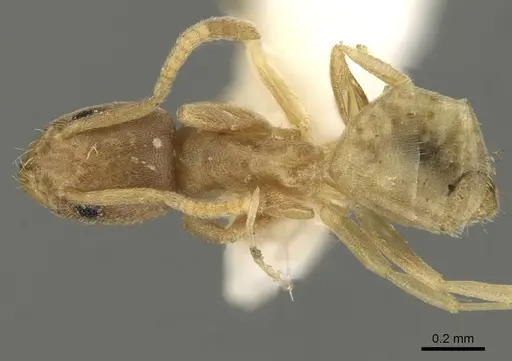
Literature
Loading distribution map...Loading products...