
Tiny Coconut ant
Tapinoma minimum
- Sci. Name
- Tapinoma minimum
- Tribe
- Tapinomini
- Subfamily
- Dolichoderinae
- Author
- Mayr, 1895
- Common Name
- Tiny Coconut ant
- Distribution
- Found in 1 countries
Introduction
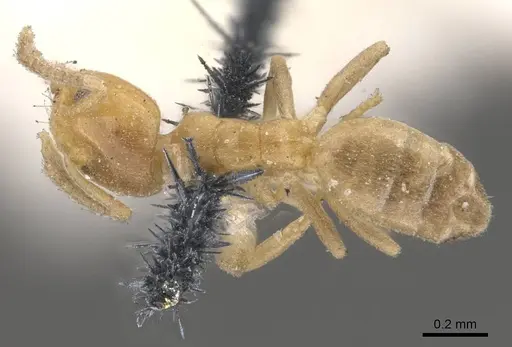
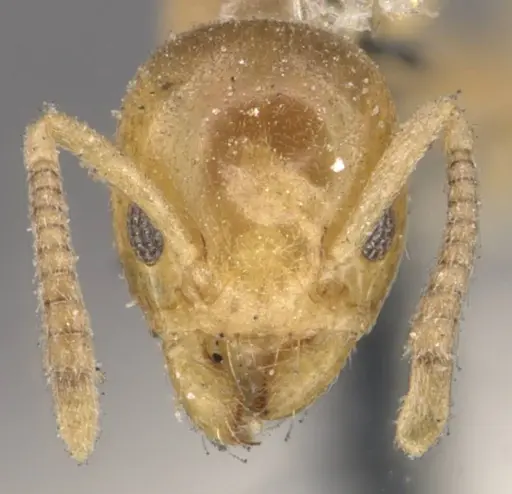
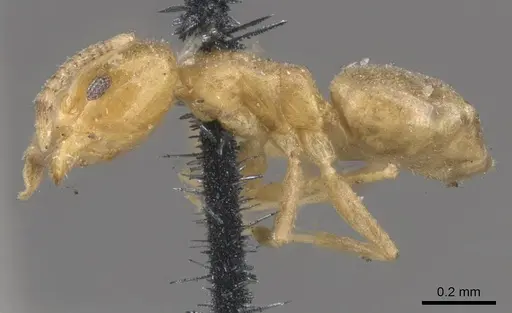
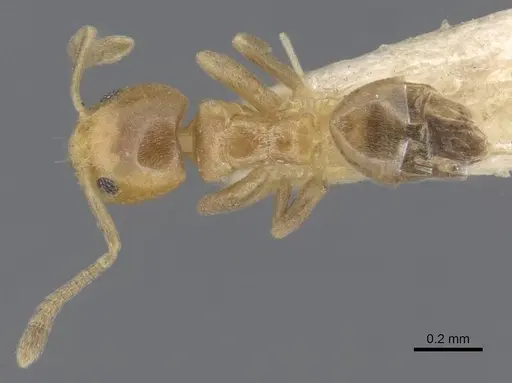
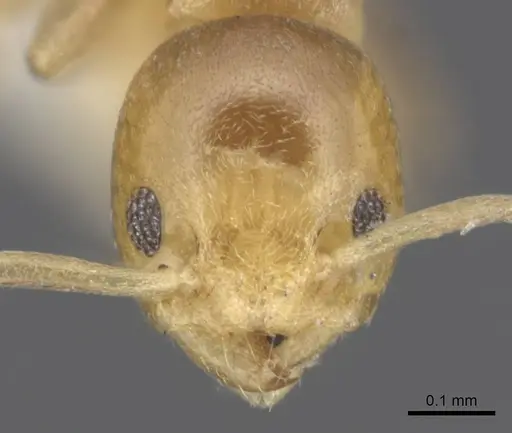
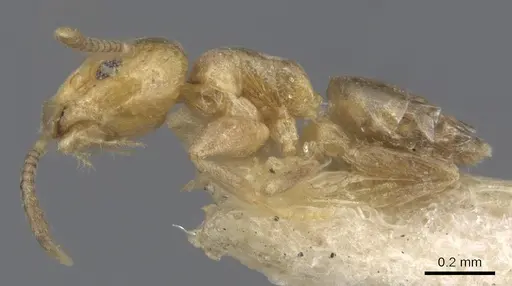
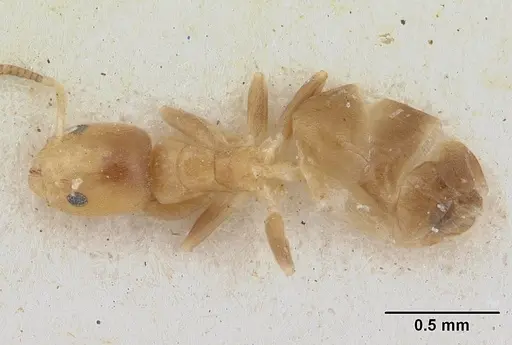
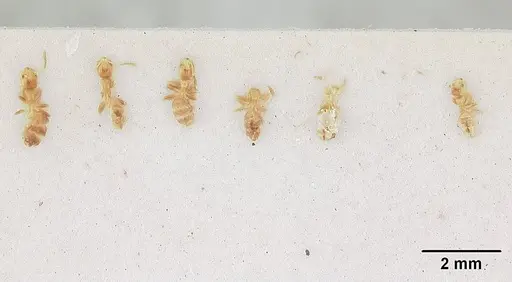
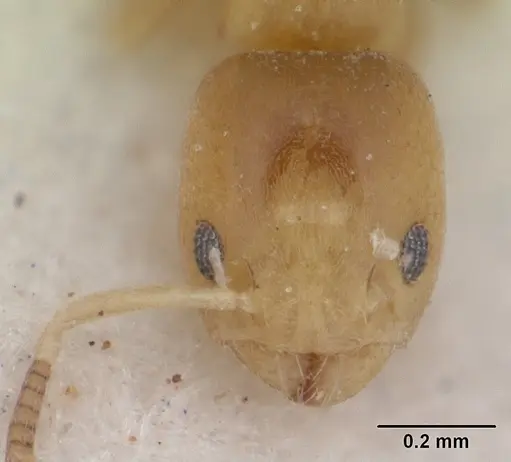
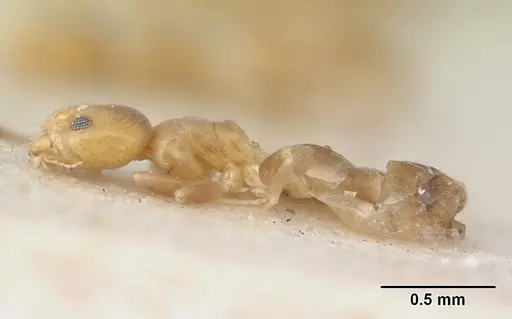
Tapinoma minimum is a minute, soft-bodied ant measuring 1.2-1.4 mm in total length . It belongs to the Dolichoderinae subfamily, so it lacks a stinger and instead uses chemical secretions from an anal gland to defend itself. When disturbed, these tiny ants may run with their abdomens raised - a typical behavior of the genus. The species was first described from Tanzania in 1895 , and has also been recorded in Akagera National Park, Rwanda . In the wild, they forage on savannah trees such as Vachellia nilotica, Vachellia zanzibarica, and Combretum molle . Because they come from tropical East Africa, they likely need warm conditions in captivity.
Quick Summary
- Difficulty: Hard
- Origin & Habitat: Tanzania (type locality) and Rwanda. Found in savannah habitats, foraging on acacia (Vachellia) and Combretum trees [1][3].
- Colony Type: Unconfirmed. Based on typical Tapinoma patterns, colonies are likely single-queen (monogyne), but this has not been studied for this species.
- Size & Growth:
- Queen: ~2-3 mm (estimated from genus patterns, no direct measurements available)
- Worker: 1.2-1.4 mm [1]
- Colony: Unknown, no published records for mature colony size.
- Growth: Unknown, no data available.
- Development: Unknown, no species-specific data. Based on related Tapinoma species, may take 6-8 weeks at warm temperatures, but this is speculation. (No published data on development time.)
- Antkeeping:
- Temperature: Unknown, as a tropical species, likely needs 24-28°C year-round. Provide a warm heating gradient and monitor. Avoid temperatures below 20°C.
- Humidity: Provide a humidity gradient, one area of the nest slightly moist (not wet) and another dry. Their natural savannah habitat suggests they prefer drier conditions than rainforest species.
- Diapause: Unknown, as a tropical species, likely no diapause needed. Keep warm year-round.
- Nesting: Tiny size means escape prevention is critical. Use test tubes with tight cotton plugs, or small Y-tong/plaster nests with fine mesh barriers. Avoid standard acrylic nests. Provide small chambers.
- Behavior: Shy and non-aggressive. Uses chemical secretions (smear defense) typical of Dolichoderinae. Good escape artists due to minute size, require fine mesh or tight lids. In nature, they forage on trees, may appreciate some vertical space in the outworld.
- Common Issues: escape prevention is extremely difficult, 1.2-1.4 mm ants can squeeze through tiny gaps, use Fluon or tight cotton plugs., unknown founding behavior, wild queens may be hard to establish, no data on claustral/semi-claustral founding., tiny prey needed, standard feeder insects may be too large, use fruit flies or micro-crickets., temperature sensitivity, no published tolerance data, avoid cooling below 24°C., slow or stalled growth possible if conditions are off, monitor carefully.
Housing and Escape Prevention
Because workers are only 1.2-1.4 mm [1], escape prevention is the biggest challenge. Standard test tube cotton plugs must be packed very tightly, even a tiny gap will be an exit. You can add a ring of Fluon or PTFE around the tube opening. For a small colony, a test tube setup is fine. If you upgrade to a plaster or Y-tong nest, seal all joints with non-toxic silicone and use fine mesh (0.5 mm or smaller) over ventilation holes. Avoid nests with large openings. Their natural habitat suggests they may like some vertical climbing space, but keep the outworld small and escape-proof.
Feeding and Diet
In the wild, Tapinoma minimum forages on savannah trees, likely for honeydew and small insects [1]. In captivity, offer a constant supply of sugar water (1:4 honey/water) or diluted honey. For protein, provide tiny prey such as Drosophila fruit flies, freshly killed micro-crickets, or pinhead mealworms. Remove uneaten protein after 24 hours to prevent mold. Because of their minute size, only very small prey will be accepted. Be patient, they may be reluctant to try new foods. A shallow water dish with a cotton wick prevents drowning.
Temperature and Heating
As a tropical species from Tanzania and Rwanda, Tapinoma minimum likely requires warm conditions [3][1]. Keep the nest at 24-28°C using a heating cable on one side to create a gradient. Room temperature may be too cool for normal activity. Monitor with a digital thermometer. Avoid temperatures below 20°C. Since no species-specific data exists, adjust based on colony behavior, if they are lethargic, raise the temperature slightly. No seasonal cooling is needed for this (assumed) non-diapause species.
Colony Establishment
No published data exists on how Tapinoma minimum queens found colonies. Founding type (claustral vs. semi-claustral) is unconfirmed, do not assume either. A queen should be placed in a small test tube with a water reservoir at one end and a tight cotton plug at the other. Keep the tube dark and undisturbed. Offer a drop of sugar water after a week. If no workers appear after 8 weeks, the queen may not be mated or conditions may be wrong. Wild colonies are cryptic and hard to find, you would need to search carefully on savannah tree bark. This species is not well-documented, so expect experimentation. [1]
Frequently Asked Questions
How long does it take for Tapinoma minimum to raise their first workers?
Unknown, no data exists for this species. Based on related Tapinoma, it might take 6-8 weeks at 24-28°C, but this is speculative.
Can I keep Tapinoma minimum in a test tube?
Yes, test tubes work for small colonies, but escape prevention is critical. These ants are only 1.2-1.4 mm [1] and can squeeze through tiny gaps. Use a very tight cotton plug and consider adding a barrier of Fluon.
What temperature do Tapinoma minimum ants need?
No precise data, but as a tropical species from Tanzania and Rwanda, they likely need 24-28°C year-round [1][3]. Avoid dropping below 20°C.
How big do Tapinoma minimum colonies get?
Unknown, no published colony size estimates. Their tiny size might limit total population, but this is speculation.
Do Tapinoma minimum need hibernation?
Unknown, but as a tropical species from a region without cold winters, they probably do not require diapause. Keep them warm year-round.
What do Tapinoma minimum ants eat?
In the wild, they likely feed on honeydew and small arthropods on savannah trees [1]. In captivity, offer sugar water and tiny prey like fruit flies.
Are Tapinoma minimum good for beginners?
No, their tiny size makes escape prevention extremely difficult, and their biology is poorly documented. They are best suited for experienced keepers willing to experiment.
Report an Issue
The current care sheet is based fully on literature. See inconsistencies, or something that's incorrect? Please , it will be resolved after review from an admin. Contributing to the blogs tab also helps providing information, to make us be able to further improve the caresheets. Thank you for your support!
References

This caresheet is licensed under CC BY-SA 4.0 .
Community Blogs
Literature
Loading distribution map...Loading products...