
Tapinoma atriceps
- Sci. Name
- Tapinoma atriceps
- Tribe
- Tapinomini
- Subfamily
- Dolichoderinae
- Author
- Emery, 1888
- Distribution
- Found in 3 countries
Introduction
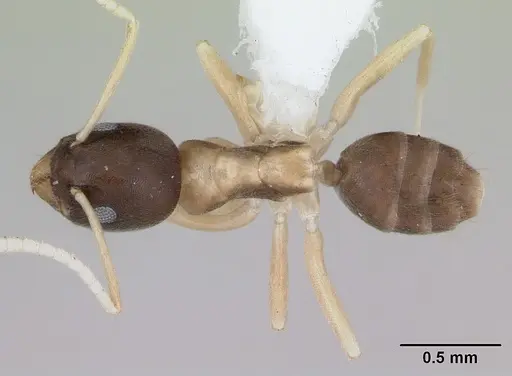
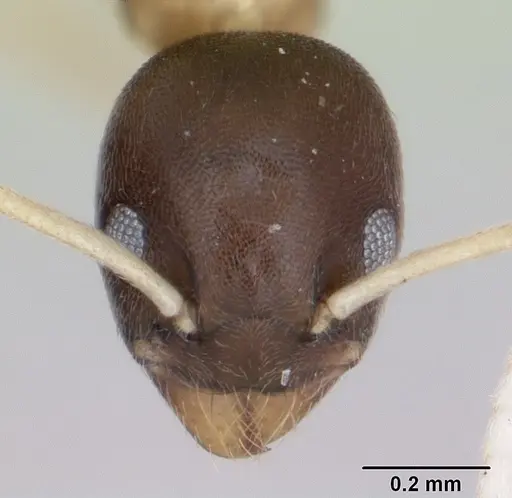
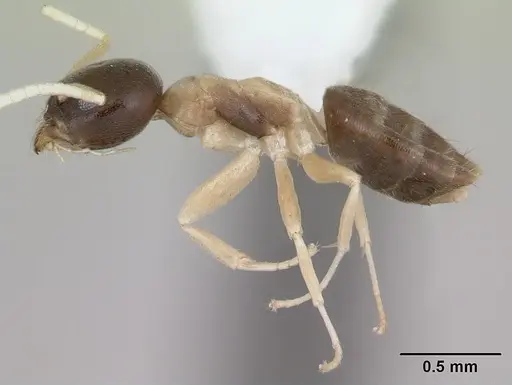
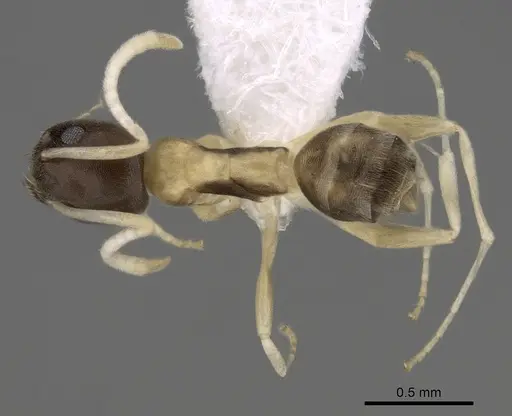
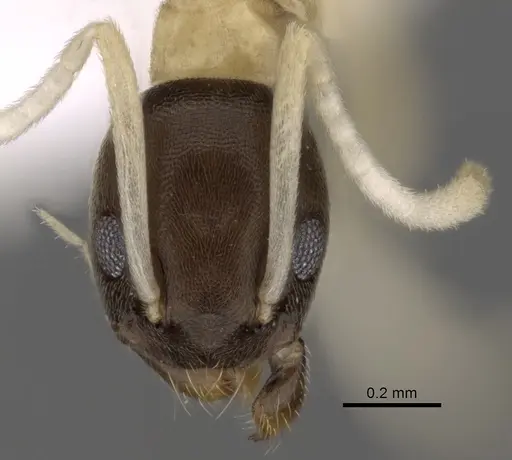
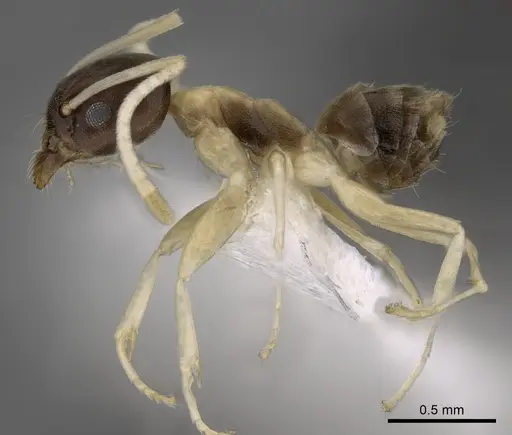
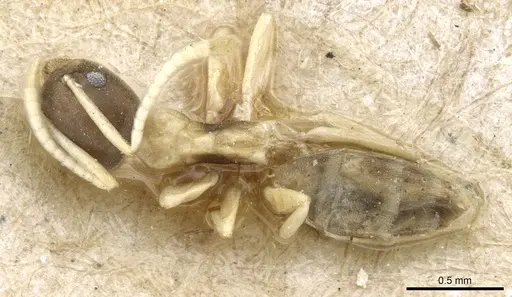
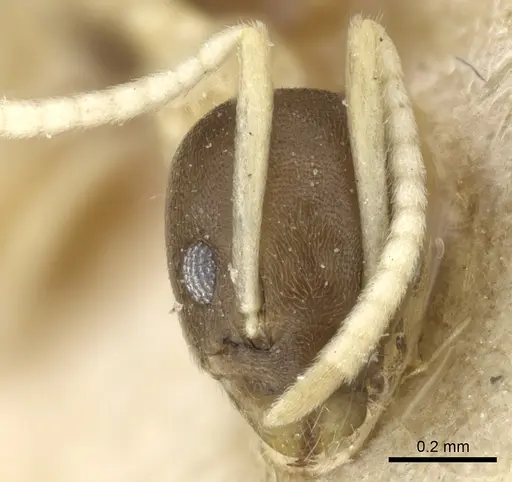
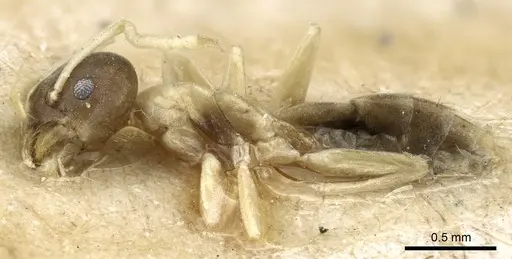
Tapinoma atriceps is a small, bicolored arboreal ant native to the Atlantic Forest biome of southeastern South America. Workers have a distinct color pattern: the head and gaster are medium brown while the antennae, mesosoma, legs, and petiole are pale whitish-yellow, with a brown spot on the mesopleuron. Their scapes (first antennal segments) are long, extending well beyond the back of the head . These ants live in trees and shrubs rather than on the ground - they nest in hollow cavities of vegetation and dry hanging branches, often in plants like bamboo, melastomes, pepper plants, and nettles . Colonies are polygynous (multiple queens), with up to four dealate queens found in some nests . They can grow to over 300 workers, and their most striking trait is extreme speed - workers are so agile they are barely capturable even with an aspirator .
Quick Summary
- Difficulty: Medium
- Origin & Habitat: Atlantic Forest biome of southeastern South America: Argentina (Misiones), Brazil (Mato Grosso do Sul, Minas Gerais, Paraná, Rio de Janeiro, Rio Grande do Sul, Santa Catarina, São Paulo), and Paraguay (Canindeyú) [1][2][4]. Found from the understory layer to the canopy, rarely on the ground [1].
- Colony Type: Polygynous, multiple queens coexist in the same nest (up to four documented). Workers number over 312 in established colonies [1][2].
- Size & Growth:
- Queen: Approximately 3-4 mm total length (inferred from genus patterns, head length about 0.7 mm) [1]
- Worker: Approximately 2-3 mm total length (inferred from genus patterns, head length 0.52-0.64 mm) [1]
- Colony: Over 312 workers documented [1]
- Growth: Moderate
- Development: Unknown, estimated 6-10 weeks based on related tropical Dolichoderinae (No specific development data for this species, estimate based on genus-level patterns.)
- Antkeeping:
- Temperature: Keep at 24-28°C, these are tropical ants from the Atlantic Forest that need warm, stable conditions. Avoid drops below 20°C
- Humidity: Provide a humidity gradient: keep the nest substrate moist but not waterlogged. Good ventilation is important. Avoid dry conditions as they come from a humid forest environment
- Diapause: No, as a tropical species, they do not require hibernation. Keep warm year-round
- Nesting: Arboreal specialists, they nest in hollow plant stems, bamboo sections, and twigs. In captivity, use Y‑tong (AAC) or 3D‑printed nests with narrow, vertical chambers. Avoid horizontal soil setups. Connect the nest to a foraging area with vertical elements like leaves or twigs [1][3]
- Behavior: Workers move extremely fast and are among the quickest ants you will encounter, very challenging to handle [3]. As a Dolichoderinae, they lack a stinger but release chemical defenses from their anal gland (smear defense). Forage actively on leaves and stems near the nest for small prey and honeydew [1]. Their tiny size and speed make escape prevention critical, they can fit through very small gaps.
- Common Issues: escape prevention is critical due to tiny size and extreme speed, use fine mesh (≤0.5 mm) and tight seals, tropical requirements mean consistent warmth year-round, cold temperatures can kill the colony, arboreal nesting preferences require vertical nest structures, not horizontal setups, extreme agility makes handling during transfers or feeding very difficult, limited captive breeding experience, expect a learning curve and adapt quickly
Housing and Nest Setup
Tapinoma atriceps is arboreal, so your setup should reflect their natural preference for vertical, enclosed spaces. In the wild, they nest in hollow cavities of vegetation, like bamboo stems, dry twigs, and abandoned galls [1][3]. For captivity, Y‑tong (AAC) nests work well because they provide smooth walls that these tiny ants cannot grip, combined with narrow chambers that mimic natural twig nests. You can also create a naturalistic setup using hollow twigs or stems connected to the outworld. Use a test tube setup for the founding colony, then move them to a proper nest once they reach around 50 workers. Escape prevention is critical: apply Fluon to all barrier surfaces, use fine mesh (0.5 mm or tighter) on ventilation holes, and make sure all lids fit tightly [3].
Feeding and Diet
Like other Dolichoderinae, Tapinoma atriceps is omnivorous. In the wild, workers hunt small insects and tend honeydew‑producing insects like aphids and scale insects on nearby plants [1]. In captivity, offer a varied diet: small live prey such as fruit flies, springtails, and pinhead crickets for protein, and honey water or sugar water for carbohydrates. Because they are arboreal and forage on leaves, place food on vertical surfaces (like stems or leaves in the outworld) to encourage natural foraging. Feed small amounts every 2-3 days and remove uneaten prey to prevent mold. Their fast metabolism means they need regular feeding, but avoid overfeeding to keep the nest clean.
Temperature and Seasonal Care
As a tropical species from the Atlantic Forest, Tapinoma atriceps needs consistently warm temperatures year‑round. Aim for 24-28°C in the nest area, this supports brood development and keeps the colony active. Use a heating cable or mat on one side of the nest to create a gentle gradient, but always provide an unheated area where the ants can retreat if they get too warm. Room temperature (20-24°C) may be acceptable, but colonies will be more active and grow faster in the warmer range. Do not let temperatures drop below 20°C for extended periods, this species has no cold tolerance. They do not hibernate, so maintain these conditions throughout the year. Watch for signs of stress, such as workers clustering in the coolest area or reduced foraging, and adjust accordingly. [1][2]
Handling and Colony Maintenance
Warning: these ants are extraordinarily fast and difficult to handle. Workers move so quickly that even with an aspirator they are hard to catch [3]. When working with this species, use patience. For nest transfers, connect the old and new enclosures and let the ants relocate on their own rather than forcing them. If you need to handle them directly, work in a small, confined space (like a plastic tub) and move slowly to avoid startling them. For colony splits or queen isolation, have everything ready in advance because chasing tiny, hyper‑fast ants is frustrating. Use smooth containers (glass or acrylic) that they cannot easily grip, and apply barrier compounds like Fluon on the walls to prevent escapes during maintenance. When feeding, place prey directly on the nest entrance or on elevated surfaces to encourage natural arboreal foraging. Their polygynous nature means you may find multiple queens in an established colony, this is normal and they usually coexist peacefully.
Frequently Asked Questions
How long does it take for Tapinoma atriceps to produce first workers?
Estimated 6-10 weeks from egg to worker at optimal temperature (24-28°C). This is based on typical development times for related tropical Dolichoderinae, as no specific data is available for this species.
Can I keep multiple Tapinoma atriceps queens together?
Yes, this species is naturally polygynous. Wild colonies have been found with up to four dealate (wingless) queens working together [1]. Unlike some species where queens fight, Tapinoma atriceps queens coexist peacefully.
Are Tapinoma atriceps good for beginners?
No, this species is best suited for intermediate to experienced antkeepers. Their tiny size, exceptional speed, arboreal nesting needs, and lack of available captive‑breeding information make them challenging. Escape prevention is especially difficult due to their agility [3].
What do Tapinoma atriceps eat?
They are omnivorous. Offer small live prey (fruit flies, springtails, tiny crickets) for protein and honey water or sugar water for carbohydrates. In the wild they naturally forage for honeydew, so sweet liquids are readily accepted [1].
How big do Tapinoma atriceps colonies get?
Documented colonies have over 300 workers [1]. As a polygynous species with multiple queens, colonies can likely grow larger over time, though the exact maximum size is not well known.
Do Tapinoma atriceps need hibernation?
No, as a tropical species from the Atlantic Forest, they do not require hibernation or diapause. Keep them warm year‑round at 24-28°C.
Why are my Tapinoma atriceps escaping?
They are extremely fast and tiny, workers are barely capturable even with an aspirator [3]. Use excellent escape prevention: apply Fluon to all surfaces, use fine mesh (0.5 mm or tighter), and ensure all lids fit tightly. Smooth surfaces like glass or acrylic help because the ants cannot grip them as easily.
What is the best nest type for Tapinoma atriceps?
Y‑tong (AAC) nests work well because they provide smooth walls and narrow chambers that mimic natural twig‑nesting habitat. 3D‑printed nests with vertical, stem‑like passages are also suitable. Avoid horizontal, soil‑based setups, these arboreal ants prefer elevated, enclosed spaces [1][3].
Report an Issue
The current care sheet is based fully on literature. See inconsistencies, or something that's incorrect? Please , it will be resolved after review from an admin. Contributing to the blogs tab also helps providing information, to make us be able to further improve the caresheets. Thank you for your support!
References

This caresheet is licensed under CC BY-SA 4.0 .
Community Blogs
Literature
Loading distribution map...Loading products...