
Tanipone subpilosa
- Sci. Name
- Tanipone subpilosa
- Subfamily
- Dorylinae
- Author
- Bolton & Fisher, 2012
- Distribution
- Found in 1 countries
Introduction
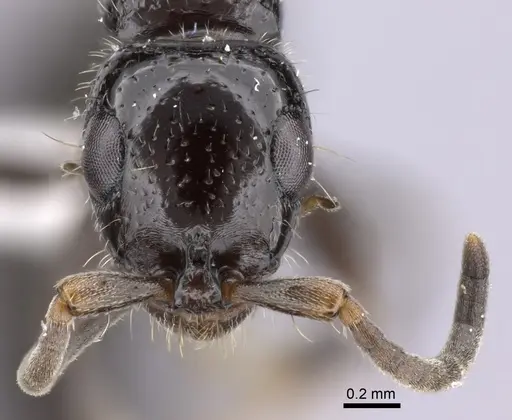
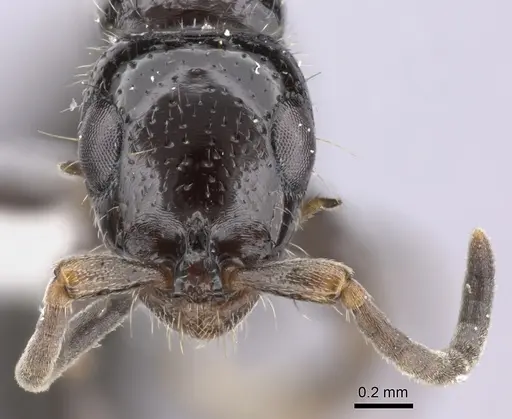
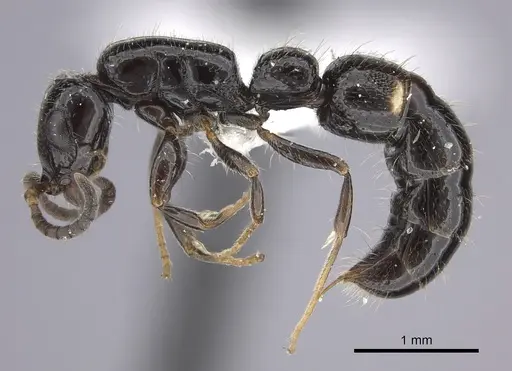
Tanipone subpilosa is a tiny ant species from Madagascar, described in 2012. It belongs to the Dorylinae subfamily, but unlike the famous army ants, this genus is not nomadic. Workers are the smallest and most lightly sculptured members of the Tanipone hirsuta species group, with relatively large eyes and sparse body hairs . They are known only from tropical dry forests in northern Madagascar, where they forage on low vegetation and on the ground at elevations between 60 and 180 meters . Very little else is known about their biology or captive care. As a rare and poorly documented species, it is only suitable for highly experienced keepers interested in obscure Malagasy fauna.
Quick Summary
- Difficulty: Expert
- Origin & Habitat: Northern Madagascar (Antsiranana Province) in tropical dry forest at 60-180 m elevation [1]
- Colony Type: Unconfirmed, no data available on colony structure or queen number
- Size & Growth:
- Queen: Unknown, queens have not been described
- Worker: Size data unavailable, no total length measurements exist in the literature. Head measurements indicate a very small ant (head length 0.65-0.79 mm) [1]
- Colony: Unknown, no colony size data available
- Growth: Unknown, no development data available
- Development: Unconfirmed, no direct data exists. This is a tropical species, so development likely takes several weeks at warm temperatures, but this is purely an estimate. (Development timeline is unknown. No captive breeding records exist.)
- Antkeeping:
- Temperature: Unknown, no specific data. As a tropical dry forest species, keep warm year‑round (estimated 24-28°C). Use a heating cable on one side of the nest to create a gradient if room temperature is lower. Avoid sudden drops below 22°C.
- Humidity: Unknown, the species occurs in tropical dry forest, which is seasonally moist. Provide a humidity gradient: keep the nest substrate slightly damp in one area and drier in another, allowing the ants to choose. Avoid waterlogging.
- Diapause: No, likely not required. Maintain warm conditions throughout the year.
- Nesting: Unknown, no nest site data. Based on their small size and ground‑foraging habits, provide a small nest with tight chambers (e.g. Y‑tong/ AAC, plaster, or a test tube setup). Use fine‑mesh ventilation (≤0.5 mm) to prevent escapes.
- Behavior: Very little known. The species is believed to be predatory (common in Dorylinae), but diet preferences are unconfirmed. Workers are tiny and can squeeze through very small gaps. Excellent escape prevention is critical. Their sting is negligible to humans.
- Common Issues: tiny size makes escape prevention extremely challenging, use fine mesh and barriers, no captive breeding data exists, establishing a colony may be nearly impossible, natural diet is unknown, if they are strictly predatory, a constant supply of live micro‑prey is needed, tropical dry forest species may be sensitive to both drought and constant wetness, extremely rare in the hobby, nearly unobtainable
Species Overview and Identification
Tanipone subpilosa was described by Bolton and Fisher in 2012 from northern Madagascar [1]. It is the smallest member of the Tanipone hirsuta group and is recognized by its fine, diffuse body sculpturing and sparse bristles. Workers have a uniformly brown to blackish‑brown body with a pale band on the third abdominal segment (AIII) [1]. The eyes are relatively large compared to related species. Only the worker caste has been described, queens and males are unknown. All type specimens were collected in tropical dry forest by beating low vegetation or on the ground [1].
Captive Care and Housing
Because Tanipone subpilosa is virtually unknown in captivity, all care recommendations are educated guesses. The species’ tiny size (head length
Feeding and Diet
No direct observations of feeding have been published. As a member of the Dorylinae, which are overwhelmingly predatory, Tanipone subpilosa is assumed to hunt small arthropods. In captivity, offer tiny live prey such as springtails, fruit flies, or pinhead crickets. You may also try small pieces of insect (e.g., mosquito larvae) but live prey seems more likely to be accepted. Sugar water is probably not needed but can be offered as a test. There are no reports of successful feeding in captivity, adjust based on colony response.
Behavior and Ecology
Virtually nothing is documented about the behavior of Tanipone subpilosa. Field notes (from AntWiki) indicate that workers are active on low vegetation and on the ground in tropical dry forest, suggesting they are diurnal or crepuscular foragers. They probably use their sting to subdue prey, but it is too weak to affect humans. Because of the extreme lack of knowledge, any attempt to keep this species should be treated as an experimental project rather than a standard care regimen. [1]
Frequently Asked Questions
How long does it take for Tanipone subpilosa to raise their first workers?
Unknown, no data exists. If you obtain a founding queen, development likely takes several weeks at warm temperatures, but this is purely speculative.
Can I keep Tanipone subpilosa in a test tube setup?
A test tube can work as a temporary nest, but be absolutely certain that the cotton plug is tight and that the tube has no gaps. Even a tiny opening will allow these ants to escape. For a growing colony, a small Y‑tong or plaster nest with narrow chambers is better.
What do Tanipone subpilosa ants eat?
The natural diet is unconfirmed. Based on the subfamily, they are probably predators of tiny arthropods. Offer springtails, fruit flies, and other small live prey. Accepting protein and rejecting sugar is likely.
Do Tanipone subpilosa ants sting?
Yes, Dorylinae ants have functional stingers. However, given the tiny worker size, the sting would be negligible to humans.
Are Tanipone subpilosa good for beginners?
No. This species is extremely rare, poorly documented, and likely very difficult to keep. Their tiny size also makes escape prevention a major challenge. Only experienced keepers with a strong interest in obscure species should consider them.
Do Tanipone subpilosa need hibernation?
No, they come from a tropical climate and should be kept warm all year. Do not try to induce diapause.
How big do Tanipone subpilosa colonies get?
Unknown. No colony size data exists. Given the tiny worker size, the colony is probably modest in number, but this is speculation.
Can I keep multiple Tanipone subpilosa queens together?
There is no information on colony structure. Assuming they are monogyne (single‑queen) is risky. Do not house multiple queens together without evidence that they tolerate each other.
Why are my Tanipone subpilosa dying?
Common causes for a species with unknown needs: temperature too low, humidity too extreme (too dry or too wet), lack of suitable prey, stress from disturbance, or escape. Provide warmth, a moisture gradient, tiny live prey, and minimal disturbance. Also check that they haven’t escaped, tiny ants are easily lost.
Where can I get Tanipone subpilosa ants?
They are virtually unavailable in the ant‑keeping hobby. Your best bet is to contact myrmecologists working in Madagascar or specialized research collections. Import restrictions may apply.
Report an Issue
The current care sheet is based fully on literature. See inconsistencies, or something that's incorrect? Please , it will be resolved after review from an admin. Contributing to the blogs tab also helps providing information, to make us be able to further improve the caresheets. Thank you for your support!
References

This caresheet is licensed under CC BY-SA 4.0 .
Community Blogs
CASENT0110527
View on AntWeb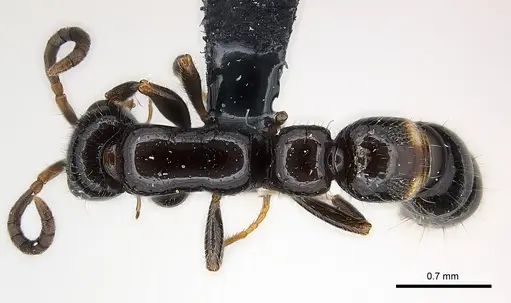
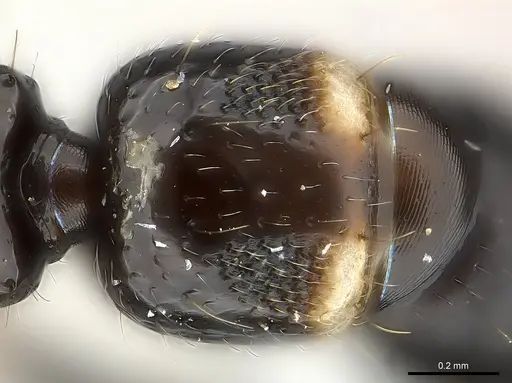
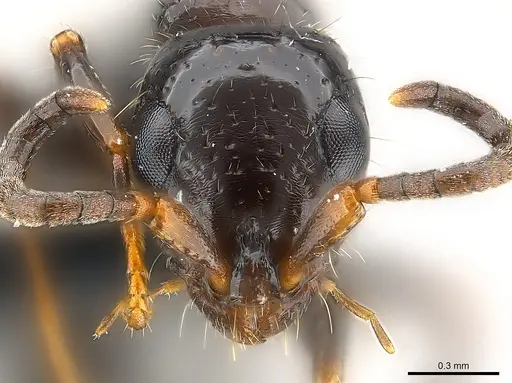
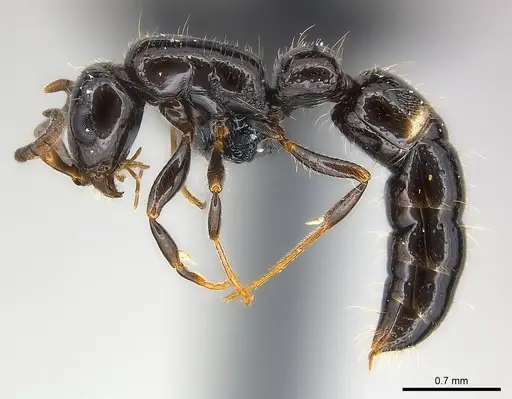
CASENT0410477
View on AntWeb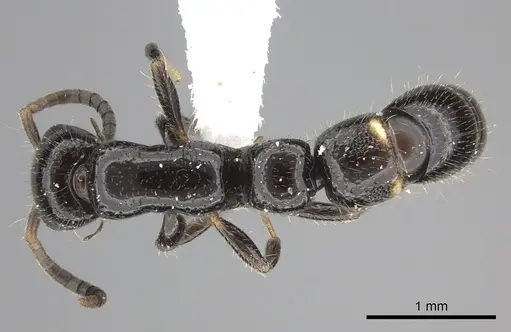
Literature
Loading distribution map...Loading products...