
Syscia typhla
- Sci. Name
- Syscia typhla
- Subfamily
- Dorylinae
- Author
- Roger, 1861
- Distribution
- Found in 2 countries
Introduction
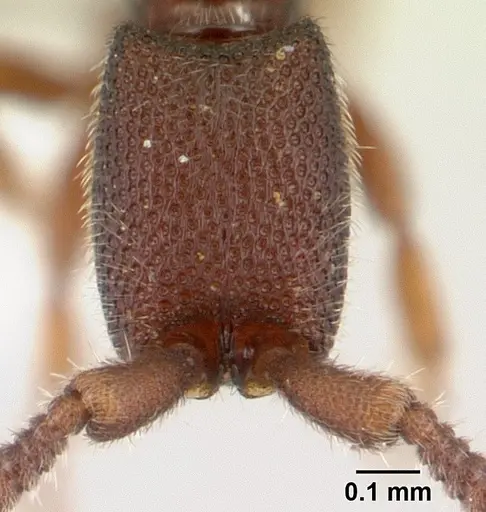
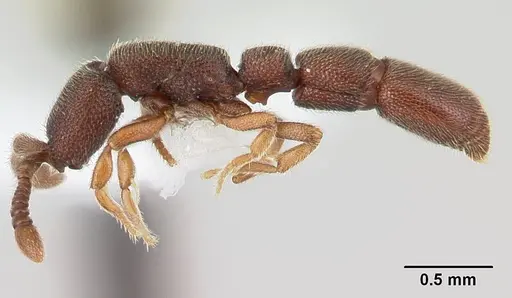
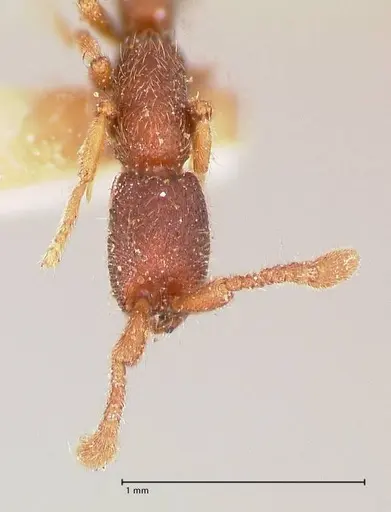
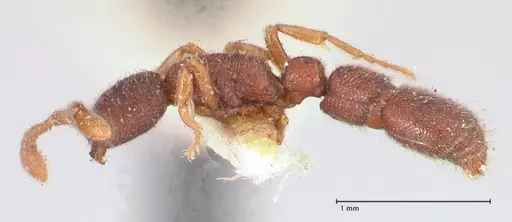
Syscia typhla is a tiny predatory ant from the Dorylinae subfamily, which includes army ants and their relatives. Workers measure just 2.75 mm in total length, with 9-segmented antennae, a dark reddish-brown body, and very small eyes, a clue to their underground lifestyle . This species is native to Sri Lanka and West Bengal, India, where it lives in lowland wet forests and both wet and dry zones. It is a soil-dwelling ant, usually collected by sifting soil, and relies on primary forest habitat, it does not survive in secondary forest or plantations . Syscia typhla is listed as Critically Endangered in Sri Lanka due to habitat loss, so any captive colonies must be handled with extreme care and never released outside their native range .
Quick Summary
- Difficulty: Hard
- Origin & Habitat: Native to Sri Lanka and West Bengal, India. Found in lowland wet forests and both wet and dry zones. A primary forest specialist that disappears from secondary forest and rubber plantations [6][5][10].
- Colony Type: Colony structure is unconfirmed. As a Dorylinae species, it likely forms small colonies typical of the subfamily.
- Size & Growth:
- Queen: Not documented in available literature
- Worker: 2.75 mm [1]
- Colony: Unknown, likely under 100 workers based on related Syscia species
- Growth: Unknown
- Development: Unconfirmed, no direct data. Based on related Dorylinae and tropical conditions, estimated 4-8 weeks at 24-28°C (Development timeline is estimated. Related Dorylinae in the tropics develop relatively quickly, but this is not confirmed for S. typhla.)
- Antkeeping:
- Temperature: Keep at 24-28°C, this species comes from tropical Sri Lanka with consistently warm conditions [10]. Provide a gentle gradient so workers can self-regulate.
- Humidity: High humidity required. They live in lowland wet forests, so keep the substrate consistently moist but not waterlogged [7][8]. Use a water reservoir or light misting, and ensure good ventilation to prevent mold.
- Diapause: Unlikely, Sri Lanka has no true winter. A slight drop in temperature during cooler months may be beneficial, but full diapause is probably not needed.
- Nesting: Ground-dwelling species that nests in soil. Use a naturalistic setup with moist substrate, or a plaster, Y-tong (AAC), or 3D-printed nest with good moisture retention. Avoid large open spaces, they prefer tight, enclosed spaces scaled to their tiny 2.75 mm size.
- Behavior: This ant is a predator, likely hunting small invertebrates in the soil. Its tiny eyes suggest it uses chemical cues and vibrations rather than vision to find prey [3][11]. Workers are very small (2.75 mm), so escape prevention is critical, use mesh with openings 0.5 mm or smaller. They are probably shy and not aggressive, focusing on hunting micro-prey rather than defending a large territory. Given their Critically Endangered status [9], any captive colonies must be handled with extreme caution.
- Common Issues: tiny size means escapes are likely without fine mesh (0.5 mm or smaller), critically endangered, wild collection should be avoided, source from breeders if available, no captive breeding data, first workers may take longer than expected, high humidity needs can lead to mold if ventilation is poor, prey acceptance is unknown, may require live micro-prey like springtails and fruit fly larvae
Housing and Nest Setup
Syscia typhla is a tiny ground-dwelling ant only 2.75 mm long [1][2]. A naturalistic setup with moist substrate works best. Use a plaster, Y-tong (AAC), or 3D-printed nest instead of any acrylic nest, these ants need good moisture retention. The substrate should be about 2-3 cm deep so they can dig their own chambers. For the outworld, keep it small, they don't need much space. Escape prevention is vital: use fine mesh with openings 0.5 mm or smaller, because these tiny ants can squeeze through almost any gap. Avoid large open areas, they feel safer in tight, enclosed spaces typical of their subterranean lifestyle [4].
Feeding and Diet
As a Dorylinae ant, Syscia typhla is most likely a predator of small soil invertebrates [12][3][11]. In captivity, offer tiny live prey such as springtails, fruit fly larvae, and other micro-arthropods. Because they have small eyes, they probably rely on chemical trails and vibrations to find their prey, not vision. Sugar sources are not their natural food, you can offer a drop of honey water occasionally, but don't expect them to take it. The most important thing is to provide appropriately sized live prey. Start with springtails and increase prey size only as the colony grows.
Temperature and Humidity
Keep the temperature in the 24-28°C range. This species comes from tropical Sri Lanka, where conditions are warm year-round [10]. A small temperature gradient in the nest allows workers to self-regulate. Humidity must be high, they live in lowland wet forests, so the substrate should feel consistently moist but never waterlogged [7][8]. You can use a water reservoir or light misting to raise humidity, but make sure ventilation is good to prevent mold. A hygrometer will help you track conditions: aim for 70-80% relative humidity in the nest area.
Handling and Colony Care
Syscia typhla is Critically Endangered in Sri Lanka due to habitat loss [9]. If you keep this species, treat the colony with extreme care. Avoid collecting wild queens, source from a licensed breeder if possible. Because the workers are so tiny, be very careful when moving them, the slightest gap can cause escapes. Never release any specimens outside their native range (Sri Lanka and West Bengal, India). Monitor your colony for signs of stress: workers dying outside the nest, refusing to eat, or unusual lethargy. Slow growth is normal, so don't overfeed trying to speed things up.
Growth and Development
No specific development timeline is documented for this species. Based on related Dorylinae and other tropical ants, you can expect 4-8 weeks from egg to first worker at optimal temperature (24-28°C). The first workers (nanitics) will probably be even smaller than mature workers. Growth rate is unknown but likely slow to moderate. Be patient, small colonies take time to establish. Try not to disturb the queen during founding, as stress can cause her to abandon the brood. Once nanitics emerge, the colony can gradually handle larger prey items.
Frequently Asked Questions
How long does it take for Syscia typhla to raise first workers?
The exact timeline is unconfirmed, but based on related Dorylinae species and tropical conditions, expect 4-8 weeks from egg to first worker at 24-28°C.
Can I keep Syscia typhla in a test tube setup?
A test tube can work for founding, but because of their high humidity needs and tiny size, a naturalistic setup with moist substrate is often better. If using a test tube, make sure the water reservoir is properly sized and use fine mesh (0.5 mm) to prevent escapes.
What do Syscia typhla ants eat?
They are likely predators. Offer live micro-prey like springtails and fruit fly larvae. Sugar sources may or may not be accepted, offer occasionally but don't rely on them [12].
Are Syscia typhla ants good for beginners?
No. This species is difficult to keep: it is Critically Endangered [9], requires high humidity, has unknown dietary preferences, and its tiny size makes escape prevention challenging. It is not recommended for beginners.
Do Syscia typhla ants need hibernation?
Probably not. They come from tropical Sri Lanka which has no real winter. A slight temperature drop during cooler months may be beneficial, but full diapause is likely unnecessary [10].
How big do Syscia typhla colonies get?
Colony size is unconfirmed, but based on related Syscia species and typical Dorylinae patterns, colonies likely stay under 100 workers. They are not large-colony builders.
Why are my Syscia typhla dying?
Common causes include: incorrect humidity (too dry or waterlogged), temperature stress, refusal to accept offered prey, escape through tiny gaps, and stress from disturbance. Review your setup and make sure it matches their native lowland wet forest habitat [7][8].
When should I move Syscia typhla to a formicarium?
Wait until the colony has at least 20-30 workers and is actively foraging. Moving too early can stress the colony. A small plaster or soil nest with good moisture retention works well for this ground-dwelling species.
Report an Issue
The current care sheet is based fully on literature. See inconsistencies, or something that's incorrect? Please , it will be resolved after review from an admin. Contributing to the blogs tab also helps providing information, to make us be able to further improve the caresheets. Thank you for your support!
References

This caresheet is licensed under CC BY-SA 4.0 .
Community Blogs
CASENT0106214
View on AntWeb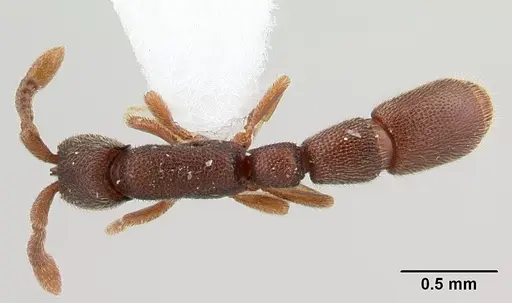
FOCOL0804
View on AntWeb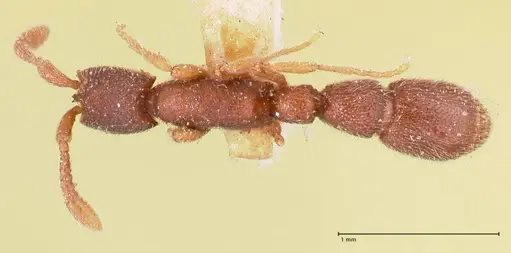
Literature
Loading distribution map...Loading products...