
Syscia quisquilis
- Sci. Name
- Syscia quisquilis
- Subfamily
- Dorylinae
- Author
- Longino & Branstetter, 2021
- Distribution
- Found in 1 countries
Introduction
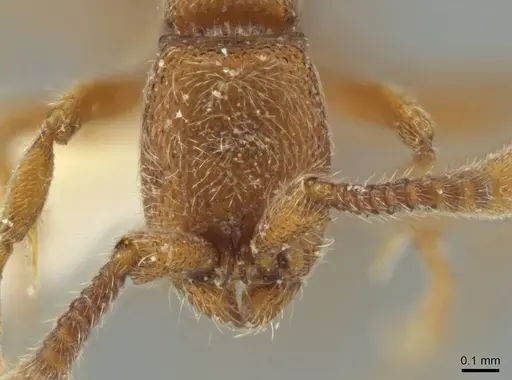
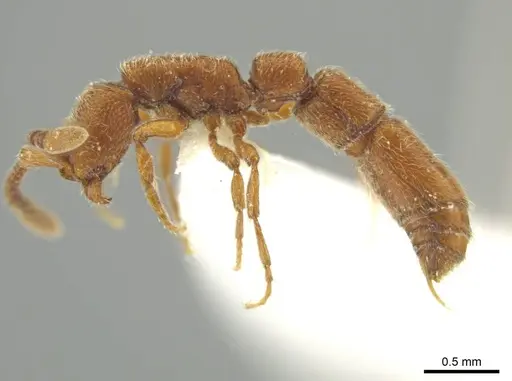
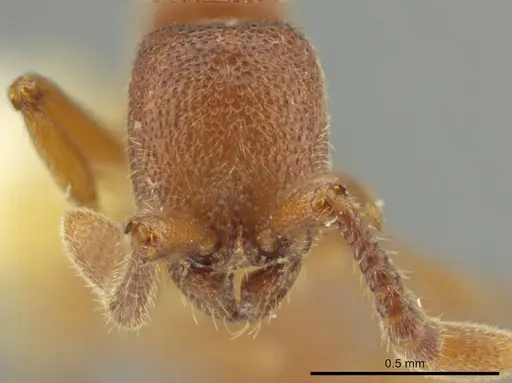
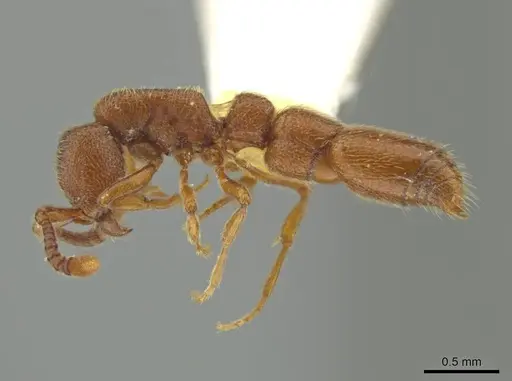
Syscia quisquilis is a small army ant (subfamily Dorylinae) native to the southwestern United States, found in California and Arizona . Worker body size is undocumented but the species is very small, with a light brown coloration and short, fine body hairs . This ant was only formally described in 2021,making it one of the newest recognized ant species in North America . It lives a largely subterranean lifestyle in chaparral (dry scrubland) and riparian woodland habitats near water . One of the most unusual things about this species is its association with the army ant Neivamyrmex californicus, the type specimens were collected from a column of that species, and it has also been found in middens of Forelius ants . This suggests complex interactions with other ant species, though the exact nature of the relationship is unknown.
Quick Summary
- Difficulty: Expert
- Origin & Habitat: United States (California, Arizona) in subtropical/temperate chaparral and riparian woodland at approximately 1000m elevation [1][2].
- Colony Type: Unknown, no colony structure data has been published for this species [1].
- Size & Growth:
- Queen: Undescribed, no queen specimens have ever been collected or documented [1].
- Worker: Size data unavailable, no complete body length (total length) measurements have been published for this species [1].
- Colony: Unknown, no colony size data exists [1].
- Growth: Unknown, no development or growth data available [1].
- Development: Unknown, no development data exists for this species. Any estimate is purely speculative [1]. (No direct measurements exist. Related Dorylinae army ants often have rapid development, but specific timelines for Syscia are unconfirmed.)
- Antkeeping:
- Temperature: Inferred from habitat: chaparral environments at 1000m elevation experience moderate temperatures. Start around 22-25°C and observe colony activity. Provide a temperature gradient [1].
- Humidity: Keep nest substrate lightly but not wet, allowing some drying between waterings. Chaparral soils are relatively dry but underground conditions retain some moisture [1].
- Diapause: Unknown, no data on overwintering requirements [1].
- Nesting: Presumably subterranean, provide deep soil-based nests (Y-tong, plaster, or naturalistic formicaria with 5-10cm of soil depth). Avoid shallow or dry setups. Use fine mesh on ventilation to prevent escapes [1].
- Behavior: As a Dorylinae, this species is predatory on small invertebrates [1]. Workers have been found associated with columns of the army ant Neivamyrmex californicus, suggesting possible raiding or following behavior [1]. Subterranean lifestyle means they likely avoid light and may be sensitive to disturbance. Escape risk is high due to their tiny size, they can squeeze through very small gaps, so use fine mesh on all openings. Temperament is unknown but they are not known to have a painful sting, they may bite defensively [1].
- Common Issues: no documented captive care exists, this species has zero established husbandry protocols, predatory feeding requirements may be challenging, Dorylinae typically need live prey like micro-arthropods, extreme difficulty in obtaining colonies, only a handful of specimens have ever been collected, subterranean lifestyle makes them hard to observe and may stress colonies in shallow setups, no information on queen founding or colony structure, unknown if claustral or semi-claustral
Discovery and Taxonomy
Syscia quisquilis was only formally described in 2021 by Longino and Branstetter through genetic analysis of UCE (ultraconserved elements) phylogenomics [1]. Before this work, these ants were not recognized as a distinct species. The type specimens were collected in 1974 from a column of Neivamyrmex californicus army ants in Cleveland National Forest, California, this association with another army ant species is notable and may indicate raiding behavior or simple habitat overlap [1]. The species shows slight variation between Arizona and California populations, with Arizona specimens having a more visible occipital carina (a ridge on the back of the head) [1]. This is a rarely encountered species, only a handful of specimens have ever been collected, mostly from ant middens (discarded debris from other ant colonies) in chaparral habitats [1].
Habitat and Natural History
This species lives in chaparral and riparian woodland habitats of the American Southwest [1]. Chaparral is a Mediterranean-type ecosystem characterized by dense, evergreen scrub vegetation on dry hillsides at around 1000m elevation [1]. Being subterranean, they nest underground and hunt through soil and leaf litter [1]. Their association with Neivamyrmex californicus columns is intriguing, Neivamyrmex is a well-known army ant genus that conducts massive raids. Whether Syscia participates in these raids, follows them to scavenge, or simply shares similar habitat preferences is unknown [1]. The two collections from Forelius ant middens suggest they may scavenge from other ant colonies [1].
Predatory Behavior and Feeding
As a Dorylinae, Syscia quisquilis is likely predatory on small invertebrates [1]. Many Dorylinae army ants are known for raiding behavior, but it is unclear if Syscia forms raiding columns like its relatives. Based on their tiny size, their prey would need to be very small, think springtails, fruit fly larvae, booklice, and other micro-arthropods [1]. In captivity you would need to provide live prey regularly. Sugar sources may be accepted but are not a primary food source for predatory Dorylinae [1].
Housing and Captive Care
Since no captive husbandry exists for this species, care recommendations are based on inference from related Dorylinae and their natural habitat [1]. A deep, soil-based setup is essential, these ants need space to create chambers and foraging tunnels. A naturalistic formicarium with 5-10cm of soil depth would be appropriate, or a test tube setup with dirt fill for founding [1]. Keep the substrate lightly moist, chaparral soils dry out between rain events but never become truly arid underground. Provide a temperature gradient around 22-27°C with a cooler side. Because they are subterranean, minimize light exposure and disturbance [1]. Escape prevention is critical due to their tiny size, use fine mesh on any ventilation and ensure all gaps are sealed.
Challenges and Expert-Level Notes
This species is absolutely not recommended for beginners or even intermediate antkeepers. The complete lack of documented captive care means you would be pioneering husbandry entirely from scratch with no established protocols to follow [1]. The extreme difficulty in obtaining colonies (only a handful of specimens ever collected) means this species is essentially unavailable to hobbyists [1]. If you somehow obtained a colony, you would need to be prepared for experimental care and detailed record-keeping. The predatory, subterranean lifestyle presents ongoing challenges for feeding and housing. This species would only be appropriate for advanced antkeepers with experience in raising difficult, predatory species [1].
Frequently Asked Questions
Is Syscia quisquilis available for purchase?
No, this species is not currently available in the antkeeping hobby. It was only described in 2021 and only a handful of specimens have ever been collected in the wild. No dealers offer this species for sale [1].
How do I care for Syscia quisquilis ants?
No captive care protocols exist, this is an entirely new species with zero documented husbandry. Based on related Dorylinae, provide a deep soil setup, keep at 22-25°C, maintain lightly moist substrate, and feed live micro-prey like springtails. This species is not recommended for anyone but expert antkeepers with experimental experience [1].
What do Syscia quisquilis eat?
As a Dorylinae, they are likely predatory on small invertebrates. Based on their tiny size, they probably hunt springtails, micro-arthropods, and other small insects in soil and leaf litter. In captivity, you would need to provide live prey, probably fruit flies, springtails, and similar tiny live foods [1].
Where does Syscia quisquilis live?
This species is native to the southwestern United States, specifically California and Arizona. They live in chaparral (dry scrubland) and riparian woodland habitats at around 1000m elevation. They are subterranean, living underground [1].
How big do Syscia quisquilis colonies get?
Unknown, no colony size data exists for this species [1].
What temperature do Syscia quisquilis ants need?
Not definitively known. Based on their chaparral habitat in southern California and Arizona, aim for 22-25°C as a starting point. Provide a temperature gradient so the colony can self-regulate. Arizona populations may tolerate cooler conditions [1].
Do Syscia quisquilis need hibernation?
Unknown, no data exists on their overwintering requirements [1].
How long does it take for Syscia quisquilis to develop from egg to worker?
Unknown, no development data exists for this species [1].
Is Syscia quisquilis a good species for beginners?
No, this species is absolutely not suitable for beginners. It was only described in 2021,has never been kept in captivity, and requires predatory feeding that is extremely difficult to maintain. Only expert antkeepers with experience in experimental husbandry should consider this species, and only if they could obtain a colony [1].
Report an Issue
The current care sheet is based fully on literature. See inconsistencies, or something that's incorrect? Please , it will be resolved after review from an admin. Contributing to the blogs tab also helps providing information, to make us be able to further improve the caresheets. Thank you for your support!
References

This caresheet is licensed under CC BY-SA 4.0 .
Community Blogs
FMNHINS0000095772
View on AntWeb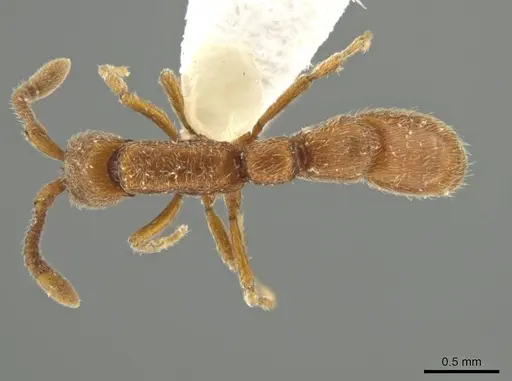
LACMENT365113
View on AntWeb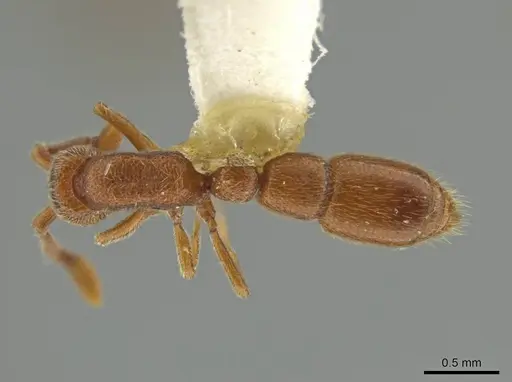
Literature
Loading distribution map...Loading products...