
Syscia pollula
- Sci. Name
- Syscia pollula
- Subfamily
- Dorylinae
- Author
- Longino & Branstetter, 2021
- Distribution
- Found in 3 countries
Introduction
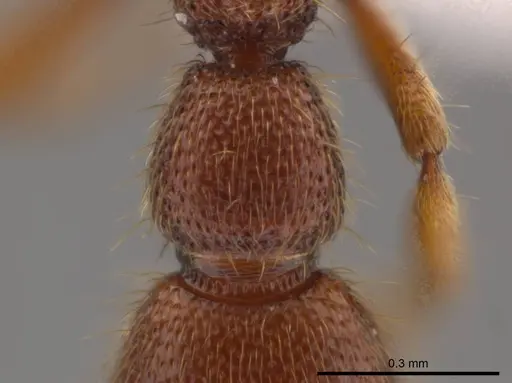
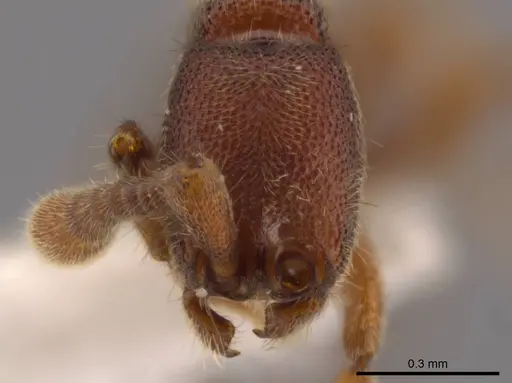
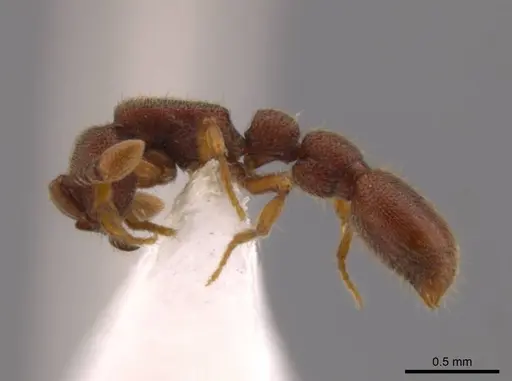
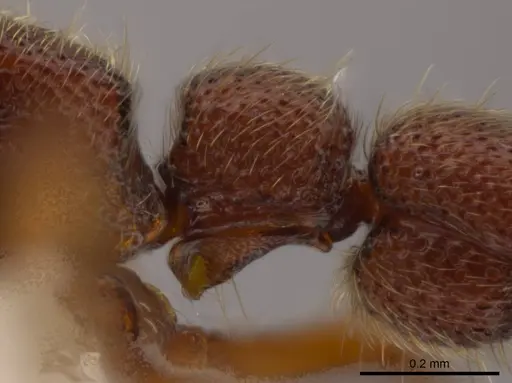
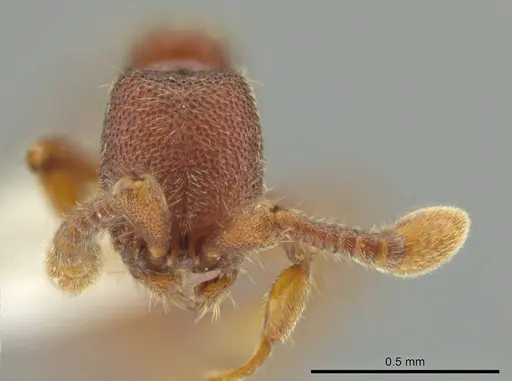
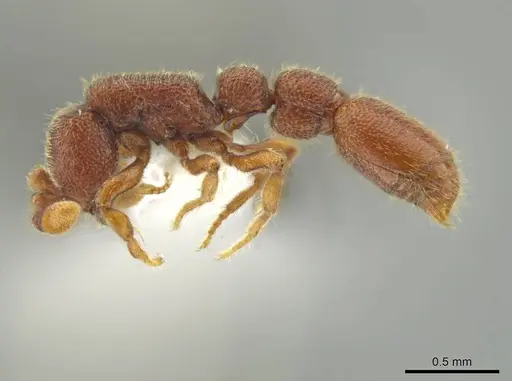
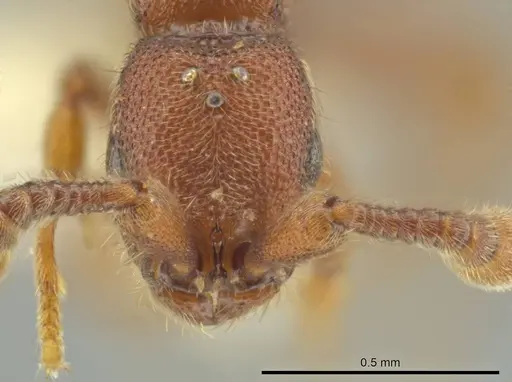
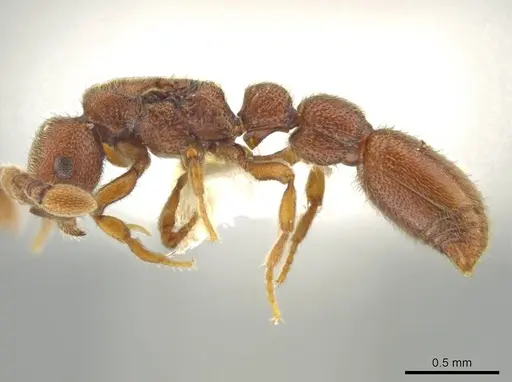
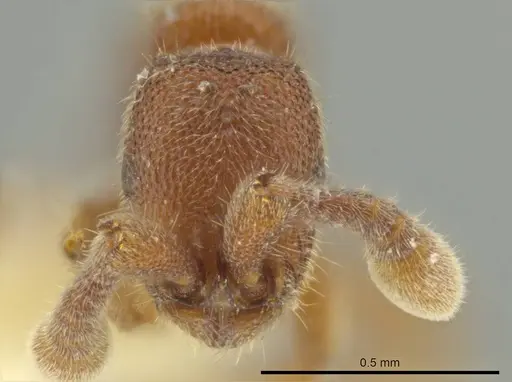
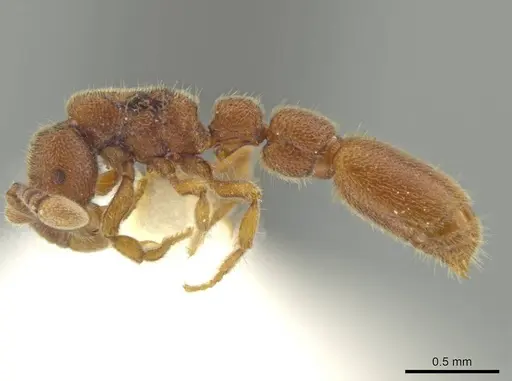
Syscia pollula is a tiny, predatory ant from the army ant subfamily Dorylinae. It is known from wet forests in Nicaragua, Costa Rica, and Panama, living in leaf litter and rotting wood . Workers and queens are extremely small, the source gives head widths and body segment lengths but not total length, so overall size is unmeasured but certainly minute (estimated around 2 mm total) . The species was described in 2021,so almost nothing is documented about its life history or captive care . It likely hunts tiny soil arthropods, springing it into the ranks of specialized micro-predators.
Quick Summary
- Difficulty: Expert
- Origin & Habitat: Nicaragua, Costa Rica, and Panama, wet forest habitats from near sea level to 1500 m elevation, collected from sifted leaf litter and rotting wood [1] [2]
- Colony Type: Unknown, no data on queen number or social structure exists for this species [2]
- Size & Growth:
- Queen: Exact total length not reported. Mesosoma length 0.85 mm, head width 0.45 mm, extremely small [2]. Overall size is inferred to be around 2-3 mm.
- Worker: Exact total length not reported. Mesosoma length 0.67 mm, head width 0.43 mm, among the smallest ants [2]. Inferred total length ~2 mm.
- Colony: Unknown, no direct records. Litter‑dwelling Dorylinae often have modest colonies (up to a few hundred workers) but this is pure speculation for S. pollula.
- Growth: Unknown, no data. An educated guess would be slow to moderate based on small body size and tropical habitat, but this is unconfirmed.
- Development: Unknown, no direct data. If kept at 24-26°C, an estimated 8-12 weeks based on other small tropical Dorylinae, but this is highly speculative. (No published developmental data exist for this species.)
- Antkeeping:
- Temperature: Unknown. Because the ants come from tropical wet forests, a range of 22-26°C is a reasonable starting guess, but no confirmed data exists.
- Humidity: Unknown. The natural habitat (wet forest floor) suggests high humidity (substrate damp but not waterlogged). Again, purely inferred.
- Diapause: No, tropical origin, no winter rest required.
- Nesting: Unknown. Based on collection methods (Winkler/Berlese), they live in leaf litter and rotting wood. A soil‑based setup with fine chambers (Y‑tong or plaster) and ample leaf litter is guessed, but unverified.
- Behavior: Extremely cryptic, rarely seen in the open. Likely not aggressive toward humans. Their tiny size makes escape a constant risk, enclosures must have mesh gaps
- Common Issues: minute size, workers can slip through seemingly impossible gaps (, no established captive care protocols, keepers must experiment, and failures are likely., high humidity needed may cause mold if ventilation is poor., slow or stalled colony growth if diet is not perfectly matched (live micro‑arthropods required)., wild‑caught colonies may carry mites or parasites that are hard to spot at this scale.
Housing and Nest Setup
Because S. pollula is so tiny and lives in leaf litter, a naturalistic setup mimicking a small patch of forest floor is recommended. A Y‑tong or plaster nest with very narrow chambers ( [2]
Feeding and Diet
As a Dorylinae, S. pollula is almost certainly a strict predator of tiny arthropods. Springtails (Collembola) are the most logical staple, they are the right size and abundant in leaf litter. Other potential prey: soil mites, very small beetle larvae, pinhead crickets (cut smaller). Sugar (honey water) is unlikely to be consumed. Feed small amounts daily, removing uneaten prey to prevent mold. No published studies on diet exist [2].
Temperature and Humidity
Without direct data, aim for conditions that match their natural wet forest home: 22-26°C, substrate consistently damp (not wet), and high air humidity. Place a heating cable on one side to create a gradient. Good ventilation is essential to stop mold. Mist the nest sparingly. This is educated guesswork, observe your colony and adjust [2].
Colony Establishment
Starting a colony is a leap into the unknown. If you find a queen (likely from leaf litter samples after rain), place her in a small closed container with moist soil and a tiny water source (e.g., soaked cotton). Disturb as little as possible, she may seal herself off. When nanitics appear (after perhaps 6-10 weeks), offer springtails immediately. Expect slow growth and high mortality. No proven method exists [2].
Behavior and Observation
These ants are extremely reclusive. You'll likely see them only when they hunt or move prey. They are not aggressive and will hide from light. Observing them requires patience, use a bright red light (ants see it poorly) and a macro lens. Their natural behavior in the wild is unknown beyond being collected from litter. Captive conditions may differ dramatically [2].
Frequently Asked Questions
How long does it take for Syscia pollula to produce first workers?
No data exists. Based on other small tropical Dorylinae, expect perhaps 8-12 weeks at 24-26°C, but this is a pure guess.
Can I keep Syscia pollula in a test tube setup?
Possibly, for a founding queen. Use a small tube with a water reservoir and fine mesh cover. But the lack of substrate may stress them, a soil‑based container is probably better. No one has published success [2].
What do Syscia pollula ants eat?
Almost certainly live micro‑arthropods, springtails are the best option. Sugar is unlikely to be accepted. No feeding studies exist [2].
Are Syscia pollula good for beginners?
Absolutely not. They are an expert‑level species: recently described, no care protocols, extremely small (escape risk), and unknown founding behavior. Only experienced keepers who accept high risk of failure should attempt [2].
How big do Syscia pollula colonies get?
Unknown, no wild colonies have been studied. Their tiny size and litter habitat suggest small colonies (maybe
Do Syscia pollula need hibernation?
No, they are tropical, so no diapause. Keep warm all year.
Why are my Syscia pollula escaping?
Their minute size allows them to squeeze through gaps as small as 0.3 mm. Use very fine mesh (insect netting) and seal all seams with fluon or similar. If ant outruns your escape prevention, the gap is too big.
Can I keep multiple Syscia pollula queens together?
Unknown, no data on queen number or tolerance. Do not attempt pleometrosis, it may lead to fighting or cannibalism. Keep them separate [2].
What temperature should I keep Syscia pollula at?
A guess: 22-26°C, based on their tropical forest origin. Provide a gradient (heating cable on one side) so they can choose. No confirmed optimal range [2].
Report an Issue
The current care sheet is based fully on literature. See inconsistencies, or something that's incorrect? Please , it will be resolved after review from an admin. Contributing to the blogs tab also helps providing information, to make us be able to further improve the caresheets. Thank you for your support!
References

This caresheet is licensed under CC BY-SA 4.0 .
Community Blogs
CASENT0623944
View on AntWeb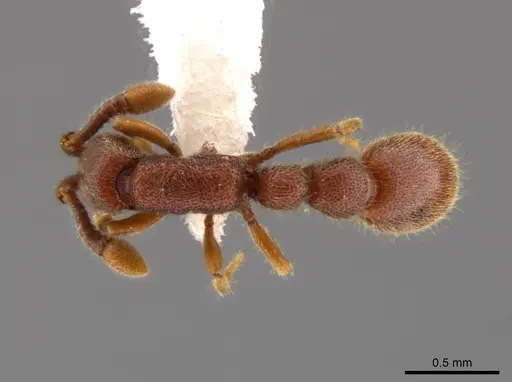
CASENT0624110
View on AntWeb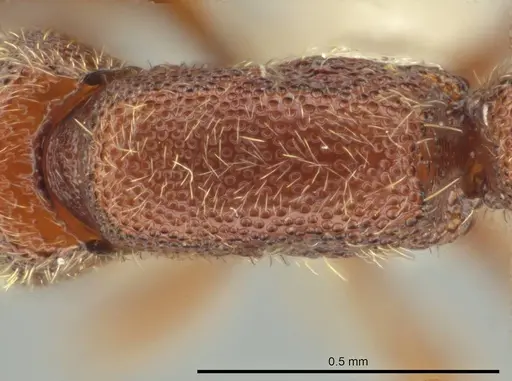
CASENT0637057
View on AntWeb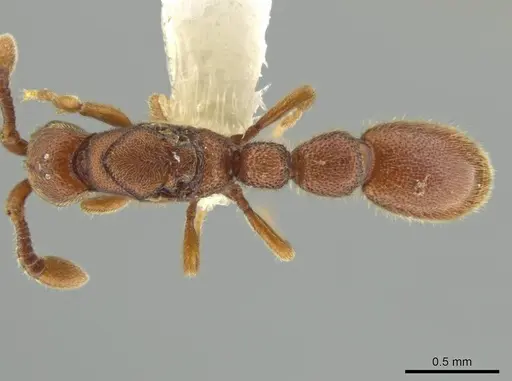
CASENT0644478
View on AntWeb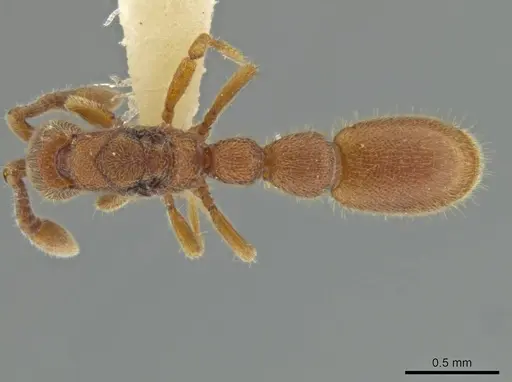
Literature
Loading distribution map...Loading products...