
Syscia pervagata
- Sci. Name
- Syscia pervagata
- Subfamily
- Dorylinae
- Author
- Longino & Branstetter, 2021
- Distribution
- Found in 6 countries
Introduction
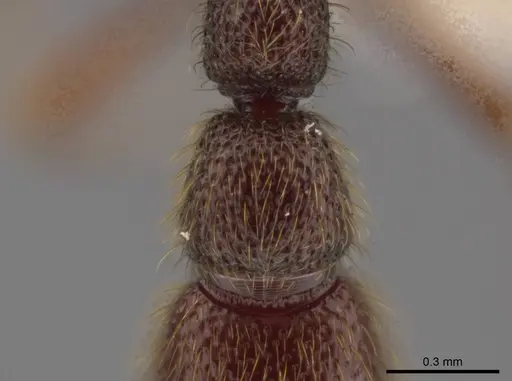
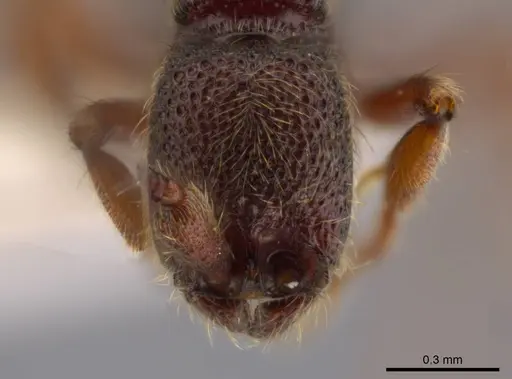
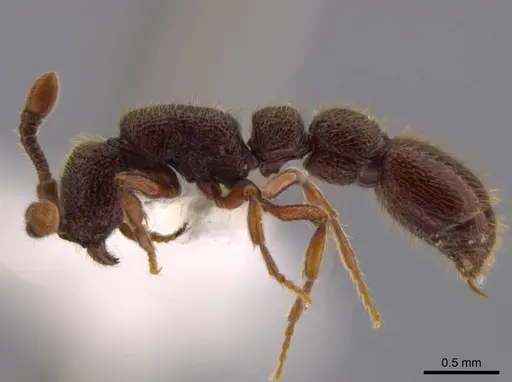
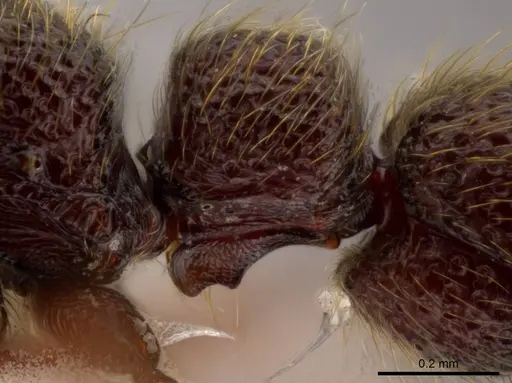
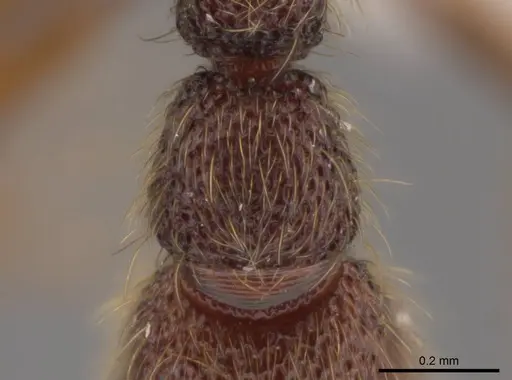
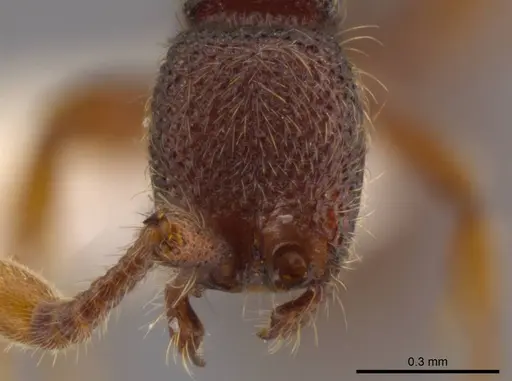
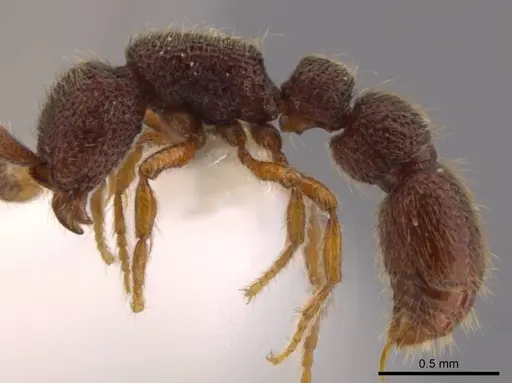
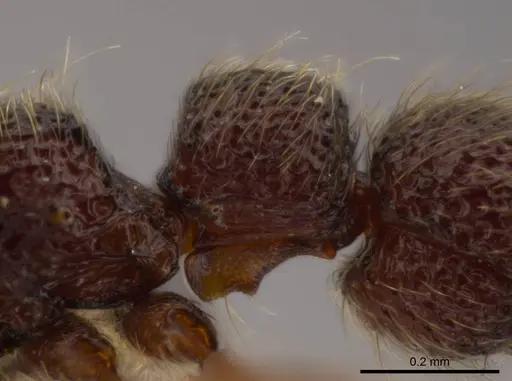
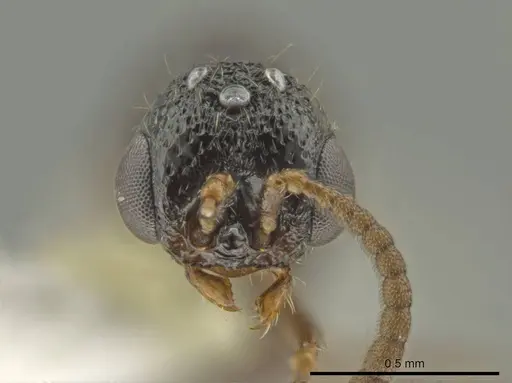
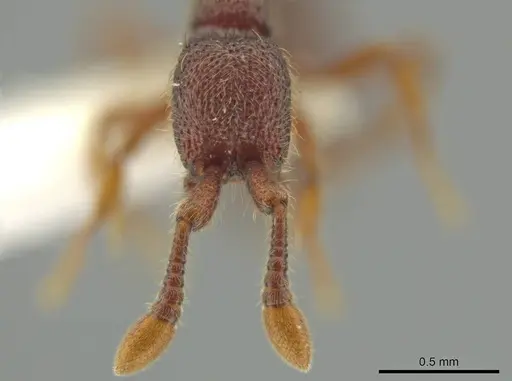
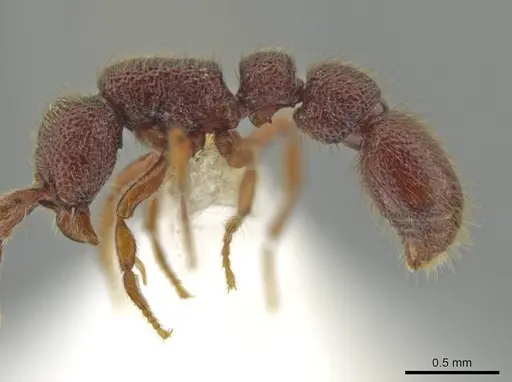
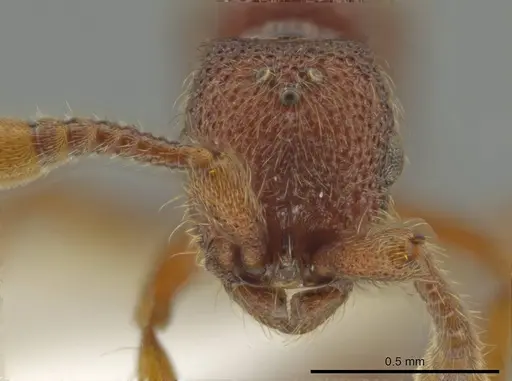
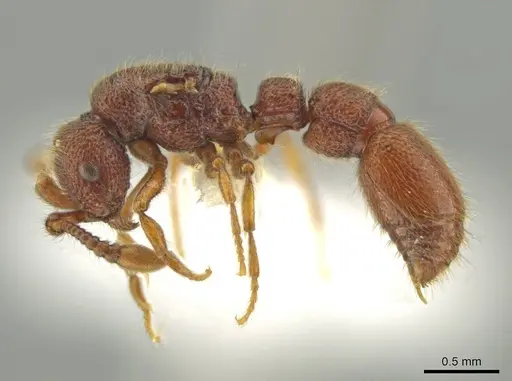
Syscia pervagata is a tiny Neotropical ant from the subfamily Dorylinae (army ants). Workers are reddish-brown, very small (body length around 1.5-2 mm inferred from closely related Syscia species), and live hidden in leaf litter on the forest floor. This is the most abundant and widespread Syscia species in the New World, ranging from southern Mexico (Chiapas) to Costa Rica, including Guatemala, Honduras, and Nicaragua . They primarily inhabit lowland tropical rainforests but have been found up to 1,300 m in lower cloud forests. Almost all records come from Winkler and Berlese samples of sifted leaf litter, showing they are cryptic, soil-dwelling ants . Two distinct clades exist separated by the Motagua fault zone in Guatemala, differing in the density of puncta (small pits) on the exoskeleton .
Quick Summary
- Difficulty: Medium
- Origin & Habitat: Tropical rainforest leaf litter from Mexico to Costa Rica, sea level to 1,300 m elevation [1][2].
- Colony Type: Multiple queen forms exist (dealate queens, intercaste females, alate queens), but the exact social structure (monogyne vs. polygyne) is unknown [1].
- Size & Growth:
- Queen: ~2-2.5 mm (inferred from Syscia genus) [1]
- Worker: ~1.5-2 mm (inferred from Syscia genus) [1]
- Colony: Unknown – no colony size data available [1]
- Growth: Unknown – no data on growth rate [1]
- Development: Unknown – no direct data [1] (Tropical Dorylinae are expected to develop continuously in warm conditions, but precise timelines are not documented.)
- Antkeeping:
- Temperature: Tropical species – keep warm and stable. Based on lowland rainforest habitat, aim for around 24-28°C. A gentle gradient with a cooler area around 22°C is fine. Avoid prolonged temperatures below 22°C or above 30°C [1] (inferred from habitat).
- Humidity: High – keep the nest substrate consistently moist but not waterlogged. A damp test tube setup works well for founding. Provide a water source (e.g., test tube reservoir) and consider occasional misting in the outworld [1] (inferred from leaf-litter habitat).
- Diapause: No – this is a tropical species active year-round [1] (inferred from habitat).
- Nesting: Small-nest specialists. Use a test tube with moist substrate for founding. For established colonies, a Y-tong (AAC) or plaster nest with tiny chambers is ideal. Avoid acrylic nests and large open spaces – these ants need dark, tight spaces like their natural leaf-litter crevices [1] (inferred).
- Behavior: Cryptic, slow-moving, and non-aggressive. They spend most of their time hidden in leaf litter and rarely venture into open areas. Escape risk is very high due to their tiny size – they can slip through standard test tube barriers. Use fine mesh (0.5 mm or smaller) on all ventilation and check for gaps [1].
- Common Issues: escape risk is critical – their tiny size allows them to squeeze through very small gaps, high humidity requirements can cause mold if ventilation is poor, sensitive to low temperatures – prolonged cold below 22°C can cause colony decline, slow or unknown colony growth may lead to frustration for impatient keepers, frequent nest disturbances can stress the colony, causing brood neglect or queen death
Housing and Nest Setup
Because of their tiny size and cryptic nature, you need a nest that suits their scale. A small test tube fitted with a tight cotton plug and a water reservoir is perfect for a founding queen or small colony. Keep the tube in a dark container to mimic the leaf-litter environment. For larger colonies, move to a Y-tong (AAC) or plaster nest with very small chambers – big open spaces stress them. The substrate should be kept moist but not wet. Avoid acrylic nests, they are too open and difficult to keep humid. Use fine mesh (0.5 mm or smaller) on any ventilation openings to prevent escapes [1].
Feeding and Diet
No direct feeding data exists for Syscia pervagata, but as a Dorylinae ant, it is likely predatory or omnivorous. Offer small live prey such as springtails, fruit flies, and pinhead crickets. They may also accept crushed insects or protein gels. Sugar sources (honey water, sugar water) are probably not a main food but can be offered occasionally. Feed small amounts every 2-3 days, remove uneaten food after 24 hours to prevent mold. Being cryptic feeders, they may prefer to eat in the dark – check in the morning [1].
Temperature and Humidity
These ants come from tropical rainforests, so keep conditions warm and humid. Aim for 24-28°C – a heat mat on one side of the enclosure can create a gradient. Avoid temperatures below 22°C for extended periods, which can weaken the colony. Humidity needs to be high: the nest substrate should feel damp, and relative humidity inside the nest area should be 70-85%. A water reservoir (e.g., test tube) helps maintain this. Mist the outworld occasionally, but don't spray the nest directly. Keep the enclosure away from air conditioners or heating vents that could dry it out [1].
Behavior and Temperament
Syscia pervagata is a shy, slow-moving ant that stays hidden in leaf litter. Workers are tiny and non-aggressive – they do not pose any sting risk to keepers, though Dorylinae do have functional stingers. They avoid open spaces and are most active in dark, humid conditions. Escape prevention is critical: their small size lets them squeeze through standard barriers, so use fine mesh and check all connections. The species occurs as two distinct clades (northern and southern) separated by the Motagua fault in Guatemala, but no behavioral differences have been noted [1].
Colony Establishment
Starting a colony requires patience. If you collect a dealate queen, place her in a small, dark, humid test tube setup. Do not disturb her – the founding process is not documented, so assume typical Dorylinae behavior (the queen may seal herself in the chamber). First workers (nanitics) are expected to be very small, the time from egg to worker is unknown, but could take several months in a cool environment. Multiple queen forms exist in nature (dealate queens, intercaste females, alates), but combining unrelated foundresses is not recommended because the colony structure is unknown [1].
Frequently Asked Questions
How long does it take for Syscia pervagata to produce first workers?
The exact development time is unknown – no data exists. Based on typical tropical Dorylinae, you might expect 4-8 weeks from egg to worker at 24-28°C, but this is speculation [1].
Can I keep Syscia pervagata in a test tube?
Yes, a test tube with a water reservoir and moist substrate works well, especially for a founding colony. Keep it dark and humid. For larger colonies, move to a Y-tong or plaster nest with tiny chambers [1].
What do Syscia pervagata ants eat?
They are likely predatory. Offer small live prey like springtails, fruit flies, and tiny arthropods. They may also accept crushed insects or protein gels. Sugar is not a primary food. Remove uneaten prey after 24 hours [1].
Are Syscia pervagata good for beginners?
This species is rated medium difficulty. The tiny size makes escape prevention tricky, and the high humidity requirements need careful management. Colony growth is unknown (likely slow), which can be frustrating. Beginners should be prepared for these challenges [1].
How big do Syscia pervagata colonies get?
Colony size is not documented. Based on the tiny body size and leaf-litter lifestyle, colonies are likely small (under 100 workers), but this is unconfirmed [1].
Do Syscia pervagata need hibernation?
No – they are a tropical species from lowland rainforests that remains active year-round. Keep temperatures warm (24-28°C) all year [1].
Why are my Syscia pervagata escaping?
Their tiny size makes them excellent escape artists. Use fine mesh (0.5 mm or smaller) on all ventilation holes, check all connections for gaps, and ensure lids fit tightly. Avoid placing the nest in bright conditions, as light stress can trigger escape attempts [1].
What temperature should I keep Syscia pervagata at?
Keep at 24-28°C, with a gentle gradient. Avoid prolonged exposure below 22°C or above 30°C. A heat mat on one side of the enclosure can help [1].
Can I keep multiple Syscia pervagata queens together?
The colony structure is unknown. Multiple queen forms exist in the wild, but combining unrelated foundresses has not been documented and could lead to aggression. It is safer to house queens individually [1].
Report an Issue
The current care sheet is based fully on literature. See inconsistencies, or something that's incorrect? Please , it will be resolved after review from an admin. Contributing to the blogs tab also helps providing information, to make us be able to further improve the caresheets. Thank you for your support!
References

This caresheet is licensed under CC BY-SA 4.0 .
Community Blogs
CASENT0624212
View on AntWeb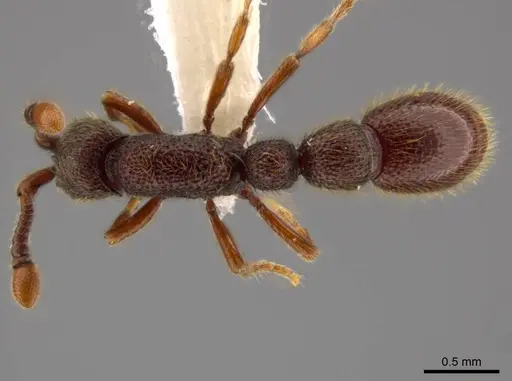
CASENT0628999
View on AntWeb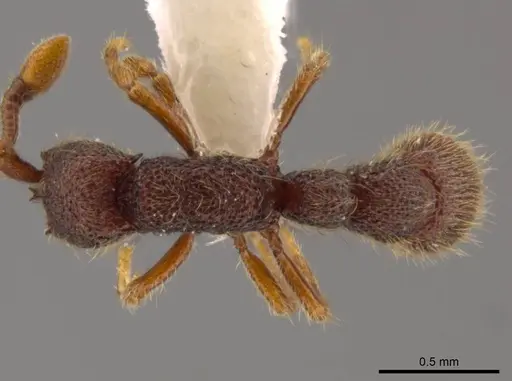
CASENT0630840
View on AntWeb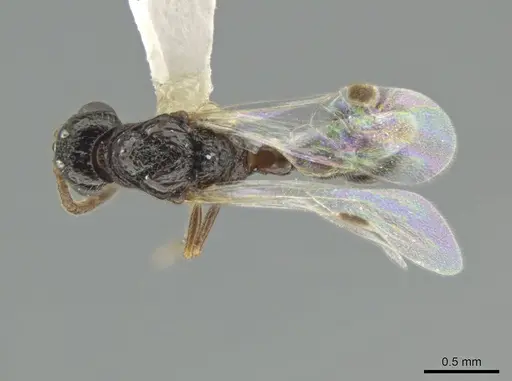
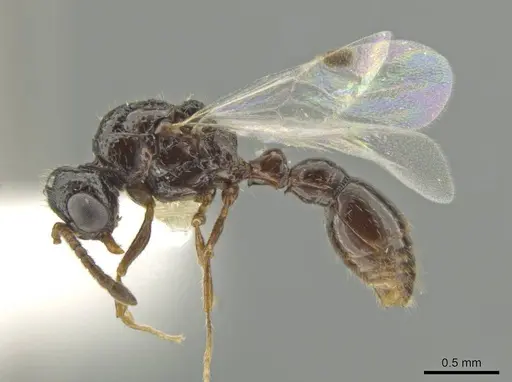
CASENT0644017
View on AntWeb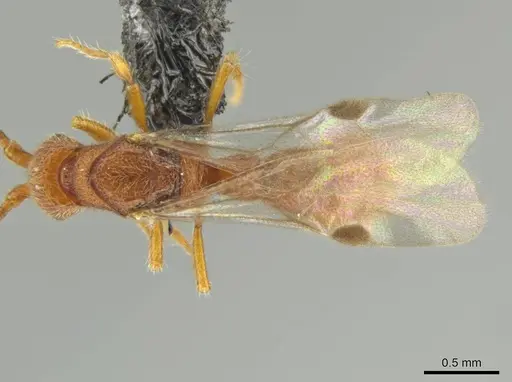
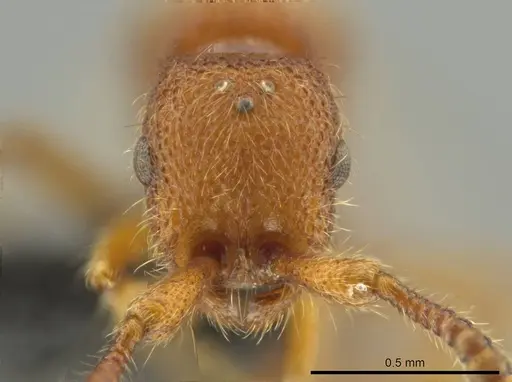
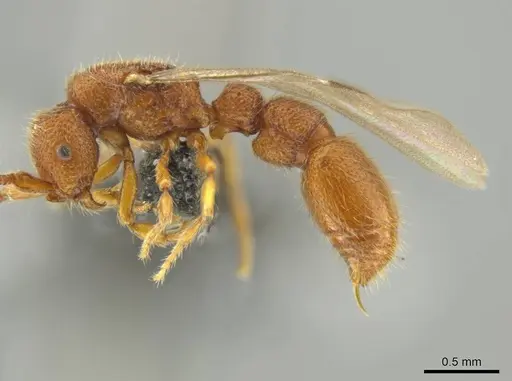
CASENT0644356
View on AntWeb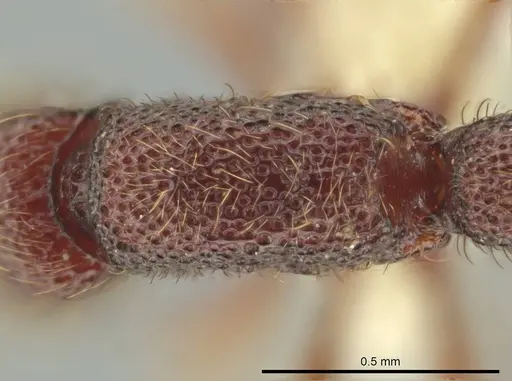
CASENT0644423
View on AntWeb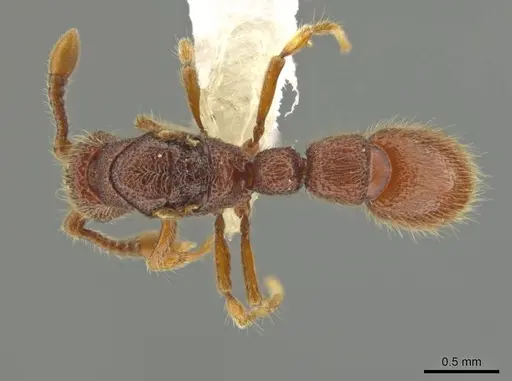
Literature
Loading distribution map...Loading products...