
Syscia jennierussae
- Sci. Name
- Syscia jennierussae
- Subfamily
- Dorylinae
- Author
- Longino & Branstetter, 2021
- Distribution
- Found in 3 countries
Introduction
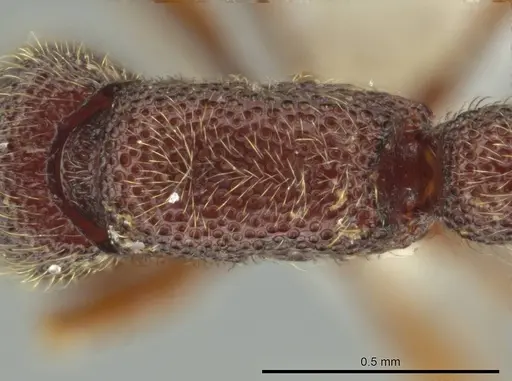
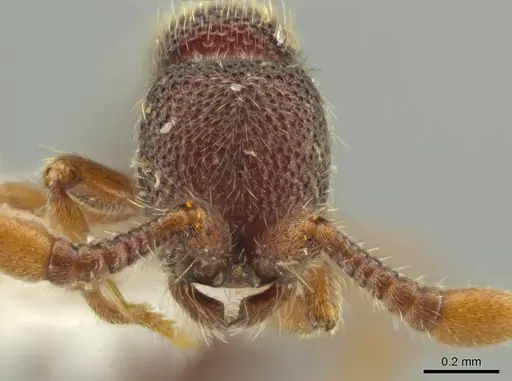
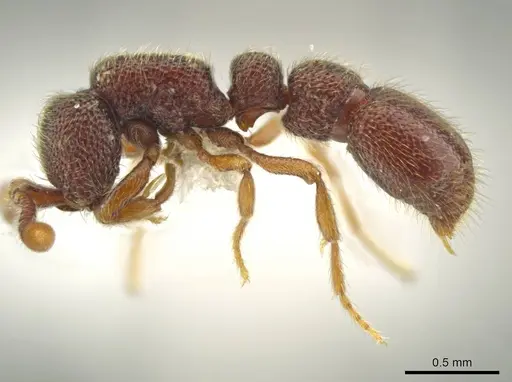
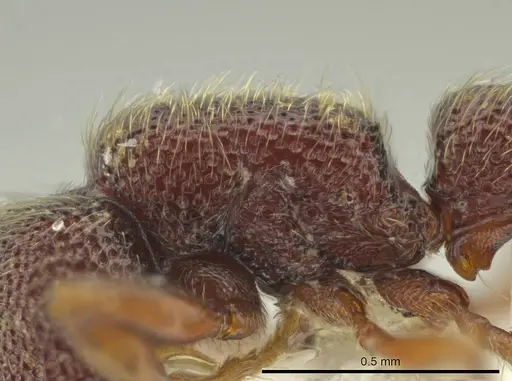
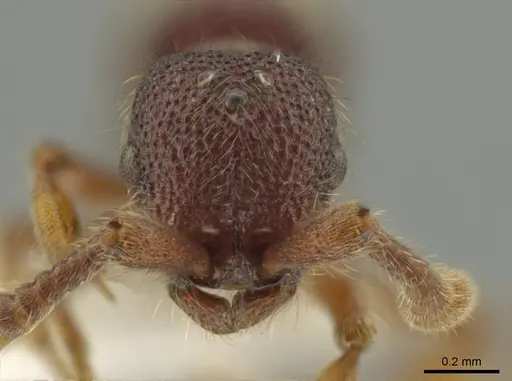
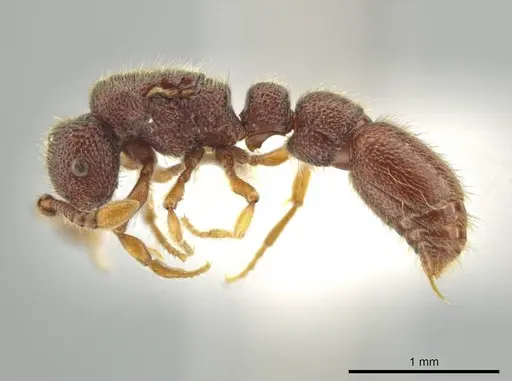
Syscia jennierussae is a tiny army ant from the Dorylinae subfamily, found only in lowland wet forests of southern Mexico and Guatemala . Workers are very small, with a reddish-brown body and coarse standing hairs. Queens are slightly larger but still tiny. The species also produces intercaste females (in between worker and queen) . All known specimens come from forest floor leaf litter and rotten wood, suggesting these ants live hidden in the soil and rarely come out in the open. This species was described in 2021,so much about its biology is still unknown.
Quick Summary
- Difficulty: Hard
- Origin & Habitat: Lowland moist to wet forest in southern Mexico (Chiapas) and Guatemala, at around 160 meters elevation [1]. They live in mature wet forest with high humidity year-round.
- Colony Type: Colony structure is unconfirmed. Workers, dealate queens, and intercaste females have been found, suggesting they may have ergatoid replacement queens or produce intercaste forms for reproduction.
- Size & Growth:
- Queen: Size data unavailable, body length not recorded in literature.
- Worker: Size data unavailable, body length not recorded in literature.
- Colony: Unknown, no colony size data available
- Growth: Unknown, no development data available
- Development: No direct data. Based on typical Dorylinae patterns, estimate 4-8 weeks at tropical temperatures. (Development timeline is unconfirmed. Dorylinae ants generally develop relatively quickly.)
- Antkeeping:
- Temperature: Keep warm, around 24-28°C. This is based on their lowland tropical origin. Avoid drops below 22°C.
- Humidity: High humidity is essential, these ants come from wet forests. Keep substrate consistently moist but not waterlogged. Provide a humidity gradient so ants can choose their preferred zone.
- Diapause: Unlikely, as a tropical lowland species, they probably do not need diapause. Keep warm year-round.
- Nesting: In the wild, they nest in forest floor leaf litter and rotten wood [1]. In captivity, use a naturalistic setup with moist substrate (soil/peat mix) and small pieces of rotting wood and leaf litter. Since colonies are tiny, they can start in small containers.
- Behavior: As a Dorylinae species, these ants are predatory and likely hunt small invertebrates. Workers are extremely small and cryptic, foraging within the substrate rather than out in the open. They probably form small colonies. Escape prevention is critical because of their tiny size. They have a functional stinger, but it is too small to be a problem for humans.
- Common Issues: escape prevention is critical, their tiny size means they slip through standard barriers, high humidity needs can cause mold if ventilation is poor, predatory diet means they need constant live small prey, lack of protein causes decline, tropical species may struggle if room temperature drops below 22°C, newly described species means captive care information is extremely limited
Housing and Setup
Set up a naturalistic terrarium that mimics their forest floor home. Use a shallow container filled with moist substrate (a mix of soil, peat, and sand) and add pieces of rotting wood, dead leaves, and other debris [1]. This gives them nesting and foraging areas. Because they are so small, even small plastic containers work for starting colonies, but you need excellent escape prevention, these ants can squeeze through gaps you would not believe. Use fine mesh on all ventilation holes and apply fluon or another barrier to the top edges of the enclosure. A small water reservoir or moisture gradient helps keep humidity up without flooding the substrate.
Feeding and Diet
These ants are predators and need live prey. In the wild, they likely hunt small soil arthropods like springtails, mites, and other micro-invertebrates in leaf litter [1]. In captivity, offer small live prey such as springtails, fruit flies, tiny crickets, and other small insects. Feed every few days, adjusting based on how much they eat. Remove uneaten prey quickly to avoid mold. They probably won't take sugar sources, Dorylinae are mainly predatory and do not tend aphids or seek nectar. Some keepers try tiny amounts of honey or sugar water occasionally, but protein-rich live prey should be the main food.
Temperature and Humidity
Keep temperatures warm,24-28°C, based on their lowland tropical origin [1]. A heating mat on one side can create a gradient, but make sure the nest area does not get too hot or dry. High humidity is essential, aim for 70-85% relative humidity. The substrate should feel consistently moist but not soaking. Mist the enclosure regularly and use a moisture-retaining substrate mix. Give them a humidity gradient so they can move between wetter and drier spots. Avoid long periods below 22°C, this species is not built for cool conditions.
Behavior and Colony Dynamics
This is a hidden, ground-dwelling ant that forages inside leaf litter and rotten wood rather than building obvious nests or moving out in the open [1]. Workers are tiny and rarely seen. The colony probably stays small, maybe under 100 workers, based on related species. The presence of intercaste females in collected samples suggests they may have flexible reproductive castes, where workers can turn into replacement queens if needed [1]. This species was only described in 2021,so many aspects of its natural behavior are still a mystery. In captivity, watch them but do not disturb, these ants are sensitive to vibration and disturbance.
Escape Prevention
Excellent escape prevention is absolutely critical. Workers are extremely small, much smaller than the springtails they eat [1]. Standard ant barriers often fail. Use fine mesh (0.5mm or smaller) on all ventilation. Apply fluon or similar barriers to all interior edges. Check connections between parts of the enclosure often. For founding colonies, consider keeping them in sealed test tubes or small containers with taped seams until you move them to a properly secured setup. Even a tiny gap can lose the whole colony.
Frequently Asked Questions
How long does it take for Syscia jennierussae to produce first workers?
The egg-to-worker timeline is unconfirmed for this species. Based on typical Dorylinae development at tropical temperatures (24-28°C), expect roughly 4-8 weeks from egg to first worker. This is an estimate, no specific data exists.
Can I keep Syscia jennierussae in a test tube setup?
Yes, test tubes can work for founding colonies. But you must ensure excellent escape prevention because they are so tiny. Use cotton plugs with fine mesh, apply fluon to the tube rim, and consider wrapping the tube in plastic wrap with small air holes. Monitor humidity carefully, test tubes dry out quickly and this species needs high humidity.
Do Syscia jennierussae ants sting?
Yes, as a Dorylinae species they have functional stingers. But their tiny size means the sting is mild and unlikely to cause significant pain to humans. The real concern is that their small size makes them hard to handle and easy to lose.
What do Syscia jennierussae eat?
They are predators and need live small invertebrates. Offer springtails, fruit flies, tiny crickets, and other small live prey. Remove uneaten prey after a few hours to prevent mold. They are unlikely to accept sugar sources, focus on protein-rich live prey.
Are Syscia jennierussae good for beginners?
No, this species is not recommended for beginners. It is a recently described species with very limited captive care information, needs high humidity and warm temperatures, requires constant live prey, and its tiny size makes escape prevention challenging. Best for experienced keepers who can provide the specific conditions.
Do Syscia jennierussae need hibernation?
No, as a tropical lowland species from Mexico and Guatemala, they do not need hibernation. Keep warm (24-28°C) year-round. Diapause is not necessary and could be harmful.
How big do Syscia jennierussae colonies get?
Colony size is unknown. Based on their tiny size and what is known about related Dorylinae species, colonies probably stay relatively small, likely under 100 workers. No large colony data exists for this recently described species.
Why are my Syscia jennierussae dying?
Common causes include: temperature too low (keep above 22°C), humidity too low (they need 70-85%), lack of live prey (they cannot survive on sugar alone), escape through tiny gaps, and mold from overwatering or poor ventilation. Check all parameters and make sure you are providing enough small live prey.
When should I move Syscia jennierussae to a formicarium?
For this cryptic species, a naturalistic setup with substrate is better than traditional formicariums. If you do move them, wait until the colony has at least 20-30 workers and is actively foraging. Make sure the new enclosure keeps the high humidity they need.
Can I keep multiple Syscia jennierussae queens together?
This has not been documented. The colony structure is unconfirmed, and combining unrelated queens is not recommended given the lack of information about their social structure. Keep one queen per enclosure unless you have specific guidance from experienced keepers.
Report an Issue
The current care sheet is based fully on literature. See inconsistencies, or something that's incorrect? Please , it will be resolved after review from an admin. Contributing to the blogs tab also helps providing information, to make us be able to further improve the caresheets. Thank you for your support!
References

This caresheet is licensed under CC BY-SA 4.0 .
Community Blogs
CASENT0609668
View on AntWeb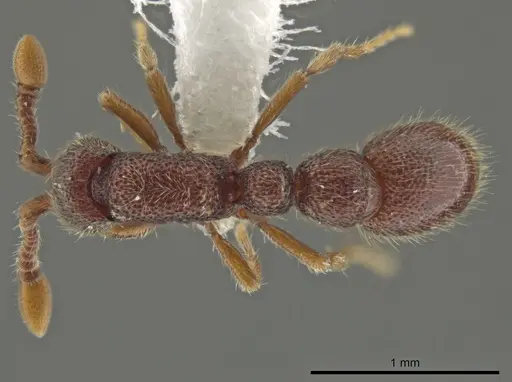
CASENT0644019
View on AntWeb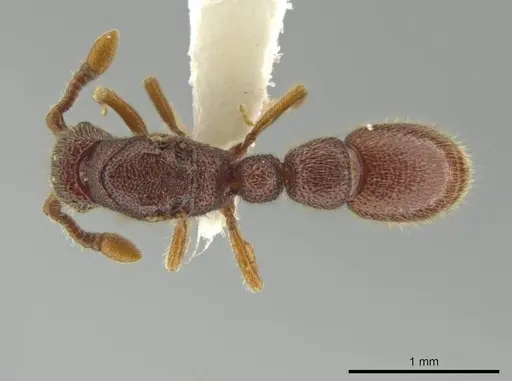
Literature
Loading distribution map...Loading products...