
Syscia honduriana
- Sci. Name
- Syscia honduriana
- Subfamily
- Dorylinae
- Author
- Mann, 1922
- Distribution
- Found in 1 countries
Introduction
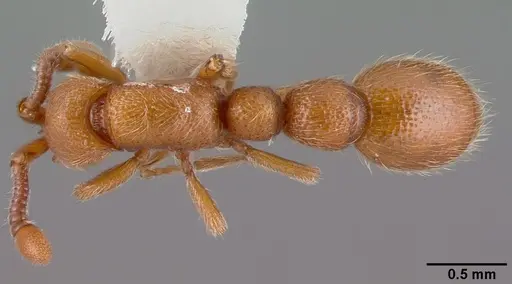
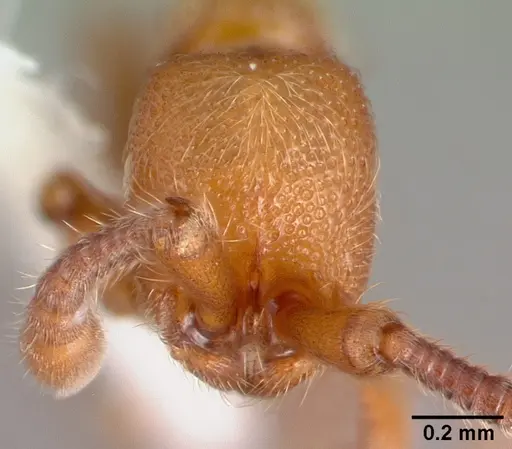
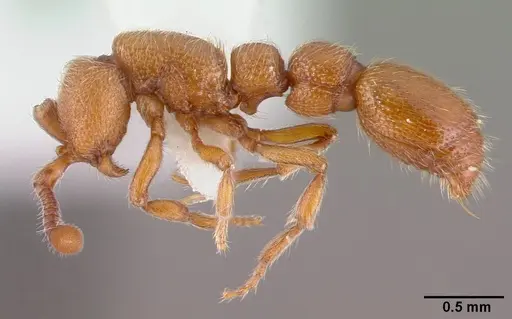
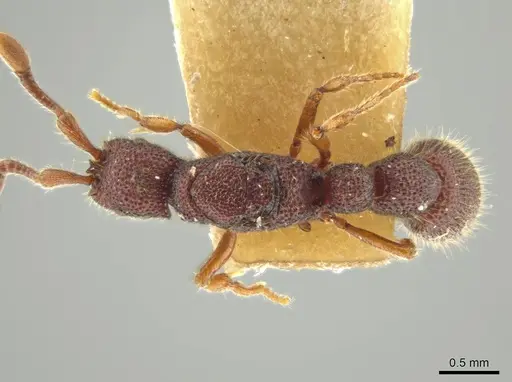
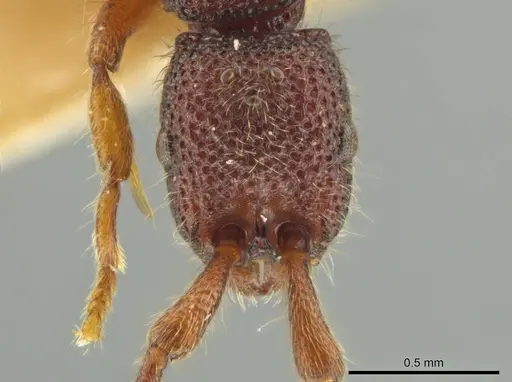
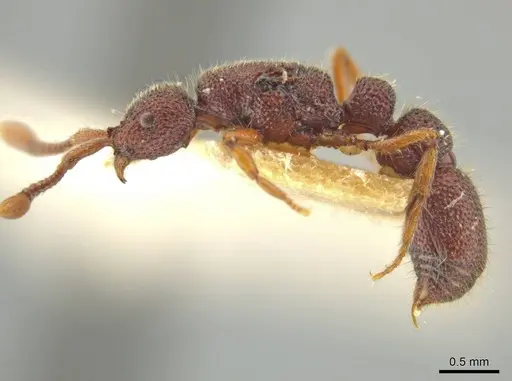
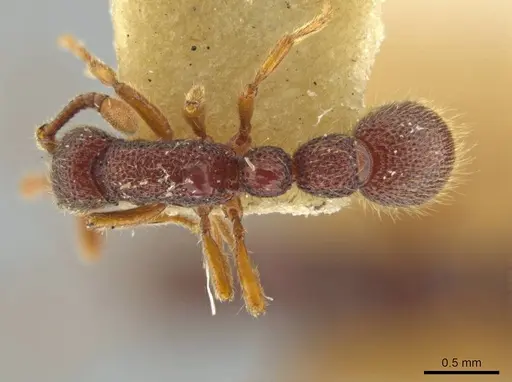
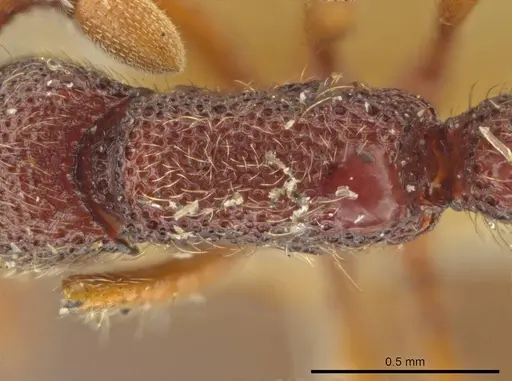
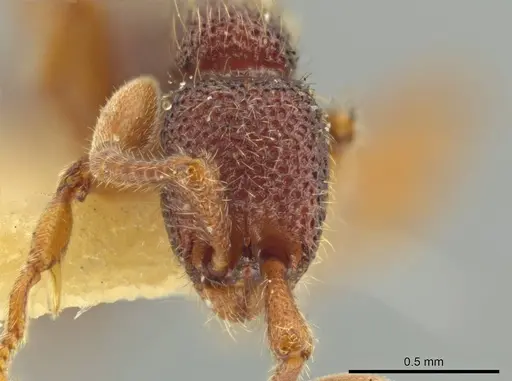
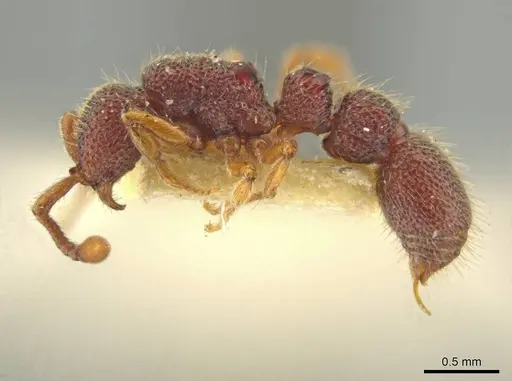
Syscia honduriana is a tiny, predatory ant found only in Belize and Honduras . Workers are very small, though total body length has not been recorded in the literature. They have a red-brown color . The species was originally described in 1922 from a small colony collected under a stone in lowland rainforest, suggesting it lives a hidden, ground-dwelling lifestyle . Queens are slightly larger, wingless, and have large eyes and ocelli - an unusual trait for ant queens . This ant belongs to the Dorylinae subfamily (army ants), which are generally predatory. However, its colony founding behavior is unconfirmed .
Quick Summary
- Difficulty: Hard
- Origin & Habitat: Lowland rainforest of Belize and Honduras in Central America [1][2]. Found beneath stones and in leaf litter samples from tropical lowland environments [2].
- Colony Type: Colony structure is unconfirmed. The only known collection was a small colony under a stone, hinting at monogyne (single-queen) colonies [2].
- Size & Growth:
- Queen: Size data unavailable, only head and mesosomal measurements exist, not total body length.
- Worker: Size data unavailable, only head and mesosomal measurements exist, not total body length.
- Colony: Unknown, only very small colonies have been documented in the wild [2].
- Growth: Unknown, based on related Dorylinae, growth is likely moderate, but no direct data exists.
- Development: Unknown, no development data exists for this species. (All timelines are speculative until direct observations are made.)
- Antkeeping:
- Temperature: Keep at 24-28°C year-round, these are lowland tropical ants requiring stable warmth [2]. Use a heating cable to create a temperature gradient, and avoid sudden drops.
- Humidity: Keep the nest substrate consistently moist but not waterlogged. High ambient humidity is needed, cover the nest to retain moisture. The natural habitat is humid rainforest leaf litter.
- Diapause: Unlikely, as a tropical species from Honduras, they probably do not need a diapause period. Keep warm year-round.
- Nesting: Prefers moist, dark environments. A naturalistic setup with damp soil and leaf litter is ideal. Use plaster, Y-tong, or a 3D-printed nest with chambers scaled to their tiny size. Never use acrylic nests. Seal all gaps to prevent escape.
- Behavior: This ant is an obligate predator that hunts small invertebrates. As a Dorylinae, it is probably an agile forager with good escape abilities, despite its tiny size, it can easily slip through small gaps. The colony is secretive and will spend most time hidden in the nest or foraging under cover. Queens are wingless, suggesting they might found colonies in pre-existing cavities.
- Common Issues: tiny size makes escape likely without fine mesh barriers (less than 0.5mm gaps)., limited distribution data means care requirements are largely inferred from related species., predatory diet may be hard to provide, need a steady supply of live micro-prey (springtails, fruit flies)., high humidity is critical, dry conditions will rapidly kill the colony., colony growth may be very slow because wild colonies seem tiny, patience required.
Natural History and Distribution
Syscia honduriana is known only from Belize and Honduras, making it one of the more range-restricted Dorylinae ants [1][2]. The type series was collected beneath a stone at Lombardia, Honduras in 1920,and additional workers were found near La Ceiba from a miniWinkler sample in lowland rainforest [2]. This species appears to be a lowland specialist, living in tropical rainforests at low elevations. The queen is wingless (apterous) with fully developed eyes and ocelli, an unusual morphology among ant queens, this suggests they may not undertake typical nuptial flights but instead found colonies by walking [2]. Colony sizes observed in the wild are very small, just a handful of workers were collected.
Housing and Nesting
These tiny ants need a moist, dark nesting environment. A naturalistic setup with a 2-3 cm layer of damp soil covered with leaf litter or a flat stone works well. For better visibility, a small plaster, Y-tong, or 3D-printed nest with small chambers (5-10 mm wide) is suitable. Never use acrylic nests, they don't hold humidity well and are not recommended. The nest should be kept dark. Because the ants are so small, ensure all connections and barriers have no gaps larger than 0.3 mm. A water reservoir in the nest helps maintain humidity without frequent misting. Avoid standing water that could drown the colony. [2]
Feeding and Diet
As a predatory Dorylinae ant, Syscia honduriana almost certainly requires live prey. In the wild, they likely hunt micro-arthropods such as springtails, mites, and tiny insects from leaf litter. In captivity, offer live springtails, fruit flies, and very small crickets. Feed roughly twice a week, adjusting based on consumption. Remove uneaten prey after 24-48 hours to prevent mold. Sugar sources are unlikely to be accepted, these ants are obligate carnivores. [1][2]
Temperature and Seasonal Care
Maintain temperatures in the warm range of 24-28°C year-round. These are lowland tropical ants from Honduras, so they do not tolerate cool conditions. Use a small heating cable on one side of the nest to create a temperature gradient. Avoid temperatures above 32°C or sudden drops. Since they come from a tropical climate without pronounced winters, they likely do not require diapause. Keep the colony at stable warm temperatures throughout the year. Room temperature may be too cool, use a thermostatic heater. Monitor with a digital thermometer near the nest. [2]
Behavior and Colony Dynamics
Syscia species are cryptic, subterranean ants that spend most of their time hidden in soil and leaf litter. Workers are tiny and likely forage in covered areas rather than open spaces. As Dorylinae, they may exhibit coordinated hunting where workers recruit nestmates to large prey. The colony will likely remain hidden for extended periods, with foragers moving through soil tunnels. Queens are wingless with well-developed eyes, which is unusual, this suggests they may found colonies in pre‑existing cavities rather than flying to new sites. Based on field collections, colonies will remain small (likely under 100 workers). [1][2]
Frequently Asked Questions
How long does it take for Syscia honduriana to produce first workers?
This is unknown, no development data exists. Any estimate would be pure speculation.
Can I keep Syscia honduriana in a test tube setup?
A test tube can work for a founding queen or a very small colony, but these ants prefer more space and substrate. A naturalistic setup with damp soil or a small plaster nest with multiple chambers is better for long-term success.
What do Syscia honduriana eat?
They are obligate predators requiring live small prey. Offer springtails, fruit flies, tiny crickets, and other small live insects. Remove uneaten prey after 24-48 hours. Sugar sources are unlikely to be accepted.
Are Syscia honduriana good for beginners?
No, this is an expert-level species. Their tiny size, high humidity needs, predatory diet requirements, and the fact that care is largely guessed from genus patterns make them unsuitable for beginners.
How big do Syscia honduriana colonies get?
Colony size is unknown but appears very small in the wild, likely under 100 workers based on collection data. They may never reach large colony sizes.
Do Syscia honduriana need hibernation?
No, as a tropical lowland species from Honduras, they do not require hibernation or diapause. Keep them warm (24-28°C) year-round.
Why are my Syscia honduriana dying?
Common causes include: too dry conditions (they need high humidity), temperatures below 24°C, lack of appropriate live prey, escape through tiny gaps due to their minute size, or mold from overwatering. Ensure proper humidity, warmth, and offer live prey regularly.
Can I keep multiple queens together?
This has not been documented. Based on the single colony collection and the queen's wingless morphology, single-queen colonies are likely. Combining unrelated queens is not recommended without evidence they can coexist.
When should I move Syscia honduriana to a formicarium?
Wait until the colony outgrows its current nest, this could happen at any size. Moving too early can cause stress. A small plaster or soil nest is suitable once the colony is established.
Report an Issue
The current care sheet is based fully on literature. See inconsistencies, or something that's incorrect? Please , it will be resolved after review from an admin. Contributing to the blogs tab also helps providing information, to make us be able to further improve the caresheets. Thank you for your support!
References

This caresheet is licensed under CC BY-SA 4.0 .
Community Blogs
Literature
Loading distribution map...Loading products...