
Syscia brachyptera
- Sci. Name
- Syscia brachyptera
- Subfamily
- Dorylinae
- Author
- Longino & Branstetter, 2021
- Distribution
- Found in 1 countries
Introduction
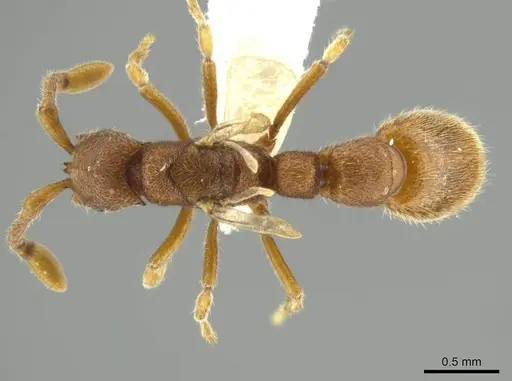
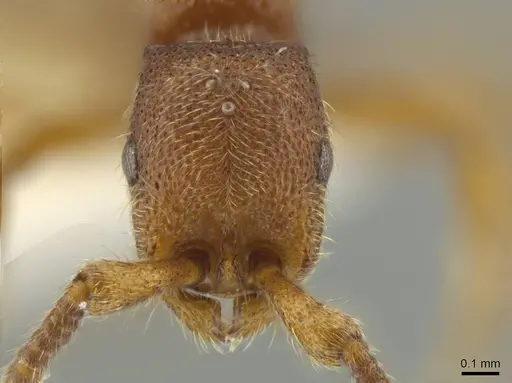
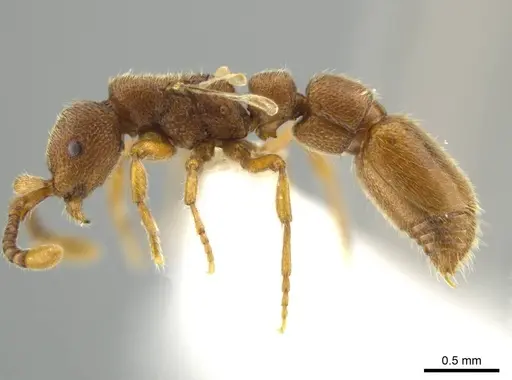
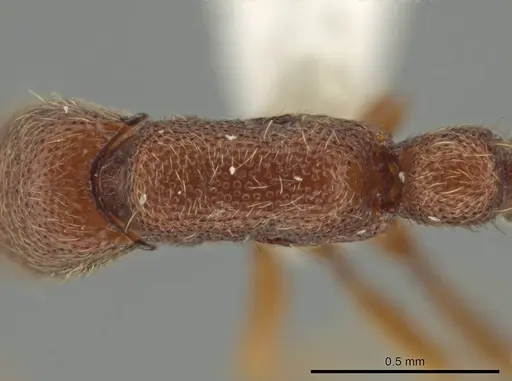
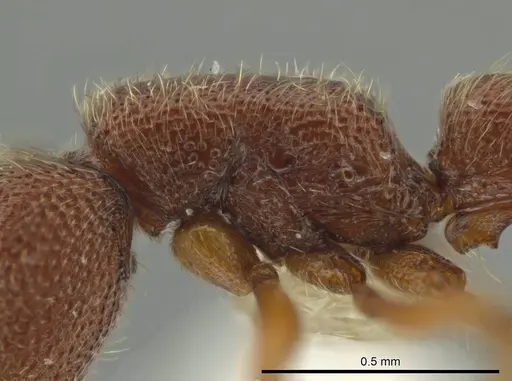
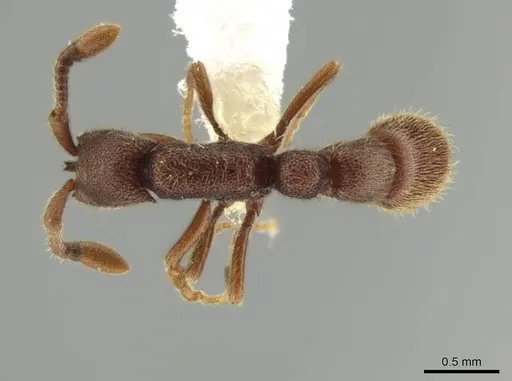
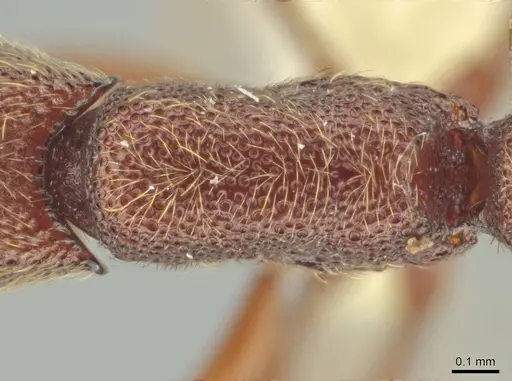
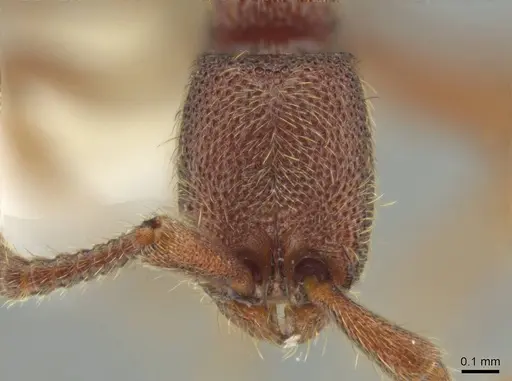
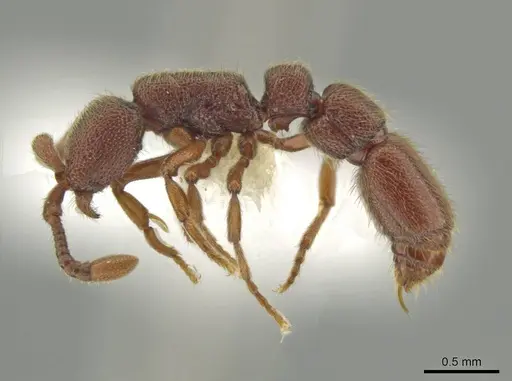
Syscia brachyptera is a tiny army ant species from the Dorylinae subfamily, described in 2021 from Honduras. Workers are among the smallest of all ants, though exact body length data is unavailable. They have a distinctive red-brown color and a sharp tooth on the subpetiolar process. Unlike typical army ants, this species lives in cool, moist montane forests and cloud forests at elevations between 600 and 1650 meters . The most unusual trait is its brachypterous queens – females with short, stubby wings instead of the long wings typical of most ant queens. Researchers have found small clusters of these short-winged queens in leaf litter, and one collection contained two intercaste females (intermediate between worker and queen). This suggests the species may have flexible queen morphology, though much about their colony structure remains unknown .
Quick Summary
- Difficulty: Expert
- Origin & Habitat: Honduras only – specifically found in montane rainforest and cloud forest in the Comayagua region at elevations of 600–1650 meters [1][2]
- Colony Type: Unconfirmed – small clusters of brachypterous queens found in leaf litter suggest possible multi-queen associations. Colony structure is not documented [1].
- Size & Growth:
- Queen: Size data unavailable – only head width known (~0.55–0.57 mm), which is not total body length. Queens are brachypterous (short-winged) [1]
- Worker: Size data unavailable – only head width known (~0.48–0.54 mm), which is not total body length. Workers are among the smallest ants [1]
- Colony: Unknown – no colony size data available. Related tiny Dorylinae might have colonies up to 200 workers, but this is speculative [1]
- Growth: Unknown – no development data exists for this species
- Development: Unknown – no direct measurements. No development data published (No published development data exists. Related tiny Dorylinae likely develop quickly, but this is not confirmed.)
- Antkeeping:
- Temperature: Cool conditions likely required – comes from montane forest at 600–1650 m elevation where temperatures are moderate. Start around 18–22°C and observe. Avoid warm conditions above 25°C [1]
- Humidity: High humidity needed – natural habitat is moist cloud forest. Keep substrate consistently damp but not waterlogged. Provide a gradient from damp to slightly drier areas [1]
- Diapause: Unknown – being from a montane habitat in Honduras, they might experience a cooler season and could benefit from a slight cooldown period, but no data supports this
- Nesting: In nature they live in leaf litter and rotting wood in montane forest. In captivity, a small test tube setup with moist substrate or a tiny plaster/Ytong nest scaled to their minute size works well. Avoid acrylic nests – use plaster, Ytong, or soil-based nests [1]
- Behavior: These are tiny, cryptic ants that live in leaf litter. Likely predatory like other Dorylinae, hunting small micro-arthropods. Workers forage individually or in small groups, not in large raiding columns. Not aggressive and pose no threat to keepers. Their minute size means excellent escape prevention is essential – they can squeeze through gaps invisible to the human eye [1]
- Common Issues: escape prevention is critical due to minute size – use fine mesh and tight-fitting barriers, no captive care information exists – expert-only species for experienced keepers, humidity control is challenging – too wet causes drowning, too dry causes desiccation, temperature sensitivity likely given montane origin – avoid extremes above 25°C or below 15°C, colony failure is likely if stressed – wild-caught colonies may carry parasites or not adapt to captivity
Species Discovery and Taxonomy
Syscia brachyptera was described in 2021 by Longino and Branstetter, making it a recently discovered ant species. The holotype worker was collected from Cerro Azul Meambar National Park in Honduras at 750 meters elevation. The species name 'brachyptera' means 'short wing' in Greek, referring to the distinctive short-winged queens [1].
The discovery was part of a larger study using ultra-conserved element (UCE) phylogenomics to revise New World Syscia taxonomy. Syscia belongs to the Dorylinae subfamily (army ants), but unlike the large nomadic colonies most people associate with army ants, Syscia species are tiny cryptic ants living in leaf litter [1].
Natural History and Distribution
This species is known only from Honduras, making it endemic to a very restricted range. It has been collected from moist forest and cloud forest habitats at elevations between 600 and 1650 meters. The type locality is in the Comayagua region, in montane rainforest [1].
Researchers found brachypterous queens in leaf litter samples, sometimes in small clusters near bait cards. One collection contained two intercaste females (intermediate between worker and queen morphology). This suggests the species may have unusual reproductive biology, though details remain unknown [1].
Housing and Enclosure Setup
Given their tiny size and recent description with no captive care history, keeping Syscia brachyptera should be considered expert-level only. A carefully constructed setup that prevents escape while maintaining appropriate humidity is essential.
A small test tube setup with a water reservoir works well for founding colonies. The test tube should have a tight cotton plug and be placed in a larger container with controlled humidity. For established colonies, a tiny plaster or Ytong nest with chambers scaled to their minute size would be appropriate. Avoid acrylic nests. The nest should have passages no wider than 1–2 mm to prevent workers from getting lost or escaping. Fine mesh on ventilation holes is absolutely essential – these ants can walk through mesh that appears solid to the human eye [1].
Feeding and Nutrition
As a Dorylinae species, Syscia brachyptera is likely predatory on small invertebrates. In the wild, they probably hunt micro-arthropods like springtails, mites, and tiny insects in leaf litter. No direct observations of their diet exist.
In captivity, offer small live prey items appropriate to their size. Live springtails are an ideal first choice – they are small enough for these tiny ants to tackle and are nutritionally complete. Other small live prey like fruit fly larvae, newly hatched crickets, and tiny beetles may also be accepted. Sugar sources are unlikely to be important, as Dorylinae are typically predatory rather than honeydew-feeding.
Feed small prey items every few days, removing any uneaten prey to prevent mold. The key is offering prey small enough for these minute ants to subdue – items that are too large will be ignored.
Temperature and Humidity Management
Being from montane forest at 600–1650 m elevation, these ants prefer cool, stable conditions. Aim for temperatures around 18–22°C. Avoid temperatures above 25°C, which could be stressful. Room temperature in most homes should be suitable, but monitor with a thermometer.
Humidity should be high – think cloud forest conditions. Keep the nest substrate consistently moist but not waterlogged. A water tube attached to the nest provides a moisture source. You should see condensation on the nest walls occasionally. However, avoid standing water, as these tiny ants can easily drown [1].
Given their specific requirements and the complete lack of captive breeding history, this species is not recommended for beginners. Even experienced antkeepers should approach with caution and be prepared for potential colony failure.
Frequently Asked Questions
How long do Syscia brachyptera ants live?
The exact lifespan is unknown. Based on typical Dorylinae patterns, queens likely live several years while workers live several months to a year. No specific lifespan data exists for this species.
Can I keep Syscia brachyptera in a test tube?
Yes, a test tube setup is appropriate for this tiny species. Use a small test tube with a tight cotton plug and water reservoir. Ensure the tube is sealed with fine mesh to prevent escape – these ants are extremely small.
How big do Syscia brachyptera colonies get?
Colony size is unknown. Based on their tiny size and related Dorylinae, colonies likely reach up to 200 workers at most. No concrete data exists [1].
Are Syscia brachyptera good for beginners?
No. This is an expert-only species. It was only described in 2021,has no captive care history, and requires specific conditions (cool temperatures, high humidity, tiny prey). There is a high risk of colony failure even for experienced keepers.
What do Syscia brachyptera ants eat?
They are likely predatory on small invertebrates like other Dorylinae. Offer live springtails, tiny mites, and other micro-arthropods. Sugar sources are unlikely to be important. Feed small live prey items every few days.
Do Syscia brachyptera need hibernation?
Unknown. Being from a montane habitat in Honduras, they probably experience cooler conditions in winter and would benefit from a slight cooldown period. However, their exact seasonal requirements are unknown.
Why are the queens short-winged?
The species name 'brachyptera' means 'short wing.' These queens have stubby wings instead of long wings, which is unusual among ants. This may be related to their colony structure or reproductive strategy. Researchers have found clusters of these brachypterous queens in leaf litter [1].
Where is Syscia brachyptera found?
This species is only known from Honduras, specifically the Comayagua region in montane rainforest and cloud forest at elevations of 600–1650 meters. It is endemic to this small geographic area [1][2].
How long until first workers in Syscia brachyptera?
Unknown – no development data exists for this species. No estimate can be given.
Report an Issue
The current care sheet is based fully on literature. See inconsistencies, or something that's incorrect? Please , it will be resolved after review from an admin. Contributing to the blogs tab also helps providing information, to make us be able to further improve the caresheets. Thank you for your support!
References

This caresheet is licensed under CC BY-SA 4.0 .
Community Blogs
Literature
Loading distribution map...Loading products...