
Syscia amblyogyna
- Sci. Name
- Syscia amblyogyna
- Subfamily
- Dorylinae
- Author
- Longino & Branstetter, 2021
- Distribution
- Found in 1 countries
Introduction
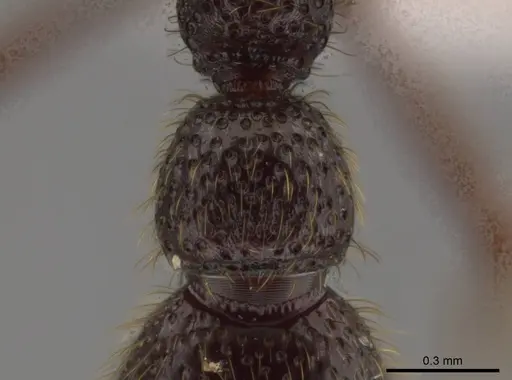
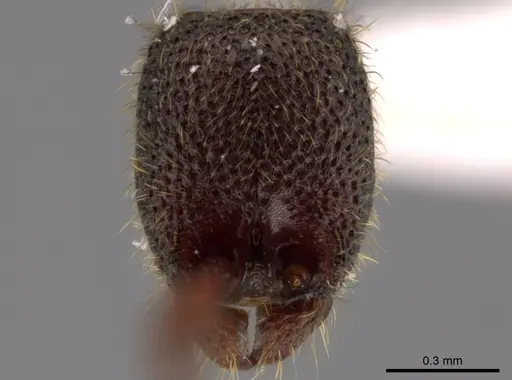
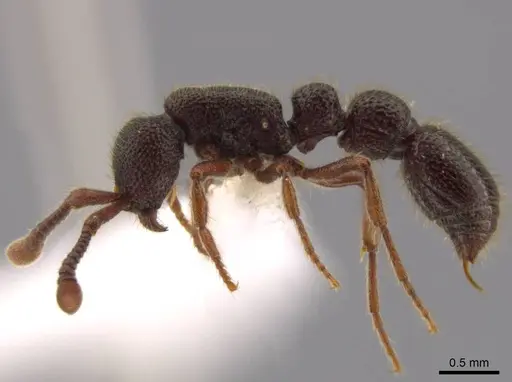
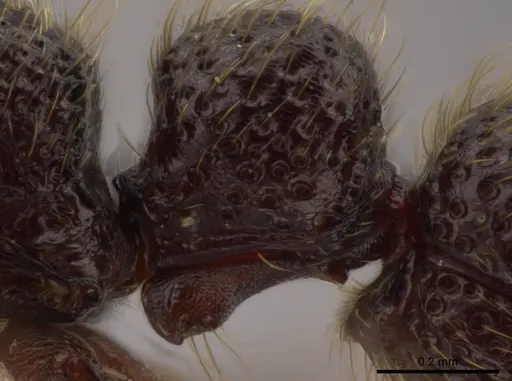
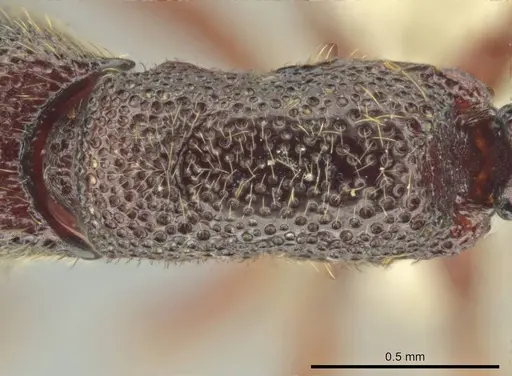
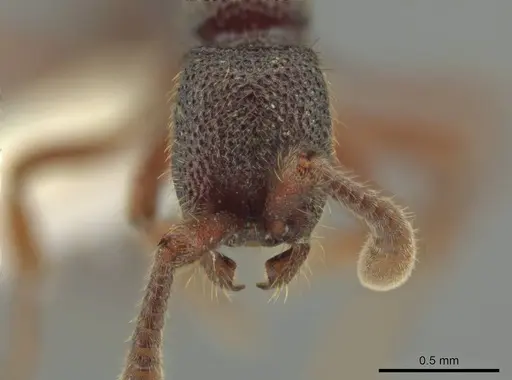
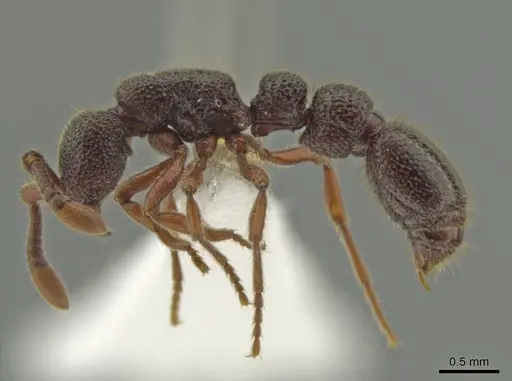
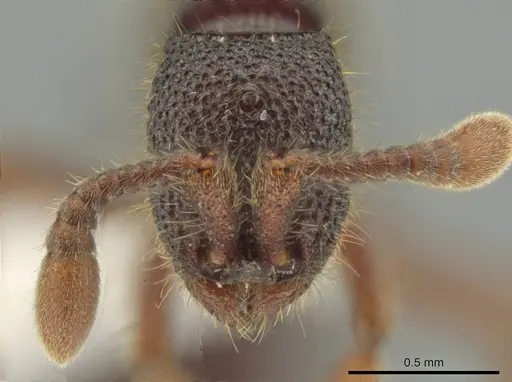
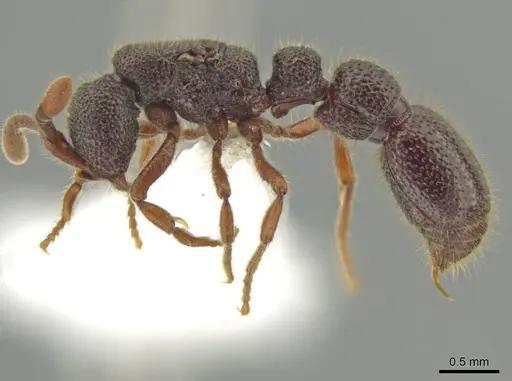
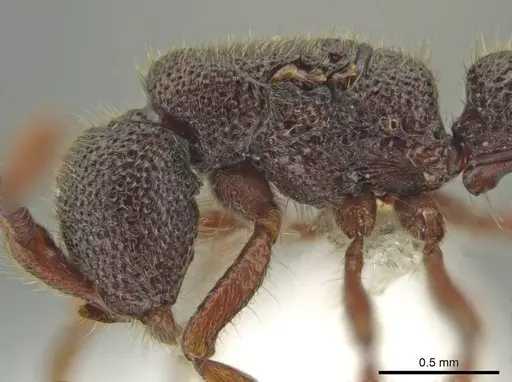
Syscia amblyogyna is a tiny, dark brown ant from the Dorylinae subfamily (army ants). Workers are extremely small, with long, coarse hairs covering their dark bodies . Queens are brachypterous, meaning they have reduced wings instead of fully developed ones. They also show variation in eye development - some have no visible compound eyes while others have tiny eyes . This species was only described in 2021 and is currently known only from montane cloud forest in Guatemala, at elevations between 1,325-1,550 meters . This is a very recently described species with almost no captive care information. Based on its cloud forest habitat, it likely needs high humidity, a cool stable environment, and small-scale nesting. The brachypterous queens suggest unusual colony founding behavior, possibly involving dispersal on foot rather than through nuptial flights .
Quick Summary
- Difficulty: Expert
- Origin & Habitat: Native to montane cloud forest in Guatemala, specifically the Zacapa region at 1,325-1,550m elevation. Found in leaf litter and rotten wood on the forest floor [1].
- Colony Type: Likely monogyne (single queen) based on typical Dorylinae patterns, but direct evidence is lacking. Queens are brachypterous with variable eye development [1]. Colony size is unknown but likely small given the tiny worker size.
- Size & Growth:
- Queen: Size data unavailable. Literature records only head and mesosomal measurements, not total body length [1].
- Worker: Size data unavailable. Literature records only head and mesosomal measurements, not total body length [1].
- Colony: Unknown, based on tiny worker size, colonies likely stay under 100 workers, but no data exists.
- Growth: Unknown, likely slow due to small colony size.
- Development: Unknown, estimated 6-10 weeks at 20-24°C based on similar small ants, but this is purely speculative. (No direct data available, estimate is speculative and based on typical small ant development.)
- Antkeeping:
- Temperature: Mimic montane cloud forest: cool, stable conditions around 15-22°C. Avoid exceeding 25°C. Provide a temperature gradient if possible, but keep the overall environment cool [1].
- Humidity: High humidity is critical. Keep the nest substrate consistently moist but not waterlogged. Aim for 70-85% relative humidity. Cloud forest leaf litter is constantly damp, so misting the outworld may help [1].
- Diapause: Unknown. Montane species may experience seasonal cooling, consider a mild winter slowdown at 12-15°C if the colony naturally reduces activity, but this is not confirmed.
- Nesting: Prefers small chambers in Y-tong (AAC), plaster, or soil nests. Test tubes also work well. Their tiny size means fine mesh (0.5mm or smaller) is essential for ventilation and barriers. Avoid acrylic nests as they are unsuitable for humidity control and escape prevention.
- Behavior: Shy, secretive, and non-aggressive. Escape risk is extremely high due to their minute size, they can slip through 1mm gaps. They are likely predatory on small arthropods, but have never been observed in captivity [1].
- Common Issues: escape risk is extremely high due to tiny size, they can pass through 1mm gaps., high humidity needs can lead to mold if ventilation is poor., no captive husbandry data exists, expect a steep learning curve., wild-caught colonies may have unknown health issues or stress., tiny size makes observation and feeding difficult, prey must be very small.
Housing and Nest Setup
Syscia amblyogyna is an extremely small ant that requires careful housing. Their tiny size means they can escape through 1mm gaps. Use test tubes with tight cotton stoppers, or small Y-tong (AAC), plaster, or soil nests with chambers scaled to their minute size. Fine mesh (0.5mm or smaller) is essential for any ventilation holes. A small outworld for foraging works well, but they don’t need large spaces. Apply fluon barriers on test tube rims for extra security. The nest material should retain moisture well, as this species comes from humid cloud forest leaf litter [1].
Feeding and Diet
As a Dorylinae, Syscia amblyogyna is likely predatory on small arthropods. Offer tiny live prey such as springtails, fruit flies, and other micro-arthropods. Prey must be appropriately sized for their tiny workers, a single fruit fly is a substantial meal. Sugar sources may be accepted but are not a primary food for predatory Dorylinae. Offer small drops of honey or sugar water occasionally. Feed every 2-3 days, removing uneaten prey to prevent mold [1].
Temperature and Humidity
This montane cloud forest species prefers cool, humid conditions. Keep temperatures around 15-22°C and avoid exceeding 25°C. A gentle heating cable on one side of the nest can create a gradient if your room is cooler. Humidity should be high, around 70-85%. The nest substrate should feel consistently damp but never waterlogged. Montane species are often sensitive to fluctuations, so aim for stability. A small water reservoir in the nest setup helps maintain humidity. Monitor for condensation, some condensation is good, but standing water indicates too much moisture [1].
Colony Structure and Reproduction
Syscia amblyogyna has unique queens: they are brachypterous (reduced wings) and show variation in eye development. Some queens have no visible compound eyes, while others have tiny eyes [1]. This suggests unusual founding behavior, possibly queens disperse on foot rather than through nuptial flights. Colony size is unknown but likely remains small (under 100 workers) given the tiny worker size. The colony structure appears to be single-queen (monogyne) based on typical Dorylinae patterns, though this is not confirmed. Expect slow colony growth.
Behavior and Temperament
Very little is known about Syscia amblyogyna behavior. As a litter-dwelling Dorylinae, they are likely secretive and not aggressive. Their tiny size means they are probably preyed upon easily, so they likely avoid confrontation. Expect them to stay hidden in the nest most of the time, emerging only to forage. They probably rely on chemical communication, consistent with their litter-dwelling lifestyle. The variation in queen eye development may indicate reduced reliance on vision. Overall, expect a shy, slow-moving species that is difficult to observe [1].
Frequently Asked Questions
How long does it take for Syscia amblyogyna to produce first workers?
The exact development timeline is unknown. Based on typical Dorylinae patterns and similar tiny ants, expect 6-10 weeks from egg to worker at optimal temperatures (15-22°C). The first workers (nanitics) will be extremely small. However, this is purely speculative [1].
What do Syscia amblyogyna ants eat?
As a Dorylinae species, they are likely predatory on small arthropods. Feed tiny live prey like springtails, fruit flies, and other micro-arthropods. They may occasionally accept sugar water, but protein from prey should be the primary food source. Prey must be appropriately sized for their tiny workers [1].
Can I keep Syscia amblyogyna in a test tube?
Yes, test tubes work well for this species. Use a small test tube with a tight cotton stopper and ensure excellent seal quality, their tiny size means they can escape through very small gaps. Add a water reservoir section for humidity. A small outworld for foraging can be connected once the colony grows [1].
Are Syscia amblyogyna good for beginners?
No, this species is not recommended for beginners. It was only described in 2021,has no captive husbandry data, requires high humidity, has critical escape prevention needs, and is extremely difficult to obtain. Even experienced antkeepers will face a steep learning curve [1].
How big do Syscia amblyogyna colonies get?
Colony size is unknown but likely remains small. Based on similar tiny litter-dwelling ants, colonies probably reach under 100 workers. Their minute size suggests they cannot support large colonies. Expect slow growth over many months or years [1].
Do Syscia amblyogyna need hibernation?
Diapause requirements are unknown. As a montane species from Guatemala, they may experience cooler temperatures seasonally. Consider providing a cool period (12-15°C) during winter months if the colony naturally slows down, but this is speculative. Monitor colony activity to determine if they need a rest period [1].
Why are my Syscia amblyogyna escaping?
Their tiny size makes escape prevention critical. They can squeeze through gaps that seem insignificant to larger ants. Use fine mesh (0.5mm or smaller), apply fluon barriers to test tube rims, and ensure all connections are sealed. Check for gaps around heating cables. Even a 1mm gap is enough for escape [1].
What makes Syscia amblyogyna unique among ants?
This species has brachypterous queens with reduced wings and variation in eye development, some have no visible compound eyes while others have minute eyes. This is unusual and suggests they may have unique colony founding behavior, possibly dispersing on foot. It was only described in 2021 and is known from a single location in Guatemala [1].
Report an Issue
The current care sheet is based fully on literature. See inconsistencies, or something that's incorrect? Please , it will be resolved after review from an admin. Contributing to the blogs tab also helps providing information, to make us be able to further improve the caresheets. Thank you for your support!
References

This caresheet is licensed under CC BY-SA 4.0 .
Community Blogs
CASENT0612527
View on AntWeb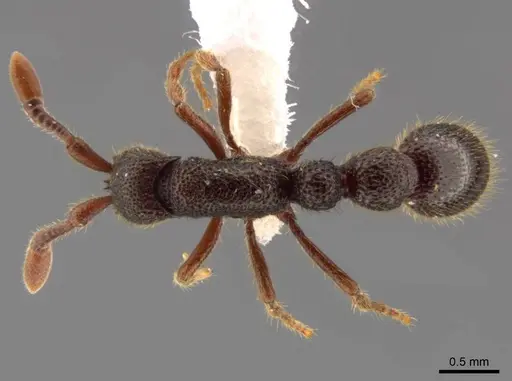
CASENT0612570
View on AntWeb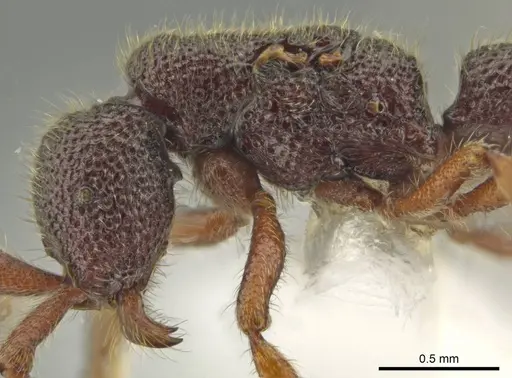
CASENT0644402
View on AntWeb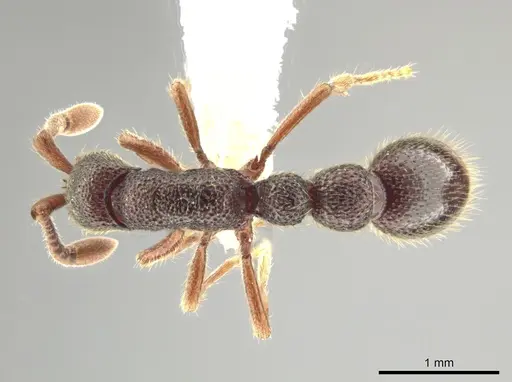
CASENT0644403
View on AntWeb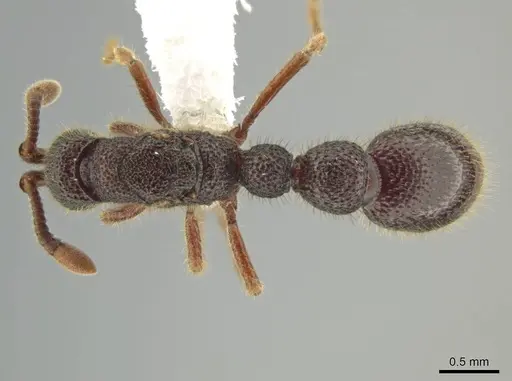
Literature
Loading distribution map...Loading products...