
Strumigenys turpis
- Sci. Name
- Strumigenys turpis
- Tribe
- Attini
- Subfamily
- Myrmicinae
- Author
- Bolton, 2000
- Distribution
- Found in 2 countries
Introduction
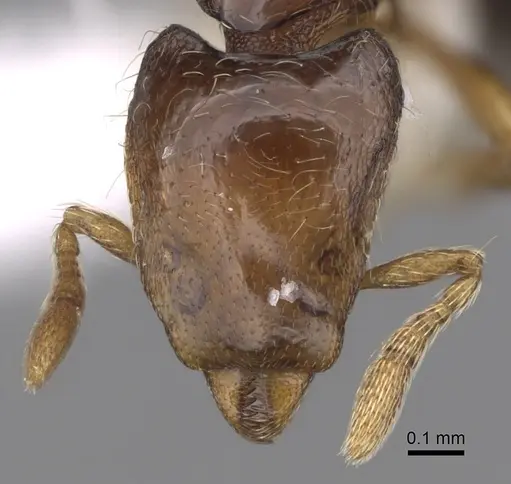
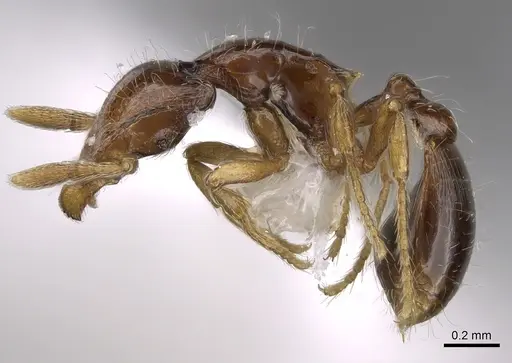
Strumigenys turpis is a tiny, predatory ant that measures 2.0 mm in total length . It is native to cloud forests in southern Mexico, Guatemala, and Costa Rica, where it lives in leaf litter on the forest floor . Workers have short, downward-curving mandibles that snap shut like a trap-jaw, and a teardrop-shaped gaster. The waist segments have some spongiform tissue, though this is absent from the underside of the petiole and postpetiole, a key feature that sets it apart from similar species . Very few specimens have ever been collected, so much about its natural history remains unknown .
Quick Summary
- Difficulty: Expert
- Origin & Habitat: Cloud forests of southern Mexico, Guatemala, and Costa Rica. Lives in damp leaf litter on the ground [2][3].
- Colony Type: Unknown, too few specimens exist to determine colony structure.
- Size & Growth:
- Antkeeping:
- Temperature: Unknown, as a tropical forest ant it likely prefers warm conditions (22-26°C), but no specific data exists. Keep stable and avoid sudden drops.
- Humidity: High, keep the nest substrate consistently moist but not waterlogged. These ants live in damp leaf litter.
- Diapause: No, tropical species, no hibernation needed.
- Nesting: A naturalistic terrarium with a thick layer of moist leaf litter over soil or plaster is ideal. Avoid acrylic nests, a humid setup with good airflow works best.
- Behavior: Timid and secretive, workers hunt alone among leaf litter using their trap-jaw mandibles. They possess a functional sting but rarely use it on humans. Their tiny size (2 mm) means excellent escape prevention is critical. They are not aggressive toward nestmates and do not recruit to food.
- Common Issues: escape prevention is critical: 2 mm ants can slip through standard mesh and tiny gaps., high humidity needs conflict with mold control, balance moisture with ventilation., specialized diet (live micro-prey) may be difficult to supply consistently., captive care is almost undocumented, success may require trial and error., slow or stalled colony growth is normal because very little is known about their needs.
Housing and Setup
Because Strumigenys turpis naturally lives in leaf litter, a naturalistic terrarium is the best choice. Use a shallow container with a layer of moist soil or plaster, topped with several inches of decaying leaves (oak or maple work well). The substrate should stay damp but not waterlogged. Provide small holes for ventilation to prevent mold. A heating mat on the side or above (never directly under) can keep the temperature stable if your room is cool. These ants do not need bright light, dim conditions are fine. Their tiny size means you must seal every gap with fine mesh or silicone. Avoid acrylic nests, they dry out too quickly for this species. [2][3]
Feeding and Diet
Strumigenys turpis is an obligate predator of tiny live prey. In the wild, it eats springtails, soil mites, and other micro-arthropods found in leaf litter. In captivity, you must provide a constant supply of live springtails (e.g., Folsomia candida). They may also accept small fruit flies, booklice, or tiny isopods, but springtails should form the core of the diet. Do not offer sugar water, honey, or dead insects, these ants will not eat them. Feed every 2-3 days and remove any leftover prey to prevent mold. It helps to maintain a springtail culture directly in the outworld so workers can hunt naturally. [2][1]
Temperature and Seasonal Care
As a tropical species from Central American cloud forests, Strumigenys turpis requires warm, stable temperatures year-round. The ideal range is not documented, but based on its habitat, aim for 22-26 °C. Avoid letting the nest drop below 20 °C. No hibernation is needed, maintain warm conditions all year. High humidity is equally important: keep the substrate damp and provide a water source in the outworld. If using a heating mat, place it on the side or top of the nest so the ants can choose a cooler spot if needed. [2][1]
Behavior and Colony Dynamics
Strumigenys turpis workers are solitary hunters that patrol through leaf litter in search of prey. Their trap-jaw mandibles can snap shut extremely fast when triggered by movement or vibration. Unlike many ants, they do not recruit nestmates to food, each worker hunts alone. They are not aggressive toward humans and will try to hide rather than sting. However, they do possess a functional sting (like most myrmicines) and may use it if handled roughly. Colonies are almost certainly small (only a handful of wild specimens have ever been collected) and growth is likely very slow. Queens have never been described, so founding behavior is unknown. Their secretive nature and rarity make captive observations challenging. [4][2][1]
Frequently Asked Questions
How long does it take for Strumigenys turpis to produce first workers?
This is unknown, no species-specific data exists. Tropical Strumigenys may take 6-12 weeks, but do not rely on any estimate.
Can I keep Strumigenys turpis in a test tube setup?
No, test tubes are not suitable. These ants require a humid leaf litter environment to thrive. Use a naturalistic terrarium with moist soil and decaying leaves.
What do Strumigenys turpis eat?
They are strict predators of live micro-prey. Springtails are essential, they may also accept fruit flies, booklice, or tiny isopods. Dead insects and sugar are not accepted.
Are Strumigenys turpis good for beginners?
No, this species is expert-only. They require live food, high humidity, and very secure enclosure. Very little is known about their captive care.
How big do Strumigenys turpis colonies get?
Colony size is unknown. Fewer than ten wild specimens have ever been collected, which suggests colonies are small, but no firm data exists.
Why are my Strumigenys turpis dying?
Common causes: lack of live springtails (they starve), humidity too low, temperature too cold, escape (they are extremely tiny), or mold from poor ventilation.
Do Strumigenys turpis need hibernation?
No, they are tropical ants and do not require hibernation. Keep them warm year-round.
When should I move Strumigenys turpis to a formicarium?
Standard formicariums are not recommended. Instead, start and keep them in a naturalistic terrarium with leaf litter. If you must use a formicarium, wait until the colony has at least 20-30 workers and use a moist plaster or soil nest.
Can I keep multiple Strumigenys turpis queens together?
There is no information about pleometrosis for this species. It is safest to assume queens are solitary during founding. Do not combine unrelated queens.
Report an Issue
The current care sheet is based fully on literature. See inconsistencies, or something that's incorrect? Please , it will be resolved after review from an admin. Contributing to the blogs tab also helps providing information, to make us be able to further improve the caresheets. Thank you for your support!
References

This caresheet is licensed under CC BY-SA 4.0 .
Community Blogs
CASENT0281950
View on AntWeb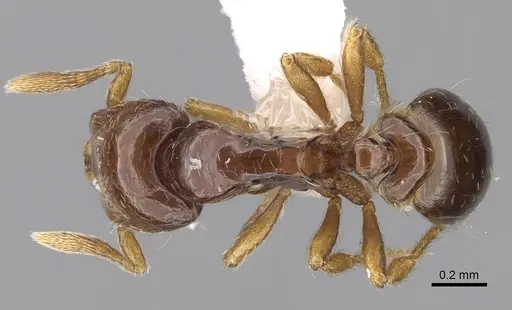
Literature
Loading distribution map...Loading products...