
Strumigenys tumida
- Sci. Name
- Strumigenys tumida
- Tribe
- Attini
- Subfamily
- Myrmicinae
- Author
- Bolton, 2000
- Distribution
- Found in 2 countries
Introduction
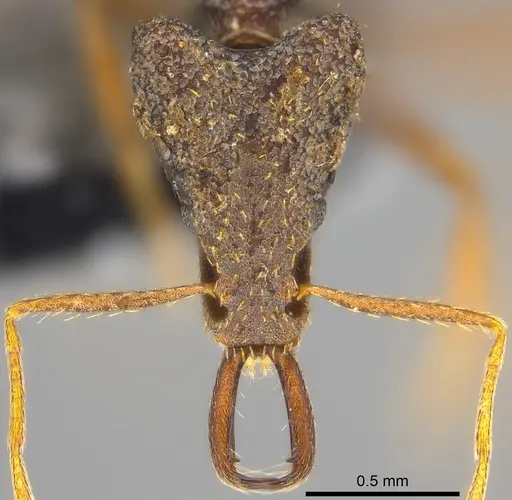
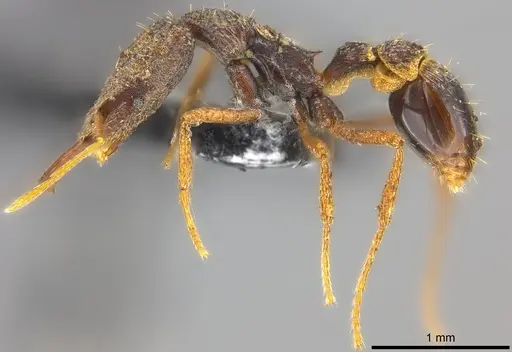
Strumigenys tumida is a trap-jaw ant endemic to Fiji. It is easily recognized by its extremely swollen postpetiole, which is twice as broad as the petiole when viewed from above . Workers are about 3.8 mm long, with long mandibles, dark brown coloration, and strongly sculpted body surfaces . This species belongs to the signeae complex within the Strumigenys godeffroyi group and is one of the larger-bodied Strumigenys in Fiji . It is found only in forest habitats at higher elevations on the islands of Viti Levu and Vanua Levu . Originally described as Strumigenys wheeleri in 1921,it was renamed to Strumigenys tumida by Bolton in 2000 due to a naming conflict .
Quick Summary
- Difficulty: Medium
- Origin & Habitat: Endemic to Fiji, recorded from Viti Levu and Vanua Levu. Inhabits high-elevation forest habitats, usually collected from leaf litter samples [4][5][3].
- Colony Type: Colony structure is unconfirmed. Based on typical Strumigenys patterns, colonies are likely single-queen (monogyne).
- Size & Growth:
- Queen: Unknown, no measurements available.
- Worker: 3.8 mm total length [1][2]
- Colony: Unknown, likely small, probably under 100 workers based on genus-level patterns.
- Growth: Moderate (inferred from related Strumigenys species)
- Development: Estimated 6–10 weeks at optimal temperature (inferred from related Strumigenys species) (Specific data for S. tumida is unavailable, timing is an estimate based on genus-level patterns.)
- Antkeeping:
- Temperature: Keep at 24–28°C, reflecting their tropical Fijian origin [3]. Provide a thermal gradient so the colony can self-regulate.
- Humidity: High humidity required. Keep the nest substrate consistently damp but not waterlogged, mimicking the moist leaf litter of their natural habitat [3].
- Diapause: No, as a tropical species from Fiji, they do not need hibernation. Maintain warm conditions year-round.
- Nesting: Naturalistic setups with deep moist substrate and leaf litter work best. Y-tong or plaster nests with a water reservoir are good alternatives. They are ground-dwelling and prefer to hunt within the litter layer.
- Behavior: These ants are specialized predators with trap-jaw mandibles for capturing small arthropods. They are ground-dwelling and move relatively slowly. Though they possess a functional stinger, it is very mild and not considered dangerous to humans. Their small size (3.8 mm) means they can escape through tiny gaps, use fine mesh and tight seals. They are not aggressive and tend to retreat when disturbed.
- Common Issues: obtaining suitable live prey (e.g., springtails, small fruit flies) consistently can be challenging., high humidity may cause mold if ventilation is poor, balancing humidity and airflow is essential., growth is naturally slow, colonies may appear stagnant for weeks before new workers appear., wild-caught colonies might carry parasites or have a weakened queen after transit., as an endemic Fijian species, accidental release outside their native range could harm local ecosystems.
Housing and Nest Setup
Mimic their natural forest floor habitat by using a deep layer of moist substrate (soil and leaf litter). The substrate should stay damp but not waterlogged. You can add bark, rocks, or moss to provide hiding spots and hunting areas. Alternatively, a Y-tong or plaster nest with a water reservoir maintains high humidity effectively. Since these ants are ground-dwelling and forage in leaf litter, avoid setups that force them to travel across large open spaces. Connect a small outworld to a secure nest chamber for easy feeding and observation [3][6].
Feeding and Diet
Strumigenys tumida are specialized predators of tiny arthropods. Their prey in the wild likely includes springtails, mites, and other minute soil animals that live in leaf litter. Offer live springtails and small fruit flies as primary food in captivity. They are not interested in sugar water or honey. Feed small prey every few days and remove any leftovers after 24 hours to prevent mold. Starting your own springtail culture makes feeding easier [6][1].
Temperature and Humidity
Keep the nest at 24–28°C. A gentle temperature gradient allows the colony to choose their preferred spot. Humidity should be very high (70–85% relative humidity) – the substrate should feel consistently damp to the touch. Use a water reservoir in plaster or Y-tong nests, or mist a naturalistic setup regularly. Avoid letting the nest dry out, is a major stress factor. If using heat, apply it from above (e.g., heat cable on the nest top) to avoid drying the substrate unevenly [3].
Behavior and Temperament
These ants are calm and non‑aggressive. They move slowly and spend most of their time hunting through the substrate. They have a functional stinger, but it is very mild and not dangerous to humans. Their small size (3.8 mm) means escape prevention is critical – use fine mesh on ventilation holes and tight‑fitting lids. They will retreat into the nest rather than investigate disturbances, so give them time to acclimate after changes [1][2].
Colony Establishment
Founding behavior has not been directly documented for this species [6][1]. Based on typical Strumigenys patterns, queens are likely claustral founders. If you obtain a founding queen, place her in a small test‑tube setup with a damp cotton plug and keep her undisturbed in the dark at around 26°C. Do not offer food during the founding stage. The first workers should appear after several weeks. Once workers emerge, begin offering tiny live prey. Colony growth is slow, and mature colonies probably remain under 100 workers.
Common Challenges
The main difficulties are providing a steady supply of tiny live prey and maintaining high humidity without encouraging mold. Their slow growth can test patience. Wild‑caught colonies may suffer from parasites or a stressed queen. Because they are endemic to Fiji, never release them outside their native range – accidental introductions could harm local ecosystems. Use fine mesh barriers and inspect the setup regularly for gaps [6][3].
Frequently Asked Questions
How long does it take for Strumigenys tumida to raise first workers?
There is no specific data for this species. Based on related Strumigenys, expect 6–10 weeks from egg to worker at optimal temperature (around 26°C). This is an estimate.
What do Strumigenys tumida ants eat?
They are specialized predators of tiny arthropods found in leaf litter. In captivity, live springtails and small fruit flies are accepted. They do not take sugar water or honey.
Can I keep Strumigenys tumida in a test tube setup?
A test tube works for a founding queen, but established colonies need more space. A naturalistic or Y-tong setup with moist substrate allows them to hunt and move naturally.
Are Strumigenys tumida good for beginners?
They are rated as medium difficulty. Their need for live prey and high humidity makes them better for keepers with some experience. Beginners might struggle with prey supply and humidity control.
Do Strumigenys tumida need hibernation?
No, they do not need hibernation. Being a tropical species from Fiji, they require warm conditions year-round (24–28°C) [3].
How big do Strumigenys tumida colonies get?
Colony size is not well documented but is likely small – typically under 100 workers at maturity. This is typical for Strumigenys species.
Why is my Strumigenys tumida colony not growing?
Growth is naturally slow. Ensure temperature (24–28°C), humidity (high), and live prey are provided. If conditions are correct and the colony still stalls, the queen may be stressed or dead.
Can I keep multiple Strumigenys tumida queens together?
Colony structure is unconfirmed. Based on typical Strumigenys patterns, they are likely single-queen. Combining unrelated queens is not recommended as they would probably fight.
Where is Strumigenys tumida native to?
It is endemic to Fiji, found only on Viti Levu and Vanua Levu. It inhabits high-elevation forest habitats and has not been recorded outside Fiji [4][5].
How do I prevent my Strumigenys tumida from escaping?
Use fine mesh barriers (standard ant mesh works), tight-fitting lids, and seal all gaps. Their small size (3.8 mm) allows them to squeeze through tiny openings. Check connections between nest and outworld regularly.
Is Strumigenys tumida invasive anywhere?
No, this species is not invasive. It is endemic to Fiji and has never been recorded outside its native range. Never release it in other countries to avoid potential ecological harm [4][5].
Report an Issue
The current care sheet is based fully on literature. See inconsistencies, or something that's incorrect? Please , it will be resolved after review from an admin. Contributing to the blogs tab also helps providing information, to make us be able to further improve the caresheets. Thank you for your support!
References

This caresheet is licensed under CC BY-SA 4.0 .
Community Blogs
CASENT0186506
View on AntWeb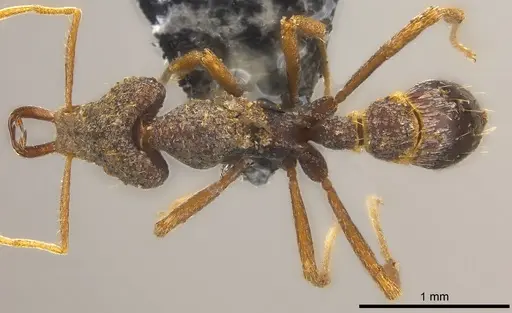
Literature
Loading distribution map...Loading products...