
Strumigenys trada
- Sci. Name
- Strumigenys trada
- Tribe
- Attini
- Subfamily
- Myrmicinae
- Author
- Lin & Wu, 1996
- Distribution
- Found in 1 countries
Introduction
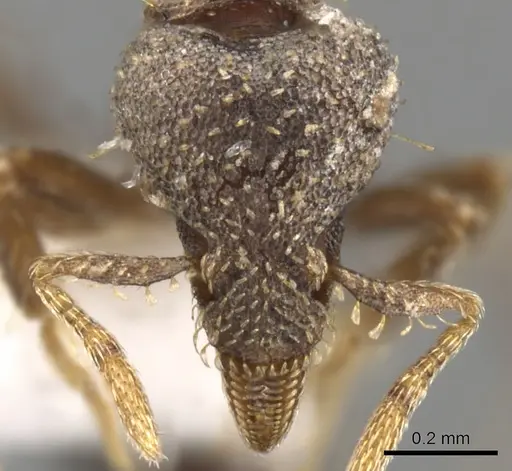
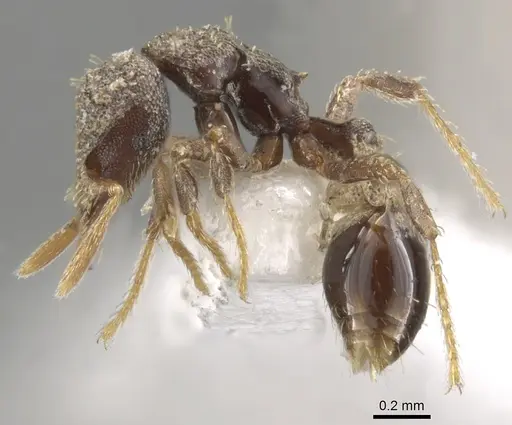
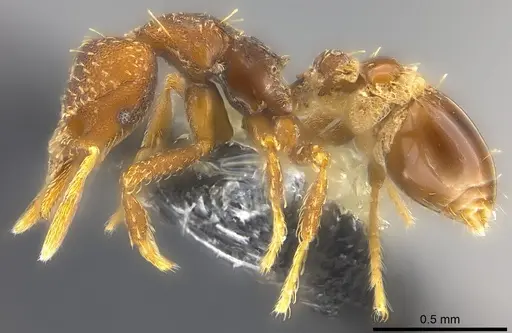
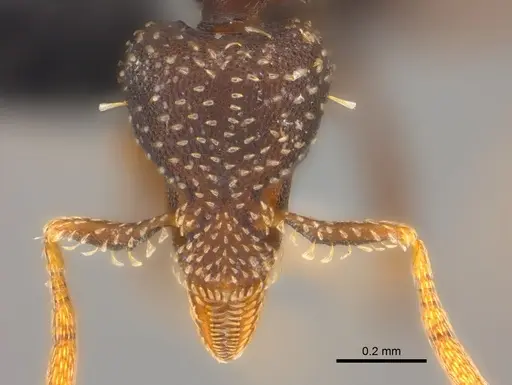
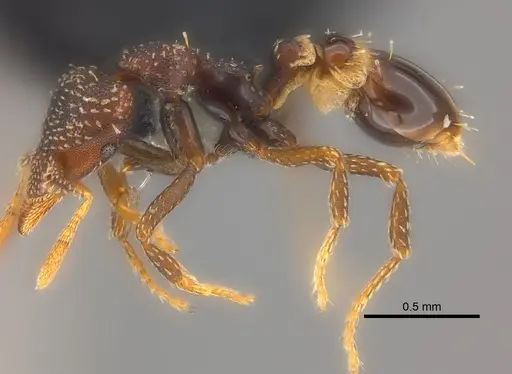
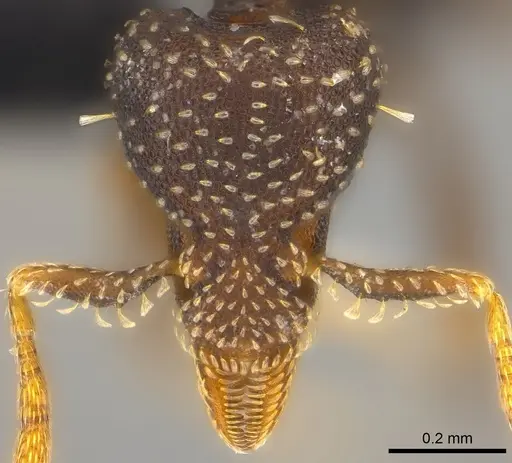
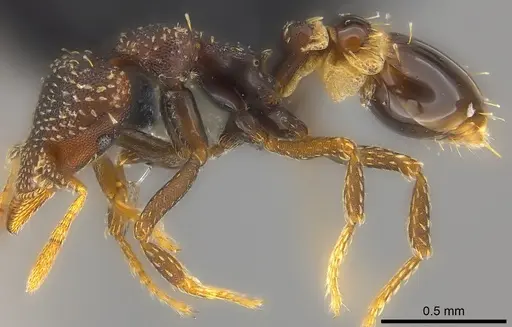
Strumigenys trada is a tiny predatory ant, with workers measuring 2.6mm in total length . It belongs to the Dacetini tribe and the smythiesii complex of the Strumigenys godeffroyi group . This species is only known from Taiwan, specifically from Wulai in Taipei Hsien and Sanshia in Taipei County . Nothing is documented about its biology in the wild, but like other Strumigenys, it is thought to be a specialized hunter of springtails and other micro-arthropods . The worker has distinctive flat, spoon-shaped hairs on the head and scapes, along with very long, whip-like hairs on the pronotum .
Quick Summary
- Difficulty: Expert
- Origin & Habitat: Endemic to Taiwan, recorded from Wulai and Sanshia in Taipei County [2][1]. Strumigenys species generally live on humid forest floors where springtails are abundant [1].
- Colony Type: Unconfirmed, no data exists on queen number or colony structure for this species [1].
- Size & Growth:
- Queen: Unknown, related Strumigenys queens are slightly larger than workers [1]
- Worker: 2.6mm total length [1]
- Colony: Unknown, no data for this species. Related Strumigenys species usually have colonies under 200 workers [1]
- Growth: Unknown, likely slow, based on the genus
- Development: Unknown for this species. Based on related Strumigenys, estimate 6-10 weeks at warm temperatures [1] (Development timeline is not confirmed, this is a genus-level estimate)
- Antkeeping:
- Temperature: Mimic Taiwan's subtropical climate: aim for 22-26°C. Avoid below 18°C and above 30°C [1].
- Humidity: High humidity is critical. Keep the substrate consistently moist but not waterlogged, and mist the enclosure regularly. Target 70-85% relative humidity in the nest area [1].
- Diapause: Unlikely needed, Taiwan has mild winters. A slight temperature drop in winter (18-20°C) may be beneficial, but full diapause is not recommended [1].
- Nesting: Use a naturalistic setup: a moist soil/peat substrate with bark, leaf litter, or moss. A plaster nest with a water reservoir also works. Chambers must be very small (2-3mm high) to fit the tiny ants. Excellent escape prevention is essential, use fine mesh on vents and seal all gaps [1].
- Behavior: These ants are specialized predators that use their trap‑jaw mandibles to capture springtails. They have a functional sting, but it is used only on prey and is not a threat to humans [1]. Their tiny size (2.6mm) means they can squeeze through gaps smaller than 0.5mm, so escape prevention is vital. They are not aggressive toward keepers but will flee or hide [1].
- Common Issues: tiny size leads to escapes, use 0.2mm mesh and seal any cracks, specialized diet, they require live springtails or other micro‑arthropods, they will not eat sugar or honey, no biological data exists, all care advice is inferred from related species, so expect surprises, high humidity can cause mold if ventilation is poor, balance moisture with airflow, slow colony growth and small final size make them sensitive to disturbance and stress
Housing and Nest Setup
Strumigenys trada needs a setup that holds high humidity while letting you feed live prey. A naturalistic terrarium works best: use a moist soil or peat substrate, add pieces of bark, leaf litter, or moss for cover. If you prefer a plaster nest, include a water reservoir and make sure chambers are only 2-3 cm across and 2-3 mm high to match the ants' tiny 2.6mm size. Whatever you choose, escape prevention is the top priority, these ants can squeeze through gaps smaller than 0.5mm. Use 0.2mm stainless steel mesh on any ventilation holes and seal all connections [1].
Feeding and Diet
Strumigenys trada is a specialized predator. In the wild it likely hunts springtails (Collembola) and other tiny arthropods. In captivity, you must provide live springtails as the staple food. Other micro‑prey such as booklice, dust mites, or fruit fly larvae may be accepted. Do not offer sugar water, honey, or other carbohydrate sources, these ants will not eat them and can starve. Feed small live prey every 2-3 days, adjusting based on how much the colony consumes. Remove any uneaten prey after 24 hours to prevent mold [1].
Temperature and Humidity
Keep Strumigenys trada at 22-26°C, mimicking Taiwan's subtropical climate. Avoid temperatures below 18°C or above 30°C. Humidity must be high, the substrate should stay consistently moist but never waterlogged. Mist the enclosure regularly and consider a water reservoir in the nest. Good ventilation is important to stop mold, but don't let the setup dry out. Use a hygrometer to aim for 70-85% relative humidity in the nest area [1].
Colony Development and Growth
No data exists for Strumigenys trada colony development. Based on related Strumigenys, expect slow growth, mature colonies likely stay under 200 workers. The first workers (nanitics) will be very small and may take 6-10 weeks to develop from egg at 22-26°C. Do not expect rapid expansion. These ants prioritize stability over speed. Be patient and keep conditions consistent. During founding, queens will seal themselves in, do not disturb them until the first workers emerge [1].
Important Keeper Notes
This species is not for beginners. Strumigenys trada has no documented biology at all, every care tip here is inferred from related species. You will be pioneering its captive care, so expect a steep learning curve and the possibility of colony losses. Only experienced antkeepers should attempt this ant. If you manage to keep a colony, record your observations, they could help the whole antkeeping community. Always maintain excellent escape prevention and stable, humid conditions [1].
Frequently Asked Questions
How long does it take for Strumigenys trada to produce first workers?
The exact timeline is unconfirmed for this species. Based on related Strumigenys, expect 6-10 weeks from egg to worker at 22-26°C. This is slower than many common ant species [1].
What do Strumigenys trada ants eat?
They are specialized predators that need live springtails or other tiny arthropods as their primary food. They will not eat sugar water or honey. Feed small live prey every 2-3 days [1].
Can I keep Strumigenys trada in a test tube setup?
A test tube can work for founding if it stays humid, but a naturalistic setup with moist substrate is better for long‑term care. Test tubes dry out quickly and make feeding live prey harder. If you use a test tube, monitor humidity closely and transfer to a proper nest when the colony grows [1].
How big do Strumigenys trada colonies get?
Colony size is unconfirmed for this species, but related Strumigenys usually reach 50-200 workers at maturity. Do not expect large colonies, they are naturally small‑colony ants [1].
Are Strumigenys trada good for beginners?
No. This species is rated Expert difficulty. There is no biological data, making captive care extremely challenging. They need specialized live prey, high humidity, and perfect escape prevention. Only experienced antkeepers should attempt it [1].
Do Strumigenys trada need hibernation?
Probably not. Taiwan has mild winters, and related Strumigenys from similar climates do not require true hibernation. A slight winter cool‑down to 18-20°C may be beneficial, but full diapause is likely unnecessary [1].
Why are my Strumigenys trada dying?
0.2mm), improper humidity (too dry or waterlogged), temperature stress (below 18°C or above 30°C), and starvation (they must have live prey, they cannot survive on sugar). Check escape prevention first, then review humidity and temperature [1].
When should I move Strumigenys trada to a formicarium?
Wait until the colony has at least 5-10 workers and is actively foraging. For this tiny species, a small naturalistic setup works better than a traditional formicarium. If you use a formicarium, make sure its chambers are appropriately tiny and that escape prevention is flawless [1].
Can I keep multiple queens together?
Not recommended. No data exists on colony founding for this species, but related Strumigenys are usually monogyne (single queen). Combining unrelated queens is untested and likely leads to aggression. Start with a single queen colony [1].
What temperature is ideal for Strumigenys trada?
Aim for 22-26°C. This species comes from subtropical Taiwan and prefers warm, humid conditions. Avoid below 18°C or above 30°C. A gentle heat gradient from a heating cable on one side of the nest can help [1].
Report an Issue
The current care sheet is based fully on literature. See inconsistencies, or something that's incorrect? Please , it will be resolved after review from an admin. Contributing to the blogs tab also helps providing information, to make us be able to further improve the caresheets. Thank you for your support!
References

This caresheet is licensed under CC BY-SA 4.0 .
Community Blogs
CASENT0013154
View on AntWeb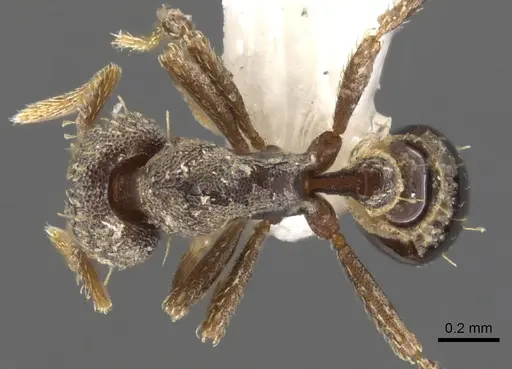
CASENT0171045
View on AntWeb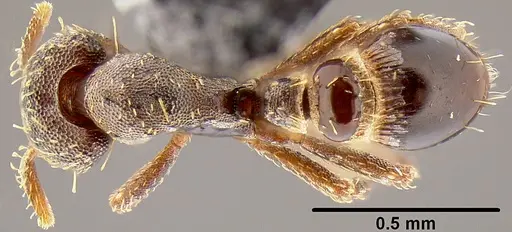
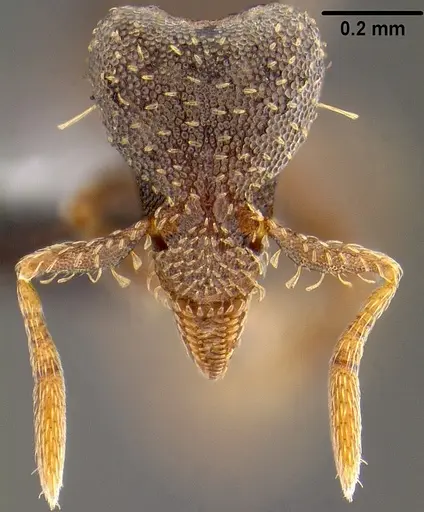
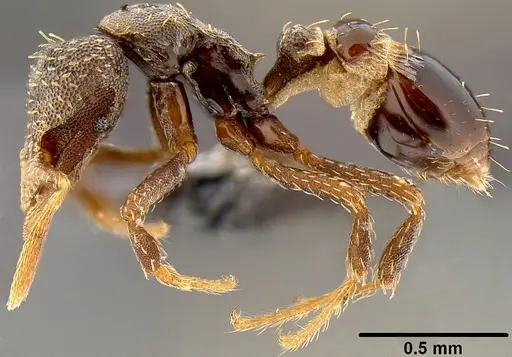
CASENT0184729
View on AntWeb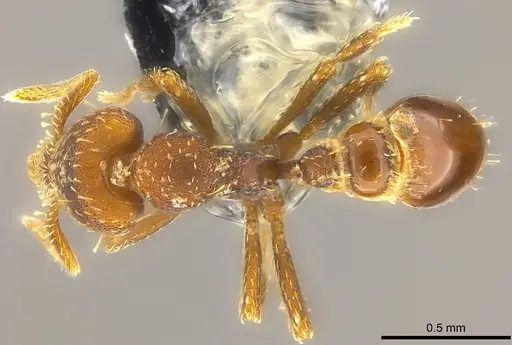
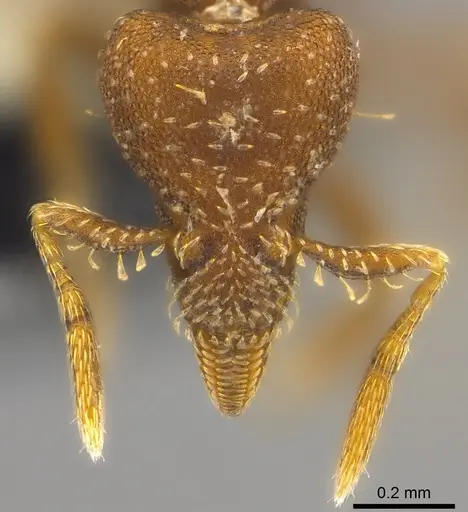
CASENT0184965
View on AntWeb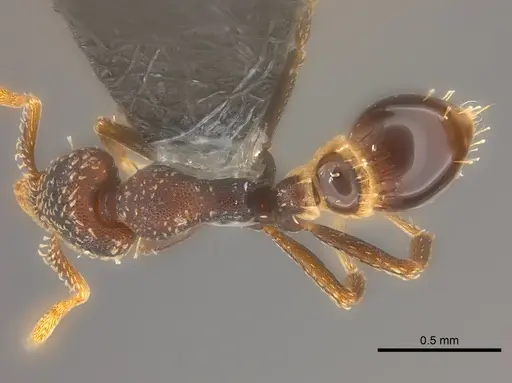
CASENT0184976
View on AntWeb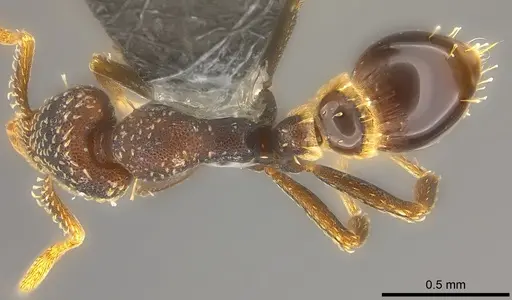
Literature
Loading distribution map...Loading products...