
Strumigenys sydorata
- Sci. Name
- Strumigenys sydorata
- Tribe
- Attini
- Subfamily
- Myrmicinae
- Author
- Bolton, 2000
- Distribution
- Found in 5 countries
Introduction
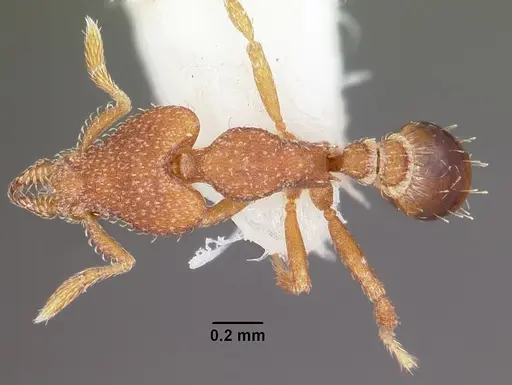
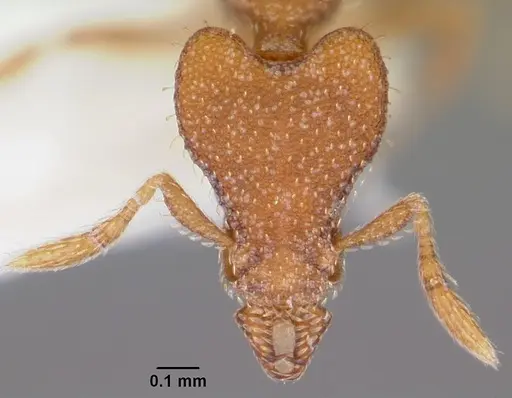
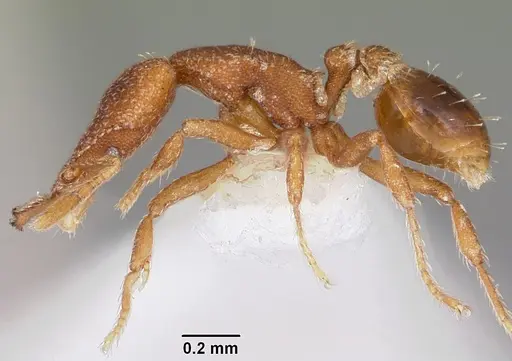
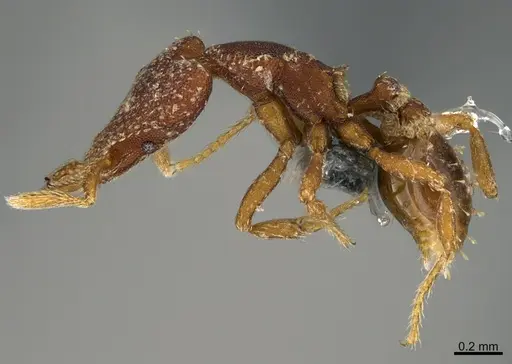
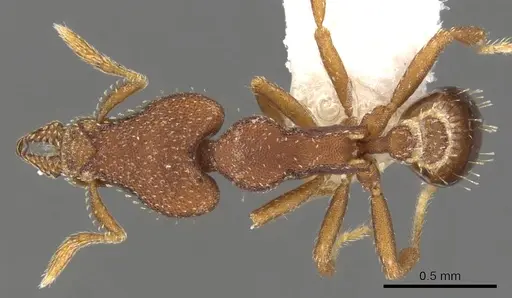
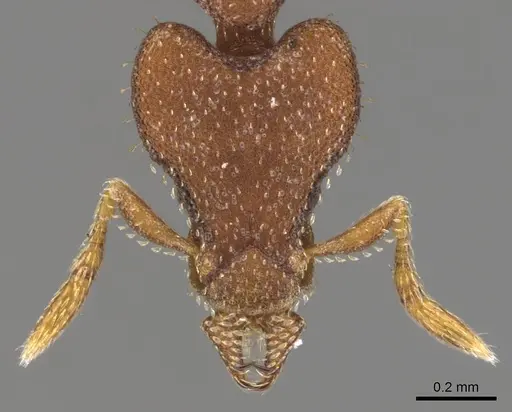
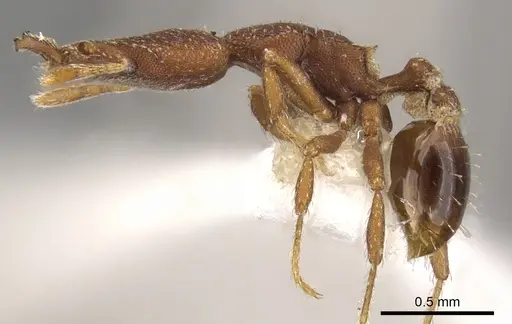
Strumigenys sydorata is a tiny predatory ant. Workers measure about 2.4 to 2.6 mm in total length . They have specialized mandibles used to capture small prey like springtails and mites. Identifying features include pronotal humeral hairs, a smooth first gastral tergite, a well-developed lamella on the propodeal declivity, and a preapical tooth on the mandible that is larger than the apicodorsal tooth . This species belongs to the lyroessa-complex within the Strumigenys lyroessa-group . These ants live in secondary forests, Feng Shui woods, and leaf litter layers across Southeast Asia. Their range includes Hong Kong, southern China (Hainan, Yunnan), Thailand, Vietnam, Singapore, and Indonesia (Java and Sumatra) . They are rare in Hong Kong but more common in other areas . Colonies are small: one field observation recorded 24 individuals including one queen . An interesting feature of Strumigenys ants is the mesopleural excavation (called ‘hairwheels’), a round hollow on the thorax lined with bristle hairs. This structure is present in workers, queens, and males, but it does not contain glands - it might help with grooming or sensing .
Quick Summary
- Difficulty: Medium
- Origin & Habitat: Southeast Asia, Hong Kong, southern China (Hainan, Yunnan), Thailand, Vietnam, Singapore, Indonesia (Java, Sumatra). Lives in secondary forests, Feng Shui woods, leaf litter, mature forest, and rubber plantations at elevations of 15-170 m [1][3].
- Colony Type: Small single-queen colonies (monogyne), with about 24 individuals in one observed nest [2]. Queens are dealate after mating.
- Size & Growth:
- Queen: Not directly measured, queens are likely slightly larger than workers, but no specific data available.
- Worker: 2.4-2.6 mm total length [1]
- Colony: Up to about 24 workers in field observations [2]
- Growth: Slow to moderate, colony stays small
- Development: Unknown, no specific data for this species. Related Strumigenys typically take 6-10 weeks under good conditions. (Timing is estimated from related species.)
- Antkeeping:
- Temperature: Keep at 22-26°C, which matches their warm tropical forest habitat [1][3]. A slight gradient helps them choose their preferred spot.
- Humidity: High humidity is crucial, think damp forest floor. Keep the nest substrate consistently moist but not waterlogged. These ants nest in leaf litter and dead twigs, which hold moisture well [2][3].
- Diapause: No, these are tropical ants that stay active year-round. Do not cool them below 18°C for long [1][3].
- Nesting: In nature they nest in dead twigs and leaf litter [2]. In captivity, use a small test tube or a Y‑tong (AAC) nest with tight, humid chambers. Avoid large open nests that dry out quickly. Because the colony is tiny, a small setup works best.
- Behavior: These are cryptic, non‑aggressive ants. Workers move slowly and spend most of their time hunting in the leaf litter. They flee from disturbance and do not defend themselves actively. Due to their tiny size (under 3 mm), escape prevention is critical, they can slip through the smallest gaps. They are fascinating to observe but not showy.
- Common Issues: tiny colony size makes them sensitive to stress and population dips, escape prevention is very important, standard barriers may not block ants under 3 mm, high humidity can cause mold if ventilation is poor, live micro-prey (springtails) must be available regularly, they don’t accept sugar water, growth is slow, so expect a small colony for a long time
Housing and Nest Setup
Because Strumigenys sydorata colonies are tiny and need high humidity, keep them in a small, damp enclosure. A test tube with a water reservoir is ideal for starting a colony. Once established, a small Y‑tong (AAC) nest with narrow chambers works well, these hold moisture better than large formicaria. Add a small outworld for feeding, but keep it compact to avoid drying out. Seal all connections carefully: these ants are under 3 mm and can squeeze through gaps that seem impossible. You can also use a naturalistic setup with damp soil and leaf litter, but make sure ventilation is enough to prevent mold. [2][1]
Feeding and Diet
Strumigenys sydorata is a specialist predator of tiny arthropods. In captivity, feed them live springtails, these are the perfect size and match their natural leaf‑litter diet. Other small live prey like booklice (psocids), tiny mites, or fruit fly larvae may also be accepted. These ants do not usually eat sugar water or honey, they are obligate predators. Offer a few springtails every 2-3 days, adjusting based on how much the colony eats. Remove uneaten prey after 24 hours to prevent mold. Because the colony is small, even a few springtails per feeding is enough.
Temperature and Humidity
Maintain the temperature between 22 and 26°C, consistent with their tropical forest habitat [1][3]. A gentle temperature gradient (cooler one side, warmer the other) is helpful but not essential. Humidity is more critical: aim for 70-85% relative humidity inside the nest. The substrate should feel damp but not soaked. Use a water‑tube setup and check regularly that the nest hasn’t dried out. In dry rooms, misting the outworld lightly may help. Avoid placing the colony near air conditioning or heating vents that cause rapid drying. Room temperature (20-24°C) is acceptable, but warmth improves activity.
Colony Dynamics and Growth
This species forms small colonies. The only detailed field observation reported 24 individuals, one dealate queen and 23 workers [2]. The queen is monogyne, meaning only one queen per nest. Growth is slow to moderate, do not expect rapid expansion. Be patient during founding, stress from frequent disturbance may cause the queen to stop laying or workers to die. Once established, the colony stays small, so a larger formicarium is unnecessary. These ants naturally live in small groups and seem content with a modest home.
Behavior and Temperament
Strumigenys sydorata is a secretive, docile ant. Workers are not aggressive and will retreat from any disturbance. They spend most of their time hunting tiny prey in the leaf litter, using their specialized mandibles to snap up springtails and mites. Because they are so small, they are easy to miss in the nest, look closely. Their calm nature makes them low‑maintenance, but it also means they won’t put on a dramatic show. When moving them, be gentle, they are fragile. The mesopleural excavation (‘hairwheels’) on the thorax might play a role in grooming, but its exact function is still being studied [4].
Frequently Asked Questions
How long does it take for Strumigenys sydorata to produce first workers?
The exact timeline is unknown for this species. Based on related Strumigenys, expect about 6-10 weeks from the queen laying eggs to the first workers emerging. Patience is needed, small colonies grow slowly.
Can I keep Strumigenys sydorata in a test tube?
Yes. A small test tube with a water reservoir provides the high humidity they need. Use a snug cotton plug because these tiny ants can wriggle through loose fibers. This setup works for founding and for small colonies.
What do Strumigenys sydorata ants eat?
They need live micro‑prey. Springtails are the best choice, they are the right size and provide proper nutrition. Booklice, tiny mites, and fruit fly larvae may also work. They will not eat sugar water or honey. Always provide live prey, not dead.
How big do Strumigenys sydorata colonies get?
Field observations show colonies of about 24 individuals one queen and 23 workers. It is unlikely that they grow much larger, this species naturally stays small. Even a mature colony will probably have fewer than 50 workers.
Are Strumigenys sydorata good for beginners?
Not really. They have strict humidity needs, require live micro‑prey, and are so tiny that escape is a real risk. Their slow growth can also be unsatisfying for new keepers. If you are just starting, try a hardier species first. Experienced keepers who enjoy mini‑hunters will find them rewarding.
Do Strumigenys sydorata need hibernation?
No. They come from tropical and subtropical regions without a cold season. Keep them warm year‑round at 22-26°C. Extended temperatures below 18°C can harm or kill the colony [1][3].
Why are my Strumigenys sydorata escaping?
They are less than 3 mm, so they can fit through gaps that look closed. Check all connections between nest and outworld. Use very fine mesh (less than 0.5 mm openings) on vents, and apply fluon or PTFE to the rims of containers. Even tiny cracks along test‑tube adapters need sealing. Inspect barriers regularly.
When should I move my colony to a formicarium?
Because they stay small, you may never need to move them from a test tube. If the colony outgrows it (which may take a year or more), transfer them to a small Y‑tong nest. Avoid large formicaria, they will dry out too fast and stress the ants.
Can I keep multiple queens together?
No. Field observations show only one queen per colony, so this species is monogyne [2]. Trying to keep two unrelated queens together will likely result in fighting. Stick to one queen per setup.
Report an Issue
The current care sheet is based fully on literature. See inconsistencies, or something that's incorrect? Please , it will be resolved after review from an admin. Contributing to the blogs tab also helps providing information, to make us be able to further improve the caresheets. Thank you for your support!
References

This caresheet is licensed under CC BY-SA 4.0 .
Community Blogs
Literature
Loading distribution map...Loading products...